In Italy, there’s always someone who tries. I mean: someone who tries to strip revolutions of their meaning. Why is that? Is it envy? Is it fear of the new? I’ll venture an answer myself: because understanding where the epicentre of a revolution lies, observing how it has spread, investigating the effects its tremor might have on the way we live – takes effort. It’s easier to pass judgment while sparing oneself the act of tasting, avoiding research, sometimes even avoiding getting into the car and seeing things firsthand. Within all this lies the infamous armchair evaluation, delivered from behind a screen; the kind we allow ourselves to share, even taking pleasure when someone else falls into harmony with our counterpoint.
These were the initial thoughts I developed as I listened, from the sidelines, to a conversation debating the bread phenomenon. It was being portrayed as an extension of a superficial gourmet wave, where the goal is simply to sell food “with fancy garnishes” at a high price, for business. It wasn’t a fruitful conversation, lacking solid and measurable content. There was no real bread at the core, especially. Just the usual bar-talk clichés.

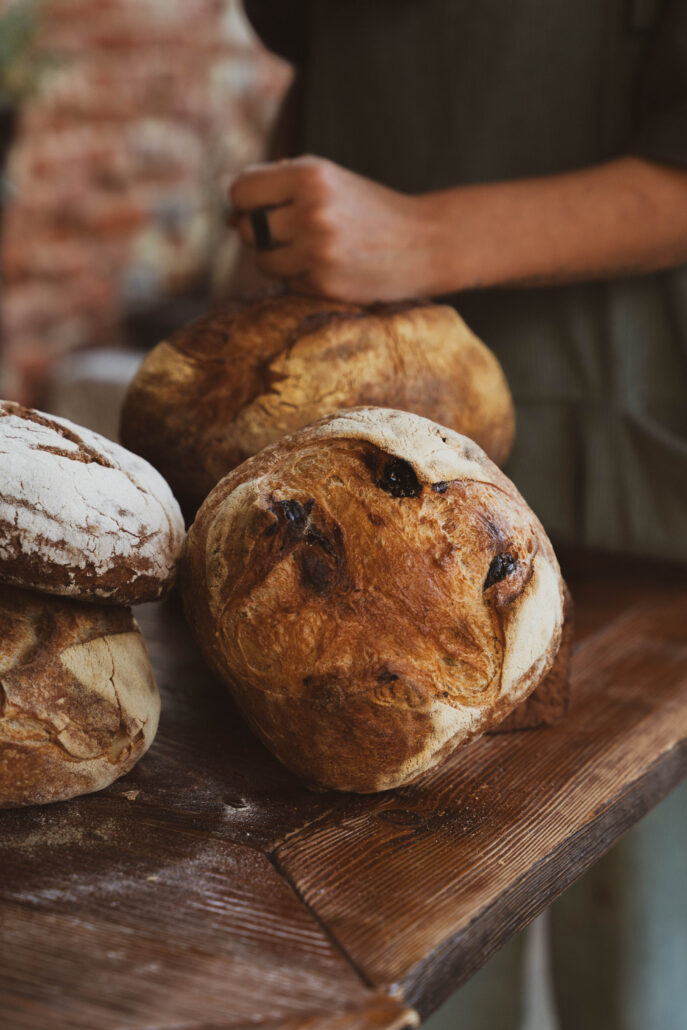
Some statements shouldn’t even be taken into consideration, I told myself at first. But then I reconsidered: that is exactly where the work of building culture must happen. That conversation lacked any awareness of what has been unfolding for several years now, in key corners of our country where real breadmaking is taking place. In cities, but above all in the provinces
I had promised myself I wouldn’t write the word courage, now made almost cacophonous by the excessive use we’ve subjected it to. Yet in these two stories, it is an essential requirement – no less than the timing of sourdough refreshments, the scrupulous choice of flour, or the way change is communicated. It all began with the instinct to throw oneself into something one believed in, without too many ifs or buts. And after the leap into the void came the other obstacle: the effort – daily, persistent – of tending, nurturing, telling the story. And repeating it all, from the beginning, in a perpetual, centripetal motion.
Francesca Casci Ceccacci: Pandefrà
I didn’t ask her whether saving herself as Franka on WhatsApp had anything to do with her bluntness, but in fact it was the very first thing that slipped out when we met, piercing through the fanciful oversized knit, the bold lipstick, the pleasantries, and everything else. Francesca Casci Ceccacci is an utterly free spirit, naturally inclined toward provocation. She takes a subject, shakes it, and returns it – provided she knows it well – with clear words and a far-reaching vision. She is a river in full flow, one that, to reveal itself at the mouth, prefers to trace its way back to the source.
And so she begins with her family, with the legacy her grandparents Giorgio and Clara left her about the value of food.
“For them, it was a mission to pass on the importance of going back to the origin, of caring for preparation, and of sharing the table. My grandmother was a rezdora from Romagna, food seeped into me by osmosis. It was one great ancestral lesson, from which my need to exist within food was born.”
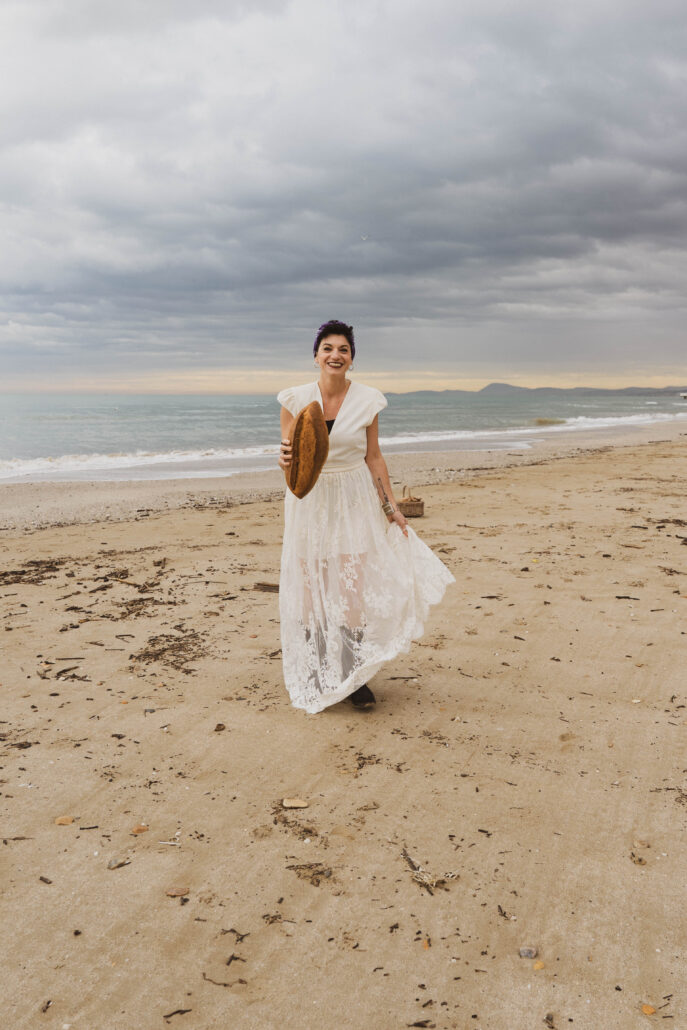
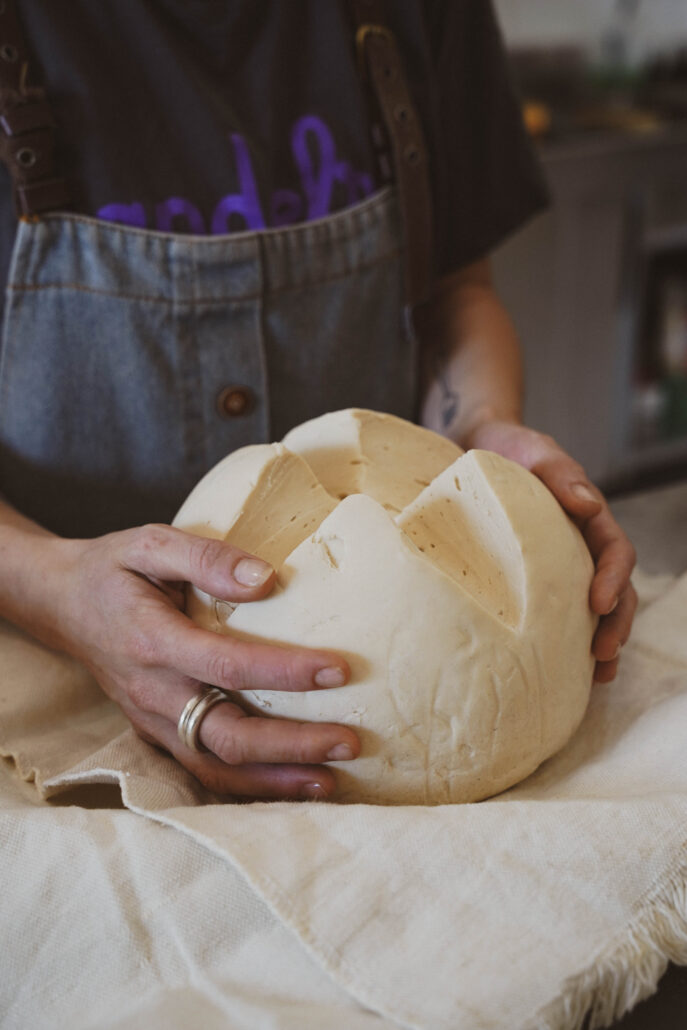
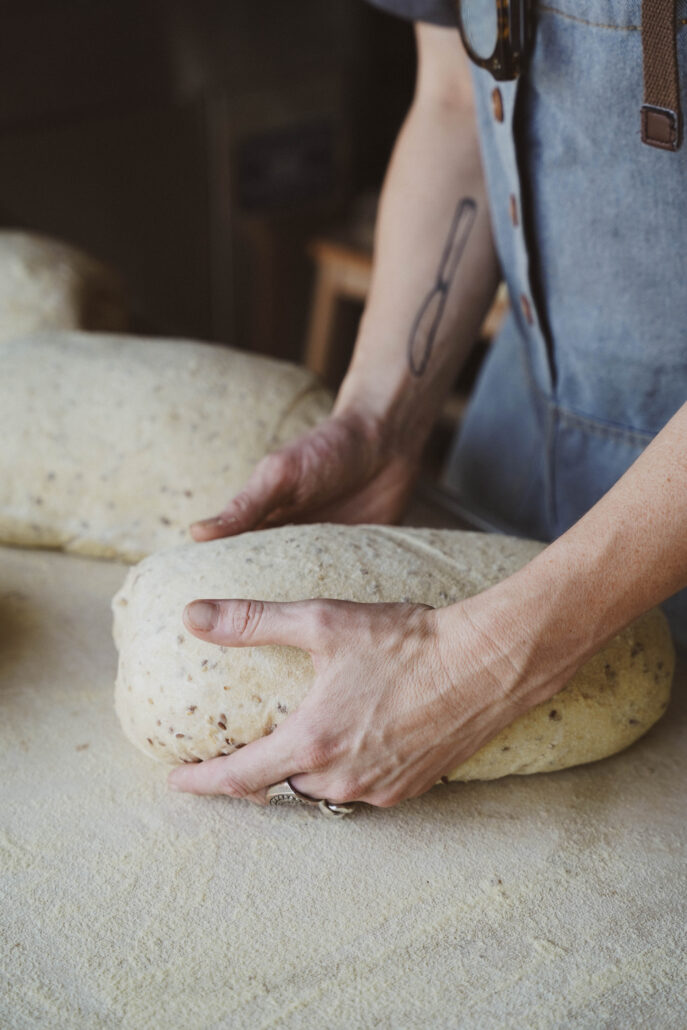
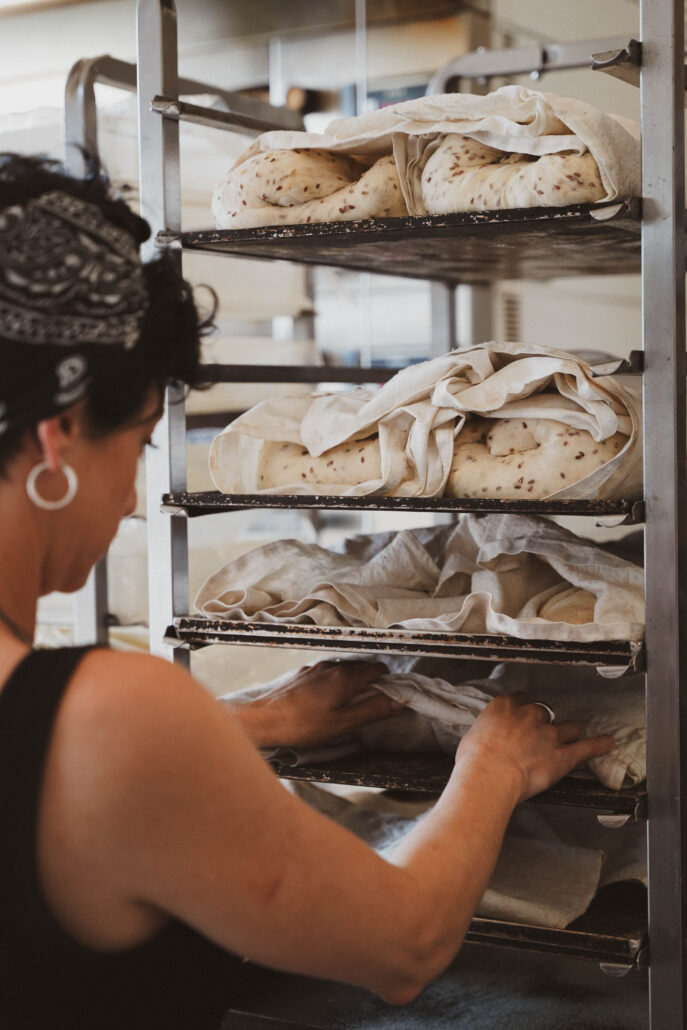
At a certain point, the need to understand more began to settle within her, so she started devoting her free time to studying food beyond the boundaries of home, probing its economic, political, and social dimensions. “But it wasn’t enough. Because of external pressures, let’s put it that way – she gives a bitter smirk – I earned a degree in Law in Bologna. Then I tried to connect the dots with a job at a multinational in Turin that cooked 4,000 meals a day. It was at that moment, in what seemed like a perfectly ordered life, neatly mapped out, that I understood what wasn’t right for me. Food and people were not being treated the way I believed they should be. I was accompanied by a sense of incompleteness, what I call bread envy, paraphrasing Freud, and the theory that at a certain point you realise something is missing.”
“I was missing that piece: the purpose of what I was doing.”
And what can happen when you reach that threshold? It becomes easier to glimpse opportunity. In 2015, Francesca overturned everything and jumped in feet first where nothing yet existed. She returned home, to the Marche, visited a mill, and together with its owner decided to work there. “I was able to follow the entire process, from the agricultural phase to milling, all the way to bread production. I met Ivo Corsini, who became my mentor. He taught me how bread is made, but he didn’t tell me how I should do it, leaving me free to find my own expression.”
There, we grasp, the focus lay in working with her hands, and slowly the first outline of autonomy became emancipation. “In this, I admit, my grandmother Assunta had a hand – she gave me female independence as a natural reference point, as the natural state of things.”
Her bakery project, Pandefrà, opened in Senigallia in 2018, at a time when only sporadic traces of this way of making bread could be found in Italy. Shortly afterward, Mauro Uliassi (Chef of Ristorante Uliassi, 3 Michelin stars in Senigallia, ed.) asked her to supply bread. In disbelief, Francesca didn’t even answer the phone at first. Then they spoke, and a special relationship began, one that continues today, marked by a synergy that can only be explained by a shared intent: to pursue excellence by pushing beyond it.
“This work requires a passion for change. You have to forget the safe space and learn to embrace perception through the senses. It is, first and foremost, an education of yourself. Once I understood it was right for me, and that I was educating myself, I leapt. One day he asked me for a bread that tasted of the sea, and I tried to develop it, using fresh seaweed.” That bread is still served at Ristorante Uliassi. In her bakery, however, there is no bread that tastes of the sea, just as there are no fashionable names or internationally flavoured pieces.
“In Italy, we should focus on the provincial bakery. That’s where you find bread, pizza rossa, onion focaccia, maritozzo, and pizza al formaggio from the Marche. People need to recognise themselves in what they eat. If we all draw inspiration from bakery models, distancing ourselves from our culture and overlooking the value of foods that are the culmination of a journey, then we are extending an unsustainable and false model into the future. We should avoid this new form of standardisation and instead, value diversity, not flatten it.”
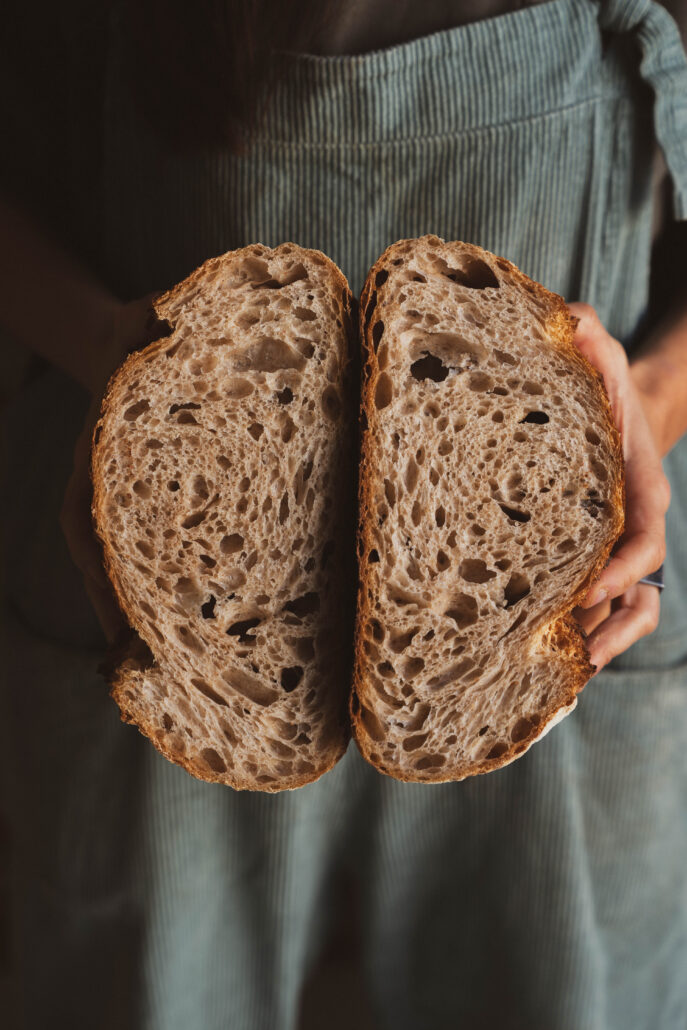
The bread of Pandefrà now takes shape a few kilometers beyond the shop, in a laboratory where flours are used primarily from a local producer who cultivates and mills them. Stepping into this space – where sourdough is refreshed, where baking happens, where thinking happens – one understands the journey Francesca and her team have undertaken, always mindful of giving credit where it is due. Together, they inhabit a place of study as much as a fully equipped and finely tuned production site. “Each of our recipes is conceived to express the value of the flour behind every baked good.”
“Bread is not a product, but a vehicle for words. Its true role is cultural!”

At that moment, Evolutionary Blend arrives at the table, an intense bread beloved by the public, born from a mix of cereals cultivated in Abruzzo by a collective of bakers. It is Breaders, a company that brings together Pandefrà, Forno Brisa, Panificio Davide Longoni, Mercato del Pane, and MAMM.
“Making bread the way we understand it is about relationship and collectivity. First as friends, then as partners, we came together around the idea that this profession should arise from a need for giving back and social responsibility. Giving back: I love this expression! It means taking care of the environment, of people, and of the place where I live. This is also why I have always seen Pandefrà as a hub of interconnection, a place where one can become aware of the baker’s role, but also build genuine relationships. Breaders is attuned to all these values and expresses the power that bread can hold today.”
After ten years of the project, Francesca has also developed a clear idea of the role that restaurants can – and should! she adds emphatically – take on. “Many restaurateurs expect bread to be nothing more than a service; they remain detached from the cultural, economic, and qualitative dimensions that revolve around it, even when they claim to support them. I often see clear evidence that there is a lack of understanding of our work and of the variables we have to manage. For all these reasons, bread should not be included in the cover charge: if you truly believe in a product, you give it the margin and the space it deserves.”
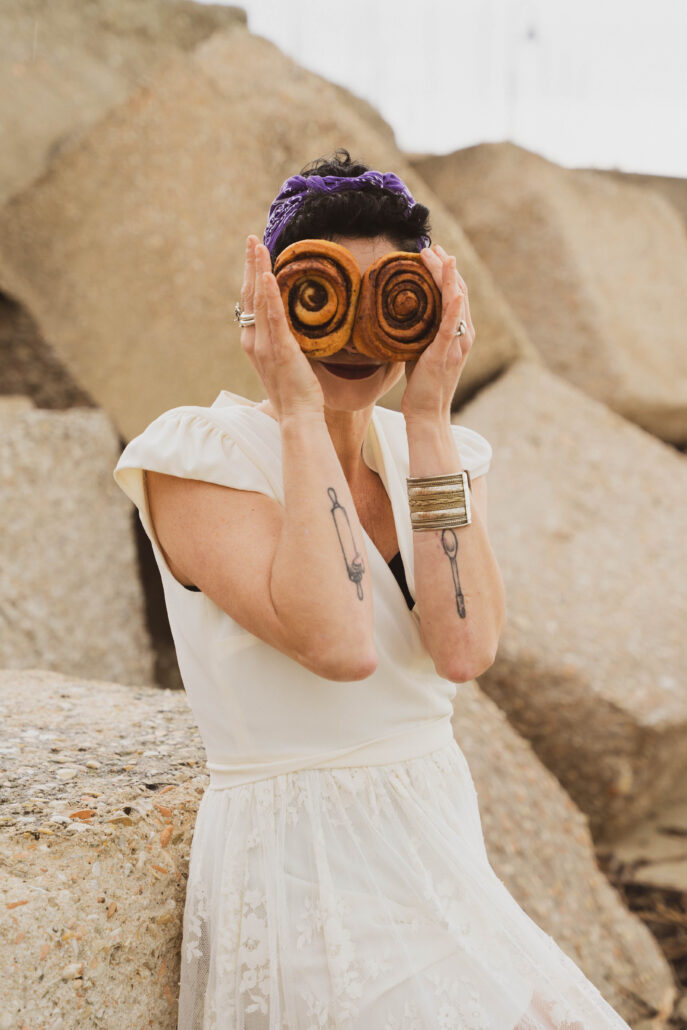
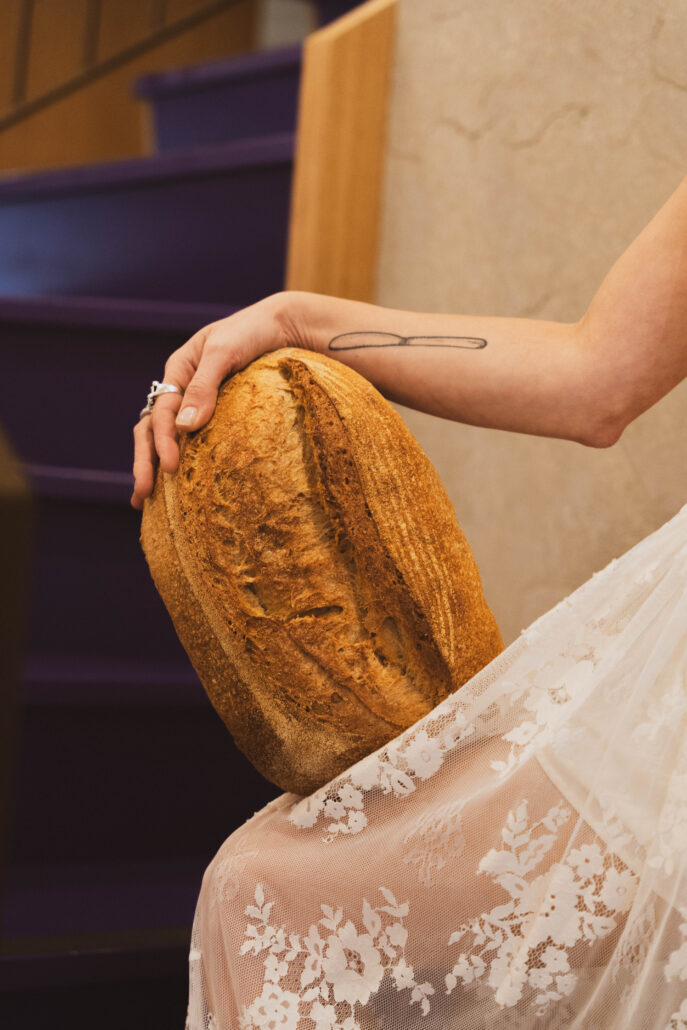
Giulia Busato: Tócio Bread
It was 2022, a solitary lunch at the end of May. It was my birthday, in fact, and I was enjoying it with professional detachment when that bread made its appearance. After the first bite, I immediately asked the staff for more information: “Do you make this bread yourselves?”
The reply was, “I wish!” With a pinch of envy, they added that it was the bread of Giulia Busato, aka Tócio Bread. I could have searched the entire province, but I wouldn’t have found a physical place – open and accessible to the public – where I could buy it: her bread was a home-based food business.
I was surprised, for many reasons. I couldn’t stop dragging my bread across the bottom of the plate, soaking up the remaining flavours, happy to have tasted one of the best breads ever, on that very day. The following week, Giulia told me her story over the phone: a degree in Law, a job at a trade union, her participation in MasterChef, and a chapter as a yacht chef aboard the Edipo Re project.
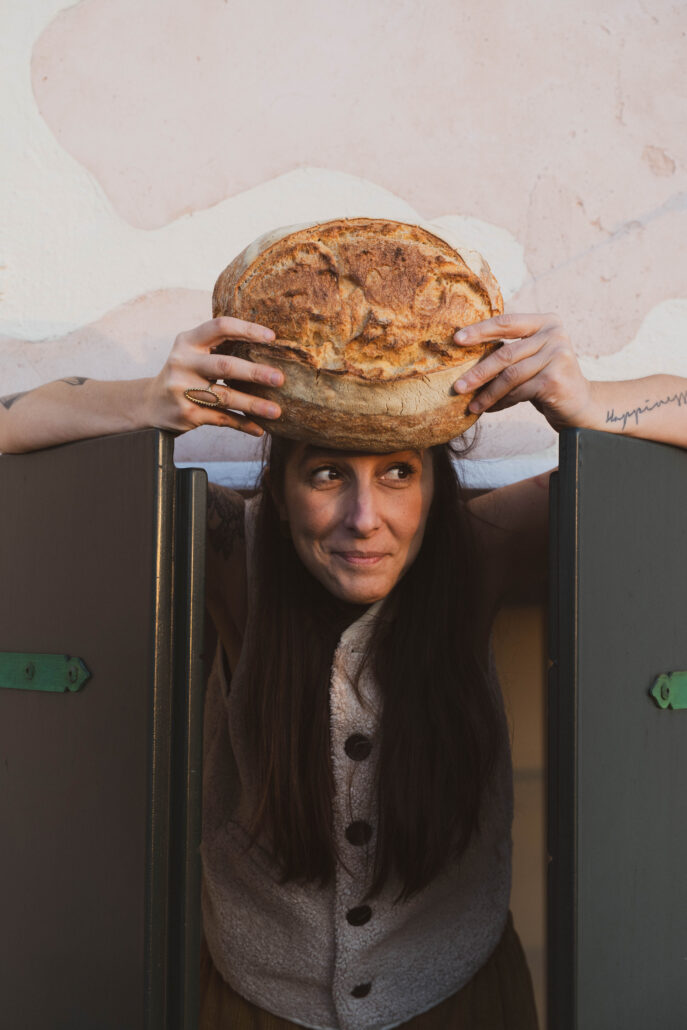
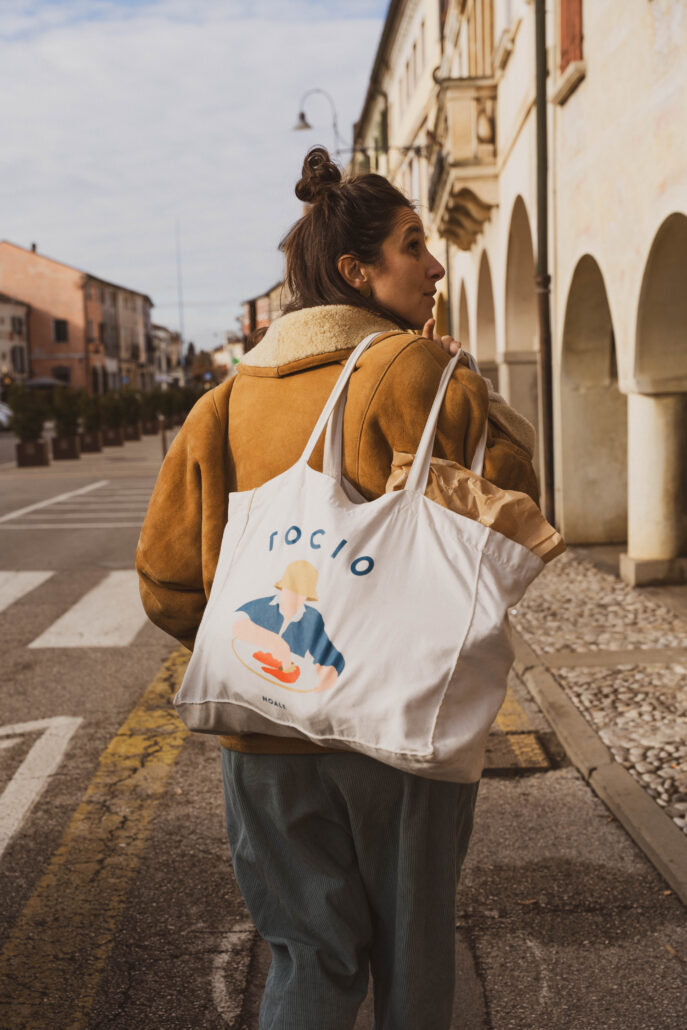
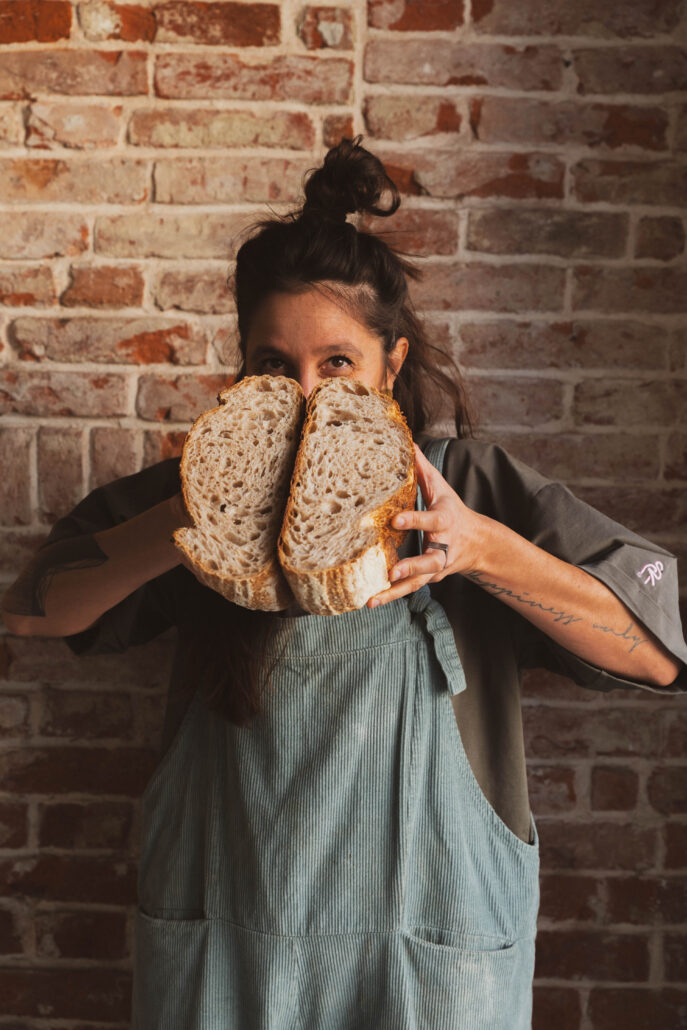
She didn’t add much about what had come before: the narrative urgency was entirely focused on the present and the future. I remember that while she was outlining how her project might evolve – leaping from one subject to another, yet with a clear center – she was gathering lagoon herbs. I didn’t question what that had to do with bread: she had already proven herself to be someone deeply engaged, curious, ready to step into any living space to understand its origins and potential. Soon after, I noticed her tattooed arms, her creatively tied hair, and her deep, steady gaze.
A year and a half later, in November 2023, Tócio Bread opened its doors for the first time in Noale, a small bridge-less and waterless walled town near Venice where, for the record, Giulia was born. Actually, I should correct myself: it wasn’t an opening, not exactly an unveiling, but rather a slow and inexorable merging with Piazza XX Settembre. I’ll explain in a moment. A handful of days earlier, Tócio had been a semi-empty rectangle, inhabited more by ideas than by objects. I remember the mixer, a two-deck oven, and a beautiful green sliding door entrusted with the task of only gently separating the lab from the retail space. There was no bread yet on the shelves, but there were books, wines and craft beers, kombucha, preserves, bean-to-bar chocolate, and specialty coffee. The bare walls were still waiting to make room for posters, paintings, and other creative works that Giulia loves to share, tucking them into frames or tiny recesses. It didn’t take long for that corner – considered by some, for historical reasons, a bit unfortunate – to become an eccentric showcase and a gathering place. “In fact, a place of generativity,” as she puts it.
Those who haven’t been there yet cannot miss it. Outside stands a tripod bearing the words pane vivo e rivoluzione: living bread and revolution. Nearby, there is often a small cluster of people waiting; they talk, nourish themselves by tasting good things, exchange contacts. They make the “piazza”. “And they always add something to Tócio’s soul. Everyone leaves an imprint,” Giulia explains, tirelessly devoted to her place.
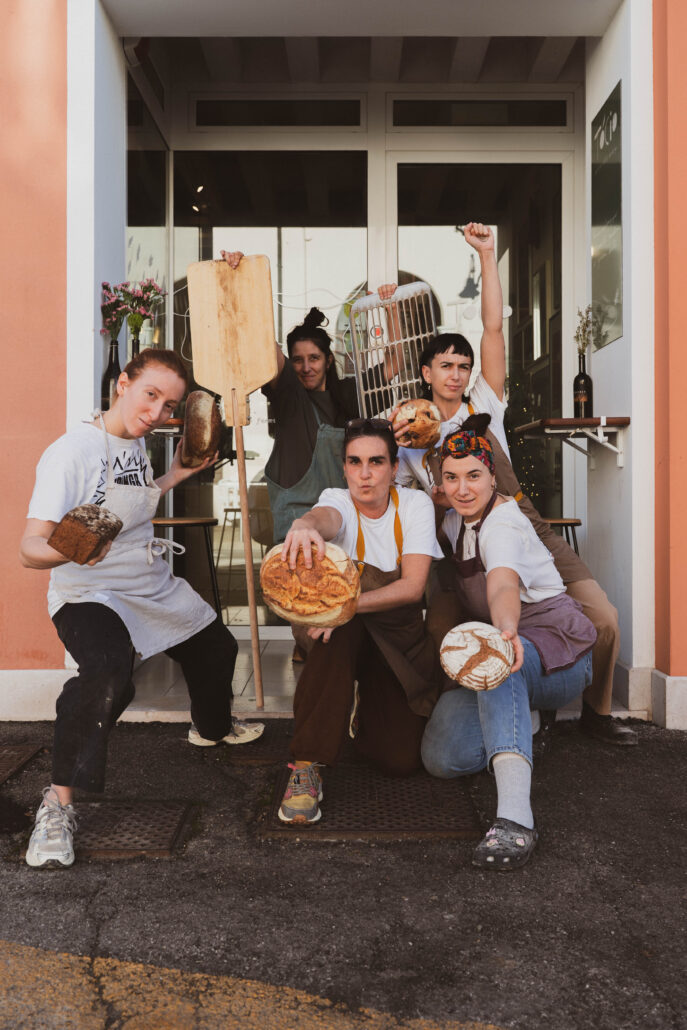
A special energy has radiated from the very first batch of Agricola – the resident bread, suited to every use– at a time when hers was the only voice in the lab. “I thought I would remain alone for a long time. Instead, I had to build a team after just one month, even though I didn’t feel ready to manage one.” While waiting their turn – hoping the sign PANE FINITO! doesn’t appear – one catches glimpses, beyond the counter, of Aurora, Eva, Silvia, Simona, and Patty, their hands moving quickly and knowingly. Yes, they are all women.
“It’s a deliberate coincidence. I don’t make it a gender thing, but undoubtedly, many women embody a nurturing attitude that fits well with this project. They have embraced Tócio as if it were their own. An immense joy! And so… you realise that the weight one person might lift alone can also be lifted by two.”
How was it possible to generate so much enthusiasm around a provincial bakery of just 50 square meters? How did that bread make its way onto the tables of Cipriani?
Dedication to quality, respect for those who produce and transform, and, of course, the goodness of the bread itself are the pillars fixed firmly to the ground. But upstream, so that everything can flow downstream, there is also the ability to communicate without strategy, with naturalness, conveying simple, yet vital concepts.
The dedication to quality, respect for those who produce and transform, and, of course, the goodness of bread are essential pillars.
However, upstream, to arrive downstream, there is also the ability to communicate without strategies, with naturalness, simple yet vital concepts. “Vocabulary is essential when telling the story of food, even when it comes to something that has shaped the history of the world. Mass commerce has violated certain terms, misusing them and creating “casin” (chaos, ed.) – she slips in a Venetian expression whenever she can. “We commit to using the right words, never losing momentum, all the way to the last customer who walks through the door. This is how we give value, create connection, and spread knowledge. Today, the bread community reminds us that revolutions begin from the ground up, and it is through language that we define where and how we intervene.”
Then there are provocations, delivered with purpose, effective even on the laziest minds – like the small sign posted up high that reads: “only the naked is whole.”
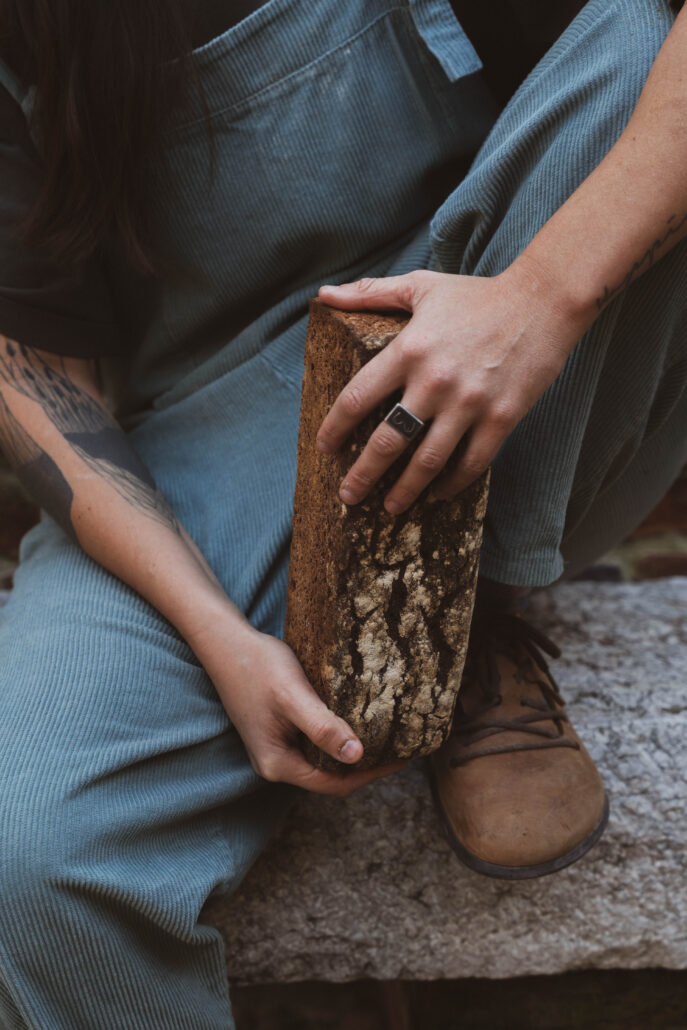
“The concept of wholegrain bread as conveyed by the market has caused damage. A beautiful expression has been tied to the wrong image. Let me explain – without sparing ourselves, not even once – that the flours we use are all wholegrain because they are real flours: unrefined, whole. This is what wholegrain means.” Care is palpable not only in words, written or spoken, but also in gestures, from the way bread is placed into its paper wrapping, to the attentiveness with which a slice of pizza is extended.
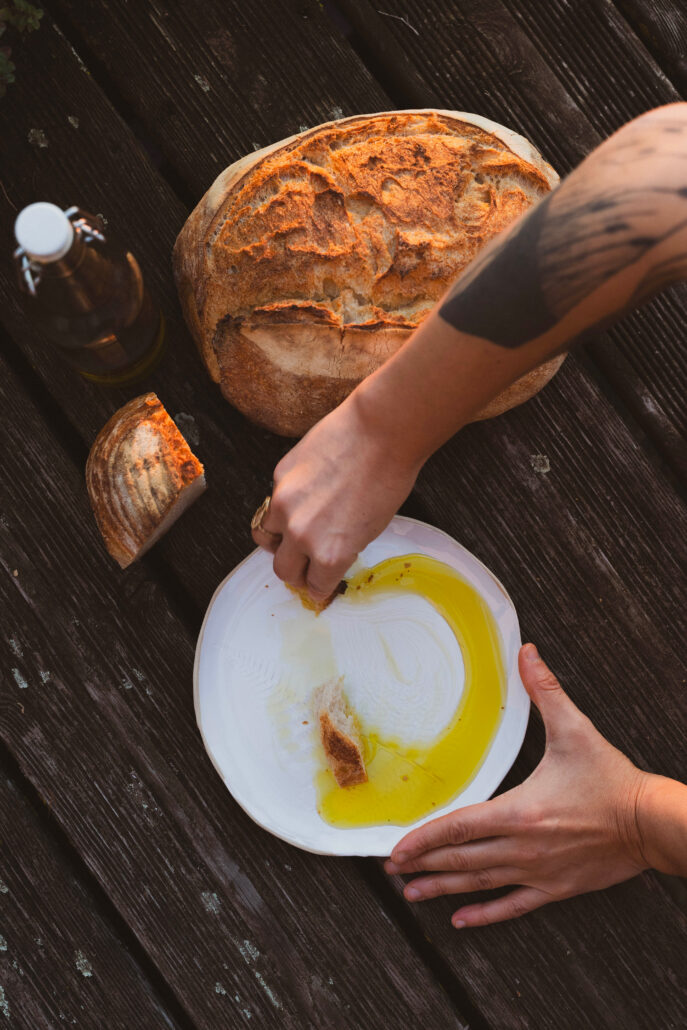
Tócio, we haven’t yet said, is a dialect word that refers to leftover sauce on a plate, meant for sinful enjoyment, to be soaked up with bread. “And so Tócio is a gesture that implies the use of the hand; the hand touches, understands, judges, adjusts, conveys.”
“It all starts there, from physical presence, but also from awareness, dedication, listening, and analysis. It is the same non-method I use to manage the sourdough starter, choosing sensitivity over rigid frameworks.”
As much as Giulia tries to tell me what is on the counter, how the weekly bread menu is structured, she always ends up slipping into something deeper.
“Through bread, I defined myself as a person. There was a moment when I needed to identify myself, to understand who I was. I chose bread, sensing that there was something meaningful within it and around it. So many beautiful offshoots, involving those who have nothing to do with it and those who have everything to do with it. Context always urges us to keep a foot in two shoes, to think first and foremost about economic stability, but only after taking the leap did it become clear to me: if you don’t devote love and diligence to what you believe in, you won’t achieve the result. That’s how I found myself. In bread, I fulfilled my need to care, and at the same time, I found care myself.“
As much as Giulia tries to tell me about what’s on the counter, how the weekly bread menu is structured, she always ends up slipping into talking about a meaning that goes beyond. “Through bread, I have defined myself as a person. There was a moment when I needed to identify myself, to understand who I was. I chose bread sensing that there was something profound, inside and around. Many beautiful ramifications, with those who have nothing to do with it and with those who have everything to do with it. The context always urges us to stand on two feet, to think foremost about economic stability, but it was only after taking the leap that I understood: if you don’t dedicate love and diligence to what you believe in, you won’t achieve the result. That’s how I found myself. I satisfied the need for care in bread and at the same time found care.”
Francesca and Giulia are opening a possible, enduring path, one in which education, sharing, and care become a common good. Boldness, instead, is the means to get there. Far from bread adorned with decorative flourishes. Far from revolutions that cannot be realised. There is only one thing to do: let yourself be irradiated.