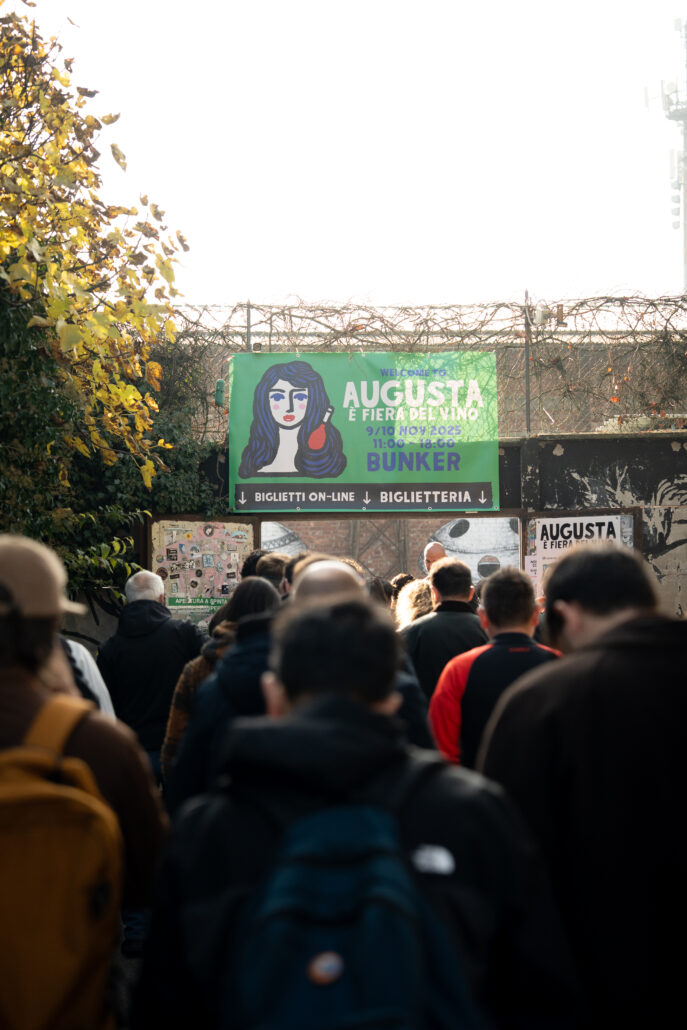
Before Augusta we asked its creator, Piero Crocenzi, what would be missing in this year’s edition. He replied: “We’ll see after the fair.” Now that Augusta 2025 has ended, we can easily say: nothing was missing.
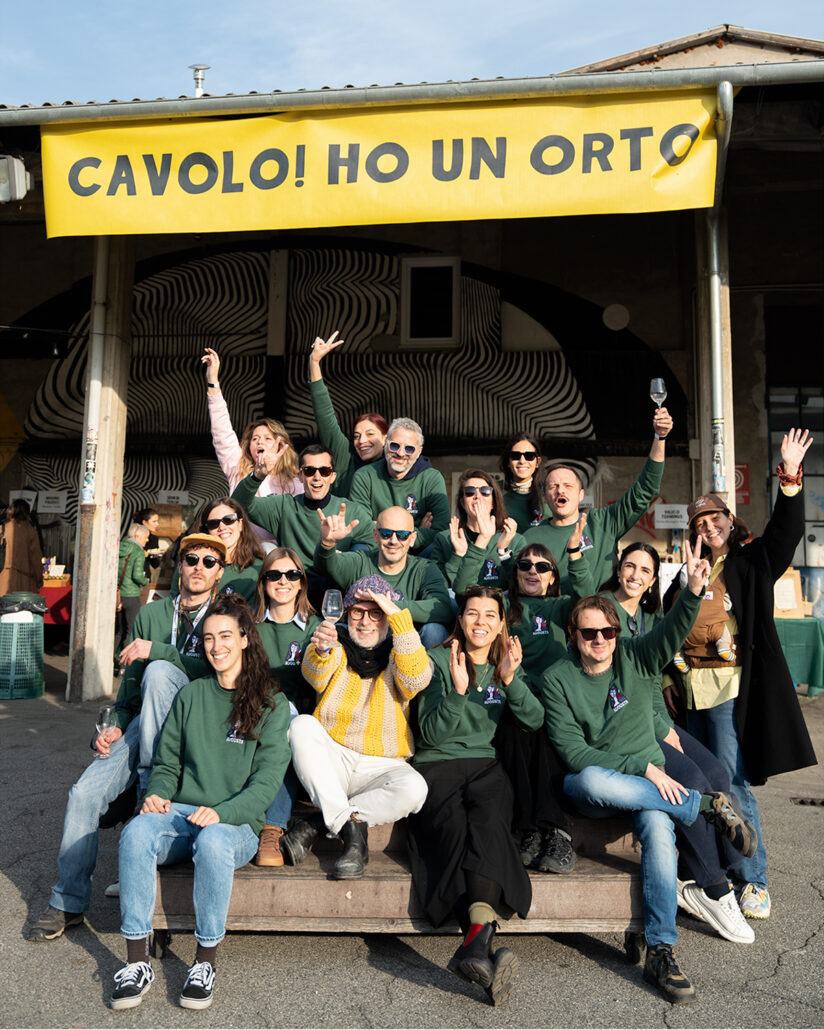
At its third edition, Augusta confirms itself as a fair, festival, and especially a gathering. An event that welcomed 3.500 visitors and 920 industry professionals, capable of blending professionalism and light-heartedness, content and conviviality. Because Augusta is not just a natural wine fair with booths, glasses, and crates being emptied, but also a moment of community, where people recognise each other before the labels. Two days where Turin becomes the capital of a movement that continues to grow, made of winemakers, enthusiasts, hosts, chefs, aficionados, and friends: a diverse audience united by a simple and powerful notion of natural wine as a means for exchange, culture, and connection. It’s a space for dialogue, a platform for interaction even among producers, where discovery and learning happen through direct contact and mutual listening.
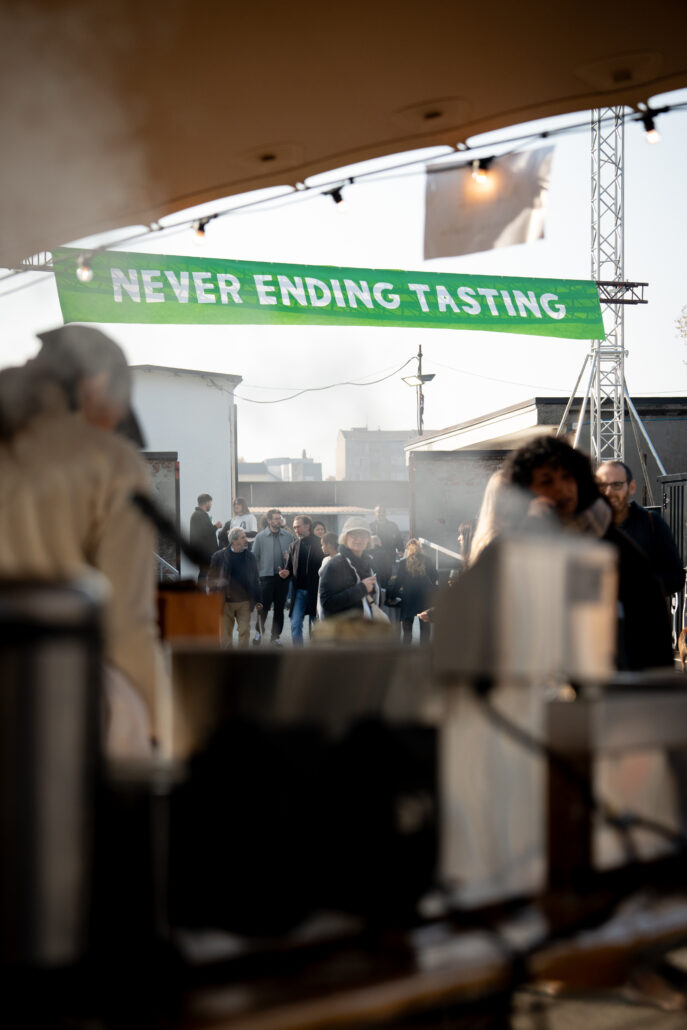
It took place on the 9th and 10th of November at the Bunker in Turin: a former regenerated industrial area, bare and concrete, with rough walls and dim lights, which seems purposely made to host a fair that thrives on authenticity. This ideal setting turned into a true laboratory of knowledge and relationships where professionals, enthusiasts, and the curious coexisted naturally, sharing the same genuine passion that animated every booth and every glass.
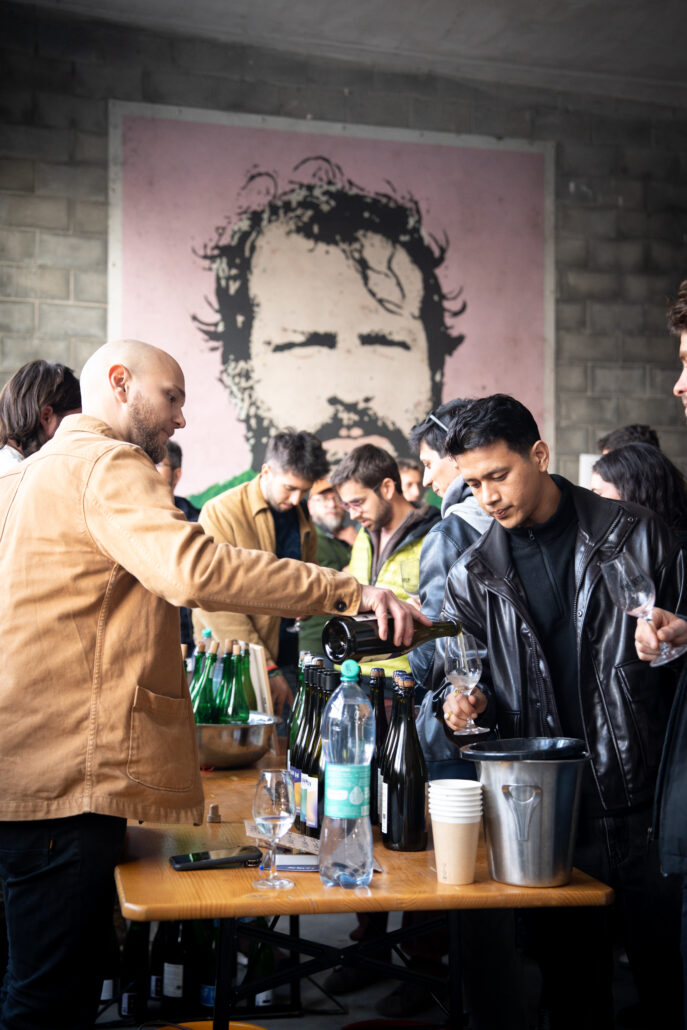
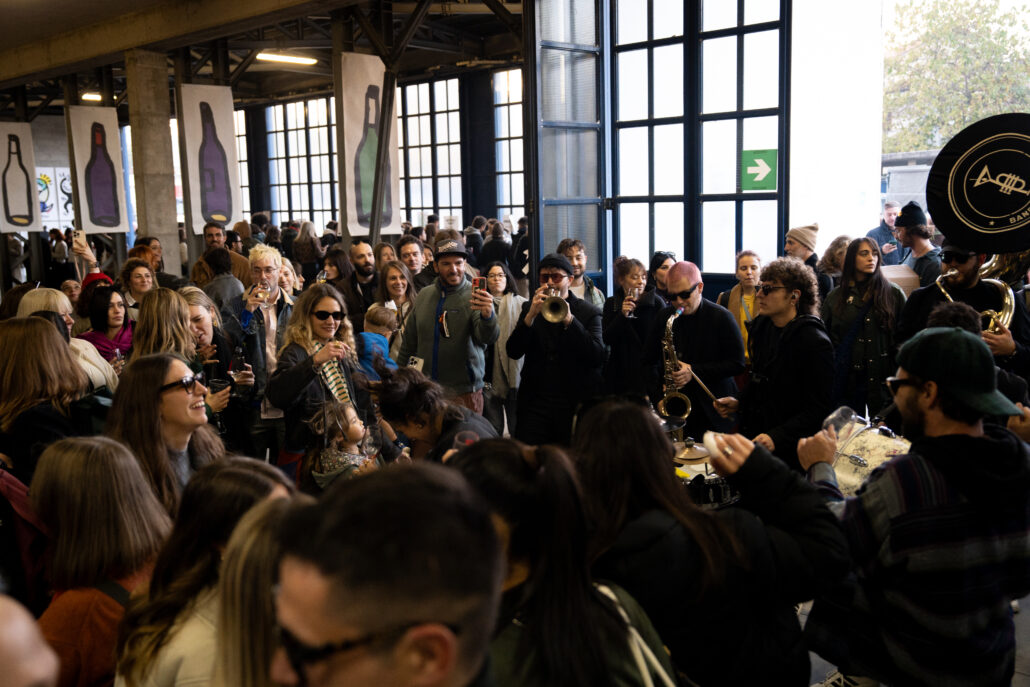
This year Augusta welcomed about 78 wine producers from eight European countries, demonstrating an inclusive approach consistent with the vision they uphold. Not only Italy and France, but also Spain, Switzerland, Germany, Austria, Slovenia, and Hungary. It’s a broad and diverse network, showing how wine has become a common language, capable of transcending geographical and cultural boundaries, uniting different agricultural realities in terms of territory, climate, and vision.
From the milestones of the natural wine movement – those producers who, even before the term existed, stubbornly believed in a different way of making wine, almost anarchic for their time – to the new generations who now embrace their legacy, reinterpreting and advancing it with new tools. As recounted by Herbert Koenig, a winemaker in Styria, in southern Austria on the border with Slovenia: “They paved the dirt road, and now we are fortunate to have a highway to travel on.” This image extends far beyond Austria: it describes the spirit of many of the regions present at the fair, from Piedmont to Alsace, where the work of the pioneers has paved the way for a generation that is conscious, curious, and deeply connected to the land.
There was also Catalonia’s Nuria Renom (Les Canterelles), who fell in love with wine during an Erasmus program in Pisa while studying to become a veterinarian. Then there’s Alsace’s Anaïs Fanti, who transitioned from being a nurse to becoming a winemaker, taking back the vines of her grandmother. And there’s the Franco-German sports duo of Domaine de Bichery in Champagne along with their friends and neighboring stand exhibitors, Talloulah and Hugo from Domaine de Cassiopée in Burgundy, who started their journey at just 25 years old. These are diverse stories united by a common thread: those who choose wine as a form of expression, exploration, and freedom. These are stories that we will share more about soon, in a special column dedicated to Augusta.
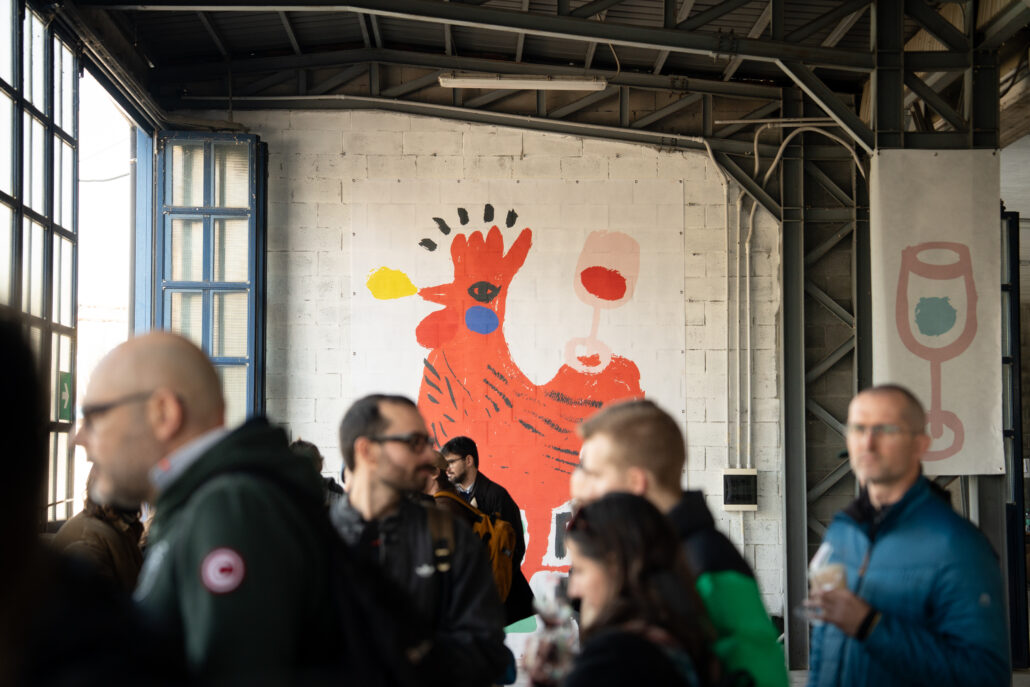
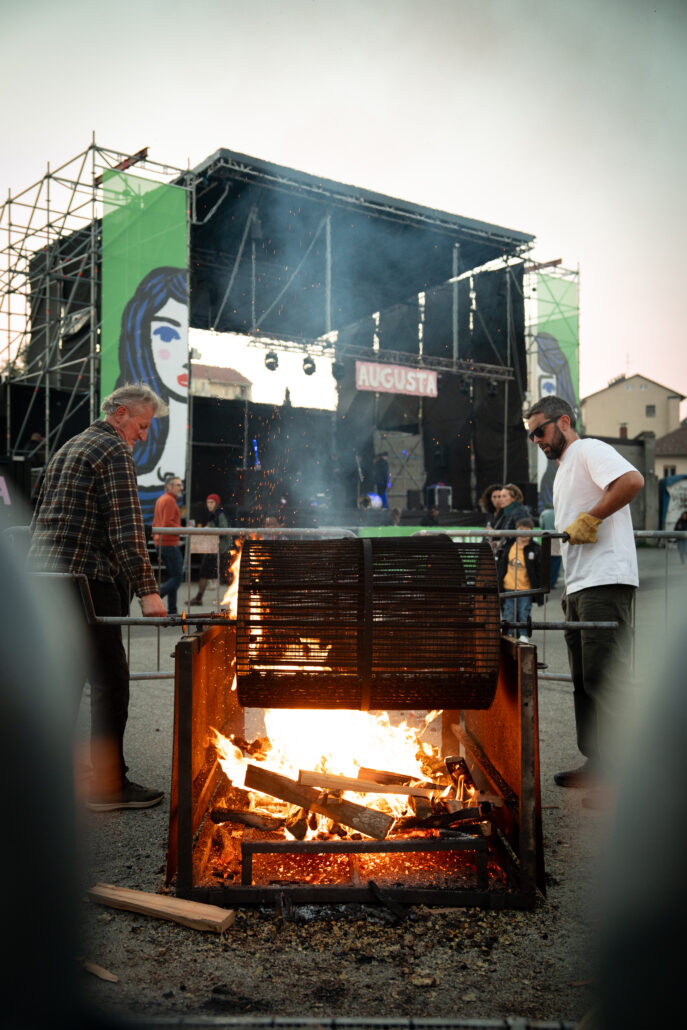
Yet, Augusta doesn’t stop at wine: it expands its horizons with a carefully curated selection of master brewers, ranging from Cantina Errante in Tuscany to Grugg og Makk from Iceland, who bring the same attention to the land and fermentation that drives natural winemakers. In dialogue with them, specialty coffee, non-alcoholic beverages, artisanal chocolate, and two independent bookstores completed a landscape that, while spanning different fields, shares the same attitude: care, respect, and awareness. A clearly antindustrial and artisanal trend, where value lies in the gesture and consistency, whether in a glass, a book, or a sandwich. Furthermore, there was an entire agricultural market area and street food stands, with the presence of relevant names in the Italian gastronomic scene such as Tipografia Alimentare or Reis – mountain cuisine.
Among the most significant moments of the cultural program, the talks provided an insightful and clear view on the contemporary meaning of natural wine. In Sunday’s talk, “The Sense of Wine“, the participants discussed how wine and its communication are perceived by those who produce it: Stefano Pescarmona from Podere Magia and Elio Sandri from Cascina Disa opened up to the public, sharing their stories and uniqueness, moderated by journalist Fabio Pracchia.
A dialogue that brought wine back to its social essence: as a mediator between stories and communities, between work and passion.
In the Monday talk instead, “Out of Wine“, a cross-cutting reflection was opened: what do wine, beer, coffee, and chocolate have in common? Speaking with Gabriela Montañez from Santaromero Coffee (a Turin-based Colombian specialty coffee roaster), Stefano Botto from Cantina Errante, and Manlio La Rotonda from Cacao Disidente (a Colombian chocolate brand that selects excellent local raw materials by working closely with producers), and Bouche Kombucha (a Berlin-based reality that transformed an art gallery into an urban fermentation space), the common ground that unites these worlds with natural wine principles emerged. The discussion showed how respect for raw materials, transparency, and craftsmanship can bring together seemingly distant realities. The common idea is to go back to the origin of the product, before its industrial transformation, and to restore cultural as well as economic dignity to it.
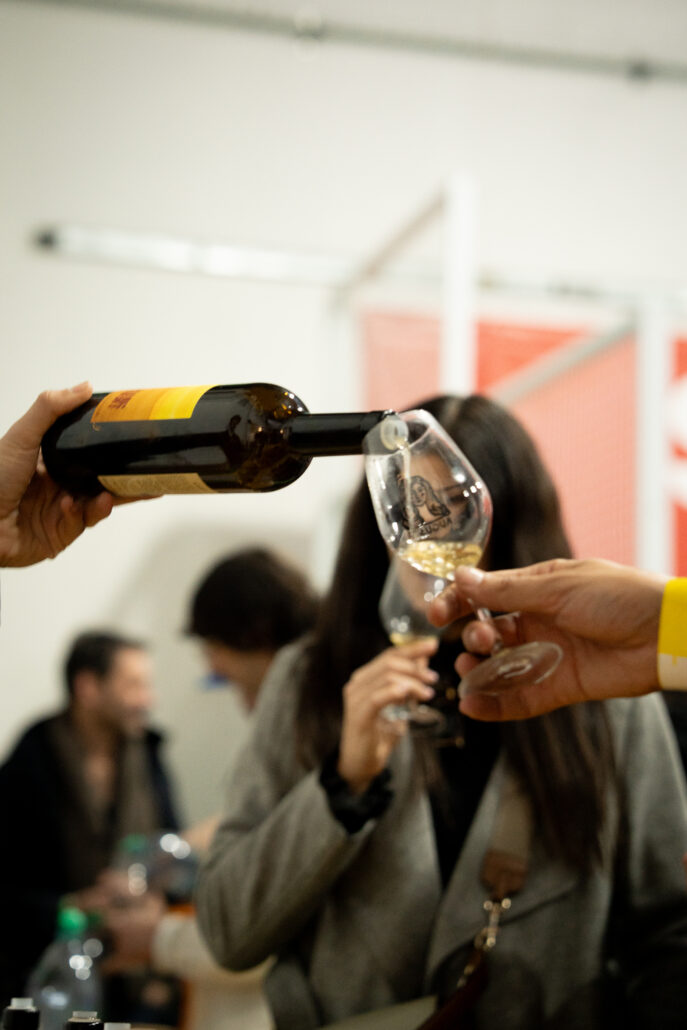
These conversations, like the tastings, have made it clear that Augusta is more than just a fair: it is a constantly evolving network, where wine becomes a vehicle for ideas, discussion, and belonging. But also where laughter, jokes, food, and dancing, all come together.
The fair’s manifesto states: “Natural wine is about relationship, care, and trust over time”. In these two days in Turin, this philosophy translated into a vibrant, tangible, shared experience.