In recent weeks, the allegations of abuse at Noma have dominated the global conversation around gastronomy, and beyond. This is not just about the crisis of an iconic restaurant, but about the human and professional collapse of a figure who helped shape contemporary cuisine. René Redzepi bears clear responsibility: the accusations bring renewed attention to a model that had long been showing signs of strain. In fact, this is not the first time Noma has come under scrutiny. The controversy around its internship system had already raised structural concerns, prompting Redzepi to acknowledge the need for change and to begin implementing reforms in the years that followed.
And yet, what is emerging now points to something more fundamental: not a series of isolated incidents, but a system that is structurally broken. A reality that goes beyond a single restaurant and speaks to an entire model of fine dining, which could, and should, become the starting point for real change. In fact, in environments like this, shaped by harsh and often toxic dynamics, the problem rarely lies with just one individual. Removing a single person is not enough, in itself, to trigger meaningful cultural change. And this is where things become more complex.
The case that ultimately led Redzepi to step down was both sparked and amplified by Jason Ignacio White, a former Noma employee who quickly positioned himself as a leading voice in the public conversation around abuse in the restaurant.
He rapidly became a point of reference for both the media and the wider public, without any real scrutiny of his own background.
And yet, some accounts are beginning to paint a far more complex picture than the one that has emerged so far.
Our editorial team received testimony from a professional who worked directly with White in 2021 and has requested to remain anonymous out of fear of repercussions. The account we present here does not diminish the urgency of speaking out about abuse – if anything, it reinforces it – shedding light on dynamics that also involve the very person now acting as the accuser.
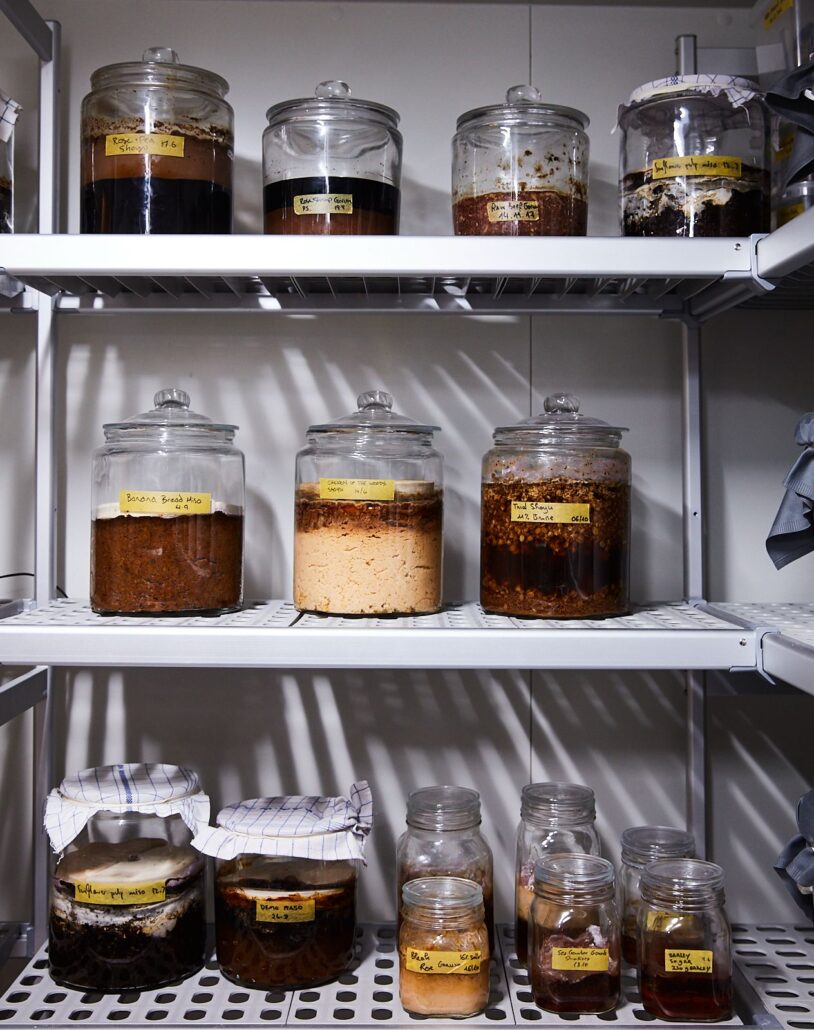
After arriving in Copenhagen to continue his university studies, the young professional secures a three-month internship in Noma’s Fermentation Lab – a dream come true. It is a delicate moment: the restaurant is closed due to the pandemic, but work continues through research & development, and production for the POPL project. At the end of the internship, he is offered a full-time position and begins working directly under Jason Ignacio White, alongside a rotating group of interns. The lab is a high-intensity environment, with dozens of fermentations to manage – miso, koji, garum, kombucha – and the days are long and demanding.
As reopening approaches, mounting pressure gives way to growing instability, particularly from White, who was leading the lab at the time. “He wanted to be seen as a visionary, brought in by René to push the lab into a new phase of pure innovation. He seemed to feel entitled to push the team beyond practical work: not just producing, but ‘connecting’ with the microorganisms, developing an intuitive relationship with what we were doing. Over time, under pressure, this almost transcendental vision created a lot of confusion,” the witness recalls.
In the lab – a roughly 40-square-meter space shared by a small team – tension becomes constant, fuelled by a pervasive sense of instability. Outbursts and reprimands are directed at the team over minor details, “like a fingerprint on a stainless-steel surface or a slight variation in the colour of a kombucha.” There is no clear operational structure: no shared routines, no real attempt at organization. Management appears basic, almost absent, while communication shifts to informal channels like Instagram, entirely inadequate for the context.
The core issue is not the demanding workload, but the nature of leadership. According to the testimony, the emotional instability of the person in charge becomes a defining factor, with the team forced to constantly adapt to his shifting moods. There are also references to White’s past which – according to the account – he openly shared himself, including a difficult personal history and mentions of substance use, though details remain unclear and unverified.
White’s behaviour is erratic: brief moments of enthusiasm quickly give way to harsh, dismantling criticism of the very same work. Interns are frequently reprimanded and publicly humiliated, often to the point of tears. These episodes repeat over time, culminating in the abrupt dismissal of one intern over a minor mistake. The impact is significant: a constant state of anxiety sets in, in some cases escalating into what can only be described as real paranoia.
During that period, the witness requests a meeting with management. He speaks with the Managing Director and describes a widespread situation: people in tears, colleagues in a constant state of anxiety, even physical tremors. His request is simply to be moved to another area of the restaurant. The initial reaction is one of disbelief. From the outside, White does not appear problematic. And it is precisely this gap – the witness explains – that makes the situation even harder to recognize and address: a kind of dual persona, largely invisible to those outside the lab. No transfer is offered. Instead, he is asked to wait and address the issue internally, with the conversation to be revisited at a later stage.
When the young professional tells White that he has spoken to management, the reaction is immediate and aggressive: insults, threats, and personal attacks. “You’re a quitter”; “You’ll never get anywhere in your career”; “Don’t ever say hello to me if you see me on the street.” At that point, the decision becomes inevitable: he leaves the lab. A forced choice that pushes him to walk away from a job he loved, not because of the work itself, but because the environment had become unbearable. A few days later, he receives a direct call from René Redzepi, who personally apologizes for what happened and offers support. An apology from White follows, but it does not translate into any meaningful attempt at repair. According to what emerges, White remains in his position, continuing to lead the lab for roughly another year.
This account is based on a single testimony, but it does not appear to be an isolated case. Other voices have already begun to emerge, driven by the need to present a version of White that differs from the one portrayed in the media so far. On social media, several public statements point in the same direction. Instagram screenshots shared online and attributed to White’s ex-wife read: “I would never discount anyone’s experience and I trust that Noma has indeed made all the changes they claim – as well as witnessed them myself. What I won’t stand for is an OFFENDER acting like a victim to gain relevance…”. In another story she adds: “You guys, please please consider the source when it comes to Jason and the lies he is spewing. He has ZERO right to attempt this HERO narrative about abusers. HE has burned EVERY bridge extended to him. HE is a user.”
Paul Leopold Kaufmann, another former Noma employee, writes in an Instagram post: “During my internship Jason was one of the biggest sources of intimidation I witnessed…”. In a private exchange with our witness, he adds: “So you also went through the craziness of working with Jason White…”. Taken together, these elements help outline a more layered picture and invite a more cautious and in-depth reading of the situation. There is also a detail that adds another point of reflection: several of White’s former collaborators – including the witness – have reportedly been blocked by him on Instagram for years. A coincidence that is difficult to ignore.
What do we make of all this? The goal is not to downplay the seriousness of the allegations surrounding Noma, nor to absolve those who bear responsibility. Rather, it is to recognize the systemic nature of the problem – and that the same culture may have been embodied, in different ways, by multiple actors. “Like a rotten genetic trait passed down from generation to generation – one that, to be truly confronted, requires a deep process of individual awareness,” the witness adds.
The question then becomes unavoidable: is it possible to position oneself as a voice on abuse without first interrogating one’s own path?
If White is now seeking recognition and accountability for the abuse, is he equally prepared to acknowledge – and take responsibility for – the harm he may have caused himself?
Within this broader picture, a final, less obvious but important element emerges: the position of the narrator. The testimony collected does not stem from a desire to accuse, but from the need to bring forward a part of the story that has so far remained untold. In the words of the person who lived through this experience, there is even a degree of empathy: an awareness that certain behaviours do not emerge in a vacuum but take shape over time, shaped by both a turbulent personal history and a system that, for years, has normalized extreme dynamics without providing the tools to process or manage them. A system that, even in progressive contexts like Denmark, still shows clear limitations.
Ultimately, two core issues emerge. On one side, the speed at which media narratives construct partial truths, amplifying certain voices without subjecting them to real scrutiny. On the other, a structural lack of leadership in the restaurant industry – a field where technical excellence is often exceptionally high, while managerial and emotional maturity remain fragile, if not entirely absent.
If the goal is genuine change, identifying a single culprit is not enough. The system itself must be examined in its entirety and those who claim to expose it – White included – must be held to the same standard.