This portfolio is a preview the upcoming book Fome by Tommaso Protti, to be published in 2026 by Vandenberg Edizioni.
Brazil is a country defined by its paradoxes: the world’s second-largest food exporter, yet home to millions of people living with hunger or food insecurity. As Josué de Castro argued in his seminal Geografia da Fome (1946), hunger in Brazil is structural, rooted in inequality, land concentration, and deep social divides. It is in this persisting context that Fome (Portuguese for hunger) emerges, the project of Italian photojournalist Tommaso Protti, who spent more than a decade traveling across the country, seeking to turn its social, cultural, and environmental contradictions into images.
As 2026 approaches, marking the eightieth anniversary of De Castro’s Geografia da Fome and Brazil’s recent removal from the World Hunger Map, Protti is preparing to release a book that takes us through three vast regions: the Northeast, the Amazon, and the Center-South. Between Bahia and the arid Sertão of Pernambuco, Protti begins this journey with the Afro-Brazilian rituals of the Iemanjá festival, bustling street markets, and food offerings before shifting to the stark reality of drought, abandoned carcasses, and families surviving on a single meal a day. Rural encampments and urban peripheries, in Recife and Maceió, reveal struggles for housing and food.
Protti captures the stories of people who welcomed him into their homes, sharing their words and the intimacy of daily life. The result is a testament to those encounters. Rather than portraying hunger as a problem confined to Brazil, the project transcends borders, inviting us to think critically about global food systems. As Carlo Petrini, founder of Slow Food, notes in his preface, “resources are often not used for the benefit of Brazilians, but instead destined for export,”
a warning that hunger is a symptom of the agro-export model that binds Brazil to the world.
In the so-called breadbasket of the world, Protti narrates the Amazon through food: families in Northen Pará subsist on a handful of flour amid the global açaí boom, further south in the state, MST (Landless Workers’ Movement) occupations demand agrarian reform, while in Mato Grosso, the Kayapó people protest against agribusiness railroads. He composes a mosaic of resilience and devastation, where survival collides with exploitation.
The Center-South reflects the urban face of the Brazilian paradox. São Paulo and Rio de Janeiro show streets where people experiencing homelessness sleep, families survive on instant noodles and ultra-processed foods, children grow up on cookies and chips, while just nearby, white diners linger over Michelin-starred plates. It exposes what is too often ignored: hunger has color and gender, striking hardest at households led by Black women, a reflection of historical inequalities that cut across urban and rural areas alike. In the countryside of Mato Grosso do Sul lies perhaps the most brutal tragedy: the Kaiowá Guarani people, confined between endless soybean and sugarcane plantations, are victims of violence and chronic malnutrition that still claims children’s lives today.
Together, these realities form a portrait that is at once a denunciation and a warning. The photos, taken during the peak of the hunger crisis between 2021 and 2023 — when 125 million Brazilians were affected by some degree of food insecurity — depict a Brazil we do not want to return to, but which remains the lived reality of millions in 2025. As Brazilian journalist Juliana Faddul writes in her essay for this book, “it is as if all of Italy and Germany had nothing to eat.” Brazil may have left the Hunger Map, but these images remind us that such an achievement is fragile, sustained only through continuous struggle.
Fome doesn’t refer only to the absence of food, but to desire: the life that persists, that celebrates, that resists, reveals a longing for justice and dignity. The book lays it bare, compelling us to look at Brazil beyond clichés of exoticism or economic growth, as a mirror of global inequality and the failures of our food systems. More than a warning, it is an invitation to join a struggle that concerns us all.
Captions
(in order of appearance)
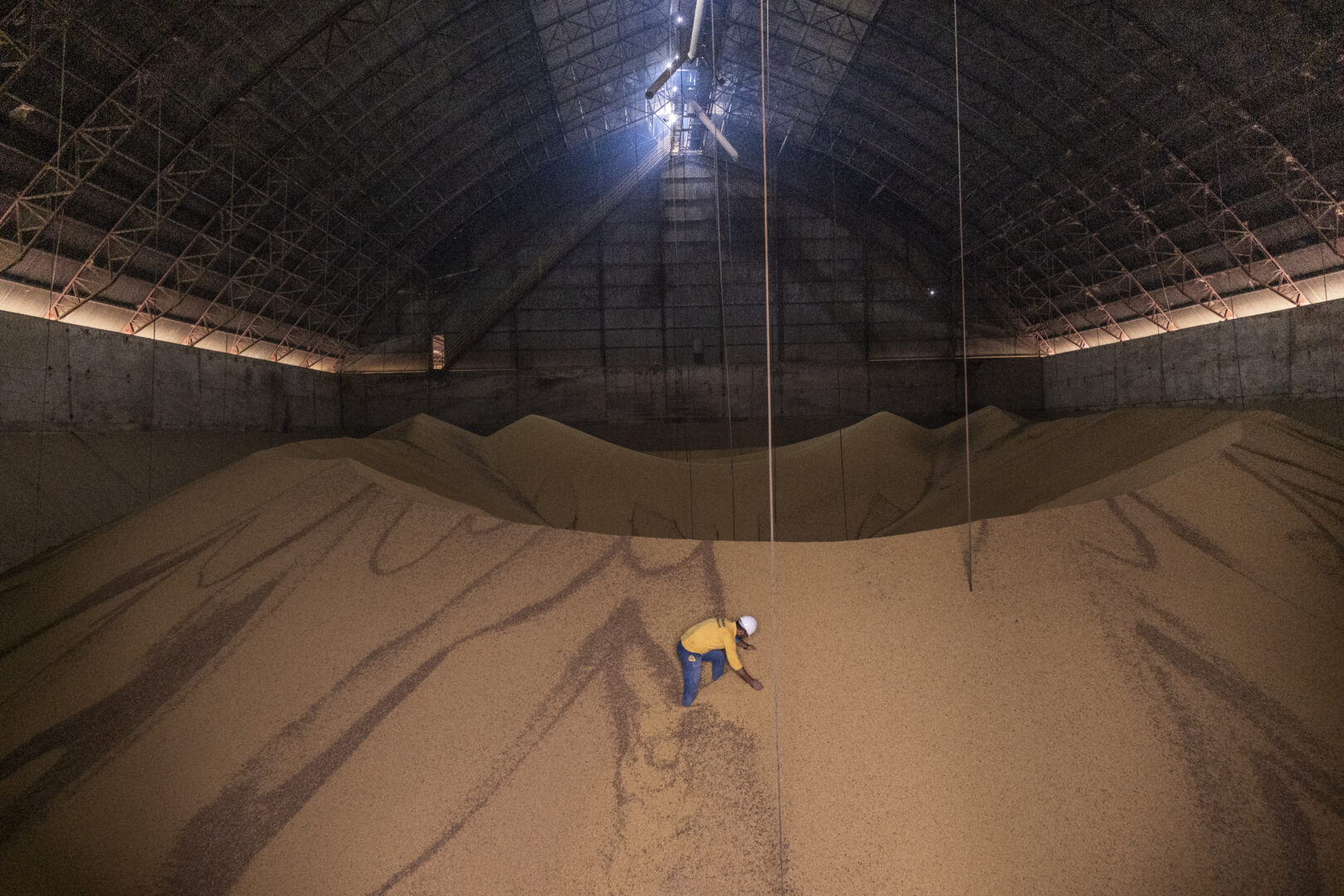
SINOP, MATO GROSSO, February 2022: An employee works at a soybean storage facility owned by Cooavil, an agrifood cooperative in Sinop. Brazil is a leading exporter of soy, livestock, and coffee and aims to expand its dominant position in other commodity markets.
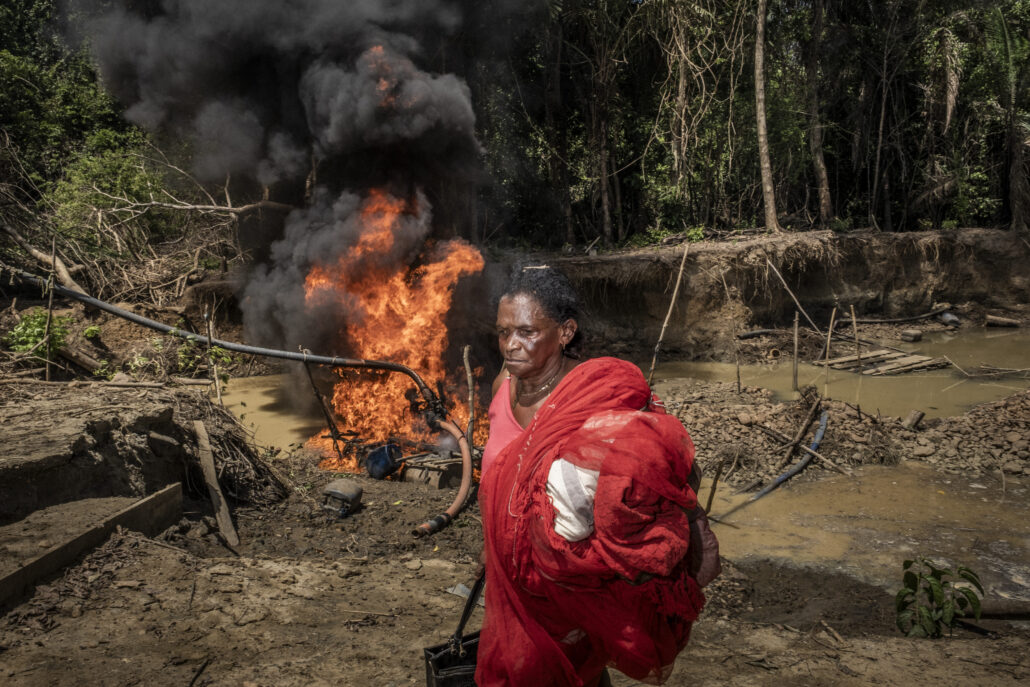
YANOMAMI INDIGENOUS TERRITORY, RORAIMA, December 2023: A cook from an illegal gold mine in the Yanomami Indigenous Reserve walks beside a pump set on fire by Brazilian special forces during an operation to drive out miners and dismantle their equipment. Found in the jungle, the woman stated that she accepted the job, attracted by the higher salary, to escape the economic crisis in the city.
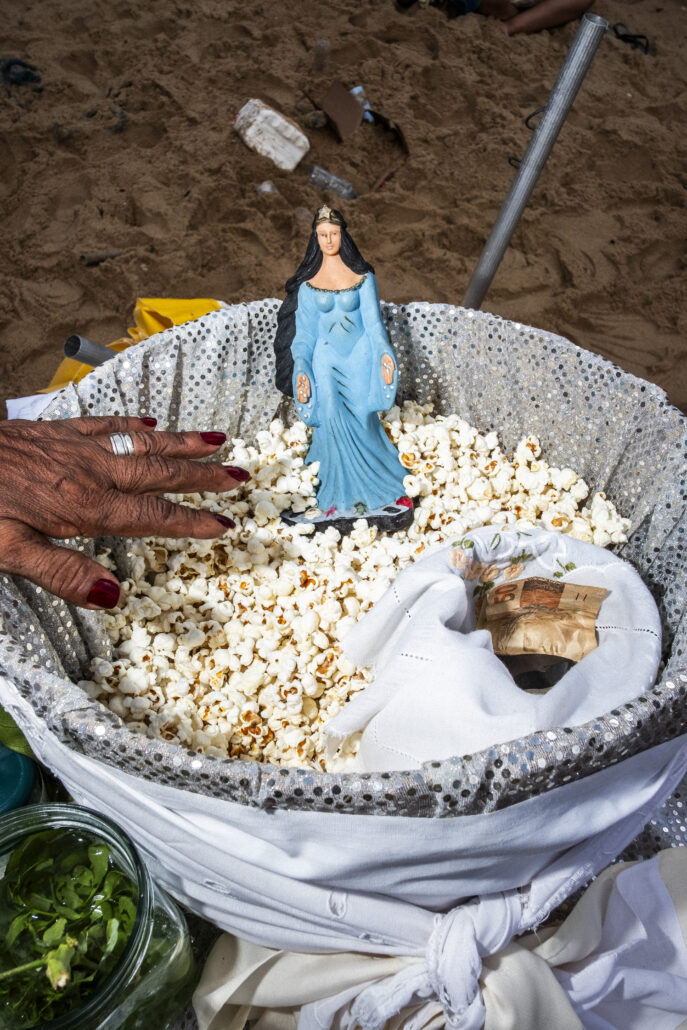
SALVADOR, BAHIA, February 2023: Popcorn and a statue of the Virgin Mary are left as an offering on Rio Vermelho beach during the celebrations of Iemanjá.
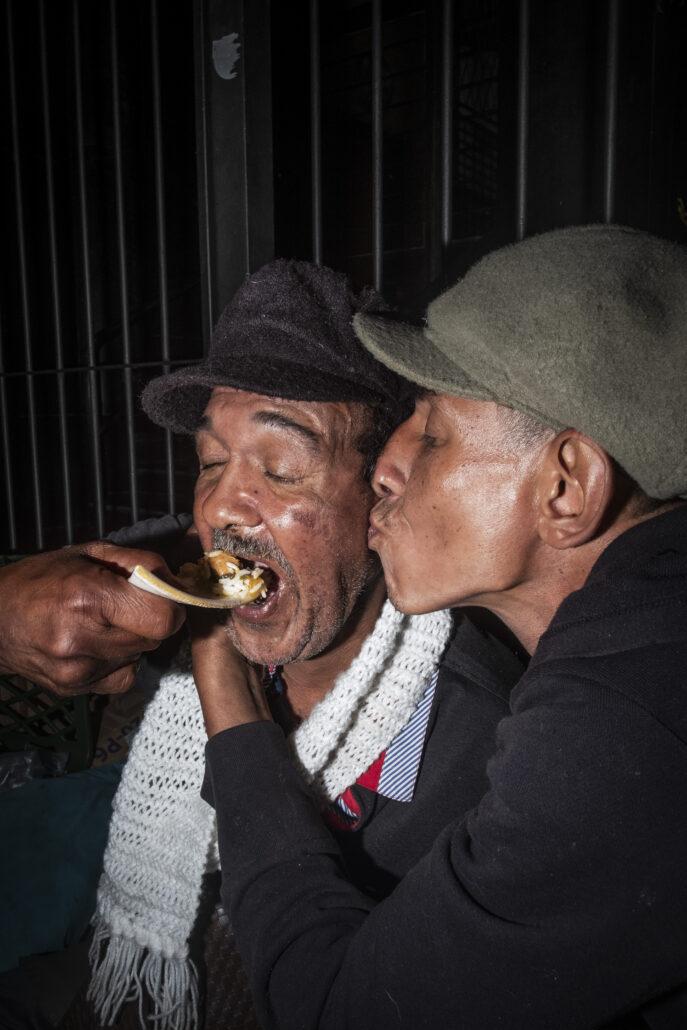
SÃO PAULO, SÃO PAULO, May 2023: Two friends in a situation of homelessness share a laugh during a meal offered by volunteers in downtown São Paulo.