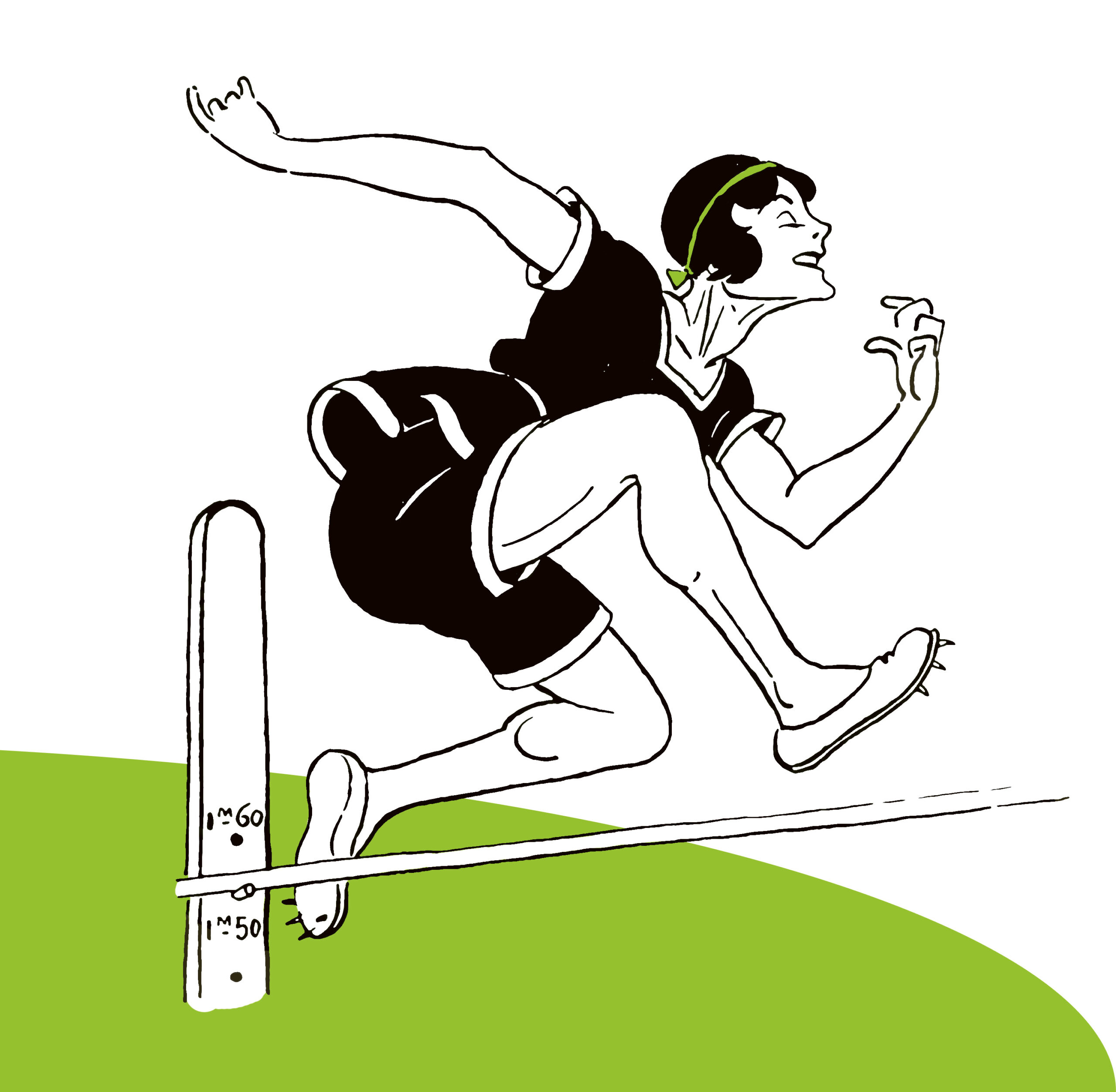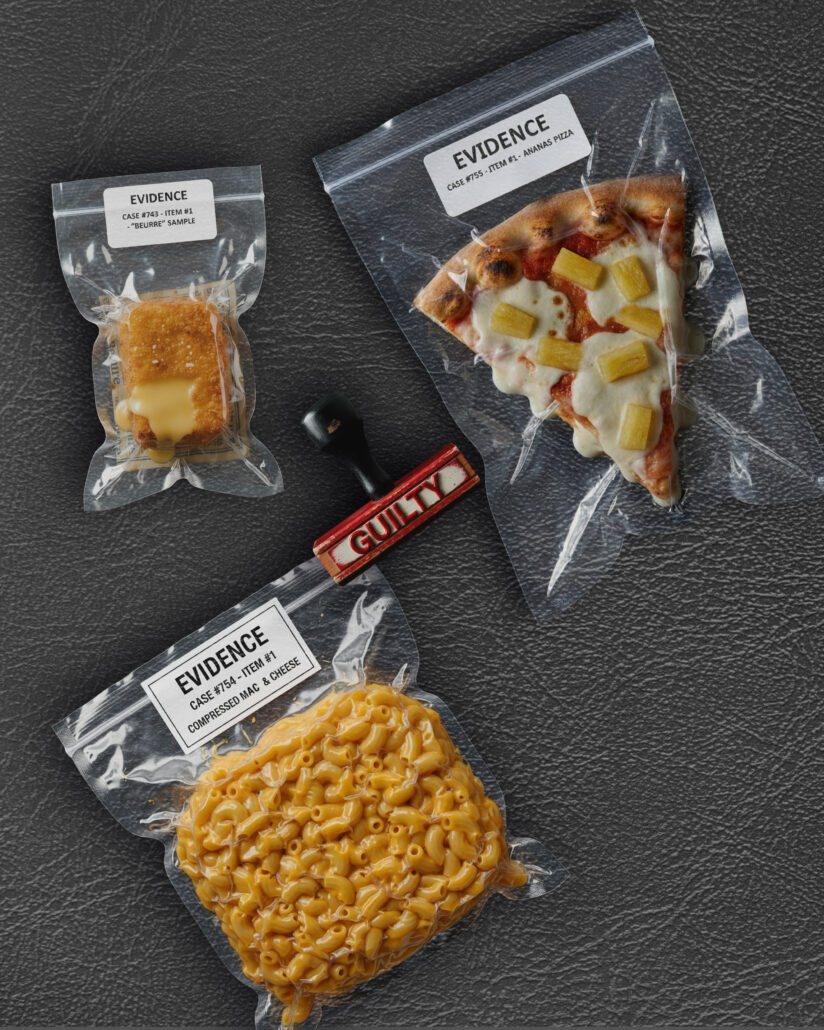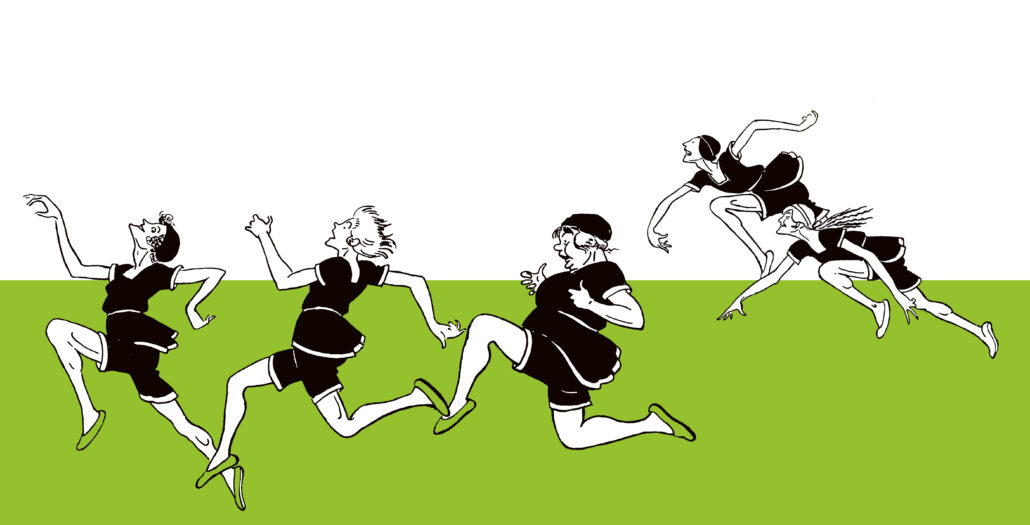
We often think of athletes as demigods, capable of lifting enormous weights or running one hundred metres in the blink of an eye. Yet movement is as fundamental to life as nourishment itself. “If you have a body, you are an athlete,” said Bill Bowerman (Nike co-founder). It is a bit like saying that we are all cooks because we eat; of course, that is not entirely true, but there is a grain of truth in it. We become athletes the moment we understand that athleticism is, above all, a state of mind rather than a matter of physical ability. Viewed this way, cooking shares the same athletic dimension. In fact, cooking is a team sport; every service is a match.
January 2026. Instagram is its usual minefield of distractions. Then an apparently harmless post manages to stop the endless scroll. It is not breaking news, but a reflection on the campaign Nike launched in September 2025. The post explores the brand’s renewed perspective, revisiting the legendary JUST DO IT slogan from 1988 through a lens designed for today’s generation. I watch the film: a slow-motion montage featuring a hall of fame of multi-sport champions captured at the very limits of their effort. The voice-over belongs to Tyler, the Creator, the American rapper, producer and designer, deep, slightly raspy and unmistakably sharp. The soundtrack is carefully crafted to convey pressure, focus and adrenaline, building towards an emotional crescendo. The rhythm is driven by a series of introspective questions. It begins with “Why do it?” Why make life harder for yourself? Why take the risk? With so many ways to fail, why dare at all? You can give everything you have and still lose. Then comes the final question: “What if you don’t?”
Only then does the iconic tagline appear: JUST DO IT. Not spoken aloud, but flashed across the screen in bold Valentino red. A brief moment of silence. The soundtrack reaches its climax, followed by a faint, echoing laugh; equal parts satisfied and devilish.
Nike’s new narrative suggests that sport extends far beyond performance alone. It is a state of mind, an attitude that can exist independently of physical movement: the decision to try, the determination to keep going when things become difficult. It is no coincidence that Pierre de Coubertin, widely regarded as the father of the modern Olympic Games, believed that the important thing was not to win, but to take part. The phrase has been worn thin by decades of motivational locker-room speeches, yet it remains remarkably powerful when taken seriously. To participate means showing up. It means accepting exposure to judgement, mistakes and, above all, the possibility of failure.
Sport teaches us that failing does not make us failures.
It is a question of identity: you are not your victory, but neither are you your defeat. You can finish last and still retain your dignity, provided there is respect for your opponent. Because a true athlete understands that the person standing opposite is not an enemy to be destroyed, but the very reason the contest exists. Without someone or something against which to measure ourselves, there can be no competition.
For years, the world of chefs and professional kitchens has been portrayed as the very opposite of sport. On one side, endless nights, cigarettes, alcohol, excess and a belief that talent matters more than sleep. On the other, a culture built around performance, controlled nutrition, recovery, physiotherapy and training. Yet a professional kitchen is a high-pressure environment founded on discipline and precision, much like elite sport.
Chef Davide Oldani captured this idea perfectly in an interview with the Italian newspaper la Repubblica ahead of the Paris 2024 Olympic Games. At the time, he was serving as Sport & Food Ambassador for the Italian National Olympic Committee, helping to develop the special menus prepared for athletes and guests at Casa Italia:
“Cooking is a team game and it is comparable to my first sport, football, which taught me to share almost everything. That’s why I feel comfortable. The secret is sharing, unity.”
Very similar statements with different nuances can be found online in interviews with Thai chef Tam Chudaree Debhakam, chef of the restaurant Baan Tepa in Bangkok:
“One thing I love about cooking is seeing people working together. Being in a kitchen is like playing a team sport, my passion since I was a child. In basketball or football there is pressure and a shared goal. In the kitchen it is fun in the same way. There is much more than just cooking.”
Of course, it would be naïve to paint too noble a picture. Both kitchens and sports can be places of frustration, worlds shaped by toxic hierarchies, questionable narratives around sacrifice, and cultures of performance that often end up consuming the very people they are meant to elevate.
Yet there is something strikingly similar about a kitchen moments before service and a dressing room before a match. Everyone knows exactly what they have to do, and everyone depends on everyone else. A brigade is not simply a group of talented cooks sharing the same stoves, just as a team is not merely a collection of gifted athletes wearing the same shirt. They are living systems held together by a practical, unsentimental form of trust: you do not trust your teammate because you are fond of them, but because you know they will be there when the system needs them. It is a constant rebuttal of the myth of the self-made individual. People must be in tune with one another, like members of an orchestra. No one wins alone, because even the most individual act is supported by a wider network. Some prepare, some pass the ball, some keep the rhythm when others lose it. Talent and relationships become forms of collective intelligence that work only when all the parts fit together.
To quote Johan Cruijff, the Dutch football legend:
“Technique is not about being able to juggle a ball a thousand times. Anyone can learn to do that with enough practice and then go and work in a circus. Technique is passing the ball with a single touch, at the right speed, onto the right foot of your teammate.”
Sport and cooking share the same obsession with timing. Timing is not simply about time itself; it is about recognising the precise moment when the right action can make all the difference. A pass played half a second too early is useless; half a second too late and the opportunity is gone. The same applies in the kitchen: leave a poached egg in the water for a minute too long and it becomes hard-boiled, ruining a plate of eggs Benedict. Both also teach another lesson: patience. No meaningful result arrives instantly. Sport is scandalously slow. It requires repetition, correction, waiting, failing and starting again. There is no shortcut to building strength, just as there is no way to become skilled without first accepting that you will be awkward, inexperienced and often unsuccessful. The same applies in the kitchen. No app can teach you to tell whether the water for your pasta is perfectly salted simply by catching the scent of the steam.
This is because both sport and cooking are hybrid disciplines. They work through the body to reach the mind and, in turn, through the mind to shape the body. In both cases, however unromantic it may sound, the body learns before the mind does. You can study a recipe and memorise a game plan, but until that knowledge is embodied, it remains little more than an idea. Mise en place is not simply about preparing ingredients; it is a form of mental rehearsal, ensuring that everything will be exactly where it needs to be when there is no longer time to look for it. Once service begins, once the game is underway, overthinking becomes a dangerous luxury. Action must come before analysis. Training exists to reduce the number of decisions that need to be made in the moment. Yet the body is not merely a machine built for performance, nor a tool to be endlessly optimised. It is our first teammate.
And when it comes to the body, sport and cooking are united by the same sweat. Both worlds depend on a form of dedication that can hover somewhere between fulfilment and self-destruction, depending on how much room is left for life beyond performance. For decades, we have treated both the athlete’s body and the chef’s body as expendable tools: as long as they held up, everything was fine; if they broke down, it was considered a personal failure rather than a flaw in the system. Yet the tide is beginning to turn, and the story of Alysa Liu – gold medallist in figure skating at the Milano Cortina 2026 Winter Olympics – speaks of a new alliance between athletes and their bodies. Liu first came to prominence in 2019, when she became the youngest ever US national champion at just thirteen years old. Three years later, however, she decided to walk away from a life that had become unsustainable.
She was crushed by psychological pressure and by the relentless demand to remain as thin as possible, a mindset that had pushed her towards disordered eating. She could no longer accept the idea that discipline had to come at the expense of her wellbeing. After reclaiming her adolescence at eighteen, she returned to the ice. But this time she did so on her own terms: competing when she felt like competing, skating to the music she loved, and wearing what she wanted to wear. Among those conditions, one was non-negotiable: the freedom to eat what she wanted. For Liu, food became a central part of her rebellion; the means through which she could finally become a free and happy athlete.
Not every high-performing body conforms to our dominant idea of physical perfection. Some athletic bodies challenge our automatic assumptions, and perhaps no example is more striking than that of the rikishi, the wrestlers of sumo. Viewed through a superficial Western lens, their bodies are often seen as excess incarnate: the result of a hypercaloric diet that can reach 10,000 calories a day. Yet theirs is a body shaped with extraordinary precision, designed for stability, power and the ability to command space. The aim of sumo is not to strike an opponent, but to unbalance them. Every aspect of the wrestler’s physique serves that purpose. Their diet is part of a long-term discipline centred around chanko nabe, a hearty stew prepared by the youngest wrestlers and eaten according to a strict hierarchy: first the champions, then the higher ranks, and finally the youngest members of the stable, who eat what remains. What makes this fascinating is that eating large quantities of food is not an act of indulgence but a functional element of a centuries-old discipline in which form and performance become one and the same.
Speaking of eating with pleasure, the most recent Winter Olympics offered an almost accidental reminder of how central food remains, even in the ultimate arena of controlled performance. For weeks, a remarkable share of the athletes’ social media content had little to do with competition itself and everything to do with the food in the Olympic Village: molten-centre chocolate cakes, endless plates of pasta, tiramisù. People who usually treat nutrition as a carefully calibrated science were seeking out comfort food just like everyone else. It was a reminder that, even for elite athletes, food may be fuel and strategy, but it is also reward, pleasure and enjoyment. Then again, for those watching sport, food has never been merely a matter of nutrition. Fans eat while they wait, while they gather, while they fill the pauses between moments of action. The sandwich that a nutritionist might regard with suspicion becomes the perfect ritual when eaten from the stands or in front of a match. It is a dimension that food culture can sometimes overlook, not everything that matters about food is contained within the plate itself. Much of its meaning lies in where we eat, when we eat, and who we share it with.
It is an idea that Gianni Mura, the legendary columnist for La Gazzetta dello Sport and la Repubblica, understood perhaps before anyone else. For him, sports journalism and food writing were not separate worlds but two expressions of the same attempt to capture the fleeting. A match ends. A dish is eaten. That should be the end of the story. Yet we keep talking about both, trying to hold on to something that, by its very nature, disappears. Describing a goal is not the same as scoring it, just as describing a flavour is not the same as tasting it. And yet, without the act of storytelling, all that would remain is an impression destined to fade. Mura had a unique ability to weave together a stage of a race, a lunch, a mountain climb and a glass of wine within the same narrative. Cycling, perhaps more than any other sport, has always possessed something inherently gastronomic in the way it moves through the world. It does not unfold within a neutral, enclosed space, but across landscapes, roads and villages. It is a sport that consumes kilometres and generates stories. In his reports from the Giro d’Italia and the Tour de France, there were never just breakaways, attacks and kilometres in the saddle. There were trattorias, bottles of wine and the people who inhabited the places through which the race passed. His writing was a tribute to substance rather than spectacle, a lesson that applies as much to sport as it does to cooking, where the act itself leaves little room for pretence. As Mura liked to remind us:
Sport may have many flaws, but unlike life, it does not allow you to merely appear to be something. In sport, you have to be it.
This need to be, rather than simply seem, helps explain why so many people working in restaurants turn out to be dedicated athletes themselves. There are runners who wake before dawn to clock ten kilometres before stepping into the kitchen. Chefs who spend their free time at the shooting range, others who chase waves, ride bicycles or climb mountains. More broadly, they are people who train their bodies with the same precision they bring to building a dish. It is a logical consequence, but also a fascinating paradox: finding, in the voluntary effort of sport, a form of balance for the unavoidable demands of work.
They are two disciplines that constantly mirror and refine one another. Anyone who works in a professional kitchen already understands, almost instinctively, the language of sport. Training then becomes a way of restoring order, of giving structure to a body that for too many years has been treated as little more than a tool to be used up. Not simply in pursuit of health in some moralistic sense – although there is a bit of that too – but as a way of inhabiting one’s body again, rather than merely putting it to work. Because professional cooking is built on a contradiction. Chefs create pleasure through a profession that often leaves little room for pleasure itself. They feed others while eating badly, hurriedly, standing up, at odd hours. They craft memorable experiences while navigating days that can feel more like survival than living.
Sport becomes a way of reclaiming an identity beyond the profession.
The boundary between sport and cooking is so porous that the two worlds frequently spill into one another, sharing structures, bodies and even a remarkably similar vocabulary. Out of curiosity, I asked an AI chatbot to compile a list of terms that apply equally to both sport and cooking: discipline, training, technique, strategy, teamwork, timing, coordination, sacrifice, performance, pressure, concentration, ritual, endurance, balance, precision, improvisation, energy, identity, rhythm… The connections run so deep that the notion of a simple parallel barely does them justice.
There was, however, one word the AI failed to mention: creativity. The writer Haruki Murakami addresses it in What I Talk About When I Talk About Running (2007), part memoir, part reflection on his life as a long-distance runner. For Murakami, running becomes both a metaphor for writing and a discipline through which to cultivate the mind. He never speaks directly about cooking – although he does touch on body weight and eating habits – but he argues that creativity depends upon both physical and mental endurance. Running, for him, is a way of developing the consistency and concentration required to make art.
“To deal with something unhealthy, a person must be as healthy as possible”.
It is the idea that creativity requires a kind of personal immune system, a deeper, more durable source of energy capable of counterbalancing the toxic aspects of the creative process.
“And where else can we find that, if not in our basic physical strength?”
For Murakami, as for anyone willing to test themselves, what truly matters is crossing one finish line after another under one’s own steam, drawing on every available reserve simply to reach the end and feel, in the most uncomplicated sense, satisfied with oneself.
Human beings are the only animals that willingly invent difficulties in order to feel alive. We run without being chased. We lift pieces of iron only to put them back exactly where they were. We spend hours cycling uphill for the privilege of returning to the place we started. In much the same way, people spend sixteen hours in tropical kitchen heat preparing dishes that will disappear in less than five minutes. They do it, and choose to keep doing it, because that effort gives something back. Because, as every sport teaches us, effort is not necessarily a punishment. When chosen consciously, it can even become a source of happiness.
JUST DO IT.