Picture a seven- or eight-year-old child, a picky eater with no appetite, who at home turns up his nose at every dish his mother offers. That same child, one evening at a restaurant with his parents, asks for the wild boar ragù pappardelle not once, not twice, but three times. Astonished, the parents can do nothing but look for the chef to thank her for that small miracle. It’s Chiara, who runs the dining room, who recounts the episode, while Silvia – the one behind the miracle – finds herself with two uncontrollable tears rolling down her face.
“These,” say the Menozzi sisters in unison, “are the real rewards. No star could ever compare.”
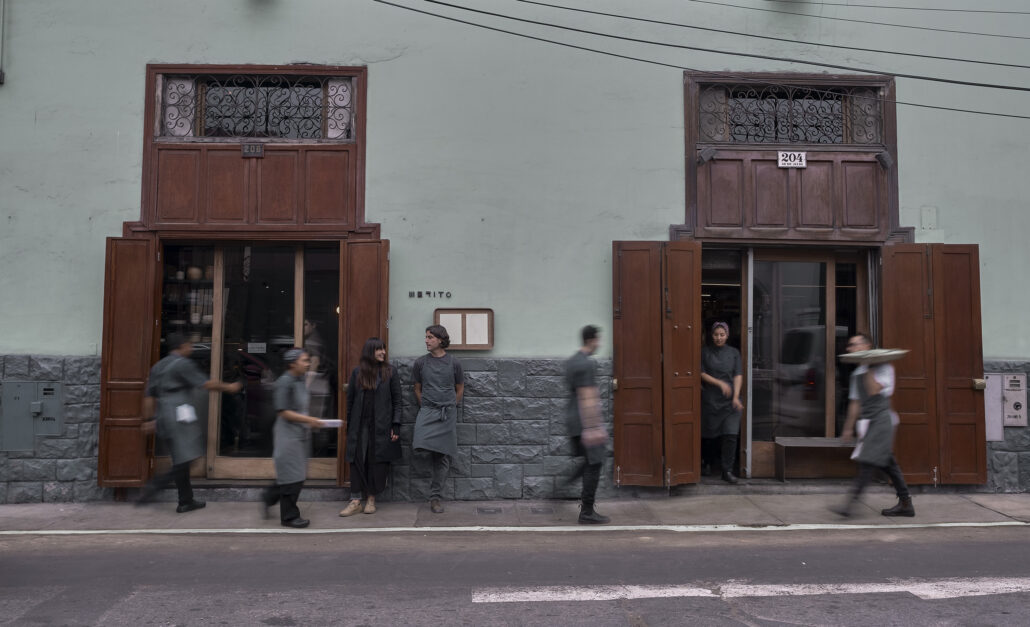
The two sisters are the small miracle that appeared in Piazza San Francesco, in Lucca – a square that, thanks in part to their Osteria La Dritta, has managed to preserve its neighbourhood soul. Around the church, now deconsecrated but still striking with its white limestone façade, stand other historic establishments and Bonny Pizzeria (the latest creation from the Giglio team, with pizzaiolo Filippo Bonamici). Together, they have sparked a small movement of restaurateurs and pizza makers devoted to the neighbourhood and its diverse community, for now sheltered from the siege of tourism that follows other routes through the historic center.

You walk past Osteria La Dritta, peek through the large glass door, and immediately feel the urge to step inside.
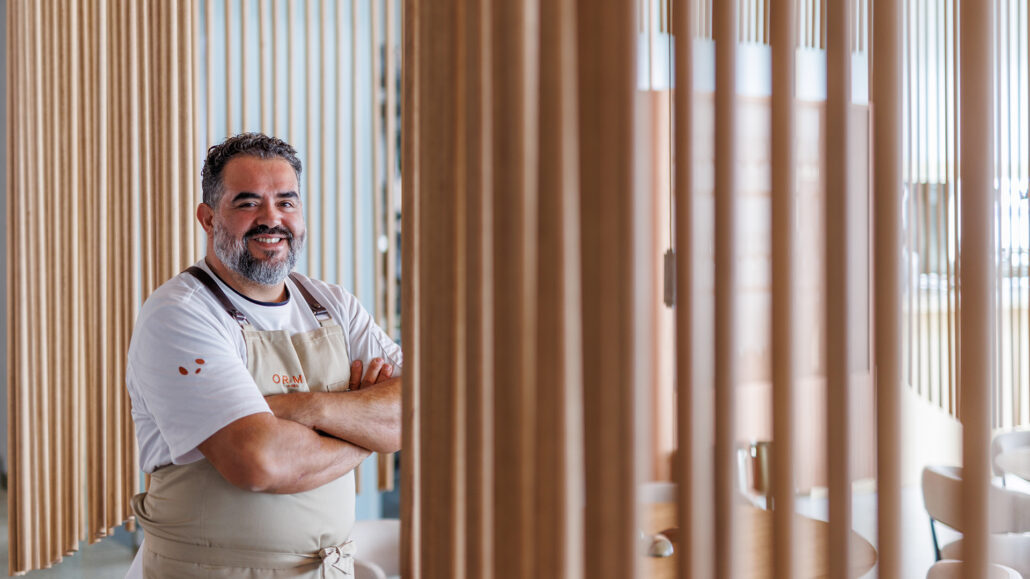
Just a few tables, an atmosphere vaguely Nordic yet with a distinctly Tuscan edge – everything in perfect harmony and coherence with the personalities of the two protagonists, who carefully envisioned, deeply desired, and ultimately created this place. Their personalities could hardly be more different: Chiara, the frontwoman, is extroverted, fiery, and impetuous – an explosion of Tuscan vitality with a touch of Emilian wit and warmth. Silvia, seven years younger, is reserved, almost shy, and prefers the protective shell of the kitchen. And yet they move as one, constantly exchanging ideas, roles, and critiques, having followed parallel paths before this venture – paths that ultimately bound them in an even deeper connection.
First of all, it must be said that they come from a gastronomically gifted family, as we will see. Their father, originally from Reggio Emilia, worked for years as a fashion intermediary between Italian brands and Chinese manufacturers, dragging the family into a whirlwind of moves: four years in Marostica, two in Treviso… a dizzying succession of places, friends, and schools, “the hardest years,” the daughters recall. In the end came the decision to move to Lucca and put down roots in their mother Cinzia’s hometown.
Chiara, the older sister, graduated in the technical business and accounting school (“because it was the only way to study languages”) and began working in several restaurants in Lucca, mostly as a dishwasher, to pay for her holidays. She decided to enroll in Communication Sciences in Bologna, while also working as a camera operator for small local television stations: “I tried, but the job wasn’t enough to live on.” At 29, she returned home: “Is my room still there?” But the family reunion was short-lived. After two months, her mother – a strong-willed, determined woman – gave her an ultimatum: “Either you find a job or you’re out.” Chiara then joined Osteria Dal Manzo, right in the historic center. She was in crisis and threw herself into work with everything she had. Within just a few months, she moved from dishwasher to kitchen manager.
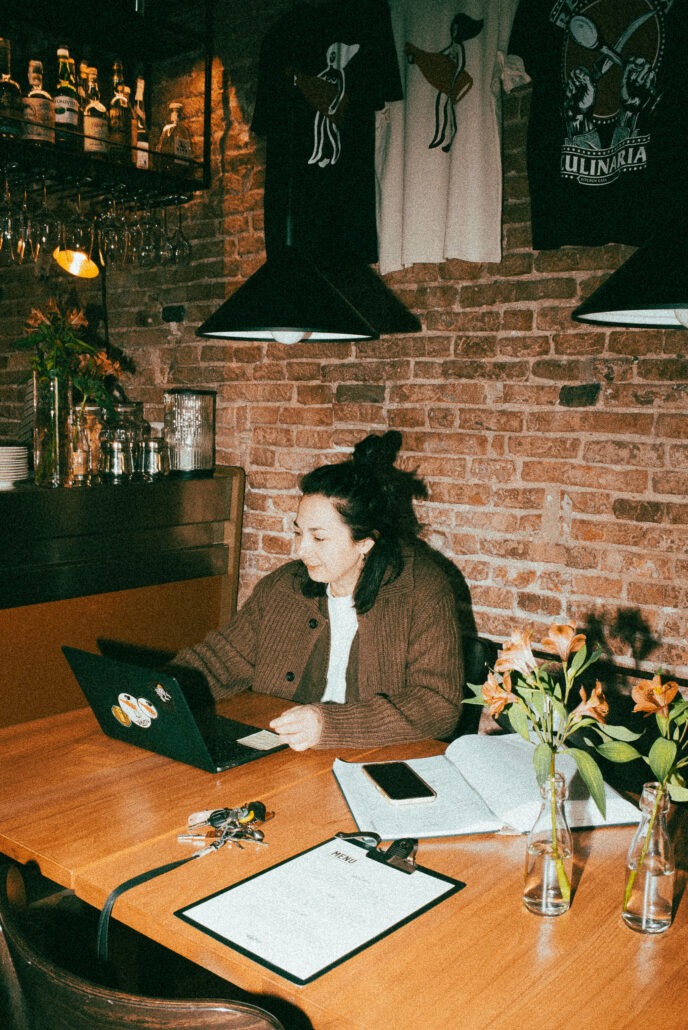
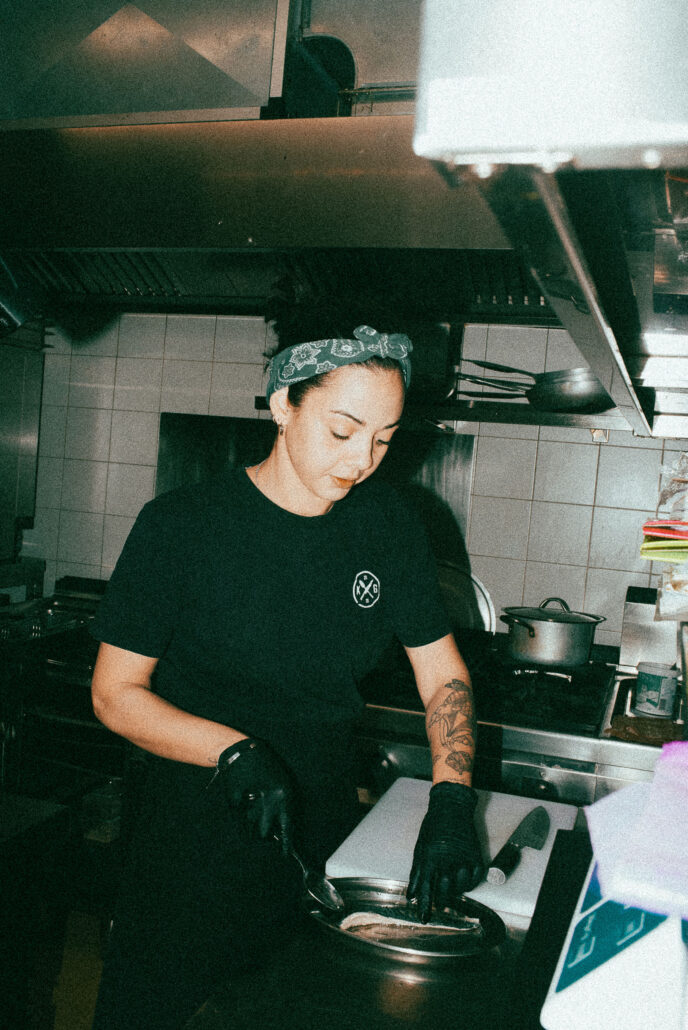
Meanwhile, Silvia, after earning a degree in Education Sciences, tried to make some money as a waitress at the same restaurant, Dal Manzo. “But I couldn’t stand working the dining room, and I kept asking my boss to let me move into the kitchen.” They worked together there for three years. “The cooking was very traditional, with large pots simmering away – everything delicious – but,” Chiara says, “I felt the need to evolve.” Her next step was joining the Academy of Niko Romito in Castel di Sangro, in Abruzzo.
Silvia’s own turning point also came through experiences away from home: she left for the Basque Country and, against all odds and despite an impossibly long waiting list, managed to spend six months at Mugaritz, Andoni Luis Aduriz’s restaurant, one of the temples of Spanish avant-garde cuisine. “Yes, I was definitely lucky. It was a military-like system, absolute rigor,” she recalls, “but I learned organisation and teamwork. The waste, though – that was hard for me to accept.”
After Mugaritz, Covid-19 broke out. Silvia managed to catch the last ferry from Barcelona and returned home. With the whole family together again, it was time for the sisters to start planning. Chiara completed her training at Niko Romito’s academy, but soon realised there was no real opportunity for growth. “There were no open positions.” And that wasn’t all. She also understood that the overly rigid hierarchies and the sexism present in certain kitchen brigades were no longer for her.
At that point, she decided to explore Piedmontese cuisine, though her experience at the Consorzio restaurant in Turin was very brief. “I lasted about as long as a cat on the highway. Still, it was useful. I came away from all those experiences with a different method.”
Silvia, for her part, landed at Bistrot 64 in Rome. “After an interview, incredibly, they hired me. I walked out of the restaurant in tears. I couldn’t believe they had taken me on as chef de partie for the starters. I only asked for time to return to Lucca to collect my things.” She stayed at Bistrot 64 for a year, then moved on to Aroma, a Michelin-starred restaurant overlooking the Colosseum. At Aroma, she focused on bread and pastry. But Rome left her feeling drained – “I left exhausted.”
She returned to Lucca and spent a restorative season with Damiano Donati at Fattoria Sardi, just outside the city:
“It felt like I was reborn. I would bring the vegetable scraps to the donkeys, and it was pure joy.”
All the while, their minds were already focused on their shared project.
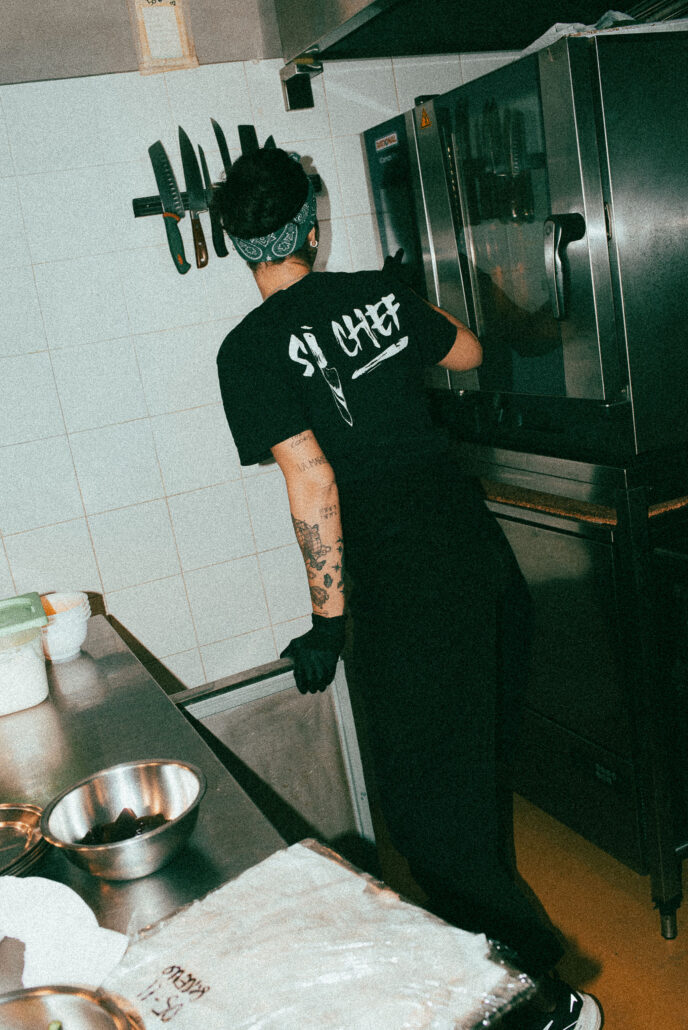
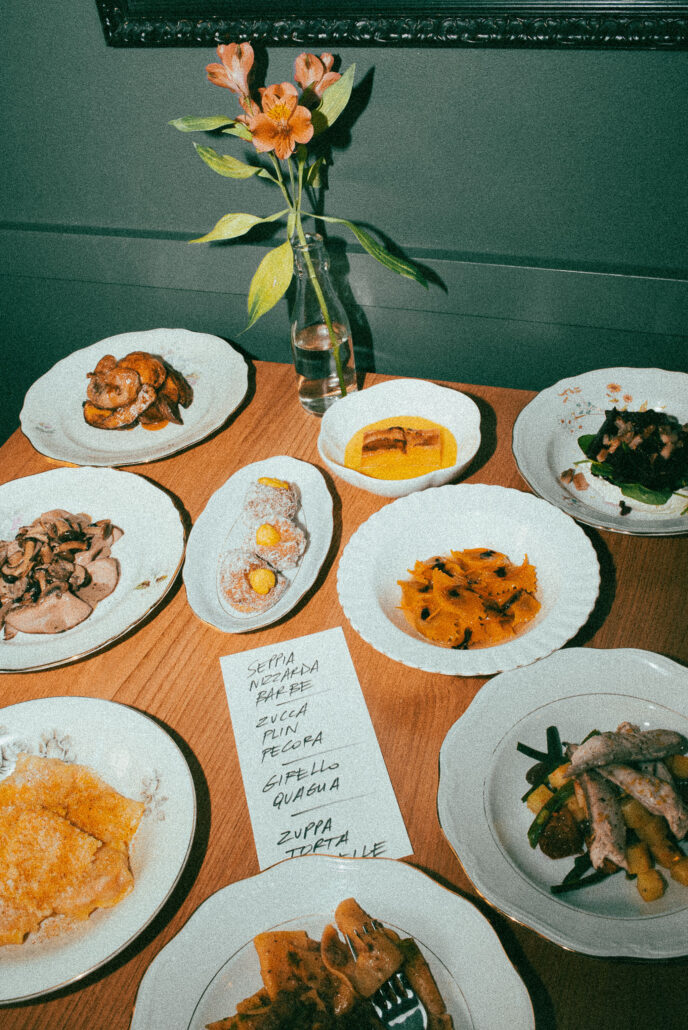
And so we arrive at the decisive moment, when the two sisters decide to look for a place of their own in Lucca. But the city has frozen new licenses, and the number of beautiful, well-located spaces is extremely limited. “It felt like Lucca didn’t want us.” The year 2021 was a disastrous one: the death of their beloved grandmother Marisa (yes, the very grandmother who held cooking in the highest regard, and whose pumpkin tortelli remain an unsurpassed totem), a broken ankle, and a series of professional disappointments.
At last, they noticed the space – number 33 on the square. The rent was prohibitive, but one day the owner called back: “I’m selling it. Are you interested?” Six months of exhausting negotiations followed, and then the keys were finally theirs. For ten days, neither of them had the courage to step inside. “Then we dropped a bomb in it” – a radical renovation.
Today, the osteria feels as though it has always been there: exposed brick walls, soothing grey-blue tones, just a few tables (24 seats at most, doubling in the outdoor area during summer), and never more than six people per table – “because that way you can talk without shouting. Besides, in the kitchen, you can’t plate more than six dishes at the pass anyway.”
Dining room and kitchen move in perfect sync, also because the sisters know how to do everything themselves.
And, as Silvia points out, “when someone in the dining room understands cooking, they can manage the orders better and ease the pressure on the kitchen.”
“Working in the kitchen, I often thought the front-of-house staff were assholes,” Chiara admits, having ultimately chosen that very side of the barricade. Silvia, for her part, agrees: “Since Chiara is also a cook, her sense of timing is incredible. She has a perfect eye for everything.”
At the beginning, they swapped roles – “both to understand each other’s work and because our parents suggested it.” But in the end, they settled into their natural places: Chiara, of course, in the dining room (“I like talking to people”), and Silvia in the kitchen.
“Coming from Michelin-starred restaurants,” they explain, “we learned a great deal, but we also saw things we don’t want to repeat. It’s a race that doesn’t belong to us. Our ambition is to create a place rooted in real life, where those who work here feel good and those who eat here do too – to do work that, first and foremost, respects ourselves. “That’s why, in summer, they close two days a week. “After all, we come from a family where Sundays were sacred.”
Their mantra hangs on the wall of the restaurant: ‘We need simple things.’
This spirit is also reflected in the warm atmosphere that has taken hold in the square. The group Gli Osti di San Francesco was founded, five establishments that jointly organise celebrations for Epiphany, Carnival, and April 25th (Liberation Day ed.), helping to keep the neighbourhood’s traditions alive (“This is Lucca’s red square, with the old Communist Party headquarters”), including, of course, its culinary ones. “I remember an eighty-year-old man who, after tasting our pasta with amberjack heads, was moved to tears: ‘You’ve taken me back to my childhood.’ When you touch those familial chords, you’ve won.”
Needless to say, the square erupted in celebration when La Dritta won the Lucca edition of 4 Ristoranti, Alessandro Borghese’s TV show, in November 2023. And speaking of traditions, their Emilian-style pumpkin tortelli with butter and Parmigiano Reggiano are a perfect example of this liaison: “Every day we strive to achieve the perfect balance between pumpkin, amaretti, and Parmigiano Reggiano – the same mixture our grandmother Marisa used to make – along with the depth of flavour that only the cheese can provide.”
Helping out in the kitchen is their mother, Cinzia – “our wild card. She’s saved us countless times, stepping in wherever needed, sometimes in the front, sometimes in the kitchen – she’s covered every role.” Cinzia adds, with irony: “They’ve never given me as many kisses as they have during this period.” In the kitchen, in an extremely tight space, four of them work side by side: the sous-chef Chiara (yes, the same name – and, as if that weren’t enough, there’s a third Chiara in the dining area). There’s also Alessandro Capone, a former Big Brother contestant, who has reinvented himself as an all-round assistant, with great humility and warmth.
Cinzia has her own little corner, where she follows Silvia’s instructions to the letter: she cuts the meat for the tagliata, prepares the raspberry marinade for the radicchio (rice vinegar and blended raspberries), the sweet-and-sour pearl onions, and the fried bread used to garnish the dish (beef tartare with mustard, radicchio, and balsamic-glazed borettane onions). “I’ve learned everything from them,” she says, “but I realise that when I try to recreate something at home, I can’t reproduce any of it anymore.”
It could hardly be otherwise: in this kitchen, countless refined techniques drawn from the Michelin-starred restaurants they trained in – from knife work to cooking methods to flavour pairings – have all become part of their savoir-faire. Behind the word “simplicity” lies the distilled weight of many experiences, the sum of two technical skill sets, and a complexity born of extensive research, deeply rooted in tradition (first and foremost Tuscan and Emilian, but also Abruzzese, Friulian, Piedmontese, Sardinian…). All of it is expressed in a thoroughly modern way.
In short, a cuisine that is joyful in spirit, in intention, and in its results.
A “simple” Salad of beetroot, baby spinach, smoked herring, and sour cream becomes a true ensemble, brought to life by the house-made sour cream itself. In the Niçoise – tuna fillets preserved in oil and lemon zest – the cut known as cordone (the outermost part of the fillet) has such tenderness that a small taste never feels like enough. The Mezze maniche with octopus water, octopus ragù, and parsley oil become something far beyond a classic seafood pasta. First, because the octopus water – “cooked the old way,” meaning in its own liquid – is reduced by two-thirds shortly after cooking begins, to prevent caramelisation and later used to emulsify the pasta. The tentacles, sautéed in an iron pan, provide the dish’s essential depth and drive.
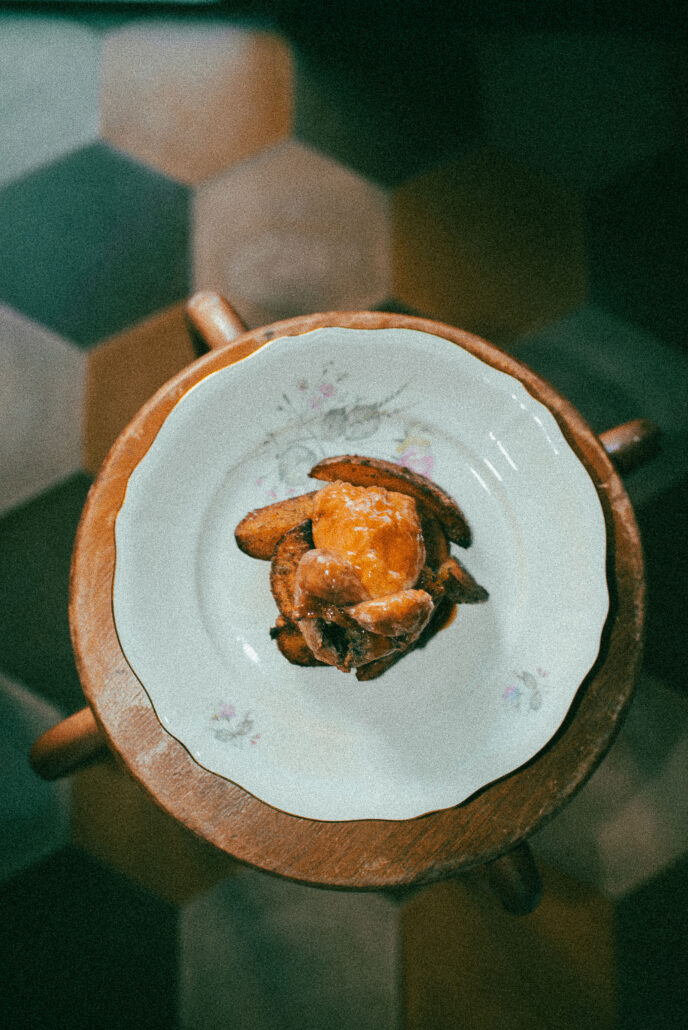
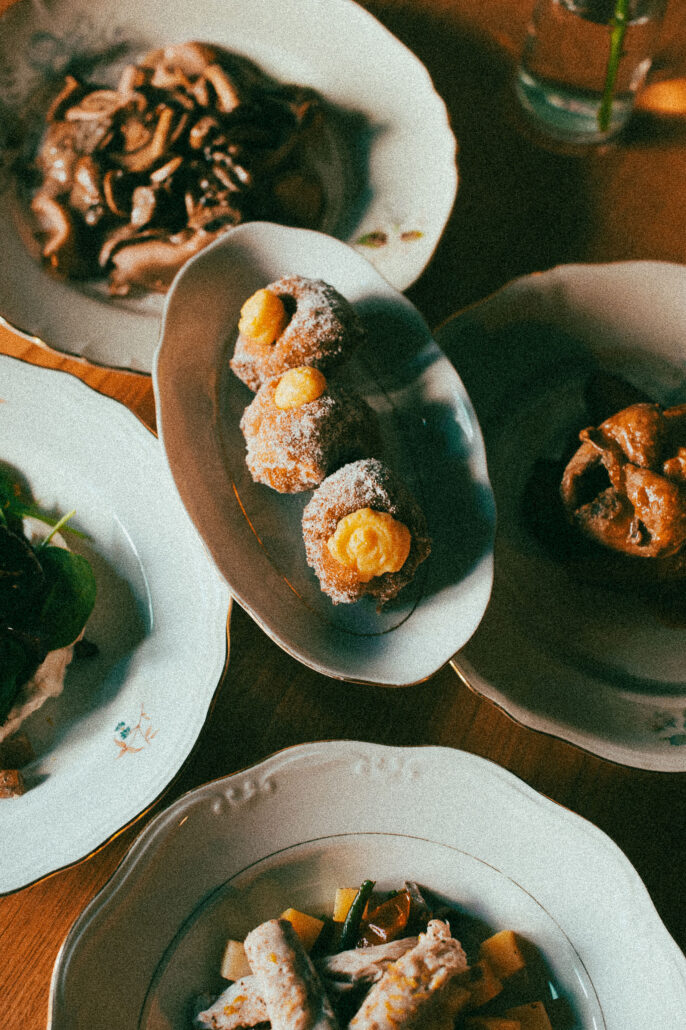
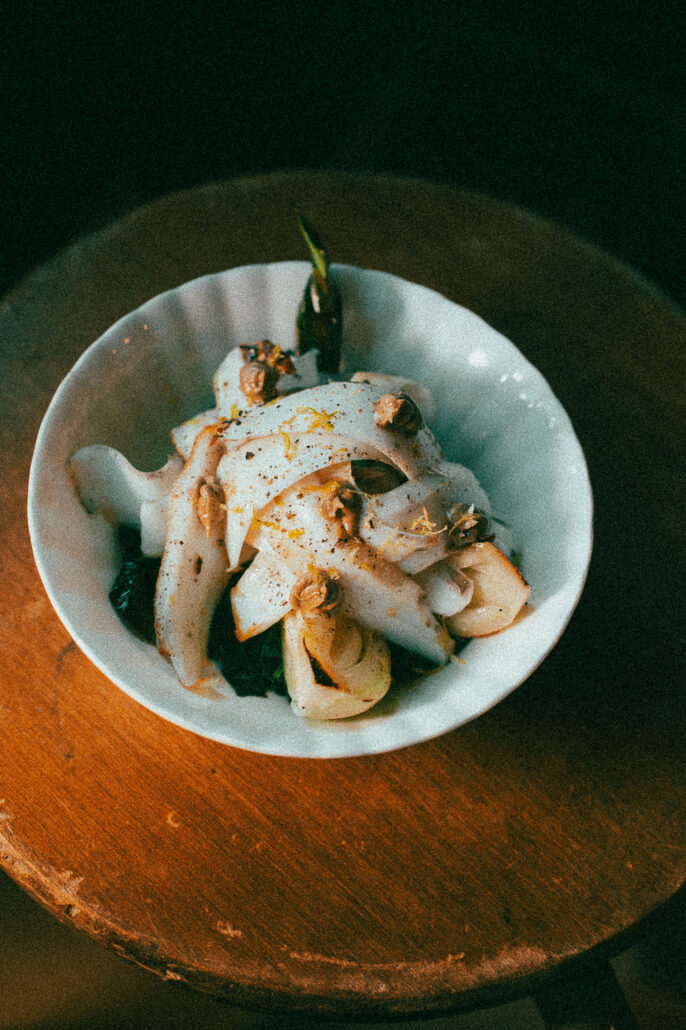
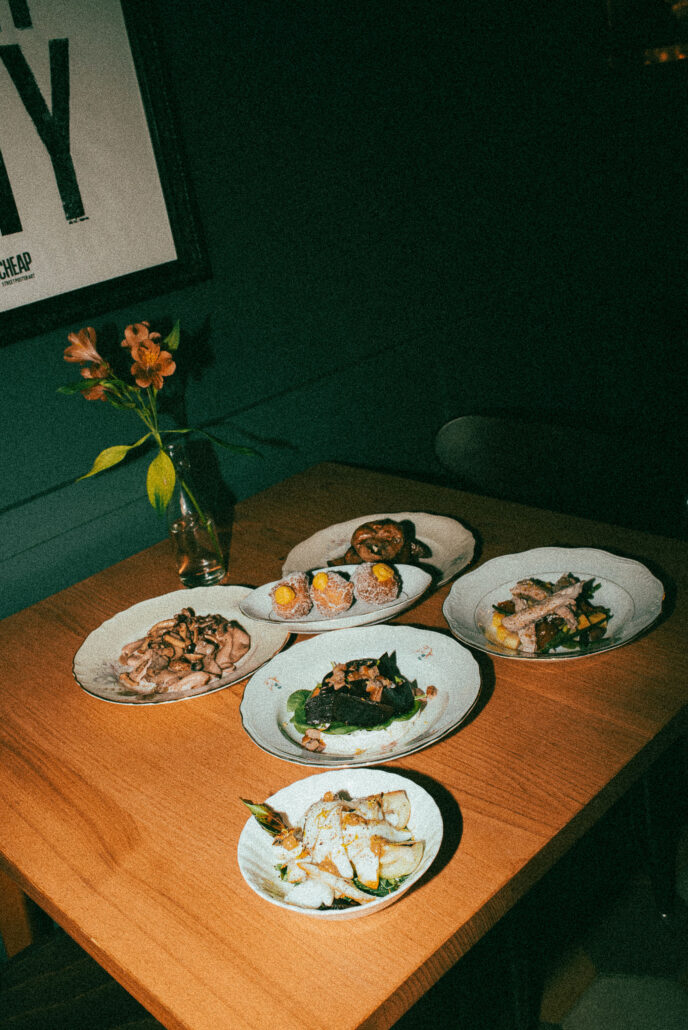
Precision, clarity of flavor, and intelligence in pairing define every plate, as in the Roasted celeriac with its own jus and variegated radicchio. The duck confit plin, with toasted barley and candied orange, rivals the best Piedmontese versions: legs and thighs, slow-cooked overnight for eleven hours in oil, are transformed into a filling of remarkable depth. “When I walk into the kitchen in the morning, the aroma is so incredible I want to eat it by the spoonful,” says Chiara. The Tacconcelli (a pasta similar to maltagliati) with lamb ragù – also “cooked the old way” – and finished with myrtle powder, are the kind of dish you’d order three times, like that child with the wild boar pappardelle. The Salt cod with leeks and potato cream achieves an extraordinary softness, enhanced by both stewed and fried leek. The Roast quail, served with its own jus and roast potatoes, is one of the restaurant’s signature dishes. The potatoes, essentially oven-fried and dusted at the last moment with a fine mix of dried aromatic herbs, fill the room with their fragrance and are made to capture every drop of the sauce. And then, of course, there is the catch of the day, served with seasonal vegetables.
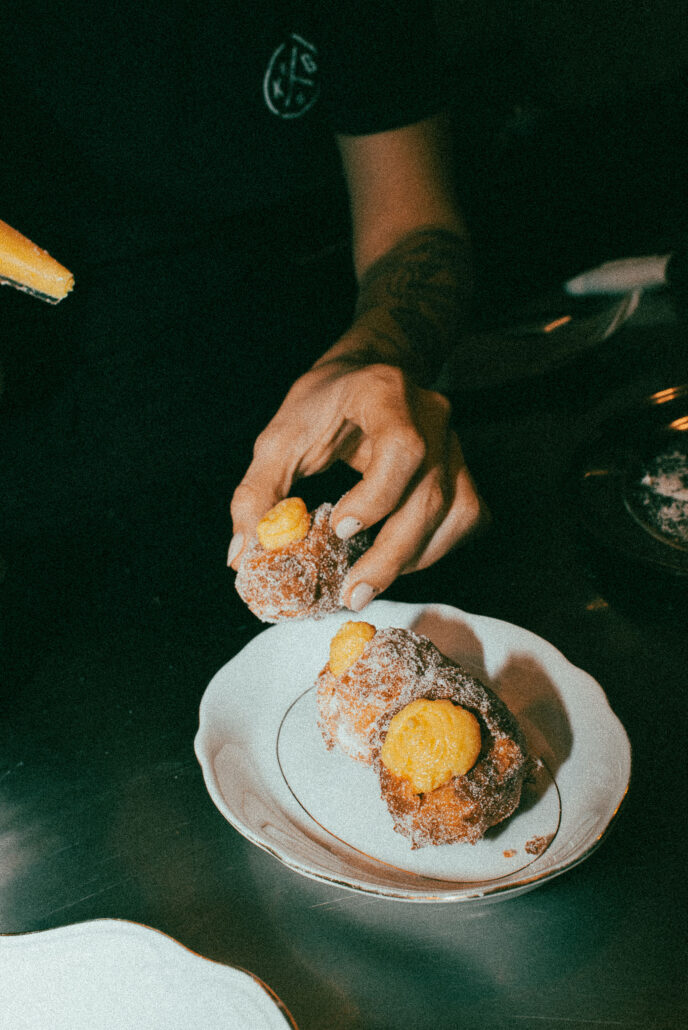
It was their father, Stefano, who passed on his passion for fish to his daughters. “He even took a course with the Congrega dei Liffi in Reggio Emilia, organized by the city’s fishmongers,” his wife says with a smile, as she retraces the family’s past. “My husband’s mother always cooked. She ran a tailoring business – she would buy the fabric cuts and distribute them to women who sewed them. She was constantly busy, and yet, whenever we asked her to host us for dinner, she could prepare wonderful dishes with almost nothing. My husband, being a true Emilian, has always loved inviting lots of friends over. He wants the house full of people. But he’s not suited to working in a professional kitchen, because he always wants to be in charge.” The family story unfolds as Cinzia prepares a pastry cream for the spelt flour fritters, which, when tasted, turn out to be outstanding.
But the sisters’ dream project is called La Storta, two doors down (meaning ‘The Crooked’, in opposition to ‘La Dritta’ which means ‘the straight’, ed.). For now, it serves as a wine storage space, but one day – licenses permitting – it may become a small wine bar. “Unfortunately, for now, it’s just a source of frustration.” As mentioned, new openings in Lucca are tightly restricted, and everything seems to go wrong (perhaps the name was prophetic!).
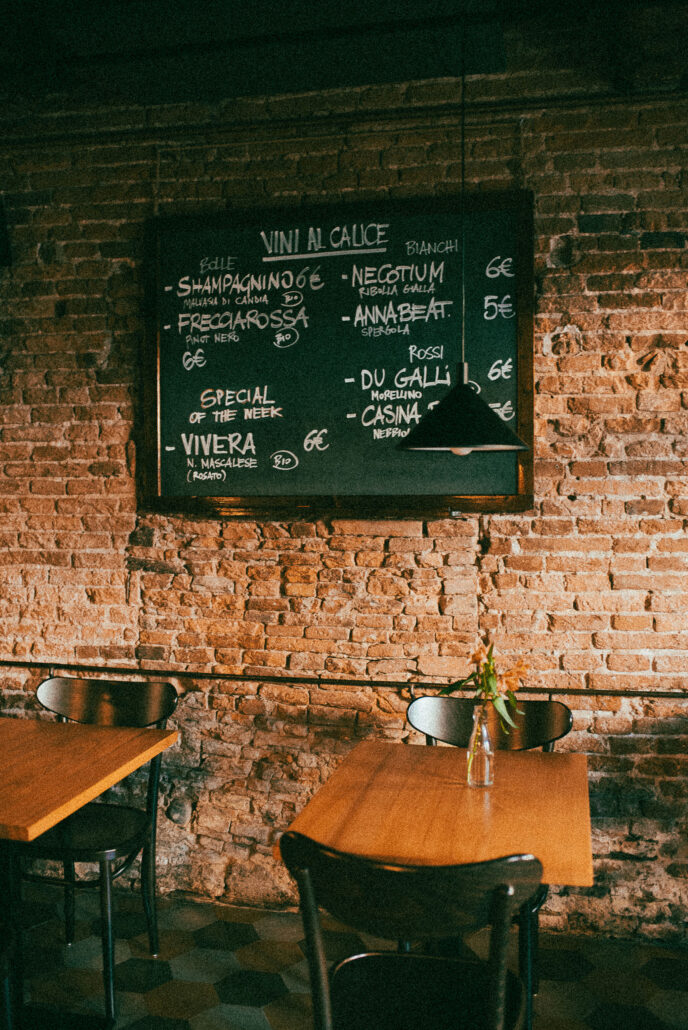
Still, a wine cellar worth €25,000 for a 24-seat osteria is nothing to scoff at. “Everyone – including sommelier Luca Grassi – keeps encouraging me to include French wines,” Chiara says, “but I won’t give in. We only have French bubbles. Otherwise, I’ve built a solid representation of all the Italian regions, and not even that much from Tuscany. You find Lucca wines everywhere. At first, I had actually decided to exclude them, but then I included just three wineries. Among them is Colle delle 100 Bottiglie, which has restored dignity to an old Lucchese grape variety, Segale – the one old men used to drink in osterias.” There are also many labels from Emilia, such as Vulpis, made from Lambrusco grapes using the traditional method. “The city has finally understood that we’re half Emilian. At first, they would say to me, ‘You can keep your cold, fizzy red Lambrusco to yourself.’”
Even the Shampagnino, the house wine served by the glass, comes from Reggio Emilia. “It goes well with anything.” Particularly delightful is the Ring Adora, a Lambrusco di Sorbara from Podere Saliceto, and from the same winery, the Falistra, also a single-varietal Lambrusco di Sorbara.
It’s late now, the kitchen has closed, and at the remaining tables the sisters chat with the last of the customers. Cinzia says her goodbyes, gets on her Vespa, and heads back up into the hills, regardless of the weather.
“Mum, please, do not pull a wheelie!”