“We’ve done it all.”
Pasquale Polito says this before a special audience at the Bologna Business School on 25 November. The theme of the event is clear: “Da Forno Brisa a Gruppo Breaders: storia della crescita dell’impresa bolognese” (From Forno Brisa to the Breaders Group: the story of the growth of the Bolognese company), and ready to take the floor are Davide Longoni, Federico Dettori and Andrea Lipparini, moderated by Natascia Ronchetti, journalist at Il Sole 24 Ore. The pretext is Forno Brisa’s entry as a supporting member of the Bologna Business School Foundation; the occasion is the new, visionary equity crowdfunding project aimed at increasing/strengthening/expanding the vertical integration of the collective enterprise model of artisan specialty bakeries1 that Forno Brisa and the Breaders Group have come to represent. Pasquale Polito’s we’ve done it all encapsulates the strength and concreteness of dreams that have become reality, but also the promise and curiosity of what’s next? now that that “all” has been achieved. “Bread was just an excuse,” says Pasquale. “Now we’re doing something bigger. Ten years ago we didn’t know it, but by imagining together, we got here.”
Yes, and, as we recount this fragment of history, it happens to be Forno Brisa’s birthday (or should we say anniversary?), which coincides with the restless age of adolescence, but also with a broader vision and a growing collective responsibility. Ten years that do not feel like a milestone, but like a new beginning, and that also spark the desire to take stock of what has been achieved and to remember where it all started. And how a craft business managed to become a cultural, economic and social infrastructure, because in this revolution to change the world one loaf at a time, everything has had its own pace. Not without acknowledging mistakes and course corrections along the way.
To make mistakes is, always, the right thing.
We went straight to it and began citing Forno Brisa and Pasquale Polito as public figures within the food and wine niche we navigate, because these names should resonate like the Beatles for the gastro-cultural shake-up they have caused over this decade. We take the audacity to assume that at least a few people know who these individuals are — those who sparked the bread revolution (not alone, of course) and who are now reshaping artisanal models. If that’s not the case, our editorial archive offers a mosaic of stories documenting this journey: from the article published in the distant Cook_inc. 15, Free bakers united, which spoke of the movement of new bakers emerging, to the book Ricette Rubate per artigiani, sognatori e startupper (Stolen Recipes for Artisans, Dreamers and Startuppers) created in tandem by Cook_inc./Forno Brisa (alas for you, it’s been sold out for some time), through to the article Cosmo Brisa in Cook_inc. 27 and the online articles that have followed step by step the evolution, up to the latest, this summer, Perché i Breaders stanno cambiando il mondo (del pane e non solo) – Why the Breaders are changing the world (of bread and beyond).
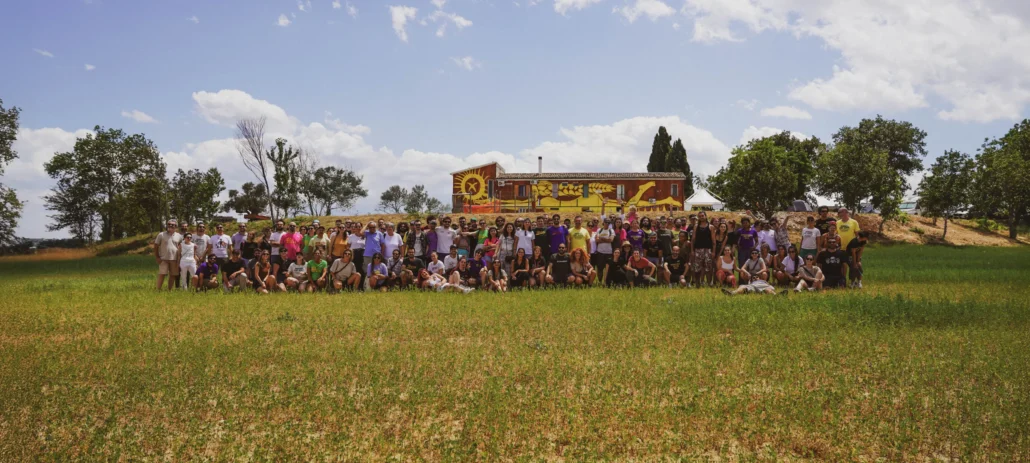
We’ve done it all lives in those lines, in those daydreams that expanded as they came true, making room for even more collective dreams. The precise list of accomplishments is partly available here, partly never fully recorded; great things are made of countless small actions that escape communication. But retracing the path from the roots is what’s needed to arrive at the here and now: the third crowdfunding campaign, open until 16 December 2025 on Mamacrowd, officially launched as Breaders.
“Bread is a totem.”
says Pasquale Polito, and everything started from here. In fact, when Pasquale recalls the journey that led him to become a baker, he never speaks specifically about his geography courses at university (by the way: yes, he is a geographer), nor in much detail about his passion for making bread at home, because there is nothing more beautiful than feeding people. Instead, he tells of a phrase that stuck with him: “Guys, you’ll have to invent your own work”, said in class by Professor Franco Farinelli. It wasn’t encouragement, it was an observation. That phrase proved key in the development of one of the most ambitious, original, and culturally significant projects in contemporary Italian craftsmanship. It is (at least partly) there that Breaders was invented. Not a brand, not a chain, not a company in the traditional sense, but a public company — which includes Pandefrà, MAMM, Forno Brisa, Panificio Davide Longoni, and Mercato del Pane — that is transforming the world of bread into a cultural, economic, and social practice.
So, the most accurate way to understand Breaders is not as a company, but as an ecosystem. A networked structure, made up of people, places, bakeries, mills, workshops, and methods of work that communicate with each other. A structure that grows not by cloning, but by grafting, ensuring that each artisanal house preserves its own history. “We don’t buy companies to change them,” they explain, “we keep the local brands because it is their identity that gives value to the group.” Within it, there is no logic of standardisation, only integration. In other words: the group does not centralise, it connects. Breaders is a living organism, one that does not aim to grow vertically but horizontally; that does not seek to dominate markets, but to build relationships; and that does not pursue uniformity, but durability.
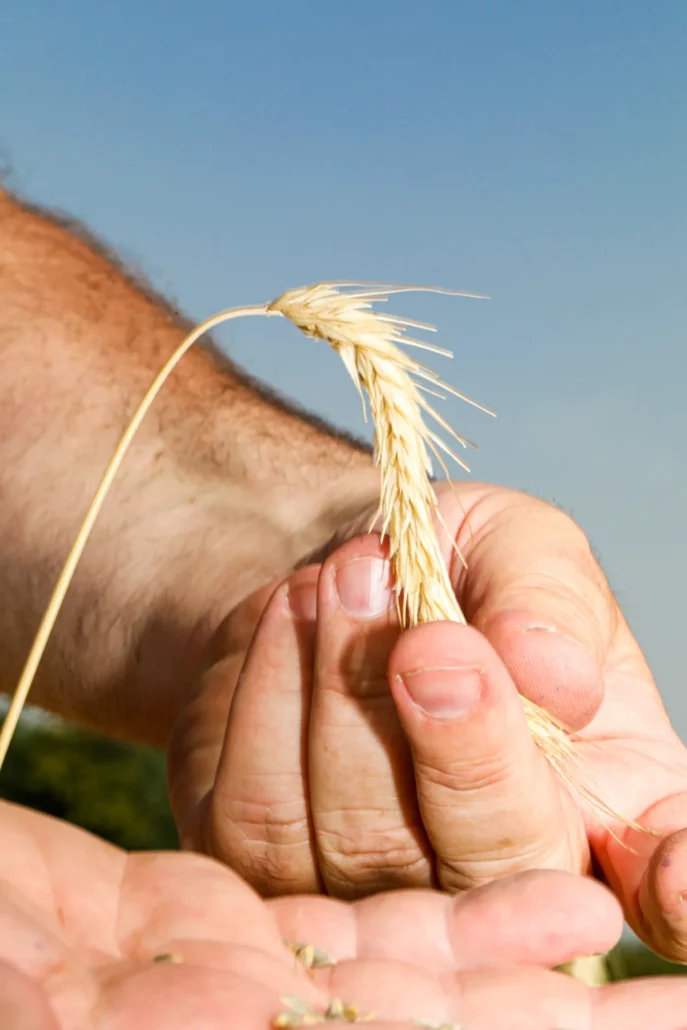
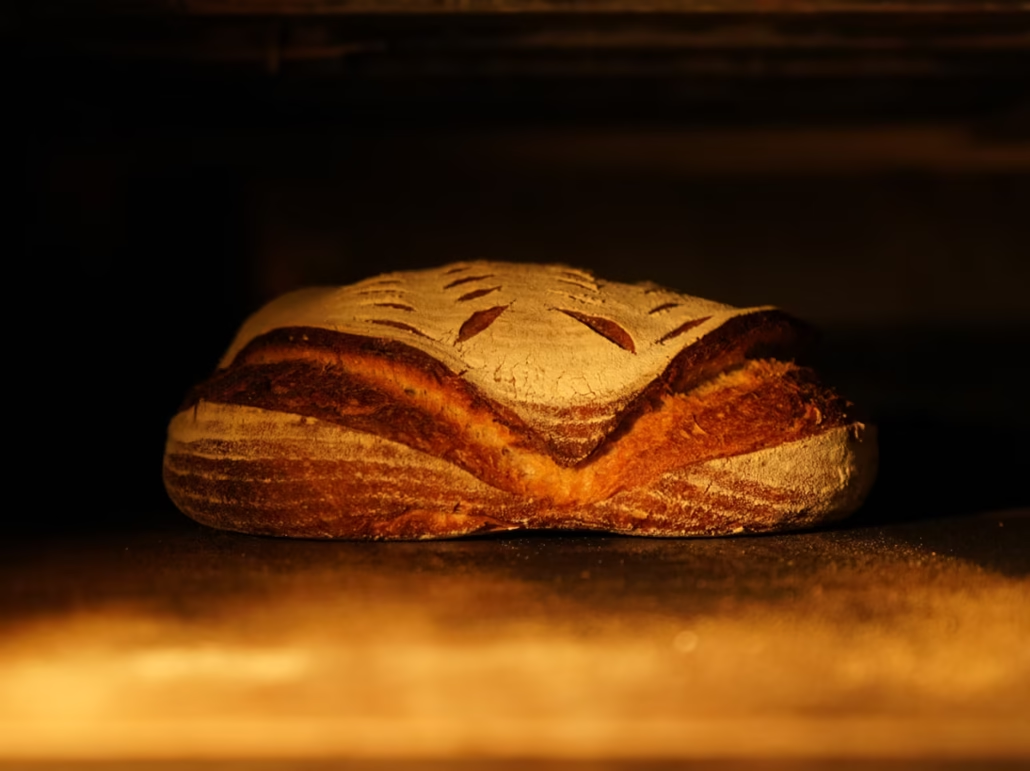
The origin is Forno Brisa, in Bologna, the bakery born from the meeting — or rather, the collision — of the visions of Pasquale Polito and Davide Sarti. The latter is rarely mentioned because Pasquale plays the role of frontman, but it is essential to understand that from the very beginning the enterprise positioned itself as innovative in its approach, with a horizontal organisational structure designed to create, precisely, an ecosystem. Davide, by the way, was a videographer/graphic designer in his previous life, who converted to the world of hands-on dough — in his case, tray-baked pizza — passing through the first Master of Advanced Apprenticeship for Bakers and Pizzaioli at the University of Gastronomic Sciences in Pollenzo, where he met Pasquale Polito, and the rest is history. Two professions — the geographer and the videomaker — that have little to do with bread, yet share a common thread in complexity. Geography teaches how to read systems, while video teaches how to give shape to what would otherwise be invisible. Pasquale and Davide bring this dual heritage into Forno Brisa: they treat bread as an agricultural and cultural object, not merely a foodstuff, and build around it a community of practice where everyone is constantly learning and unlearning.
“We are eternal apprentices.”
Pasquale says this without romanticism. It is from this mindset that the possibility arises to build a company not centred on its founders, but on its growth. Ten years have passed: in Bologna there are now seven stores under the Forno Brisa umbrella, and in the coming days the eighth will open, the former Bar dello Stadio, an even bigger challenge that extends beyond the bakery and specialty coffee universe to include a full kitchen.
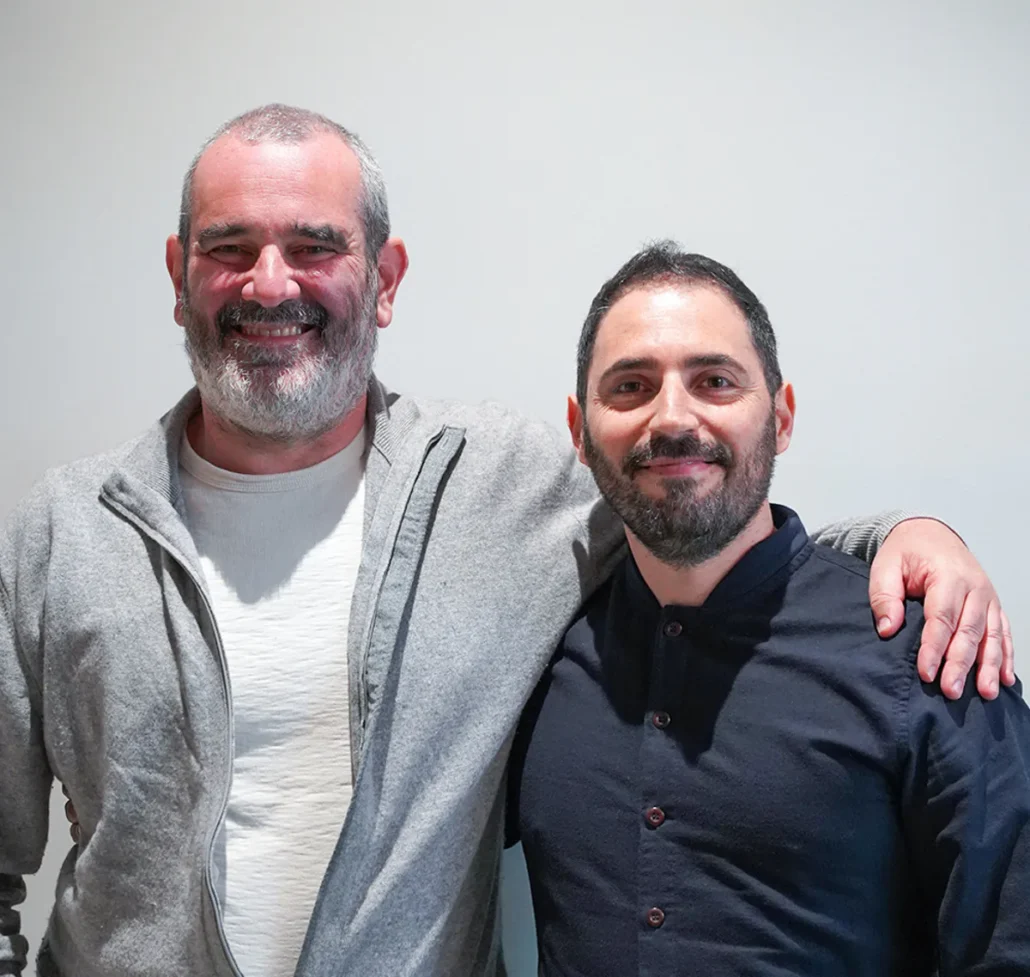
Let’s step away from Bologna for a moment: in the same years of ferment at Forno Brisa, in Milan, Davide Longoni was following a parallel path. His story is different: that of a deeply artisanal soul raised in the family bakery, who fled the trade to become a geographer (like Pasquale), only to return to the family bakery, leave again after eight years “of apnea,” and decide to build something of his own. First, a bakery in Monza with his partner Tatiana, then an expansion in Milan based on a simple principle in concept, yet complex in execution: make today’s bread, not yesterday’s.
“To always be contemporary,” says Davide Longoni, is not an aesthetic philosophy, but a production imperative.
It means reading the territory, interpreting it, anticipating it, and making bread a lens through which to view the city. His eleven shops are not alike; each is a response to its neighbourhood, not a mere replication of a format. “I named my bakery Davide Longoni because, at first, I thought it was a way to represent myself. I thought my work ended with the perfect loaf, but then I discovered that it’s more about the idea that brings people together. And now I’m happy that in Milan Longoni’s bread is also the bread of the collaborators who have passed through my bakery. Today, Davide Longoni’s bread belongs to everyone.” It is a form of local adaptation that also underpins Breaders’ systemic affinity.
The model – networked, cooperative, polycentric – of Forno Brisa first, and Breaders later, requires a cultural and economic leap. And that leap came with an apparently naïve question, posed by a loyal customer of the Bologna bakery, Federico Dettori, a lawyer, who at the time (in 2018) had nothing to do with Forno Brisa except being a big fan of their products, particularly the ragù pizza. “If you had a million euros, what would you do with it?” The question wasn’t about growth, investments, or new openings. It concerned meaning: “It’s not the desire to become rich, but the desire to change the world.” Break point. It was with this phrase that the first equity crowdfunding campaign on Mamacrowd was born between 2019 and 2020. Not a financial operation (although the fundraising was epic, surpassing one million euros with over 300 shareholders joining), but a cultural statement: inviting a community to participate in the project not as buyers, but as part of it. The crowd doesn’t just bring capital: it brings perspectives, responsibility, transparency, and trust. And it forces the enterprise to structure itself, to declare its own future – and therefore to confront it personally – to think not in intuitions but in trajectories, to communicate everything openly, always. The business becomes everyone’s.
The business becomes everyone’s.
Three years later came a second equity crowdfunding, because all the goals declared in the first had been achieved, and others were eager to be realised. By now, Forno Brisa was no longer just a collection of bakeries in Bologna, but a group with its own governance, an internal architecture, and a medium- to long-term vision. The transformation was radical: the structure became so distributed that—paradoxically—Pasquale and Davide themselves became the most replaceable. “We’re structured in a way that the ones at risk of losing their jobs are me and Davide,” says Pasquale with deadpan irony. It’s the strongest statement of their vision: to build a business that can survive its founders. And this is where Breaders comes into play—unofficially, yet essentially: the union of five artisanal specialty bakery businesses to combine forces, share talent, and integrate artisanal excellence with large-scale enterprise skills. A matryoshka of multitasking, multichannel projects, including a collective mill, wheat fields, and much more.
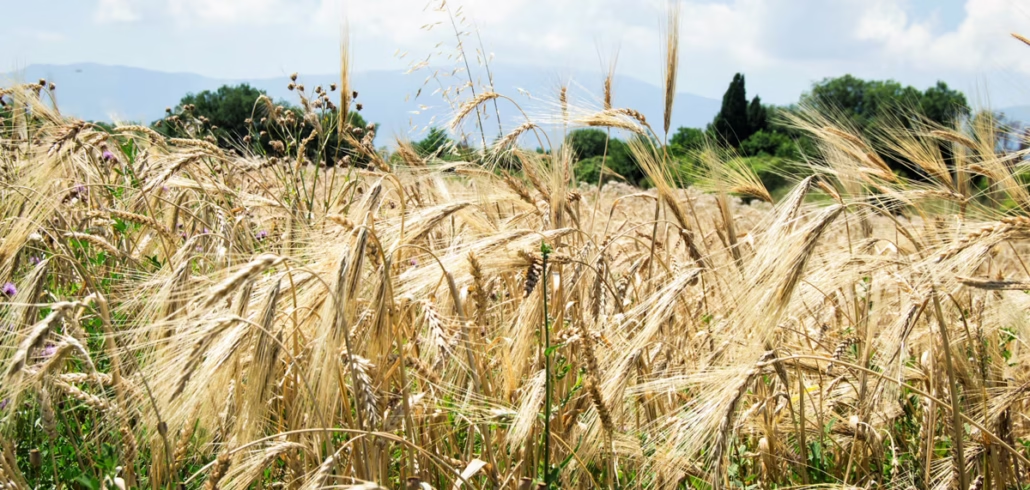
Since 2022, Breaders has truly come into being (following that second crowdfunding), structured itself, consolidated, and demonstrated that, yes, the model is sustainable. Operationally, it rests on three pillars: shared management, constant training, and distributed responsibility. The first lightens the load on artisans by relieving them of what weighs them down—primarily administrative processes—giving them back time and clarity. The second allows the creation of a generation of cultural “managers,” not just technical ones. The third builds a company where leadership is never hierarchy. After more than 18 months of trial and adjustment, it is now time for Breaders to enter a new phase of development, and here we are at the third equity crowdfunding. It’s worth noting that this public campaign concludes a fundraising journey that began months ago, which has already brought in over six million euros in support of the shared vision.
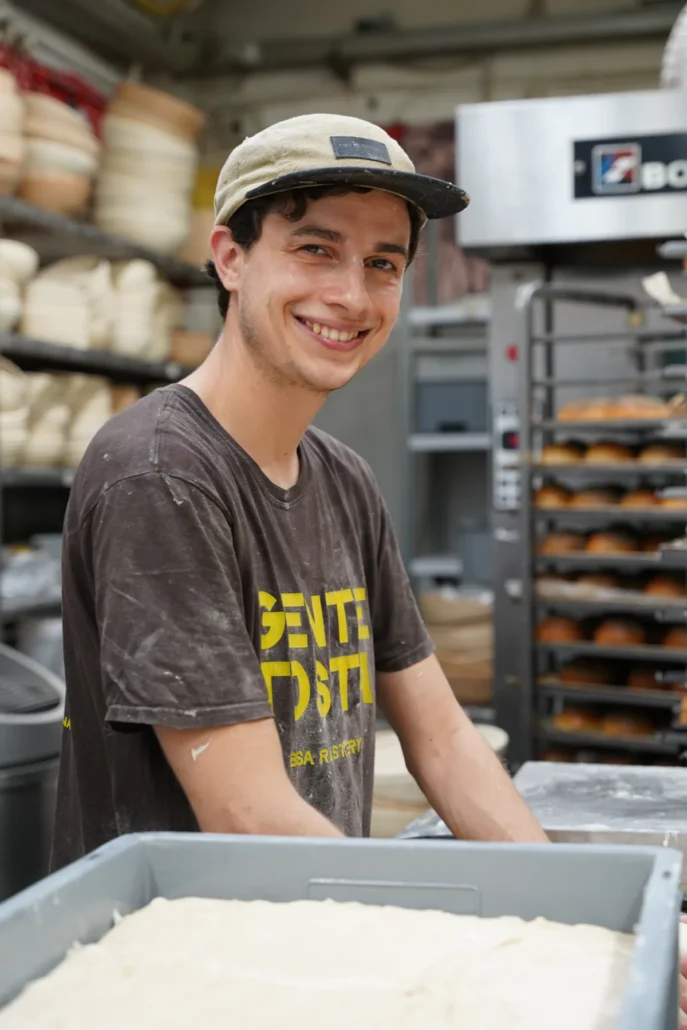
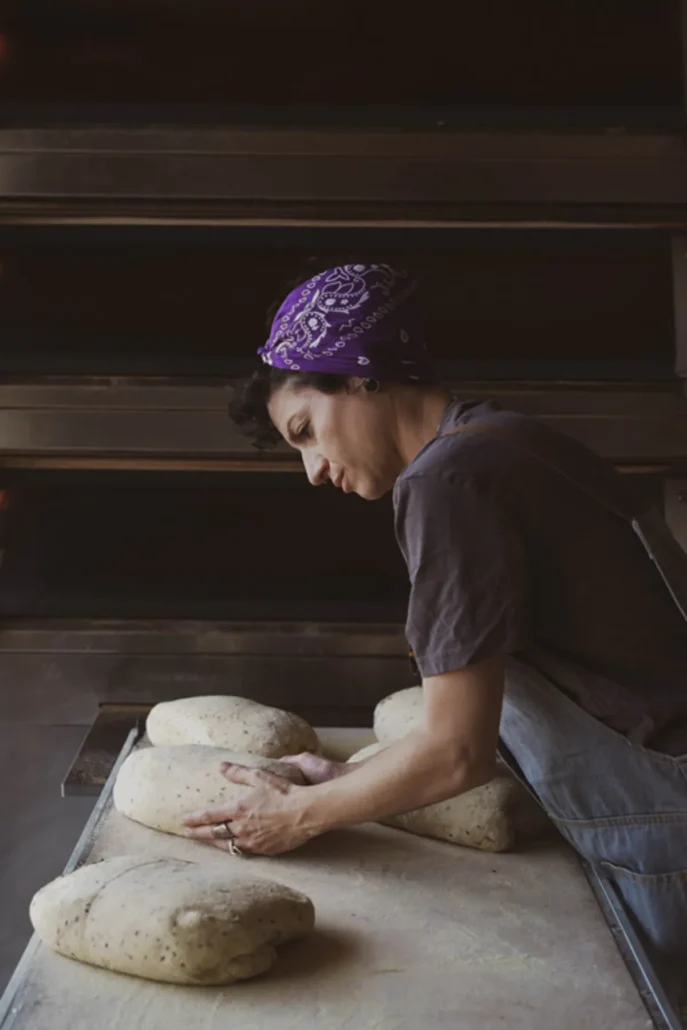
At the heart of the strategy for the near future is the aggregation of new high-value enterprises in the bakery and specialty coffee markets, following a glocal vision—growth that is not “colonial” but contextual (with Europe as the first horizon). For Breaders, expanding does not mean multiplying; it means understanding itself within new territories. “The strongest fields are those with local adaptation,” recalls Pasquale Polito, referring to the Evolutionary Mixture method developed by Salvatore Ceccarelli and Stefania Grando, which makes biodiversity the cornerstone of resilience—certainly agricultural, but also human. And the goal here is not to export the model elsewhere, but to have it meet other identities: “we look for someone stronger than us.” It is the opposite of gastronomic imperialism; it is a mindset much closer to botany. This is vegetal enterprise.
At the heart of the strategy for the near future is the aggregation of new high-value enterprises in the bakery and specialty coffee markets, following a glocal vision—growth that is not “colonial” but contextual (with Europe as the first horizon). For Breaders, expanding does not mean multiplying; it means understanding itself within new territories. “The strongest fields are those with local adaptation,” recalls Pasquale Polito, referring to the Miscuglio Evolutivo method developed by Salvatore Ceccarelli and Stefania Grando, which makes biodiversity the cornerstone of resilience—certainly agricultural, but also human. And the goal here is not to export the model elsewhere, but to have it meet other identities: “we look for someone stronger than us.” It is the opposite of gastronomic imperialism; it is a mindset much closer to botany. This is vegetal enterprise.
Without overlooking the founding values of Breaders (and therefore of Forno Brisa as well): from deep roots anchored in agriculture and artisan thinking (in the sense of full knowledge of the supply chain), to the fact that everything is strictly built on human capital before financial capital, and that Great Place to Work and B-Corp certifications do not merely attest to social and environmental impact performance standards, but reflect foundational attitudes that attract talent—and, above all, combine and enhance it.
For this reason too, Breaders represents a serious, methodical, and profound attempt to rethink a company as a collective organism. An attempt to demonstrate that it is possible to grow without sacrificing complexity, that business can be conducted without losing cultural dignity, and that a single loaf of bread can embody an entire way of imagining the future. A decidedly concrete attempt, judging by the results.
Perhaps the best summary of Breaders was offered by Andrea Lipparini (Strategy Professor at Bologna Business School):
“This is not a business. It’s a company: cum panis. People sharing bread.”
In that Latin word is everything: the agricultural origin and the glocal future, the gesture and the governance, the artisan and the manager. “One wonders what kind of yeast they use and clearly, not just for the bread,” Lipparini adds. In the end, bread remains an excuse, and Breaders is an extraordinary company that keeps growing horizontally, always pushing the horizon one step further.
- The specialty-bakery format combines the world of contemporary bakeries with that of specialty coffee shops in terms of quality, research, study and care, but also as a place of sharing and hospitality, all day long. ↩︎