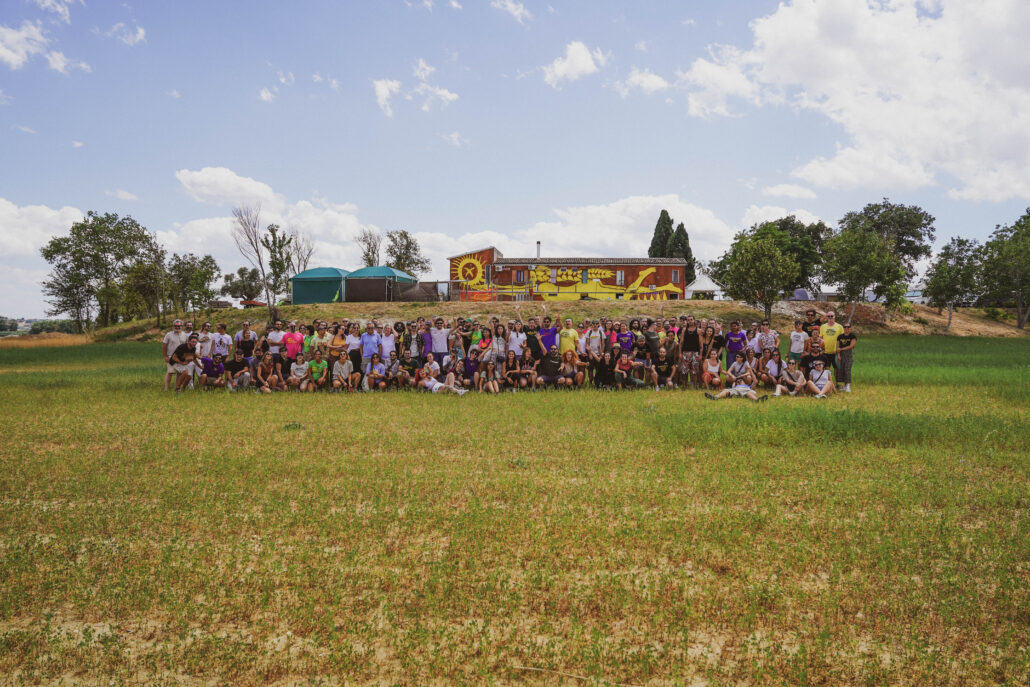
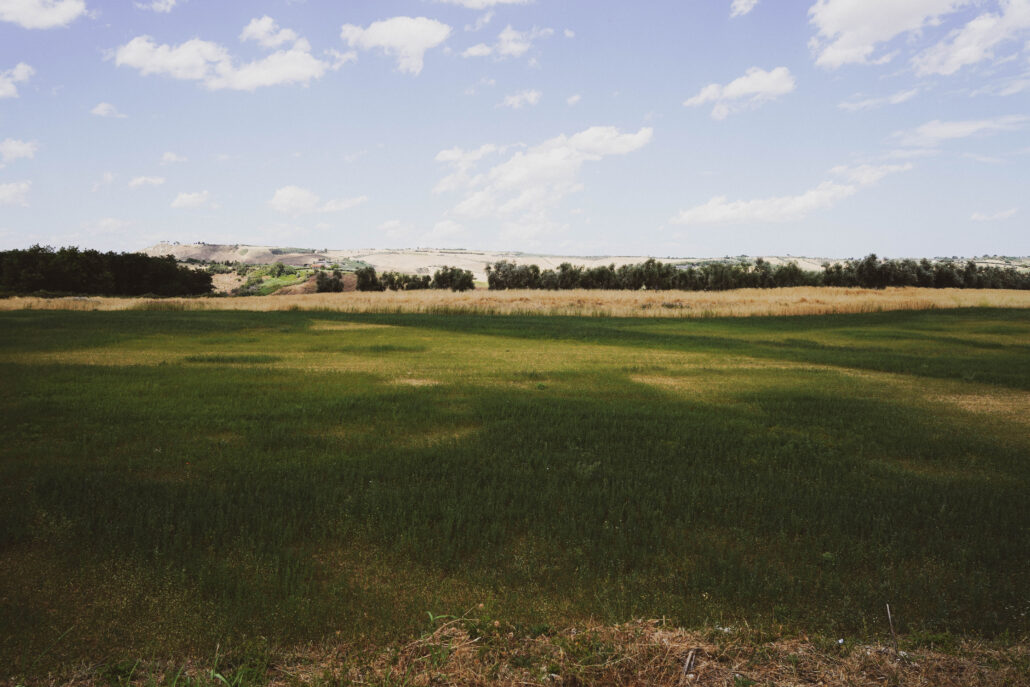
C’è un grande prato verde dove nascono speranze (trad. “There is a large green meadow where hopes are born“). This story could start like this, paraphrasing Gianni Morandi and his Un mondo d’amore. It could, but we are in Nocciano, in Abruzzo, between the Gran Sasso and the Majella mountains, the meadow is a wheat field and hopes not only arise but also sprout, they are harvested, ground, kneaded. And many, by now, have already become loaves of bread, in plural. Because there is so much diversity in this story, or rather, so much biodiversity. This is a story of a network, of an alliance, of daily revolution, and it is a small piece of the Breaders‘ history.
Breaders who?
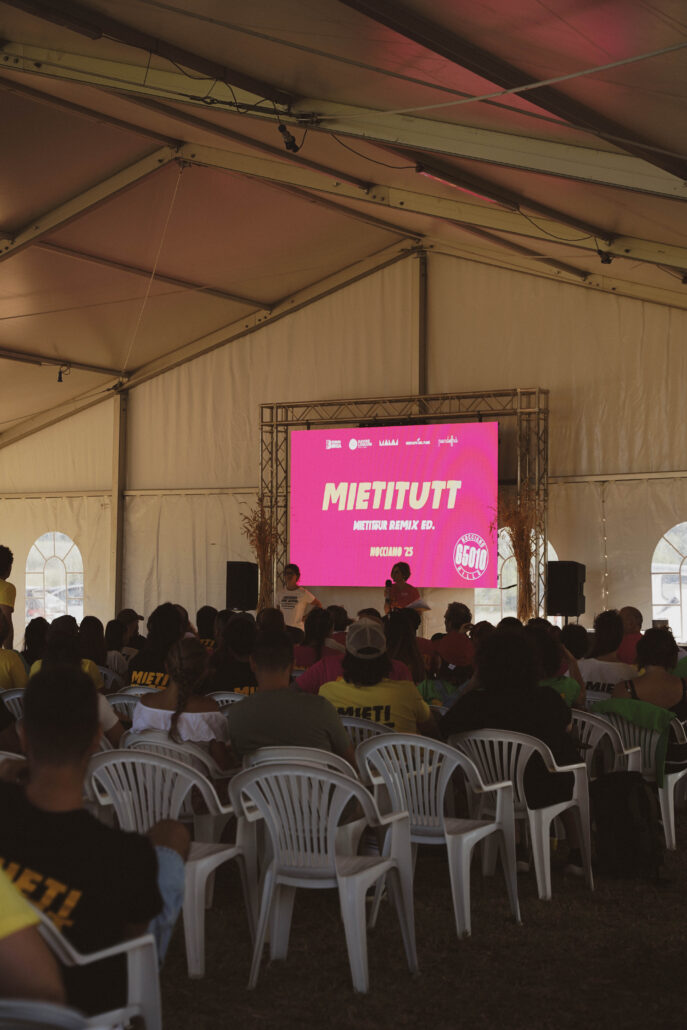
Nocciano is the place that brings them together before they knew they wanted to exist, the place that has given birth to an unlimited series of dreams that have been grounded. It is the place where the Mietitour were born, “the New Year’s celebration of ovens and wheat.” And it was at the last Mietitour – which for this year has become MIETITUTT – just a month ago in the wheat fields of Nocciano, that we’re trying to better understand who the Breaders are, what they are doing, what they will do, and most importantly, how they will do it. “In the spirit of Nocciano, a place of inspiration that invites us to rethink and rebuild relationships,” to borrow a quote from our collaborator Luca Martinelli.
The name is intriguing and is a sort of crasis between the English words “brother” and “bread”, both with the etymological root “br” common to many words that imply an action of disruption, friction, and change. The Breaders started from an ambitious idea: to change the world starting from bread and to change the way of doing and being a craftsman business. No apex, no center. Only shared roots, distributed coordination, horizontal alliance in which everyone maintains their own voice but sings in a chorus. They have created an alliance, a common “holding,” sharing resources and vision, but without giving up their own identity. A step that equals a cultural overturn. A bit like a confederation. Surely a collective enterprise. Or a mycorrhiza, that particular form of mutualistic symbiosis between the mycelium of a fungus and the roots of a plant that brings multiple benefits to both parties and the soil.
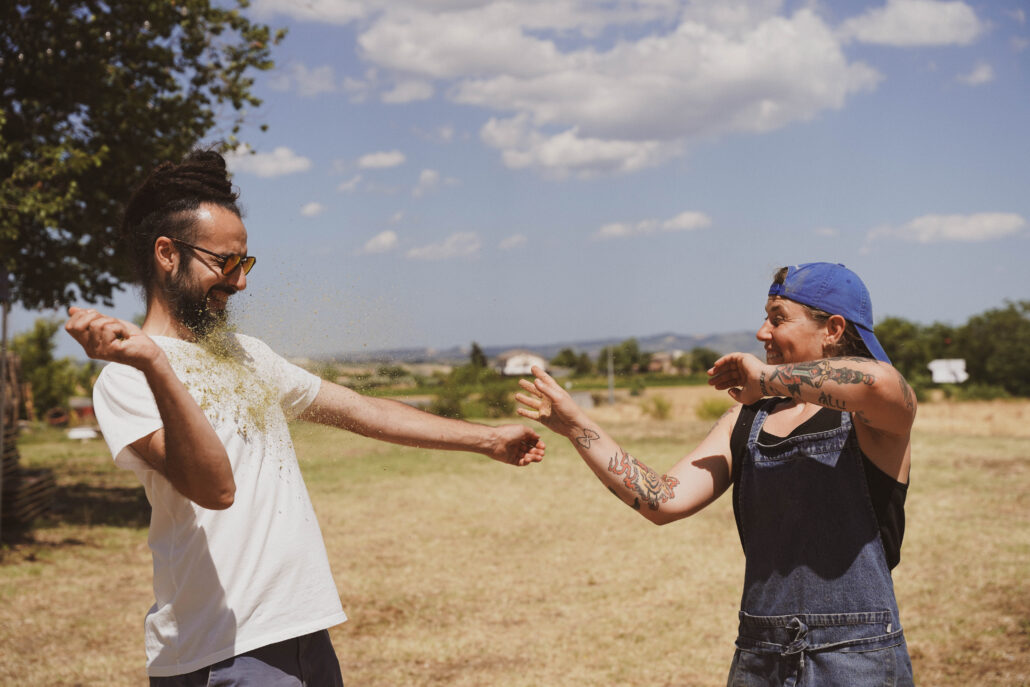
They are an “evolutionary blend” of bakers, farmers, millers, artisans, philosophers, dreamers. And like any respectable mix, they defy classification. But they converge, intertwine, establish common roots, share. And they want to demonstrate that it is possible to make diversity and the strength of the network the greatest values on which to rebuild structures. Breaders is the way for artisanal baking realities to come together in a group and succeed in doing what they could not do alone.
“Breaders marks a new paradigm”
Pasquale Polito, one of the founders of Forno Brisa in Bologna, says, “It is a group that is based on biodiversity and localism, which paradoxically means abandoning the idea of standard linear space, equal repetition, franchising, and means being able to embrace a global mindset.” It is not often that we see bakeries thinking as if they were a mini European Union, and it is Pasquale whom we ask to explain how the project was born.
“It arises from an intimate, entrepreneurial urgency of not feeling alone in moments of difficulty. It is the most complex thing to say, as it is the deepest. This is one of the urgencies that led us to systematize businesses, with the loss of total control related to ownership over what we once called our enterprise, which has actually become a collective enterprise because there are a thousand partners, with total control linked to skills. It is not a merger because the companies are autonomous, it is an enterprise that thanks to Stefano Mancuso today we call a plant enterprise that until a few years ago we called a network enterprise. It is a system of enterprises where ownership has slightly less importance and all are owners of both the controlling company and the controlled company. There is a process of symmetry where, however, the principle is that of autonomy and diffuse responsibility. Both at the level of corporate architecture and of the enterprises. This is the great challenge we have faced.”
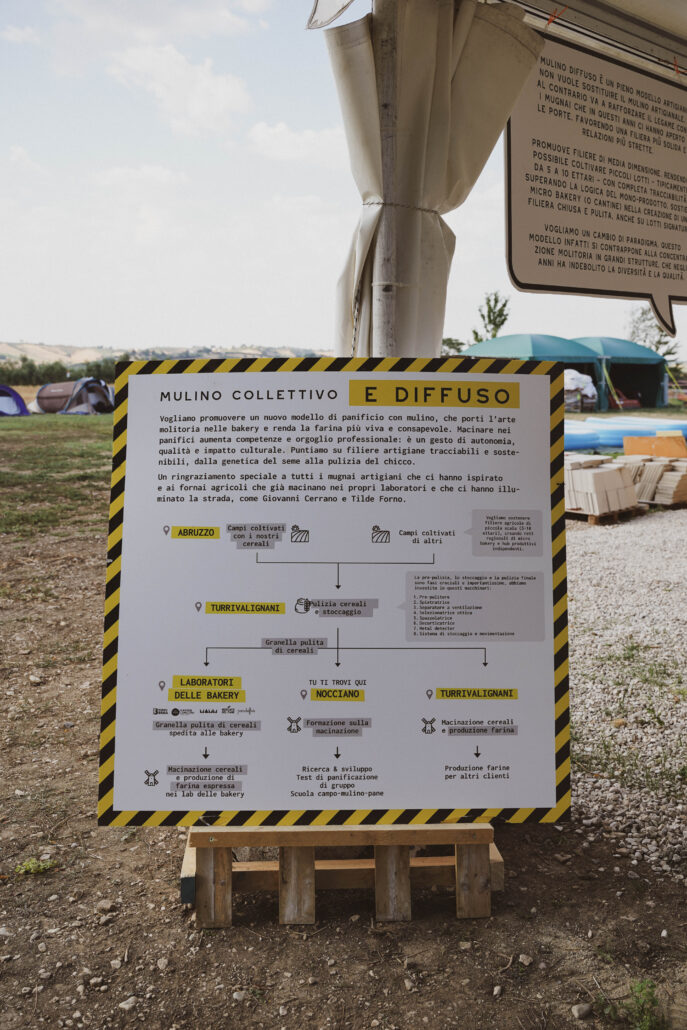
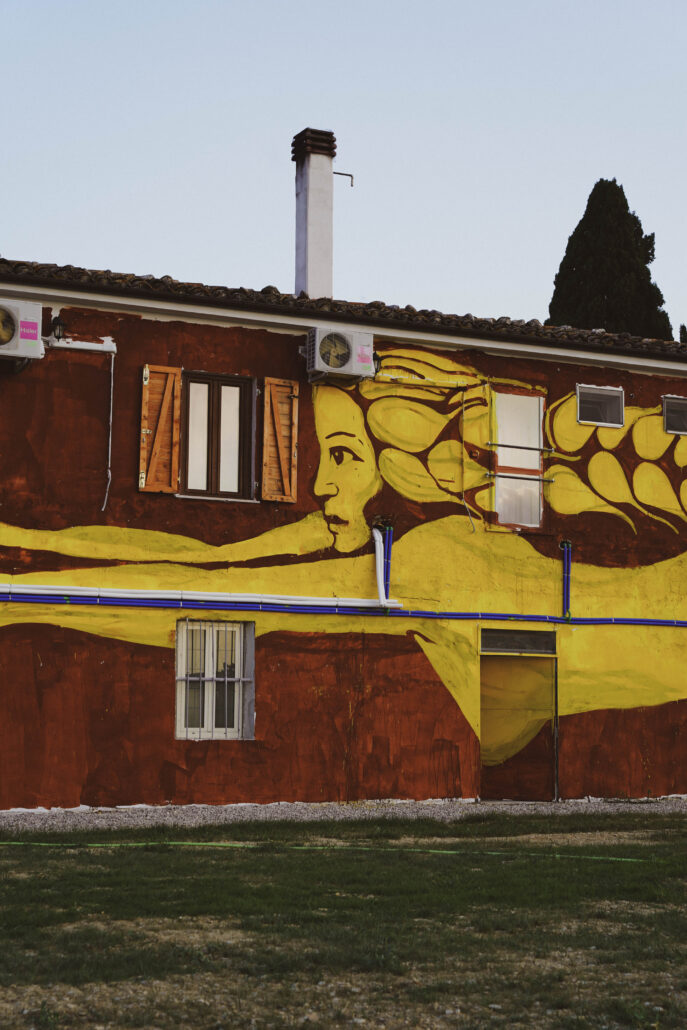
The Collective and Spread Mill
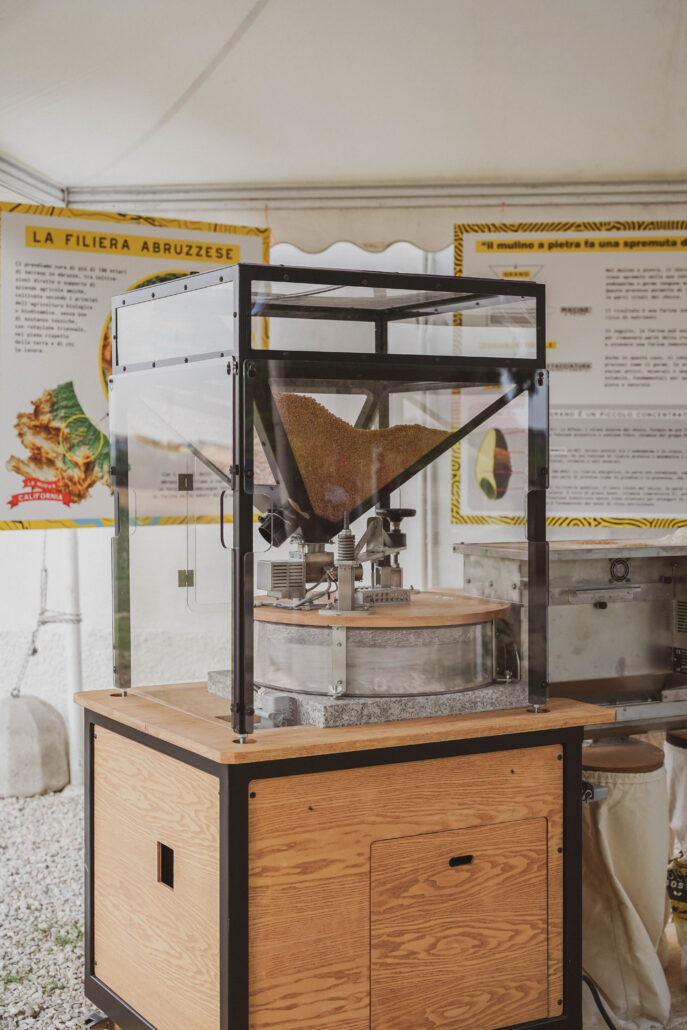
Breaders also came to do things that alone are not possible, or rather, not safe. “Like for a bakery to build a mill is a rather risky choice, but in a group of five, it’s less so, and that perhaps was the spark,” Pasquale continues. However, it’s important to note that forming a group with a shared investment to create a mill that can enhance the skills of bakers does not mean that the ambition is to stop working with the suppliers they have always worked with; quite the opposite. “We wanted to increase our expertise as bakers on the subject, and the missing link is precisely that of milling.” A necessary parenthesis. A world is emerging in Nocciano, starting from that mill Pasquale speaks of. A Collective Mill, with an attached agricultural company (Breccia srl) mainly for wheat cultivation (in evolutionary mix), which will serve as a center for training, research, and development rather than flour production, quantitatively speaking. However, the wheat from Nocciano will go to a warehouse that will serve as a storage and cleaning center in Pescara – next to Mercato del Pane – and the grains will then be distributed to various ovens. Each oven will have a small in-house laboratory mill to grind their own wheat, fresh. And the Collective Mill will also be made Spread this way.
Breaders is therefore a group of people who have come together in such a radical way that they will give birth to something innovative. But it is also: strength, sociality, family, sharing, community, dream, thoughtful revolution, urgency, stimulating, shared positive impact, collective responsibility, connections, collectivity, craftsmanship, collaboration, bonds, cooperation, innovation, opportunities, interchange, change, doing things in a different way, alternative, commitment, great passion, knowledge, courage, collaboration, eliminating the superfluous, possibilities, intersectionality, hope, future.
“It is something new, that wasn’t there, isn’t there, and will make history.”
It is the way to graft into our modern times, into our economy, that must deal with the system and find its own way to make it useful for everyone. Because to change things, one must address the system, and starting small may risk only remaining idealistic.
“There is something profoundly poetic in this endeavor. And at the same time, extremely concrete. Because in the end, it’s about work, local economies, agricultural supply chains, real food, places, and people. ‘Breaders is concreteness,’ says Luca Martinelli. ‘It’s the ability to take a dream, expand it in the sense of sharing it with others, and then make it a reality by asking questions, but without imposing ideological limits on the capacity to make it grow.’”
Pasquale hinted at it, but let’s say it better: one of the most profound influences on the Breaders’ philosophy comes from the thinking of Stefano Mancuso regarding plant enterprise. In short: plants don’t have brains, but they are extremely intelligent. They collaborate, adapt, resist; they don’t have a leader, but a network. They think without thinking, exist in symbiosis. They coordinate their existence in a distributed, cooperative, non-hierarchical way. No center, but a continuous and widespread network of exchanges. Mancuso’s thinking was a central part of Mietitour ’25 (the eleventh edition) in Nocciano, which also featured an enlightening video contribution from the neurobiologist. A Mietitour that, as we mentioned, this year became MIETITUTT: the first collaborative edition, made by Breaders.
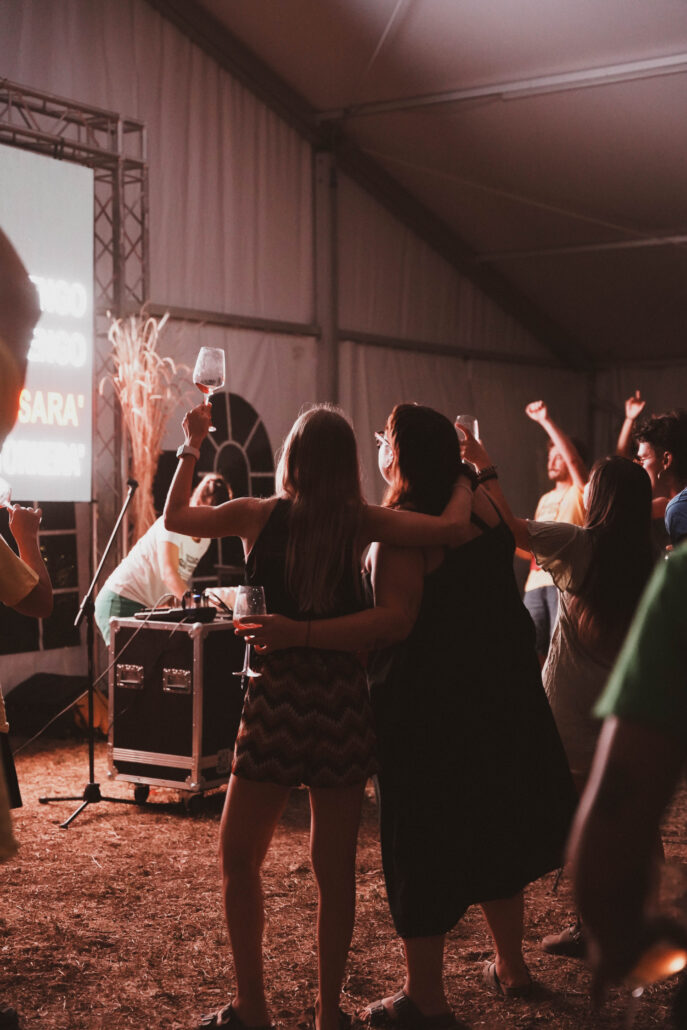
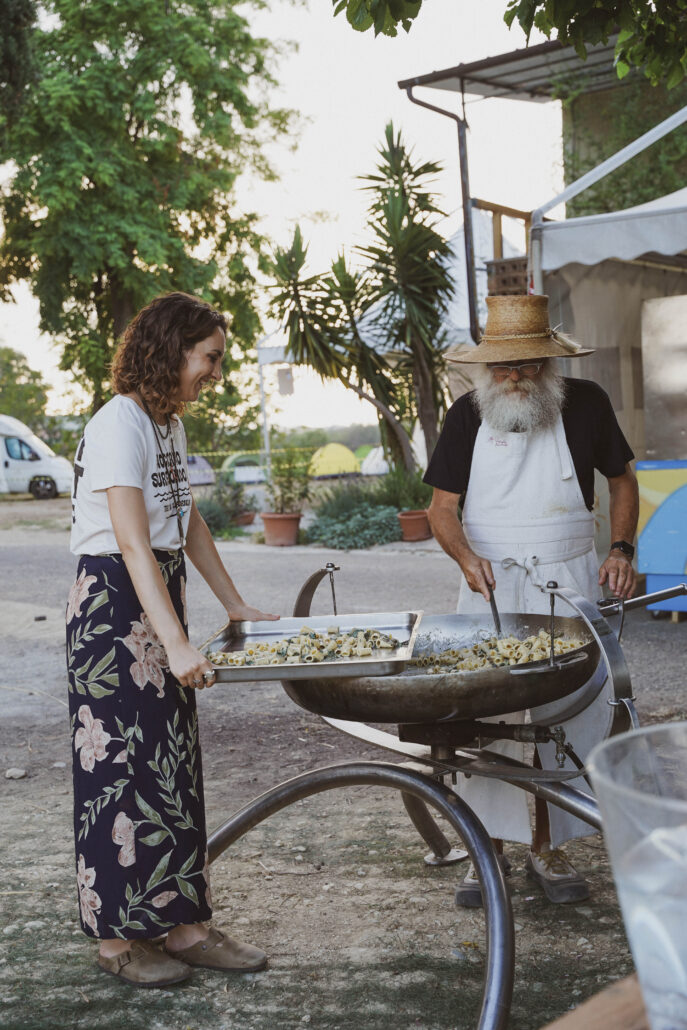
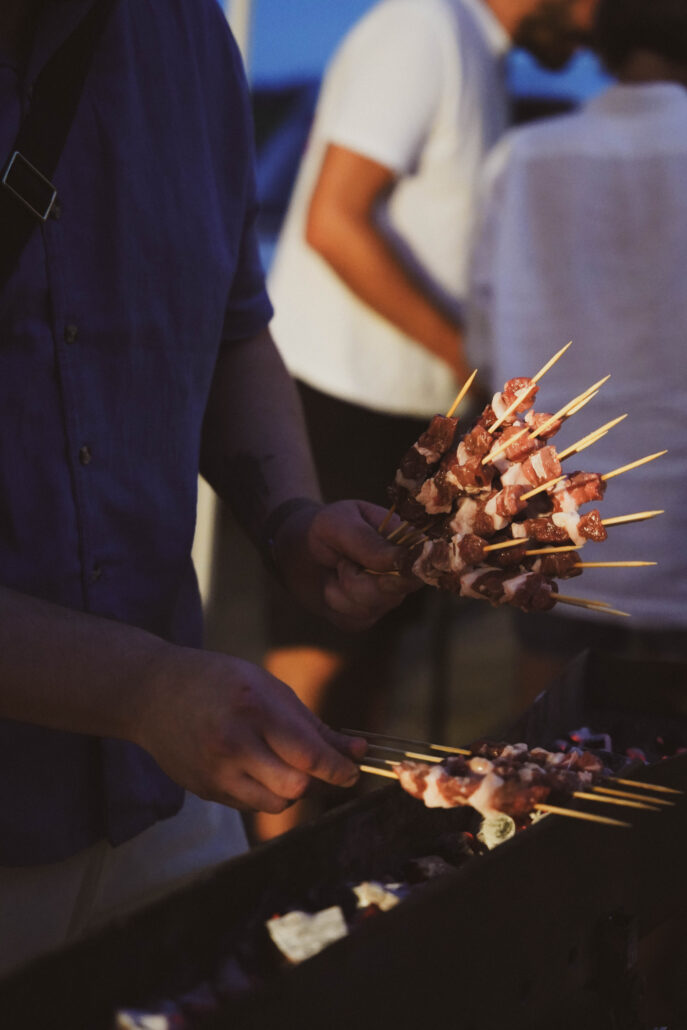
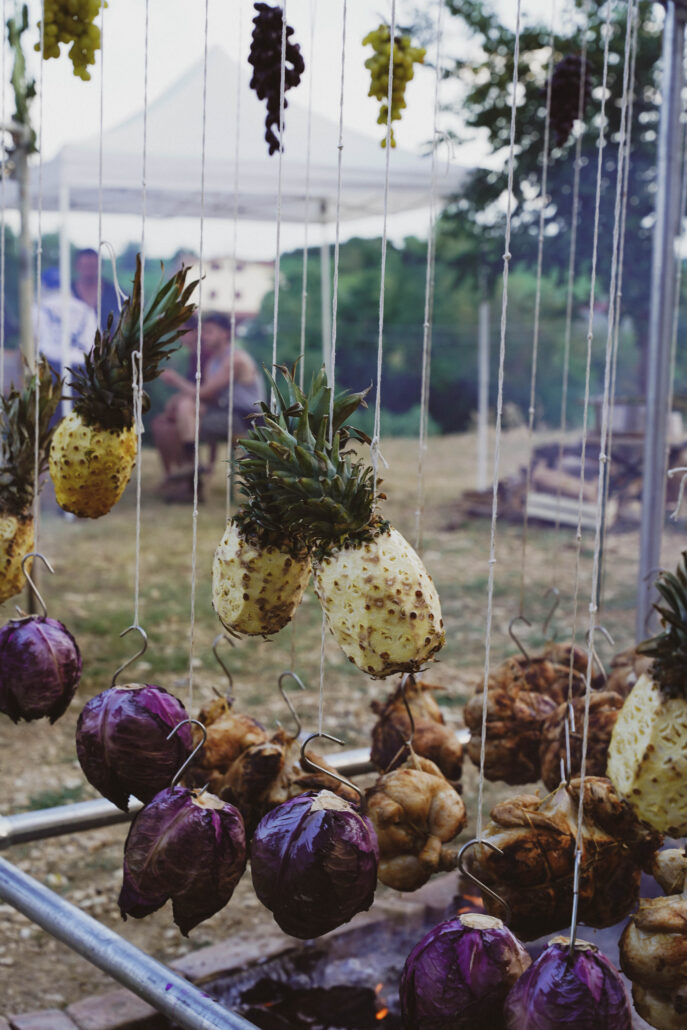
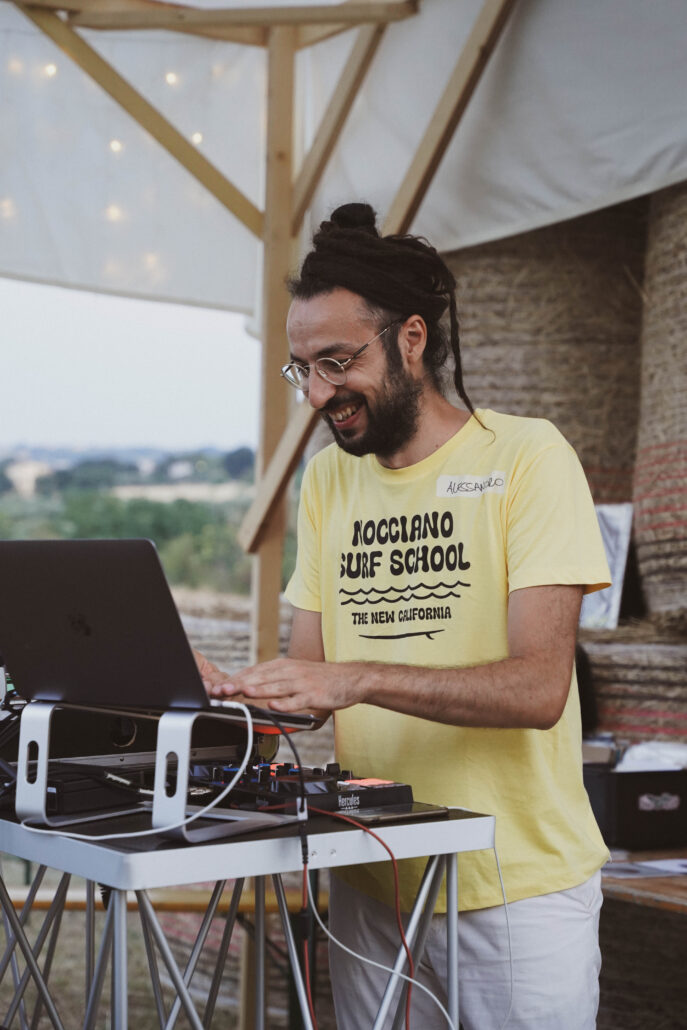
Mietitour and MIETITUTT: the wheat celebration
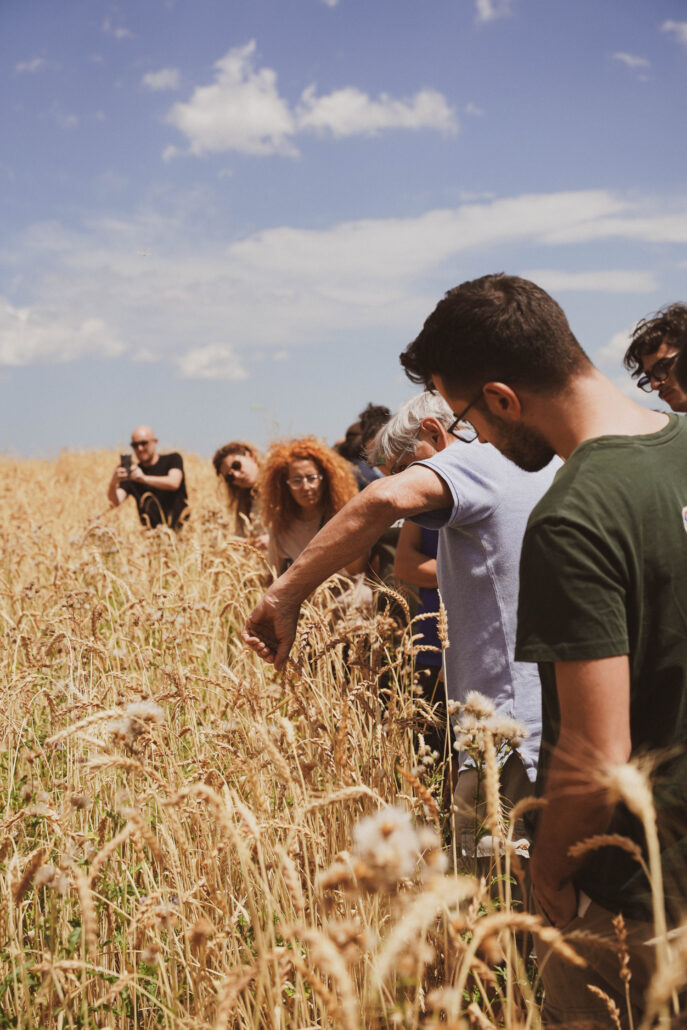
What is Mietitour/MIETITUTT? “It is the moment when we gather and collect ideas and energies, we open up to the community, exchange ideas, challenge them, mix them, dance, do karaoke, have fun.” It is a kind of collective biomimicry operation, a concrete way to experience the power of collective plant intelligence or the strength of thinking and doing things together. The first Mietitour was held in 2014, right in Nocciano, even before Forno Brisa in Bologna was born, and it was right there, from that experimental grain parcel harvesting, that the foundations of a collective business project were laid, first materialized in Forno Brisa’s equity crowdfunding and further evolving through Breaders with the goal of making a truly positive impact, with a model of artisanal enterprise applied on a large scale. Artisanal does not mean “small is beautiful,” but “mastery of the production process” as per Richard Sennett; therefore, it implies knowledge of the entire supply chain.
“The Mietitour is to touch firsthand the reality of what we do, it’s cathartic,” says Francesca Casci Ceccacci, founder of Pandefrà, one of the companies within Breaders. It’s incredibly rejuvenating for a large community that grows every year, meeting, intertwining relationships from which beautiful practices are born. It’s an opportunity to feel part of a community of people who want to see the world in a different way and strive to make it a better place. Moments of celebration and conviviality are mixed with moments of reflection, thought, and group work. With always stimulating contributions for the participants: this year with Arianna Occhipinti discussing the “fertile limit” and with Salvatore Ceccarelli and Stefania Grando sharing about the evolutionary mix, a foundational concept of the collective philosophy of Breaders both at an agricultural and human level.
A living laboratory
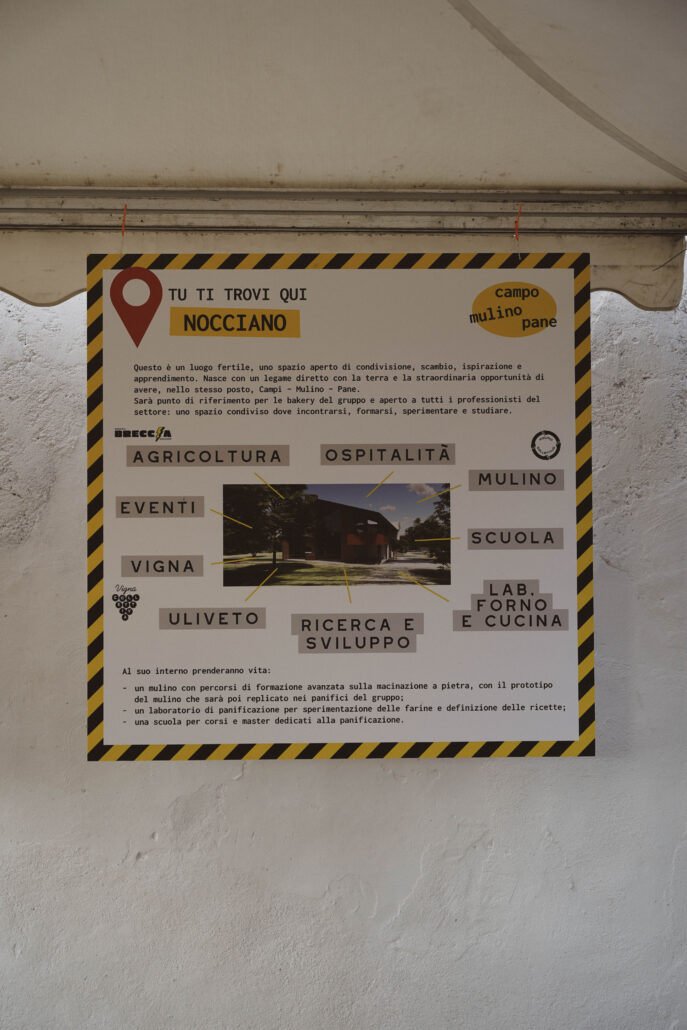
And Nocciano is, still, the epicenter without being the center. What happens here? In what is jokingly and internally called the New California, to wink at Silicon Valley. It’s becoming a living laboratory. Here they cultivate, they bake, they discuss, they imagine. There is an agricultural company, Breccia srl, and there will be the Collective Mill. It is the symbolic center. It is and will be a “sacred place.” “I would like it to be the Mecca of Bread,” says Francesca. Yes, because Nocciano is changing and becoming a gathering place for many dreams turned into reality.
What will the future hold (a near future)? “I imagine it as a place of possibility,” says Pasquale, who is at home in Nocciano as his family owns that piece of land with a farmhouse that gave birth to everything and is now shared. “We left a piece of empty planning, we learned not to plan everything, and so this place will probably host a training school with a scientific committee for professional training, there will be events related to gastronomy, there will be hospitality for all those who are part of the group to come and live in the countryside. This place must be a fundamental node of the network through which flows the lymph, information, dreams, and above all, energy. All that is not seen. It must represent a crucial node but not a center because in our system every node of the network has a center and this is one of the centers.” It will be a vibrant place throughout the year, a place to detach also to see what is being done, a place of exchange between people working in the group’s realities, a space of openness, research, and development, of training. A place, note well, not just a space. To delve deeper into the substantial difference, seek the lessons of Professor Franco Farinelli.
“What will happen in Nocciano? The revolution.”
Andrea Frigo, who lives in that place every day as the administrator of the agricultural company Breccia and as a decidedly proactive member, states with absolute certainty, “It is change. The world moves forward through small revolutions. Imre Lakatos, a philosopher of science, spoke of scientific revolutions; this is a cultural, scientific, and economic revolution, all together. There is an urgency for this.”
Blending and being an evolutionary mix in Nocciano becomes a cultural metaphor. The Breaders are not identical, they do not follow a single variety of thought. They are a mix that evolves, adapts, grows in relation to the context. Each bakery is different, each field has its own grain, but together they form a resilient network, much like a field sown with diverse varieties.
Their value lies in the diversity that harmonizes in their actions.
Re-writing the bread economy with the strength of the network
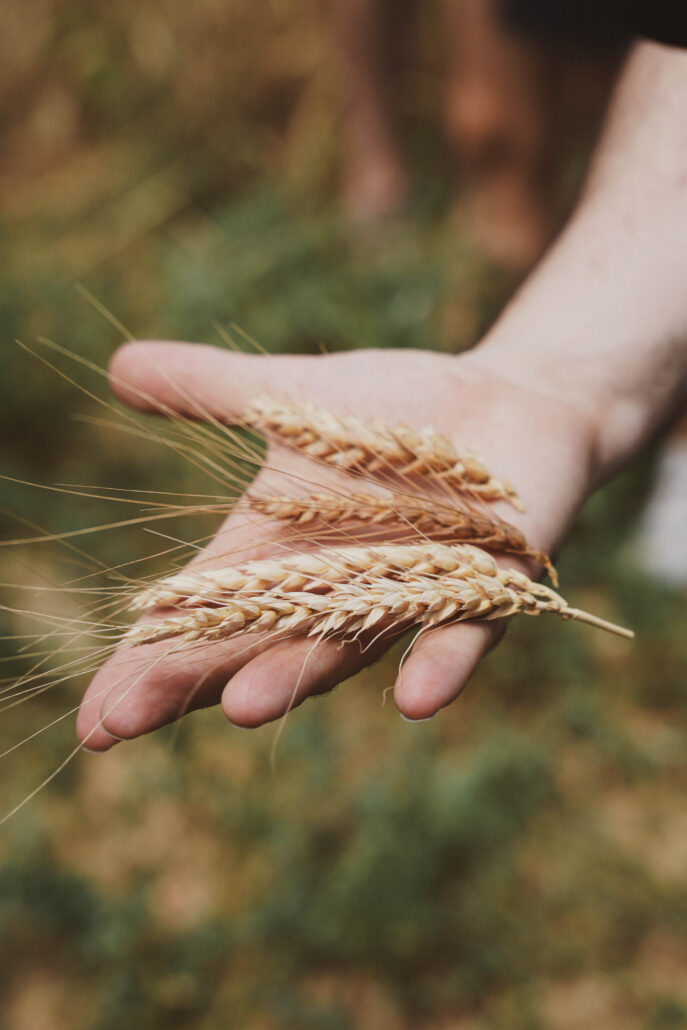
There is a great vitality here that spins energies, ideas, and changes the world. A collective force that breaks the logics of productive individualism. It makes a revolution through the Republic of Bread. And bread, in this vision, is never just a product. It is a process that reactivates the sense of place, relationship, responsibility. Bread is an immensely powerful symbolic device because it involves all stages of the supply chain: the land, the work, the transformation, the community. If you change the bread, you change everything. And indeed, the Breaders do not limit themselves to baking. They build relationships, dismantle hierarchies, reinvent the economy through forms of radical cooperation.
“After all, we’re just bakeries.”
Davide Sarti makes his debut in the midst of a nocturnal vinyl session curated by Alessandro Di Tizio (forager) and Riccardo Orlandi (head of the Forno Brisa laboratory). “Ten years ago, a bakery wouldn’t have created a situation like this. I like to think that even a bakery, or bakeries, can accomplish this (by ‘this’ meaning all that has been described above), so that many young people can approach this type of trade and this kind of reality.”
Where does all this lead? Perhaps to a new economy. Perhaps to a new culture. Perhaps it’s too early to say if the Breaders are truly changing the world. But it is certain that they are changing the way some people inhabit it. And that, in itself, is a revolutionary act.
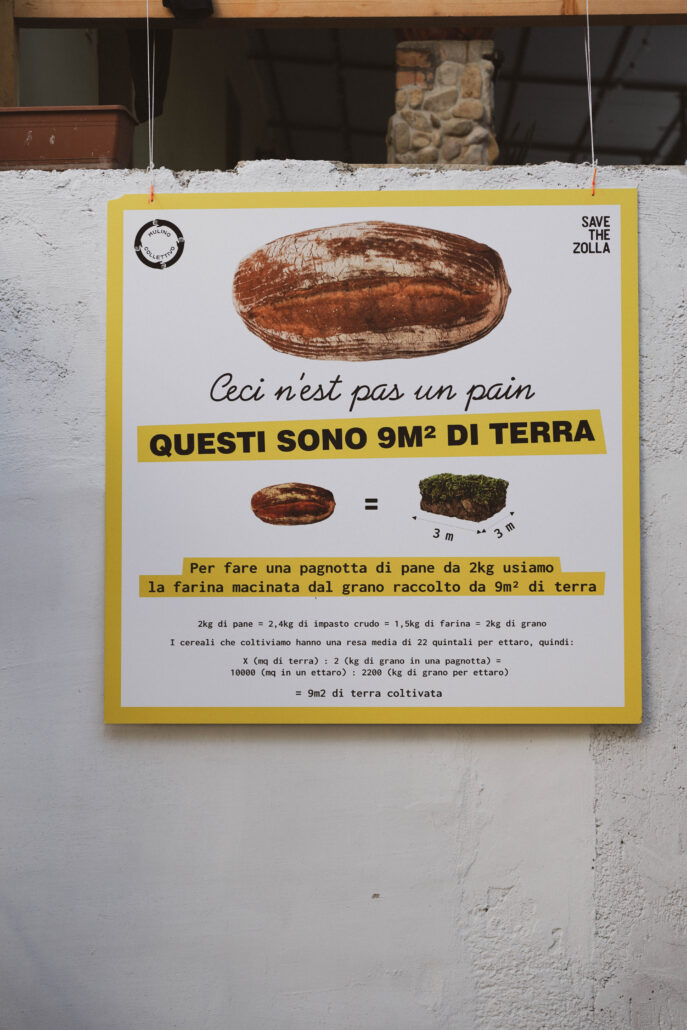
The future of bread lies in the ability to network, to educate young thoughtful bakers. To be and become evolutionary blends and to build resilient micro-chains. To see bread as commons, as a relational good, as a social institution that nourishes, but also educates. That tells stories, but also builds. That changes the world, one loaf at a time, or rather 9 square meters of land at a time, to use the bread’s relativistic equation created by Forno Brisa to communicate the impact of a well-made 2 kg loaf.