“Two is not double
but the opposite of one,
of its solitude.
Two is alliance,
a double thread that does not break.”Erri De Luca
It takes two flints to spark a fire, but making something together is never a given. Not because of the outcome (that’s the easy part to tell), but because of everything in between: that uneven, shifting matter made of highs and lows, of shared decisions that click and others that stall, of compromises that sometimes hold and sometimes don’t. Making wine together, in this sense, acts as an accelerator: it brings everything to the surface, often sooner than expected, leaving very little room for simplification.
Wandering through the third edition of Augusta, Turin’s natural wine fair, this slowly starts to come into focus. Not immediately, but it emerges through talking and listening. Between one tasting and another, between conversations that start in the vineyard and inevitably end up on life, a surprising number of couple stories surfaces. Not so much in the sense of “you work together, how nice,” which is always the first reaction, but as if that configuration were a kind of constant, a recurring structure. And the more you listen, the less it feels like a coincidence.
In wine, after all, there’s always this slightly suspicious idea (that, repeated often enough, almost starts to feel true) that it plays the role of Cupid, as if the right bottle were enough to make something happen. And in fact, things do happen: through shared tables, glasses that are filled and emptied, encounters that take an unexpected turn. But if wine can be a good intermediary for the beginning of a relationship, when that relationship decides to become wine, things get considerably more complicated. Because it is no longer about sharing moments, but about sharing processes. This is where the vineyard comes into play for what it is, without too many filters: a demanding, cyclical system, at times even unforgiving. It has no interest in relational dynamics, it neither supports nor hinders them, but precisely for that reason it brings them into focus in a rather direct way.
Working side by side in this context means being constantly exposed – both to external conditions and to the other person – without the possibility of hiding behind a clear division between work and private life. Everything mixes, inevitably, and the vineyard almost functions as a third element within the couple: something that imposes a rhythm, that forces synchronization, that makes a continuous renegotiation of how to exist together within an unstable system, where the margin of control is always partial and where intimacy doesn’t come only from saying everything, but also from sharing the same stubborn slice of reality.
Life as partners in the vineyard, then, is less a love story and more a training in complexity: of a terrain, of a cycle, and above all of two people who discover, season after season, that growing together is anything but natural – yet can be unexpectedly fertile.
Mataburro
In Roussillon, in the south of France, the landscape is harsh, with wind as a constant presence. It is called Northern Catalonia, because culturally it feels more Catalan than French. This is where Laurent Roger comes from, with a family history in wine that spans many generations and a couple of centuries. A story that had been interrupted when, in 2001, Laurent’s father decided to sell the family domaine. And it is there that Laurent returns – together with his wife Mélissa Ingrand – after years spent in Paris, immersed in the world of restaurants and natural wine, including thirteen years atLe Verre Volé, one of the symbolic places of that scene. In his story there is a change of direction that does not stem from a precise plan. “I left Paris in 2017 with the idea of opening a wine bar in another city… I found myself in the south of France with friends, and Alain Castex (an iconic figure in natural wine in Roussillon) convinced me to return to the vineyard, and my wife Mélissa and I thought to ourselves: why not.” That “why not” is more of a threshold than an actual decision, one of those things that only makes sense afterwards. They start again from the family history, but not from the domaine: from two and a half hectares of old vines, recovered, which today have become seven, between Rivesaltes and Espira-de-l’Agly.
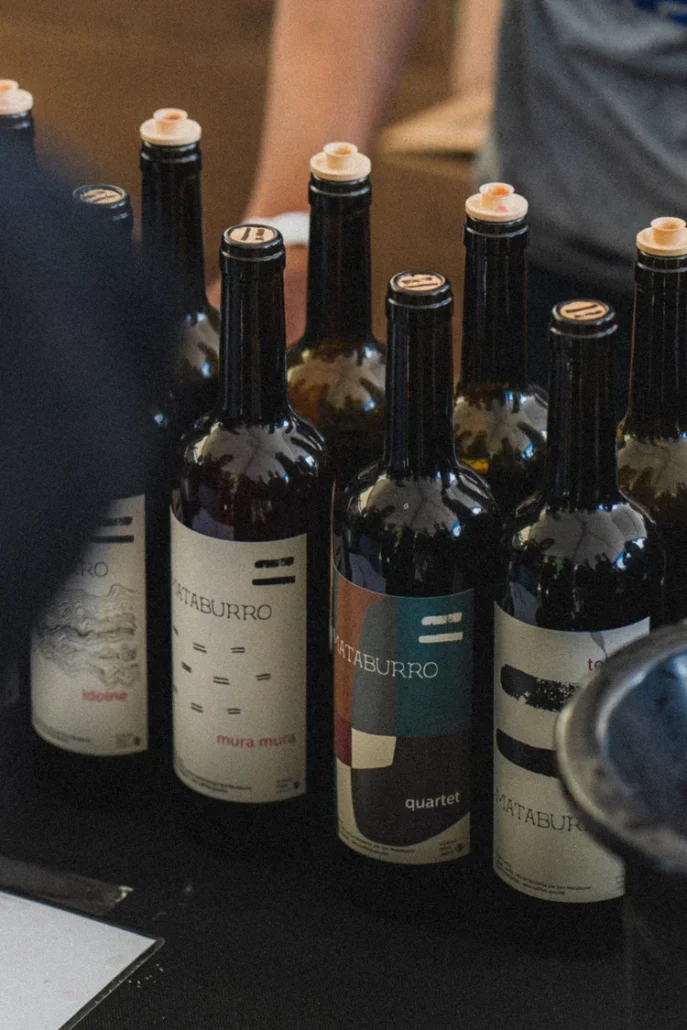
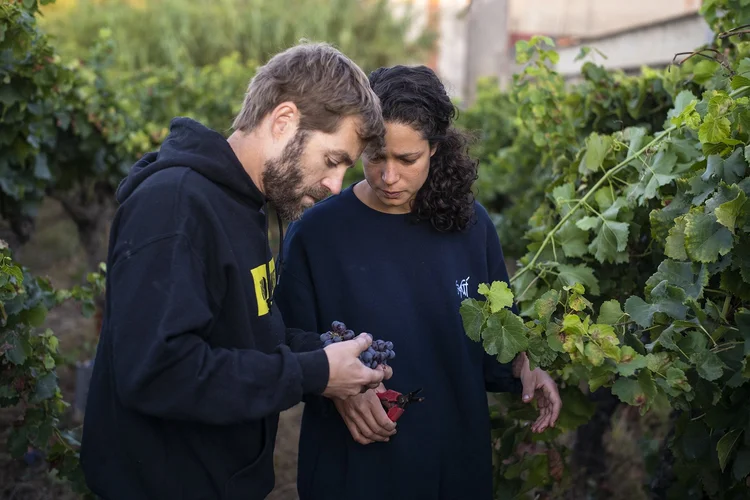
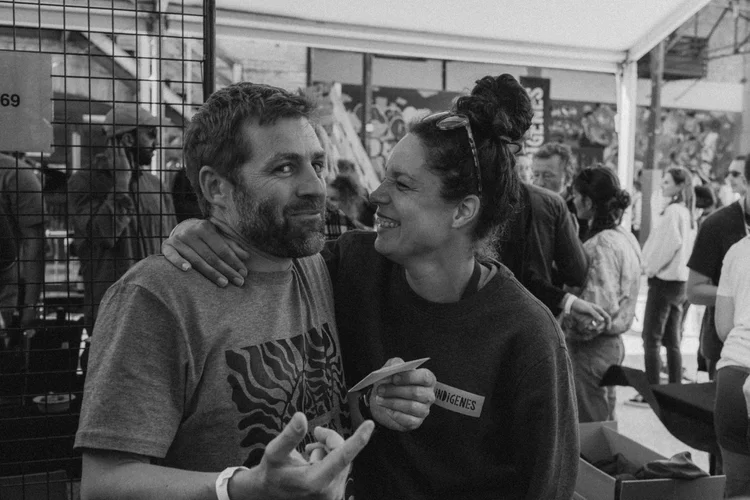
Mélissa, who comes from the world of communication and events, is not a secondary presence. “She was the person who convinced me the most to make wine,” he says, and that alone shifts the axis of the story: she is not someone who follows an already defined project, but someone who contributes to making it exist. Mataburro, their winery, is born like this, with a curious name that has little that is poetic and much that is rooted: mataburro, in Catalan, means “donkey killer,” the nickname given to the train that, when inaugurated in 1910, killed two donkeys as it passed right next to the vineyards. The train is still there, it passes just behind, and in a certain sense it constantly reminds them that the territory is not just scenery. Between Laurent and Mélissa, the work is shared. In the cellar, choices move in the direction of conscious subtraction: short macerations, often whole cluster and without crushing, fermentations in fiberglass, aging in steel, no filtration, no use of sulfites. The aim is to produce living wines, with contained alcohol levels, in a context that would push in the opposite direction (“here viticulture is very old style, the local mindset is still quite closed towards natural wine,” Laurent says).
Domaine de Cassiopée
In Burgundy, the complicity of a couple takes on another form. Talloulah Dubourg and Hugo Mathurin arrive in wine after a very structured training path, within some of the most rigorous estates in the region, where they developed an extremely disciplined approach to vineyard and cellar management. They then decide to consciously evolve that very solid technical knowledge accumulated over the years (and through studies in agronomy and oenology in Bordeaux). When in 2020 (at barely thirty years old) they founded Domaine de Cassiopée in Sampigny-lès-Maranges, the choice of location already read as a statement: this is the southern part of the Côte de Beaune, an area less central than more famous appellations such as Meursault or Chambolle-Musigny, but one that offers interesting conditions, such as often older vineyards, less commercial pressure and greater room for experimentation. They are a breath of fresh air within a region like Burgundy that lives off historical allure.
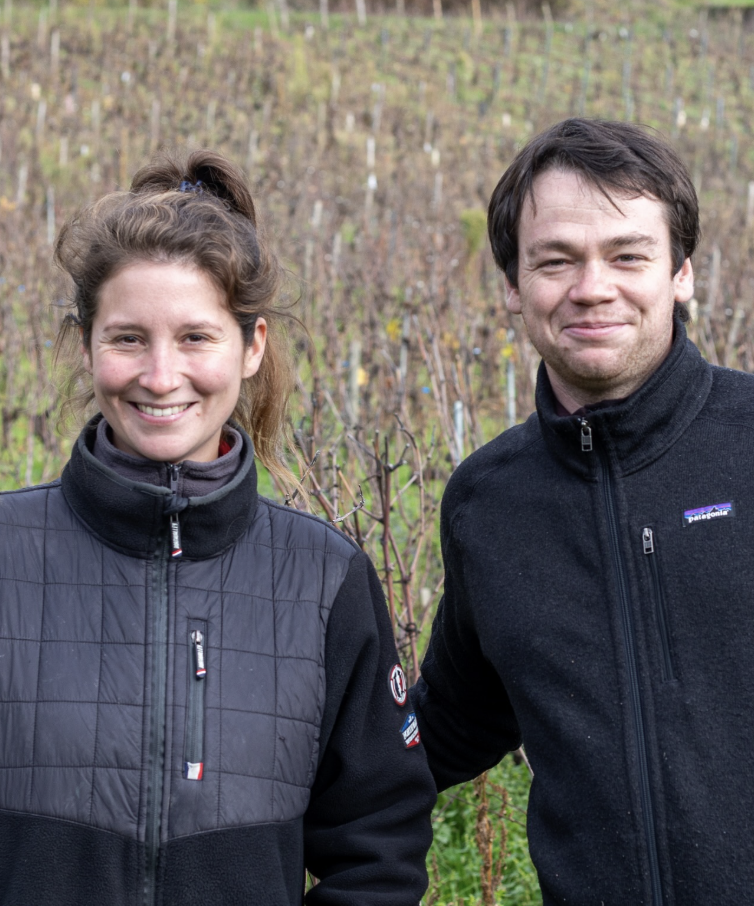
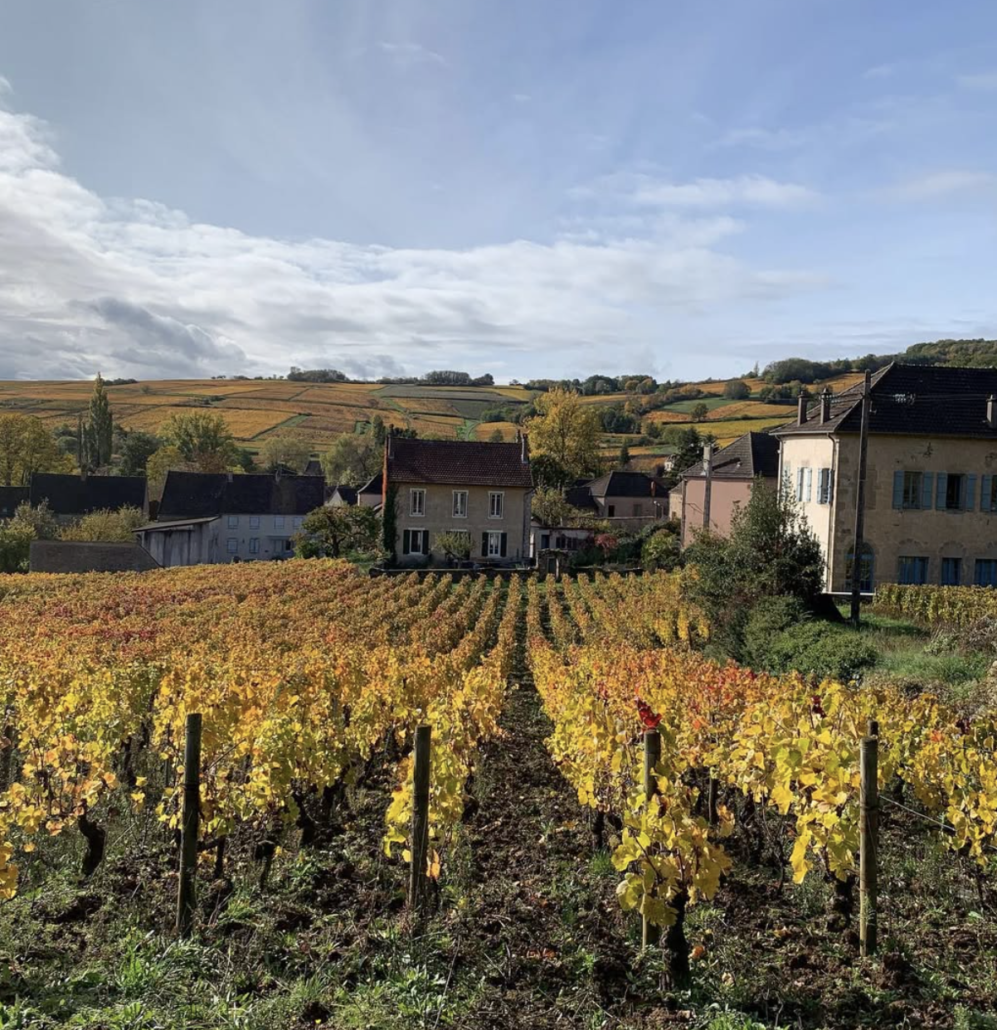
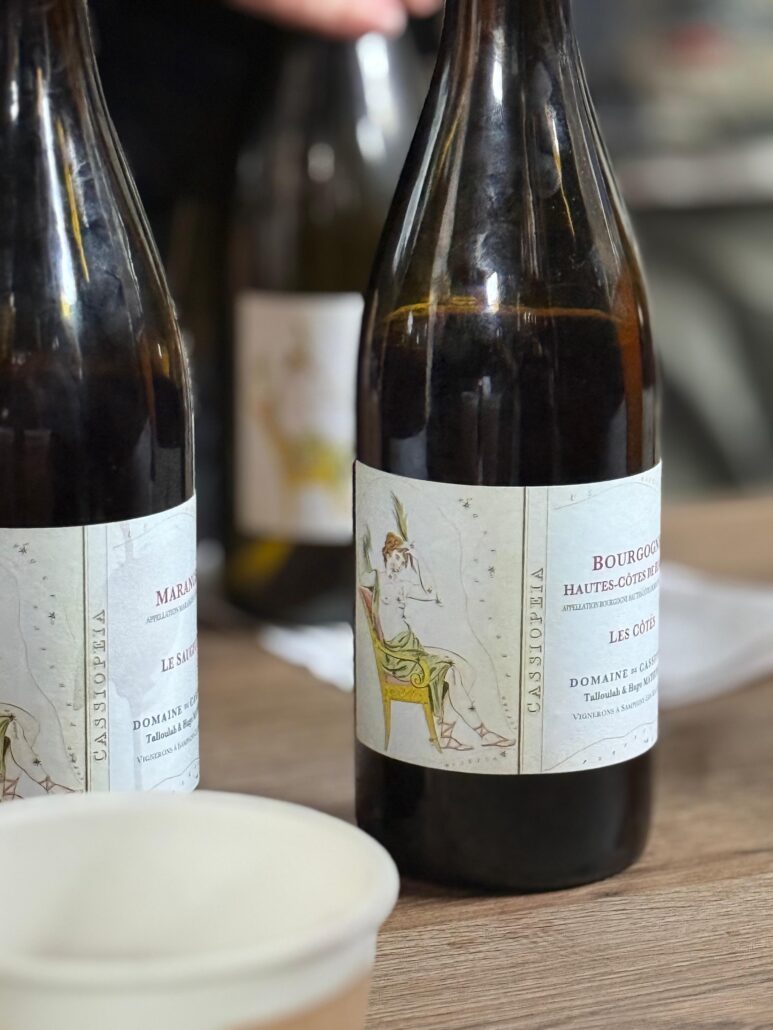
“We were in Burgundy, doing various internships in different wineries, and we heard that a man who was ill had put just over four hectares up for sale in this less renowned area, at a price that didn’t require being millionaires to buy. It’s just the two of us, we converted everything to organic and we work biodynamically because in this way the wine can surprise more, even if it is riskier to produce,” Talloulah explains. “Cassiopée was the name we wanted to give to our first daughter, and the domaine came first; so it’s a bit as if it were our first child,” she smiles. “And we didn’t want to put our names on the label, we wanted something that could last over time, and so the name of the constellation is a nice link between what we are trying to do and the imagery behind our domaine.”
The estate develops over about five hectares, with a very limited production that includes both white and red wines: Bourgogne, Hautes-Côtes de Beaune, various interpretations of Aligoté and Maranges. From the very first vintage, the wines attract the attention of importers and enthusiasts, especially for their precision and for a more tense and mineral profile compared to the average of the area. It is not so much a matter of breaking with tradition, as of understanding where to position oneself within that tradition without merely replicating it. And this has a direct impact on the dynamic of the couple, in an overlap of shared competences that turns every decision into a dialogue between two informed and structured points of view.
Their project is gradually taking shape around a balance between continuity and independence: on one side, a background deeply rooted in Burgundian tradition; on the other, a clear drive to carve out a style of their own. A balance that is constantly being negotiated within the project, but also within the relationship itself.
Vigna Flor
In Veneto, in the Colli Euganei (in Cinto Euganeo), the question takes shape in yet another way, because the separation between work and private life simply ceases to make sense. Vigna Flor, the project of Davide Boldrin and Francesca Gozzo, is born within a continuity rather than as a rupture. Both come from the world of hospitality, from years of shared work between Italy and the Canary Islands and many travels, and the transition to the vineyard does not create a new structure, but amplifies an existing one. It is a gradual shift towards production, one that passes through direct experiences in the cellar and a progressive adherence to agricultural practices linked to permaculture and synergic agriculture.
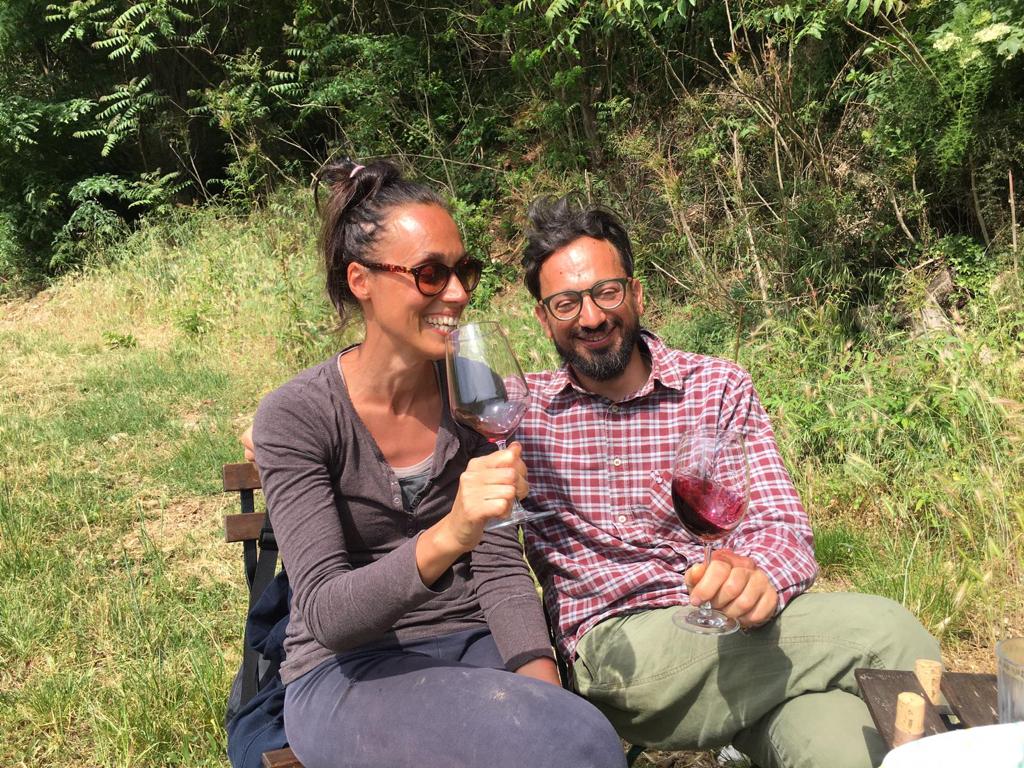
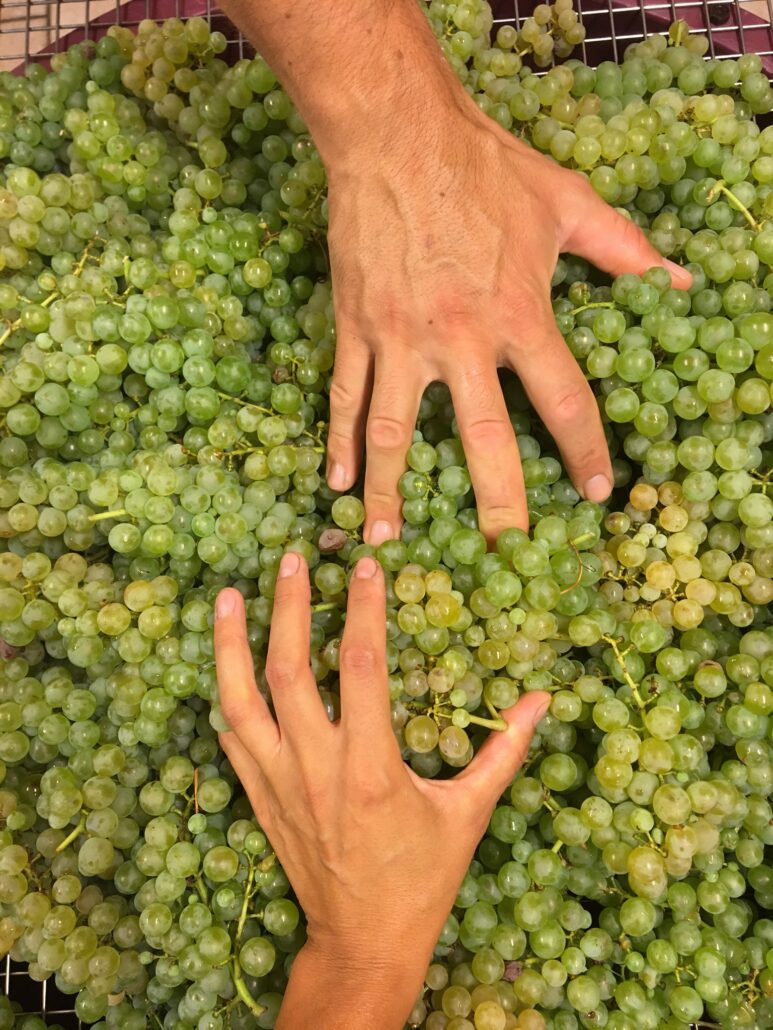
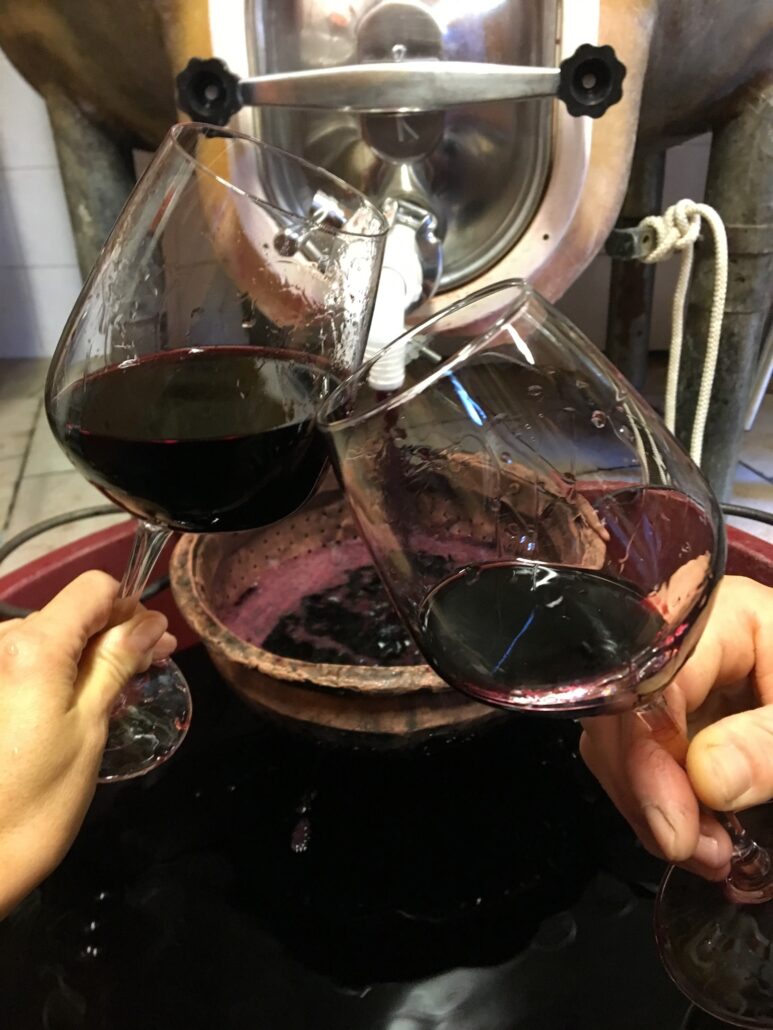
“We had a wine shop in Monselice, in the province of Padua, where we were born. After a few years, we became passionate about real wine, natural wine, made only with grapes, and so we realized that our heart was in the agricultural environment, in the family that we couldn’t manage to build in the wine shop, in a commercial setting. Right when we sold it, Flor was born. We wanted to go and live in Spain, and instead, while doing research, Davide got in touch with Lorenzo Corino, we spent some time in Valtellina working in a vineyard… and then we came back to the Euganean Hills, which are home. We are in a beautiful vineyard, healthy, biodiverse, where different varieties of flowers grow that can be felt in the wine, which is full of the energy of the sun, of nature.”
The estate develops over a few hectares, between rented vineyards and parcels acquired over time, characterized by mixed plantings and a strong heterogeneity. They are “free-grown vineyards,” as they say, which preserve the soil, the vine and the human being. A holistic project of healthy balance in which the most evident aspect is not technical: it is that the project is closely tied to the family dimension. The very name, Flor, is that of their daughter (born before the project), and this makes explicit a structure that is not separate from personal life, but rather an extension of it, in harmony with nature (“and this is also good for the balance of the couple”), in a sense that is also poetic. As is also reflected in the names chosen for the wines: Battito del sole (Heartbeat of the sun), Come lunghi baci (Like long kisses), Solo il vero resta (Only what is true remains). “The resistance we practice today, as a choice of peasant life that we make today, is also supported by a poetic vision,” Francesca concludes.
Margot Rousseau-Petit e Natalia Santo
In the Loire, in Anjou, the project of Margot Rousseau-Petit e Natalia Santo (which bears their names) is instead born in a completely different way, almost by deviation, or – better said – by destiny. Neither of them is from the area (Margot is from northern Burgundy, while Natalia is from Brittany), and neither of them has an initial agricultural background; on the contrary, both came from worlds far removed from the land. But it is in Anjou that they meet. Margot, who had previously worked in documentary filmmaking, was learning the craft of organic viticulture with the winemaker Thomas Batardière, while Natalia was there to take a break from her work in cinema and live performance production.
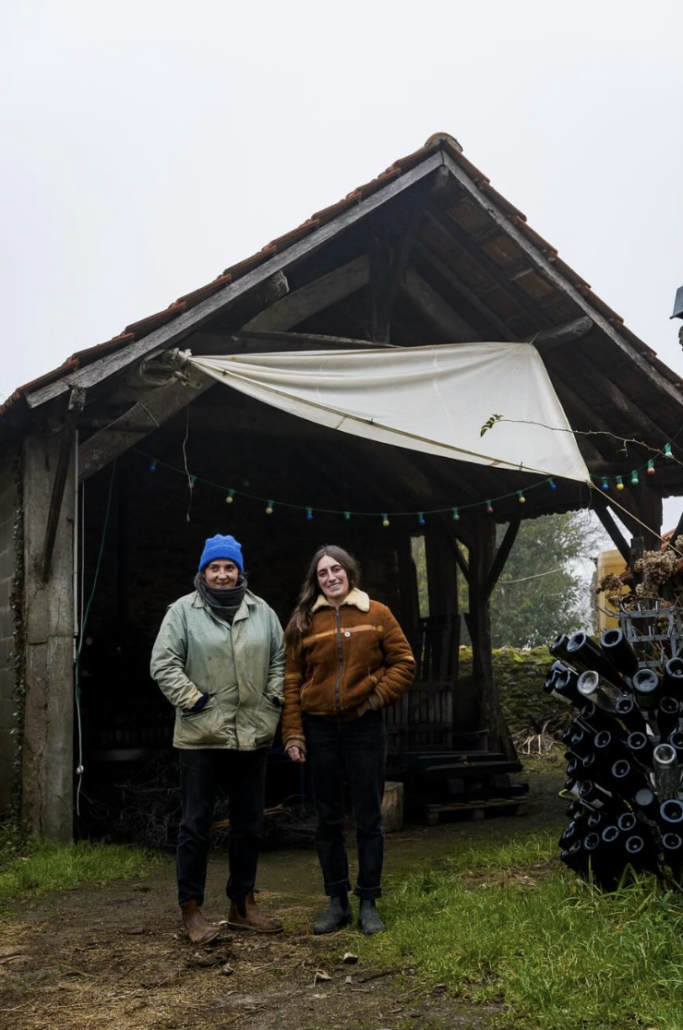
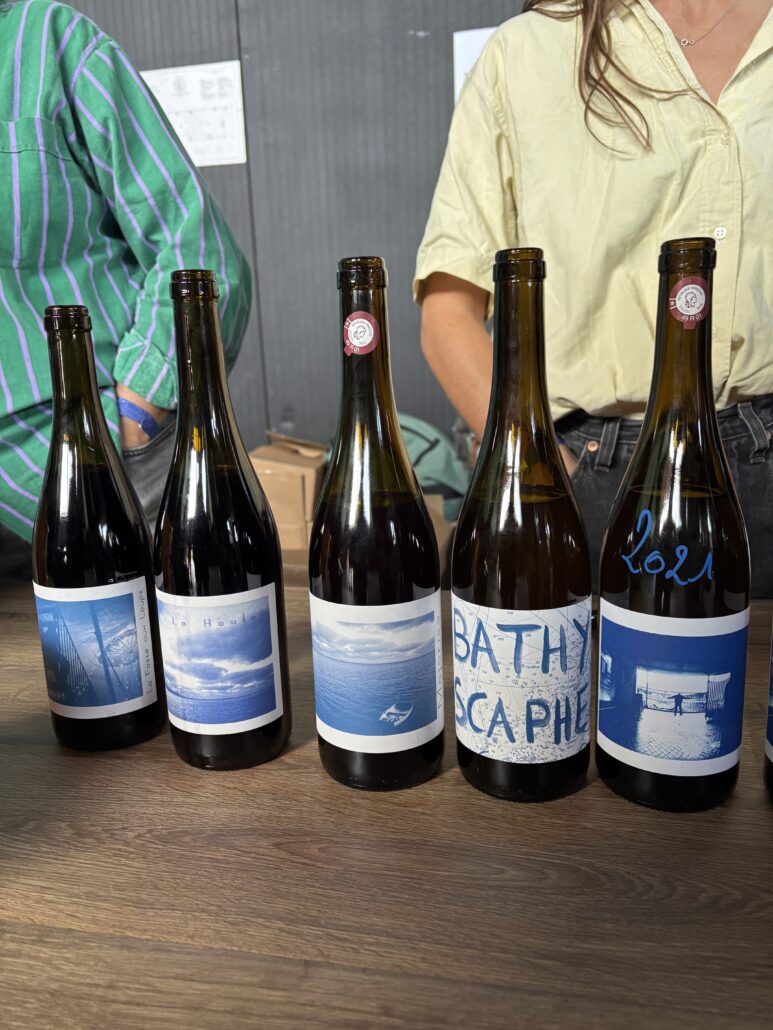
It is 2017, and they begin to build something together starting from parcels lent by Thomas Batardière: grolleau and gamay. The two attract attention right away, certainly for the unquestionable quality of their wines, but also for their artistic labels, somewhat cinematic, and for their atypical profile: two young women, elegant and reserved, with an urban cultural background, entering a scene still very much marked by a male and rural presence. “We both do everything,” Margot says, with an elegance and calmness that contains the whole meaning of their shared and direct project. A project that, precisely, is born at the same time as the relationship, just as their relationship takes shape together with the work.
Margot Rousseau-Petit and Natalia Santo are part of the new wave of Anjou, the “young plantings” producers who are bringing new life to the great work of subversion set in motion by the pioneers of natural wine a few decades ago. An older guard that is very open to dialogue, as Margot recounts with satisfaction, within a wine scene that manages to hold together experimentation and openness, allowing for a variety of stylistic approaches while maintaining a strong territorial identity.
Les Canterelles
A completely different couple story is that of Les Canterelles, in Catalonia, of Nuria Renom and Arola Tous Galí. Here everything starts from Nuria and moves to the next level thanks to Arola. Nuria is a compelling, energetic character – and her story could only be like her. In fact, Nuria arrives at wine through a path that is anything but linear. Born in Argentina, she moves as a child to Spain with her family. She studies veterinary science (but does not finish) and goes on Erasmus to Pisa – we are in the early 2000s – and here the world of wine enters the scene in an almost accidental way, but remains deeply tied to the relational dimension. “I fell in love with wine, I fell in love through wine,” she says. “Drinking, eating, living together… we often went out to have a glass of wine that was never just one glass. In that context I fell in love with wine, and there I fell in love with women. The first kiss came after six bottles of wine.” It is an origin that, in some way, remains attached to everything that comes after. “Wine is an energetic drink… it is love, passion, respect. It is my life.”
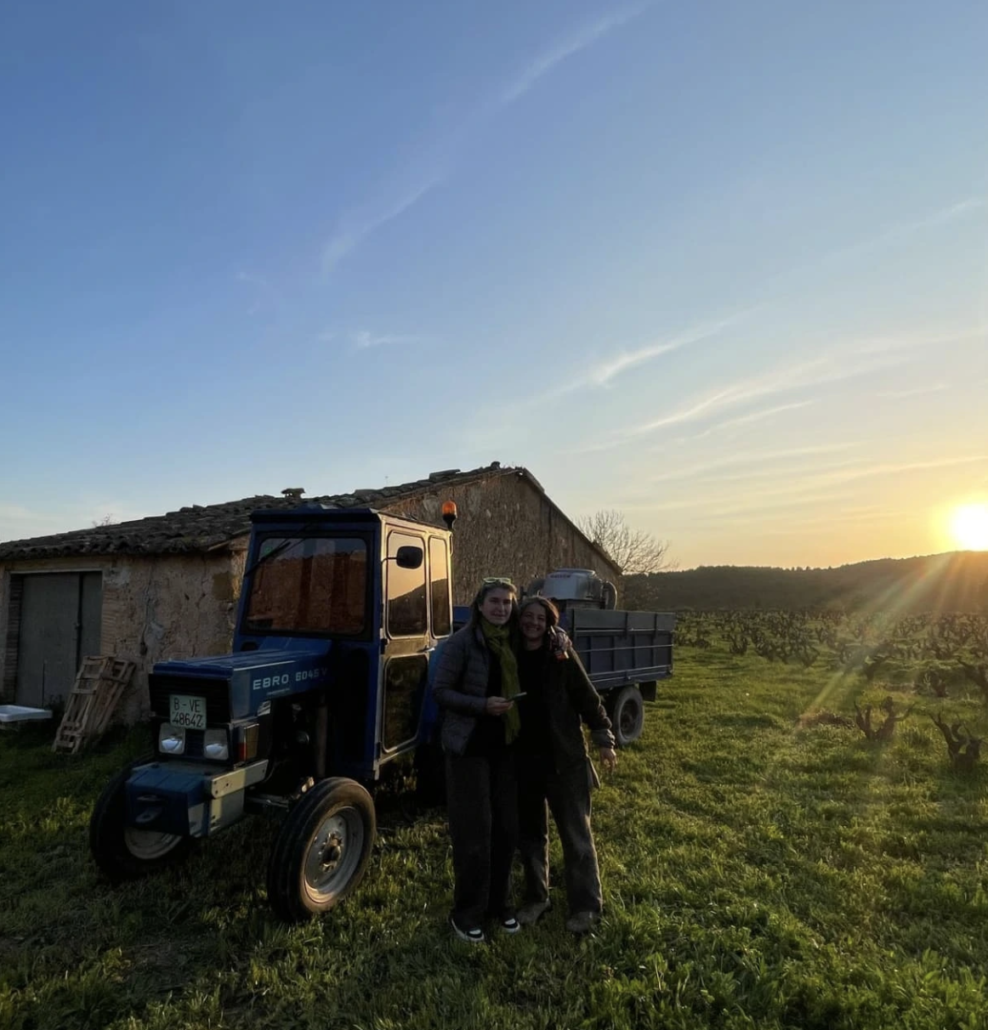
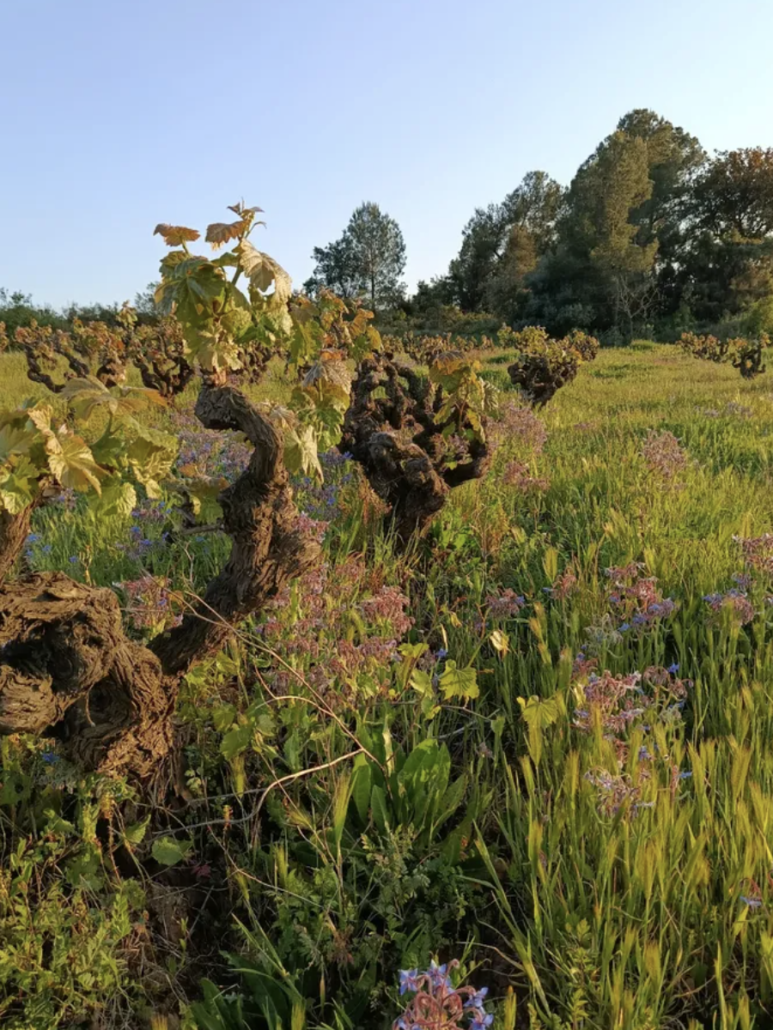
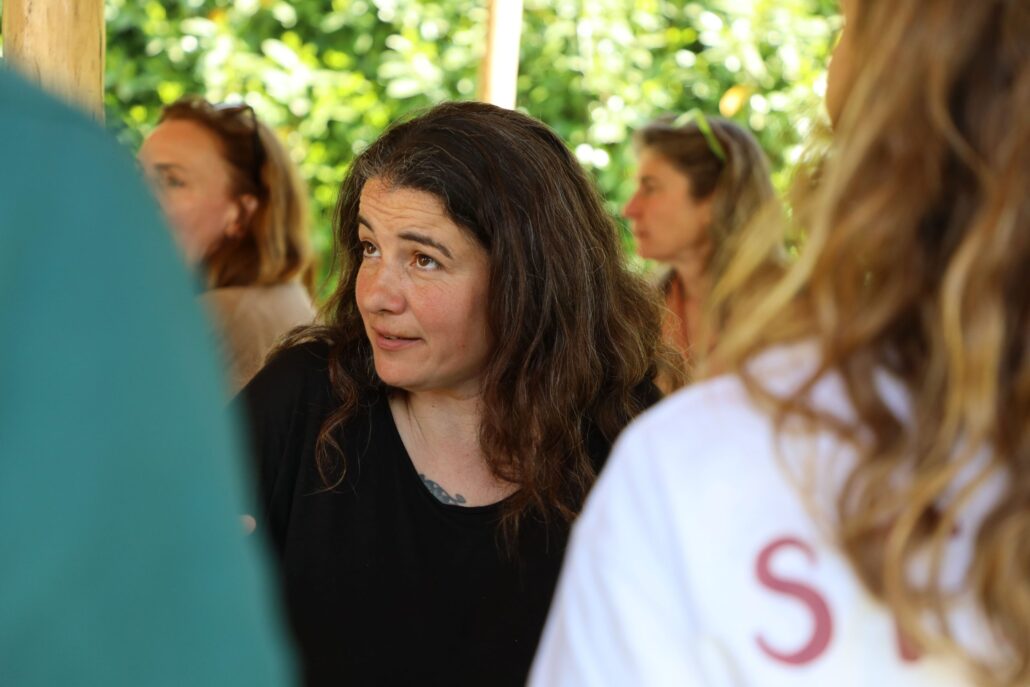
Back in Barcelona, Nuria trains as a sommelier and begins working harvests, accumulating experience in different contexts. In 2013 she contributes to the opening of Bar Brutal, becoming its head sommelier. It is an important step: the place quickly becomes a reference point for natural wine in the city and allows her to come into direct contact with a network of independent producers. She then begins her first vinifications with purchased grapes, and for several years she carries on this activity alongside her work in hospitality, building the project progressively, without a structure of her own.
The leap comes in 2021, when together with her partner Arola Tous Galí, an architect, they purchase Can Barceló, a farm in Sant Martí Sarroca, in the Alt Penedès. Nuria and Arola fell in love, of course, through wine. And thanks to Arola, in a way, her parallel activity becomes a concrete project. Their property includes around 16 hectares of vineyard (of which they currently work about ten) and about a hundred ancient olive trees. The position, at 420 meters above sea level, protected by hills and woods and far from the direct influence of the sea, presents a cooler microclimate compared to the coast: ripening is slow and the wines rarely exceed 12% alcohol. The wines of Nuria and Arola are outside appellations, and for this reason too they enjoy a particular stylistic freedom that respects the creativity of the producers, with an approach oriented towards freshness and drinkability, because “people should drink well.”
When we ask Nuria how they divide the work between them, she says with irony: “she works, I have aperitivo.” It is a way of describing a distribution of energy that does not stiffen into fixed roles, but that inevitably flows into a pure sharing.
These five couples, with very different stories across France, Italy and Spain, are only a set of contemporary wine realities that shows how couple life in the vineyard can take on very different forms of coexistence within a complex context, without oversimplifying it.
Couple life in the vineyard can be read as a practice of continuous adaptation, as the ability to respond creatively to situations that change. This requires listening, but also a certain flexibility of identity: the willingness to question one’s role, one’s habits, one’s certainties, but also the need to define boundaries.
With the awareness that, exactly like wine – the real, living kind – a relationship cannot truly be managed, or at least not entirely. It needs be cultivated.