Each year, the team behind Augusta, Turin’s natural wine fair, carefully and meticulously selects the producers who will take part in the event. Of course, everyone involved must share the fair’s philosophy and its approach to independent wine: wines made primarily in the vineyard, through spontaneous fermentations and with indigenous yeasts. But the search never stops at the usual names or the most celebrated regions.
This means that some producers who have participated for several editions inevitably make room for others. Not because they are no longer valued or interesting, but to give new vignerons the opportunity to participate – and the public the chance to encounter something unexpected. This idea of novelty, to be clear, has nothing to do with the compulsive turnover culture of consumption. It’s not about chasing the newest release like the latest iPhone. It’s about discovery. About expanding personal taste, knowledge and curiosity.
It’s the desire to continuously open up new geographies, create new connections and explore different ways of understanding wine.
At the latest edition of Augusta, in November 2025, two regions stood out that could easily be described as “underdogs.” Places from which few people really expect much. Regions outside the spotlight, still operating somewhat in the background. Areas that remain relatively unexplored – and underrepresented – both in the broader wine world and especially within the natural wine scene, yet which have proven to possess a distinct voice and something genuinely authentic to say. Places that have nothing to envy the great historical wine regions, and which may well become future centres of attention in their own right. Those places are Hungary and Switzerland.
Bence Szilágyi
Representing Hungary was Bence Szilágyi with his project, Barnag Wines. He works on the Balaton Highlands, near Lake Balaton – the largest lake in Central Europe, stretching nearly 80 kilometers – in an area with deep historical ties to viticulture, though still little known outside the country’s borders. Here, among volcanic hills and limestone soils less than ten kilometers from the lake’s northern shore, Bence produces wines deeply rooted in their territory, starting with the winery’s name itself: Barnag is the small village where he makes wine inside a two-hundred-year-old stone barn.
The origins of the project trace back to his father, who initially bought the property in Barnag as a holiday house and planted a small vineyard simply out of passion, producing a few barrels each year with no commercial ambition whatsoever. It was Bence who transformed it into a true wine project. After studying oenology between Budapest and Germany, and spending years working in natural wine bars and visiting producers, he slowly began shaping his own idea of wine. The first “unofficial” vintage came in 2017: just 400 bottles produced experimentally with friends. Barnag Wines officially launched in 2018 and has grown steadily ever since, sustained exclusively by what the wines themselves are able to generate.
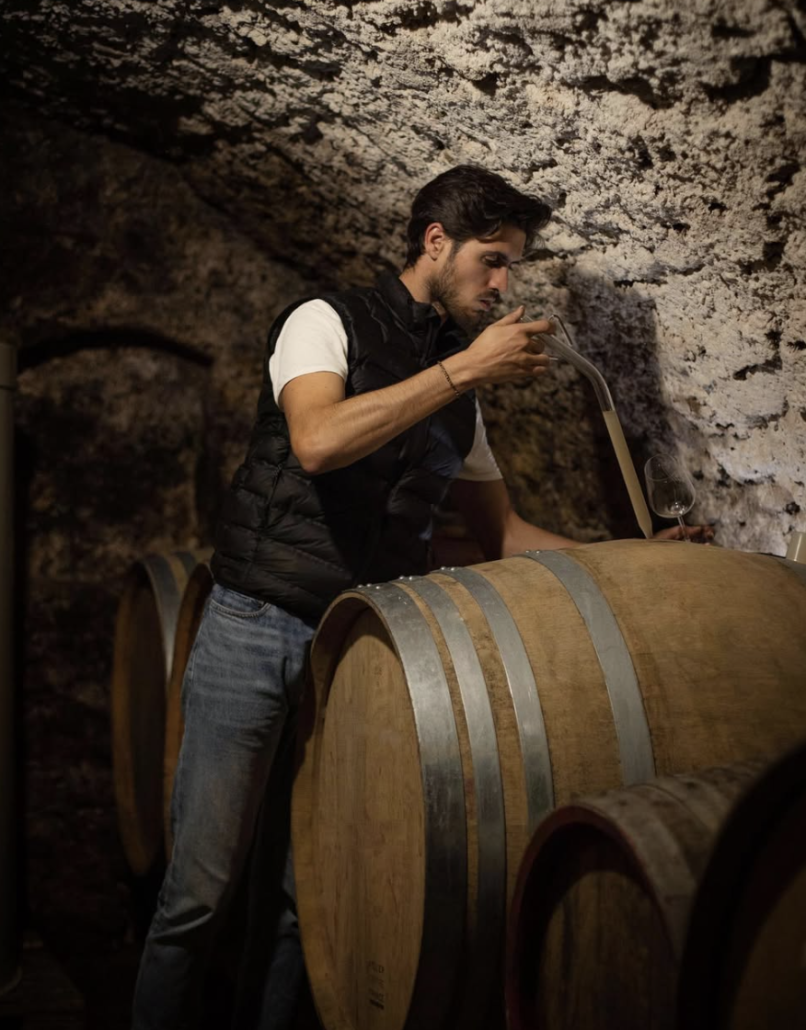
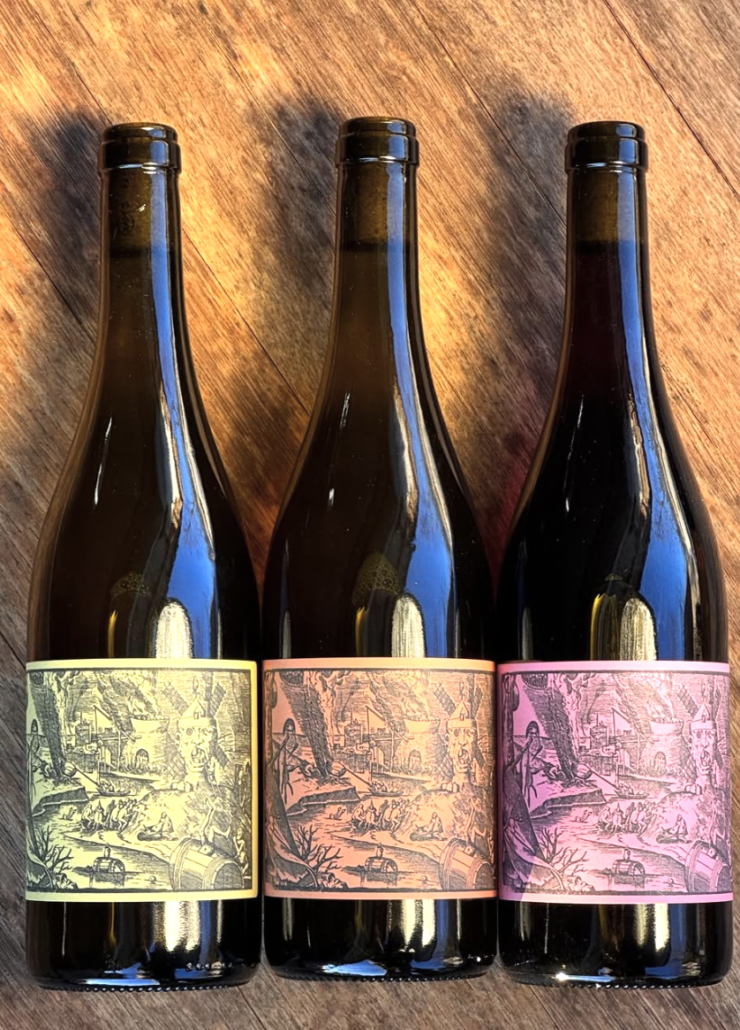
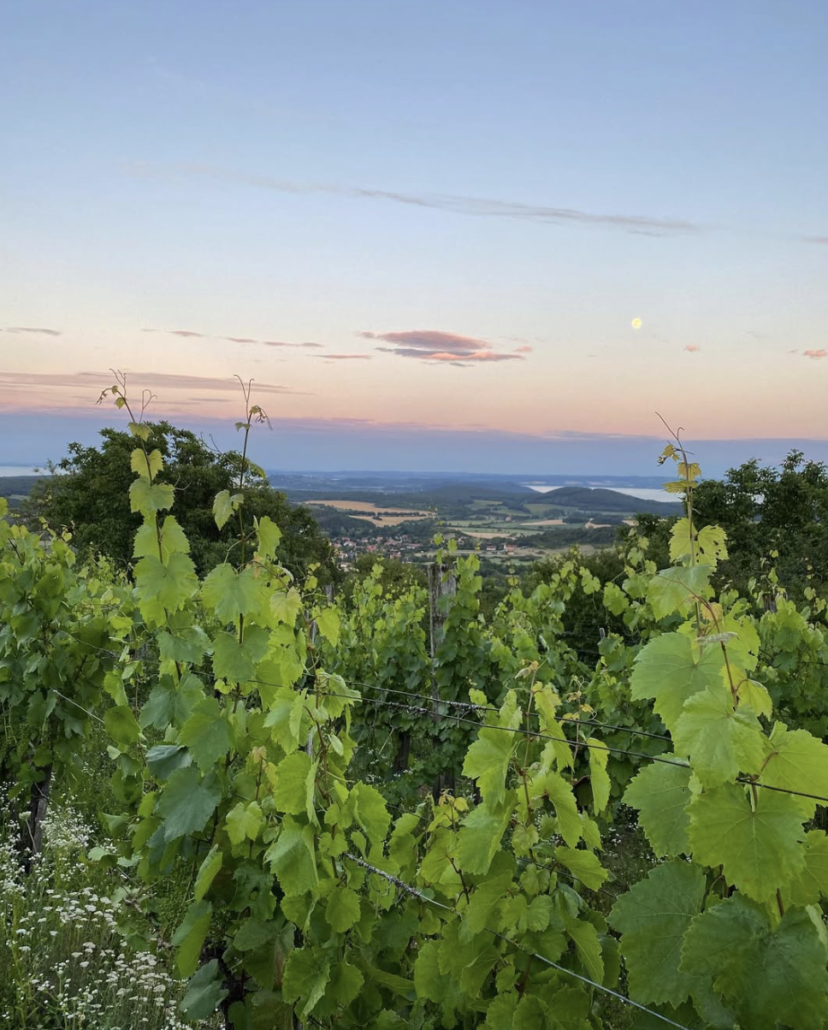
Today Bence cultivates both indigenous and international grape varieties including Furmint, Riesling, Kékfrankos, Cabernet Franc and Cabernet Sauvignon. The region’s viticulture went through difficult decades during socialism and the years that followed, when many vineyards were abandoned or replanted with higher-yielding varieties lacking real identity. Only recently have younger producers begun recovering the area’s historical viticultural heritage and once again championing native grapes such as Furmint – best known as the principal grape of Tokaj, Hungary’s iconic sweet wine and one of the oldest and most renowned wines in the world.
Bence belongs to this new generation of growers who have chosen to rebuild from Balaton’s agricultural memory rather than conform to international models. In the cellar, the philosophy remains equally minimal: spontaneous fermentations, ageing in wood, no fining or filtration, and as little intervention as possible.
But Bence is not only a vigneron. He’s one of those people who seems to move through the wine world from multiple directions at once – curious, energetic, constantly in motion. Alongside Barnag, he also runs a small distribution company called Disco Wines, importing and distributing natural wines in Hungary. “Liquid pleasures. Distributing favourites in Hungary,” reads the Instagram bio.
For a few years he also opened Bizarre Bar in Budapest: a basement space lit entirely in red, almost sacred in its decaying atmosphere. A place built around shared bottles, music, nights spent with friends, winemakers and wine lovers. The bar eventually closed due to issues with neighbors, though it already seems destined to reopen in a different form.
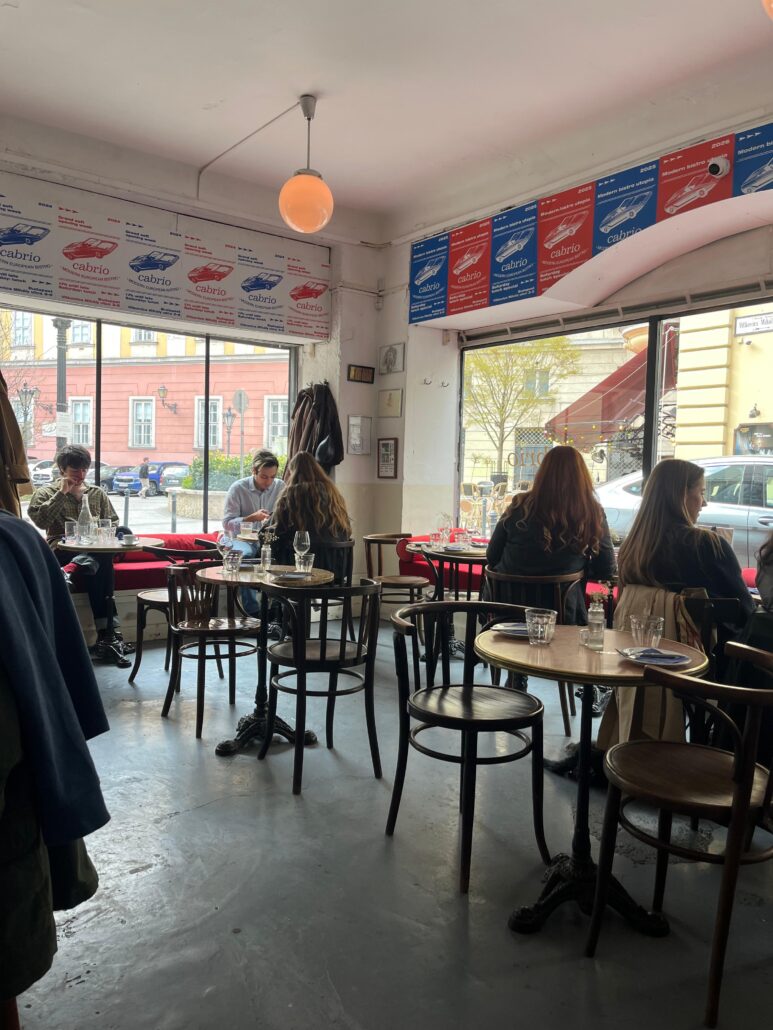
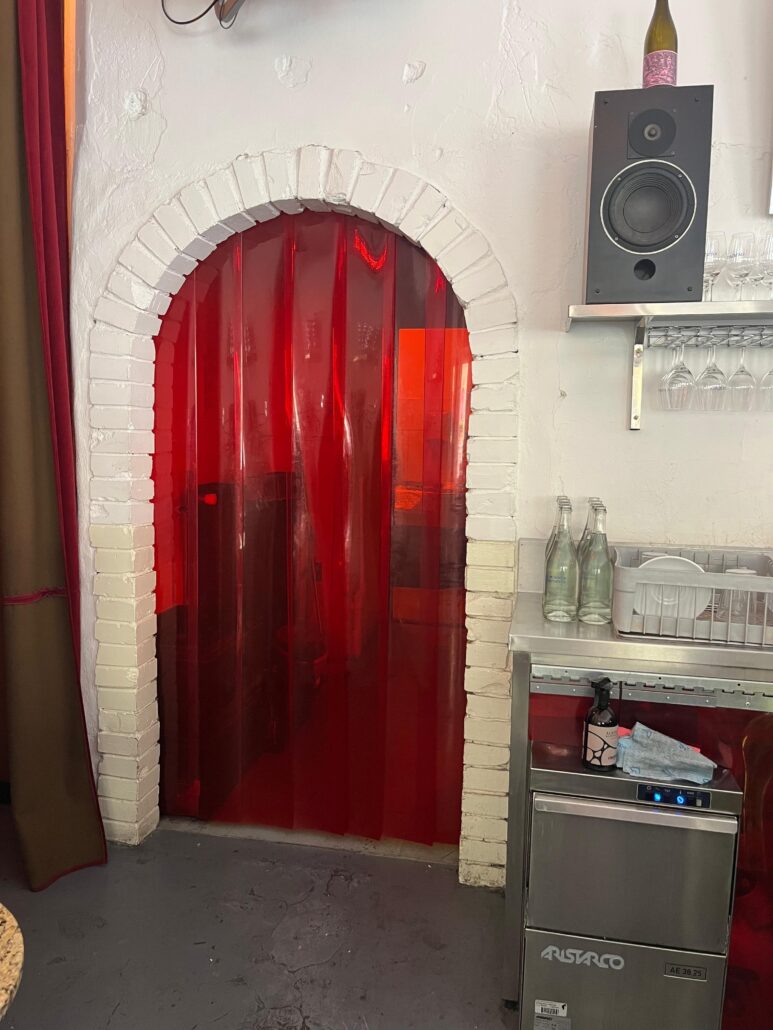
Then, in 2024, together with several partners, Bence opened Cabrio, a bistrot in central Budapest. The place feels suspended somewhere between Berlin and Paris: raw walls, dim lighting, red details, classic French bistrot tables and a heavy red plastic butcher’s curtain separating the kitchen from the dining room. In one corner, almost unnoticed, an old vintage television quietly livestreams a small glimpse of the kitchen – like a discreet window into the backstage life of the restaurant.
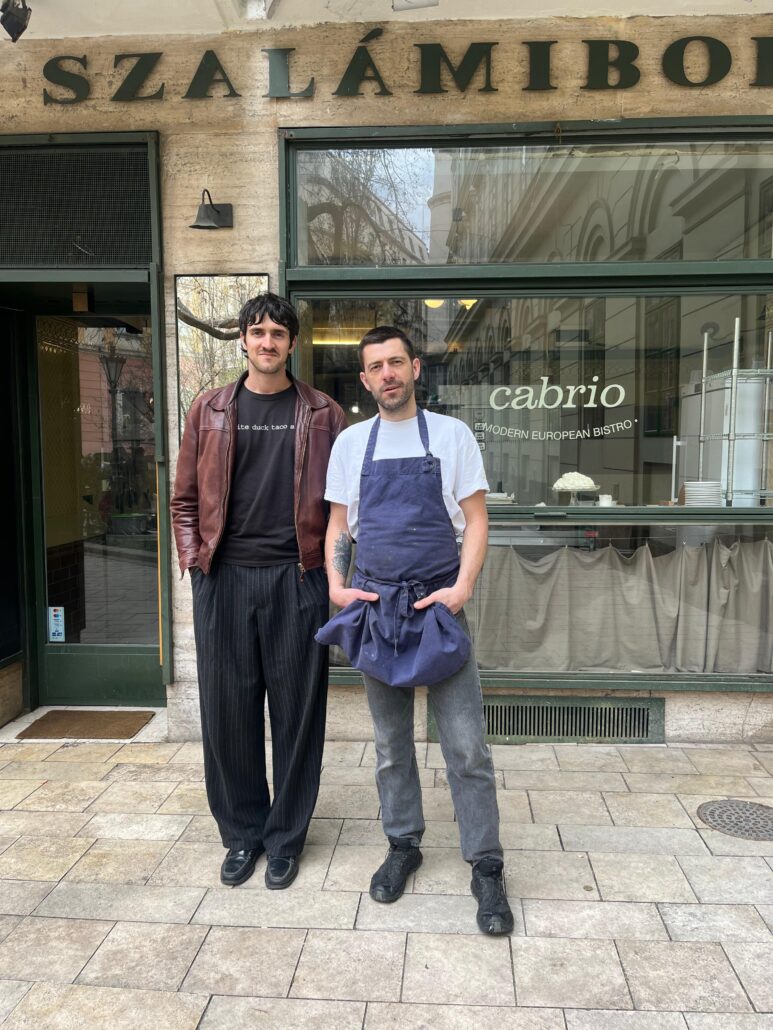
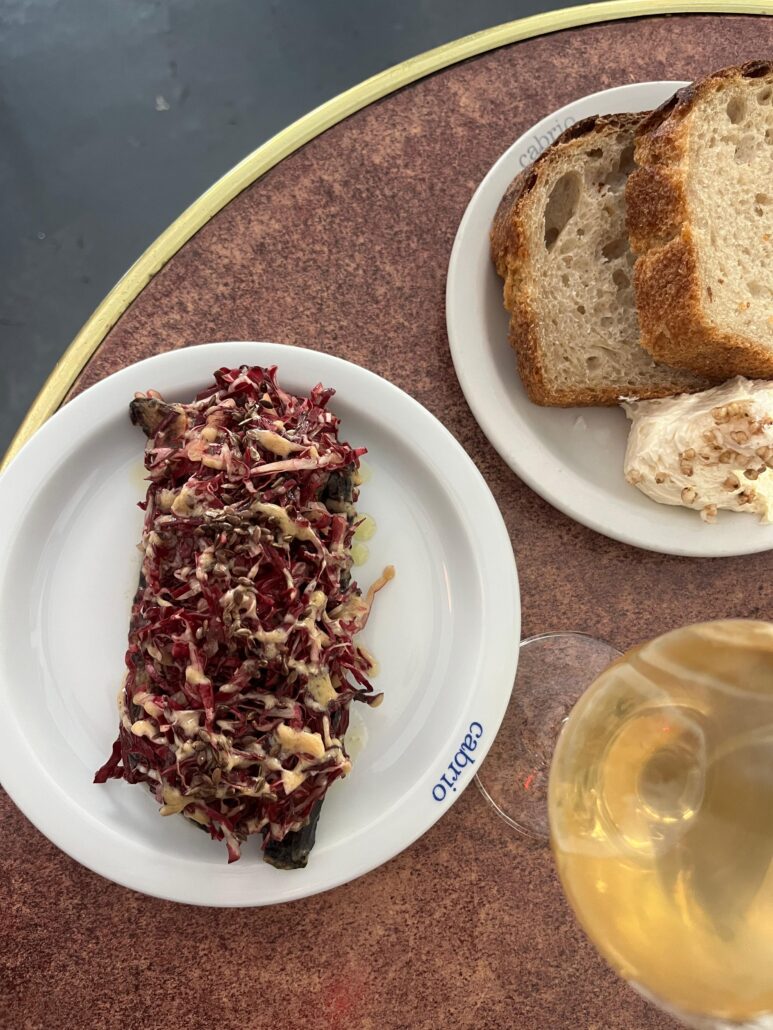
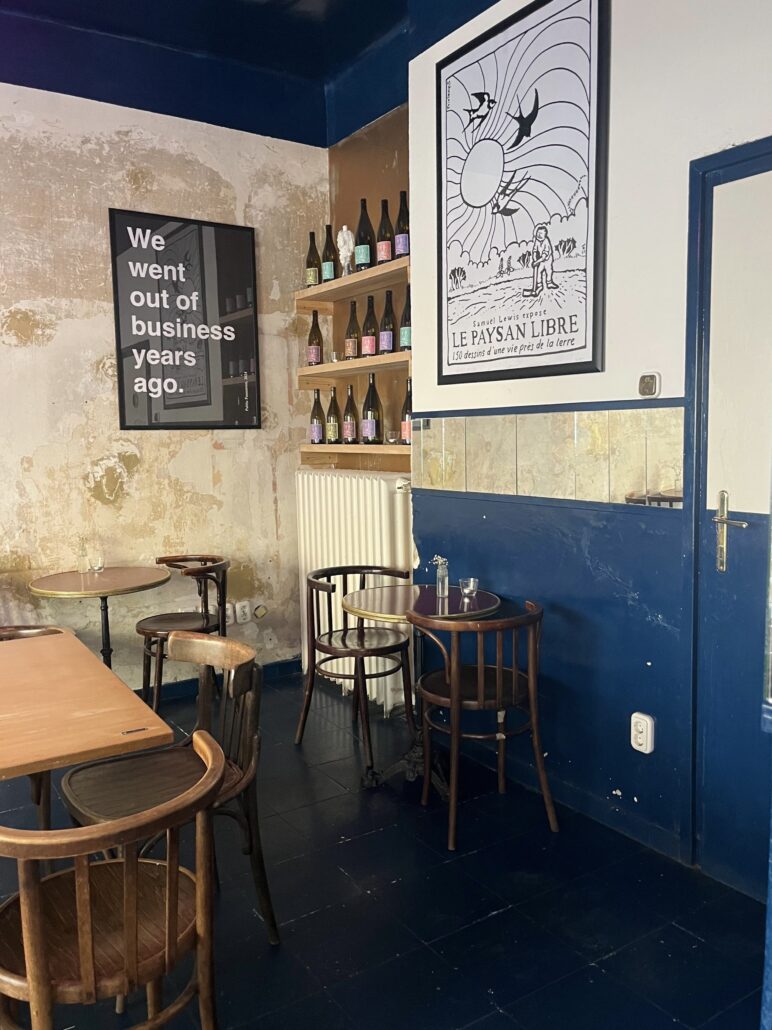
The menu revolves around seasonal sharing plates balancing European influences with local ingredients: Mangalica pork terrine, or Slow-roasted carrots, miso, shredded radicchio, flaxseed, peanuts. In 2025, less than a year after opening, Cabrio received a Bib Gourmand distinction – an unexpected recognition, and not necessarily one the team was actively pursuing, but one that speaks to the care and quality behind the project. The wine list follows the same philosophy, combining local producers with a broad and thoughtful European selection spanning France, Germany, Austria, and a handful of Spanish and Italian references.
Simply put, Cabrio has the kind of atmosphere that makes people want to linger. One of those restaurants that quickly becomes a neighborhood anchor, especially in a central area where places this authentic, accessible and free from pretension remain relatively rare. And Bence himself is warm and welcoming – someone who experiences food and wine from every possible angle: from vineyard to bottle, from distribution to hospitality. Perhaps it is precisely this broad, grounded and everyday understanding of wine that makes Barnag such an interesting project today.
Matthias Orsett
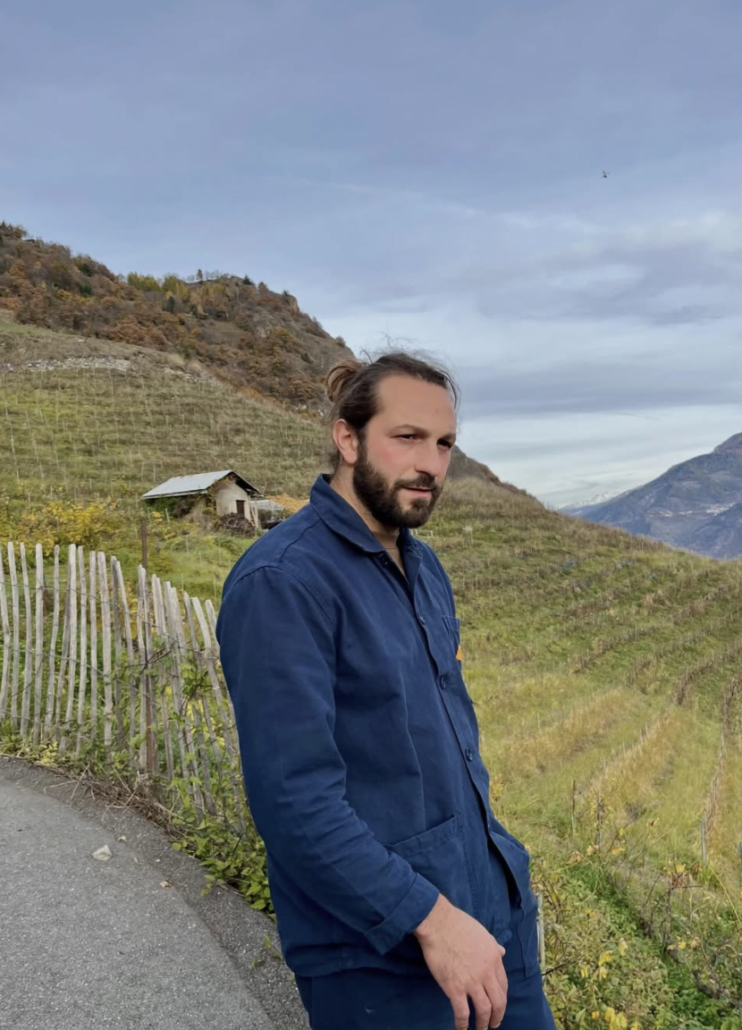
Matthias Orsett, a Frenchman from the Parisian suburbs, chose to make wine in another country not traditionally associated with the grand contemporary narrative of fine wine: Switzerland.
There too, the natural wine movement has quietly but steadily grown over recent years. The scene remains relatively small, but more and more producers are experimenting with low-intervention winemaking, spontaneous fermentations and the revival of historical local grape varieties. Between Geneva and the Canton of Vaud, a new generation is increasingly exploring unfiltered cuvées, macerations and freer interpretations of Chasselas. German-speaking Switzerland and Ticino are also contributing to the movement’s growth, each with different sensibilities but united by a more artisanal and less interventionist approach to wine. Meanwhile, the Valais produces alpine, mineral wines from native varieties such as Cornalin, Humagne and Petite Arvine.
It is precisely in Valais, in the village of Fully in southwestern Switzerland, that Matthias has built his project. He farms roughly one and a half hectares of vines spread between 460 and 870 meters in altitude along the Swiss stretch of the Rhône descending toward Lake Geneva. The winery bearing his name officially began in 2021 and from the outset has followed a deeply artisanal approach: everything is done by hand, both in the vineyard and in the cellar.
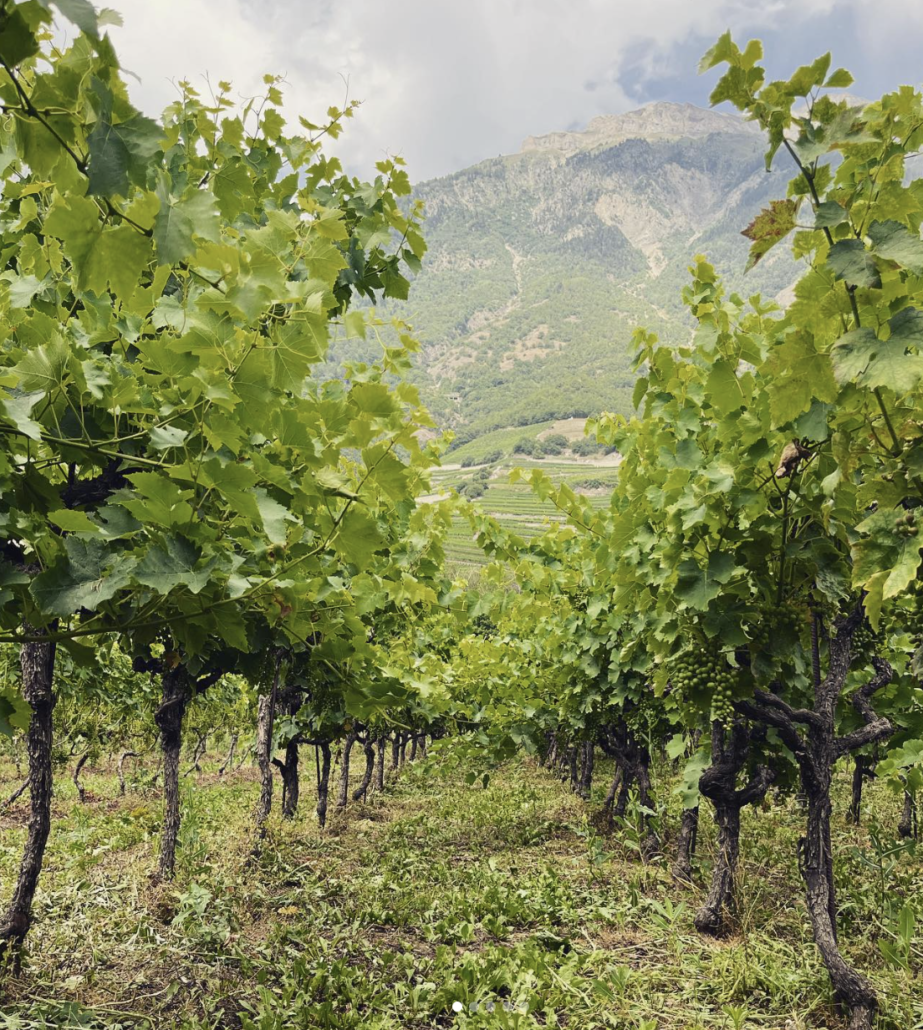
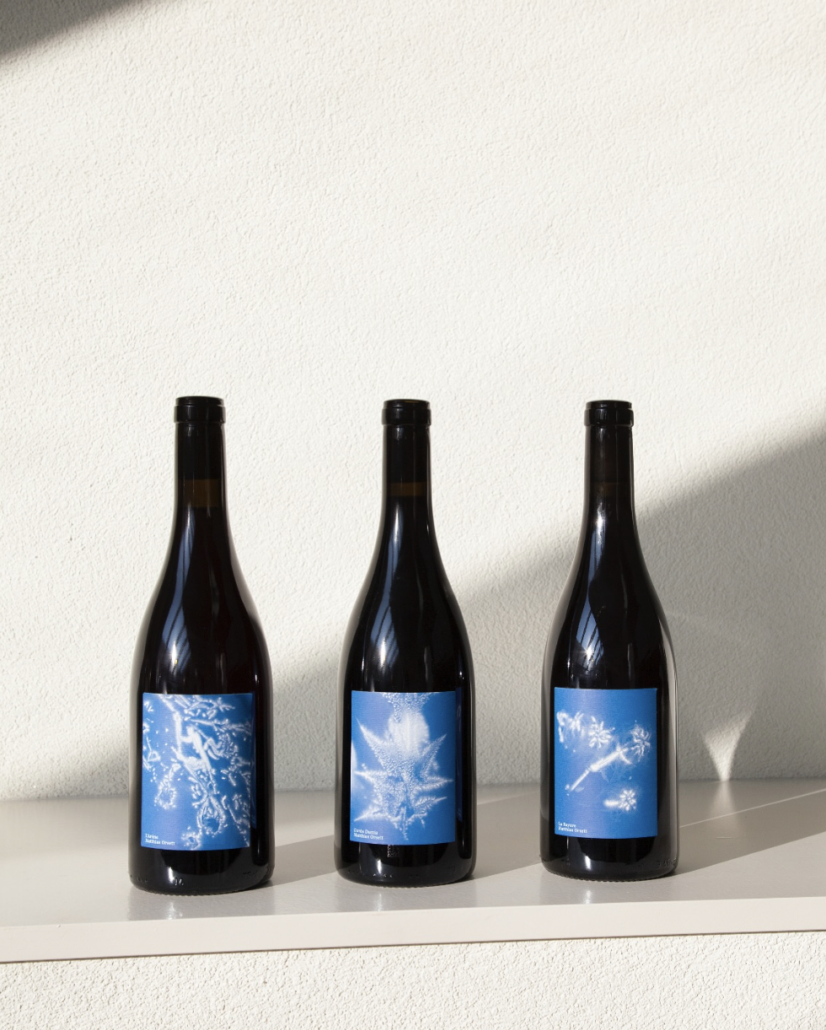
The vineyards sit on granitic subsoils and are farmed according to certified organic practices. In the cellar, the philosophy remains minimal: spontaneous fermentations with indigenous yeasts only, no fining or filtration, and just minimal sulfur additions when necessary.
Each cuvée comes from a single parcel and is vinified separately in order to highlight the identity of both grape and terroir as clearly as possible. In total Matthias produces around fifteen different wines. The whites include Chardonnay, Chasselas and Petite Arvine – a native Valais variety – while the reds include Pinot Noir, Syrah, Gamay and various blends. He also works with Gamaret and Garanoir, two Swiss-created varieties developed in the 1970s from crossings between Gamay and Reichensteiner, specifically bred for their resistance to grey rot.
The red wines are gently extracted to preserve freshness and tension, while the whites spend extended periods ageing on fine lees in old wooden barrels. Ageing can last anywhere from two to four years in old Burgundy barrels, with some cuvées only being released for the first time this year – an increasingly rare decision in a generation often forced to bring wines to market quickly.
And yet Matthias did not come to wine through a traditional path. Before becoming a winemaker, he worked in healthcare for seven years – the reason he initially moved to Switzerland in the first place. At some point, however, he decided to stop, take time off and travel. When he returned, he devoted himself entirely to music: for about three years he worked as a DJ and founded his own record label, until Covid abruptly interrupted everything.
That was when wine – always present but until then secondary in his life – suddenly took on a different role. Matthias went to Jura to help friends during harvest and immediately understood how deeply he was drawn to that world. “You use your brain, your hands, your body, your senses,” he explains. From that moment, the direction became clear. He studied oenology in Jura before deciding to return to Switzerland: a country less celebrated, perhaps, but whose altitude, sunlight and landscapes felt aligned with his own idea of wine.
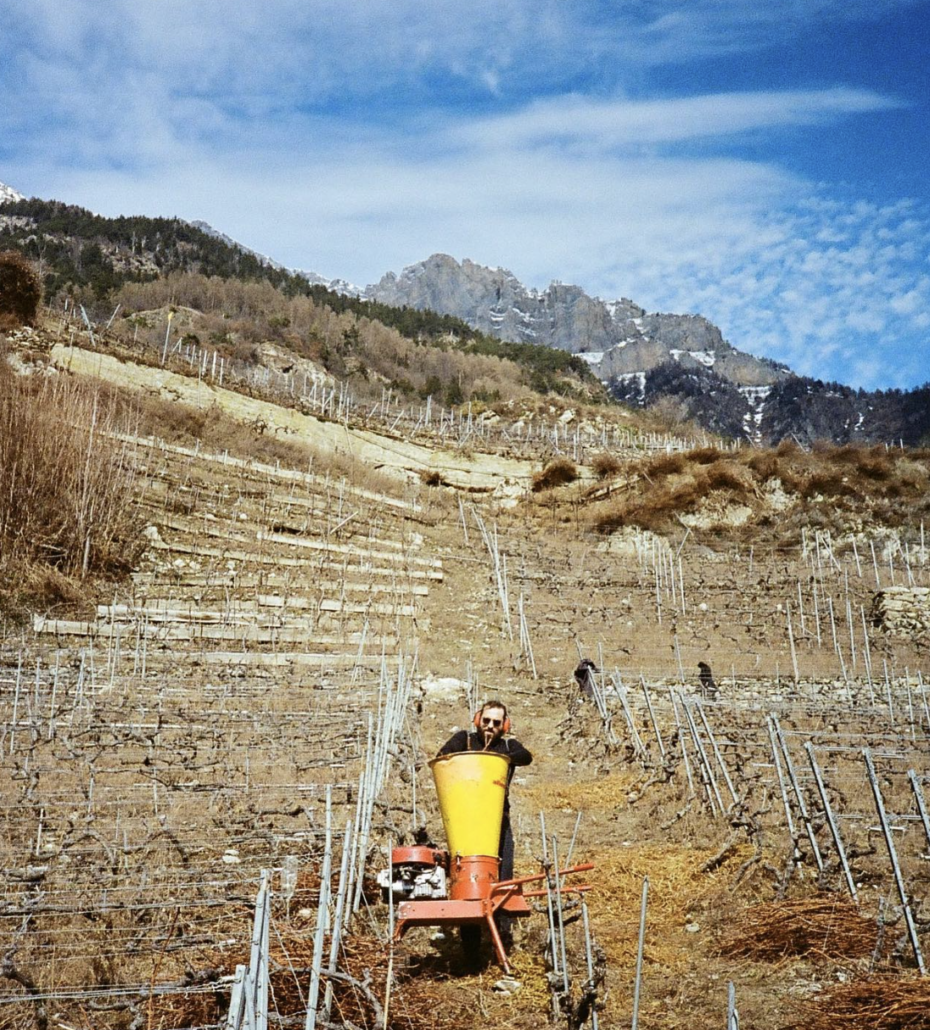
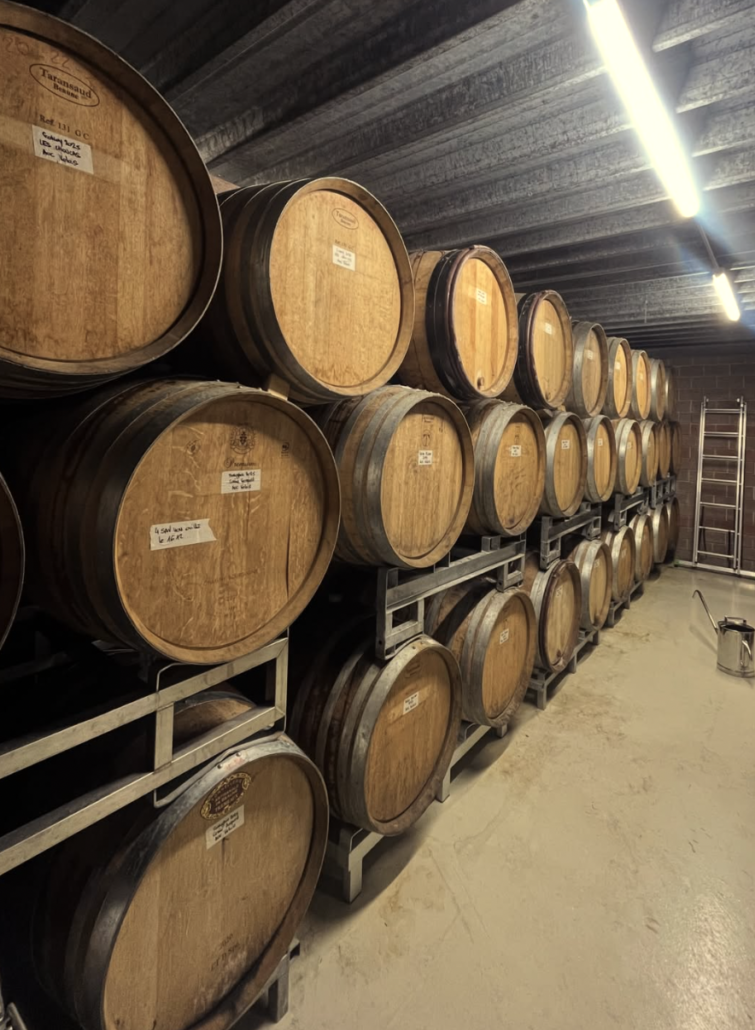
And he also senses that something is changing there. For years Swiss wine remained almost entirely confined to domestic consumption; now international interest is growing rapidly. Matthias, for example, sells only around 25% of his bottles within Switzerland, exporting the rest abroad. For him, being from a country still relatively unknown in the natural wine landscape is not a limitation, but almost an advantage: curiosity toward these regions already exists – and is only increasing.
Perhaps it is precisely this combination of different experiences that makes his approach to wine feel so personal, lucid and long-term oriented. When I ask him what he carried over from his previous lives, he says that from healthcare he retained administrative rigor and organizational discipline. From music, meanwhile, he developed a particular sensitivity to sound: he listens to fermentations and recognizes the noise each barrel makes inside his cellar.
The stories of Bence and Matthias show that being outside the radar of contemporary wine does not mean being marginal. Sometimes it simply means having the space to build an identity of your own – freer, more personal, and less constrained by expectations already written elsewhere.