“We couldn’t find a place we truly liked, so we built it ourselves.”
I don’t want to overstate it by saying it’s always like this, but it does seem to me that many of the places – and more broadly, many of the ventures – that have contributed to the evolution of our country’s restaurant scene and gastronomic culture started from exactly this thought. Talk to chefs, young winemakers, bakers, wine merchants, brewers, gelato makers, fishermen. Stop and exchange a few words, in short, with anyone who has changed even a small part of the world they work in, and ask them, “why did you do it?”. Their answer is almost always the same.
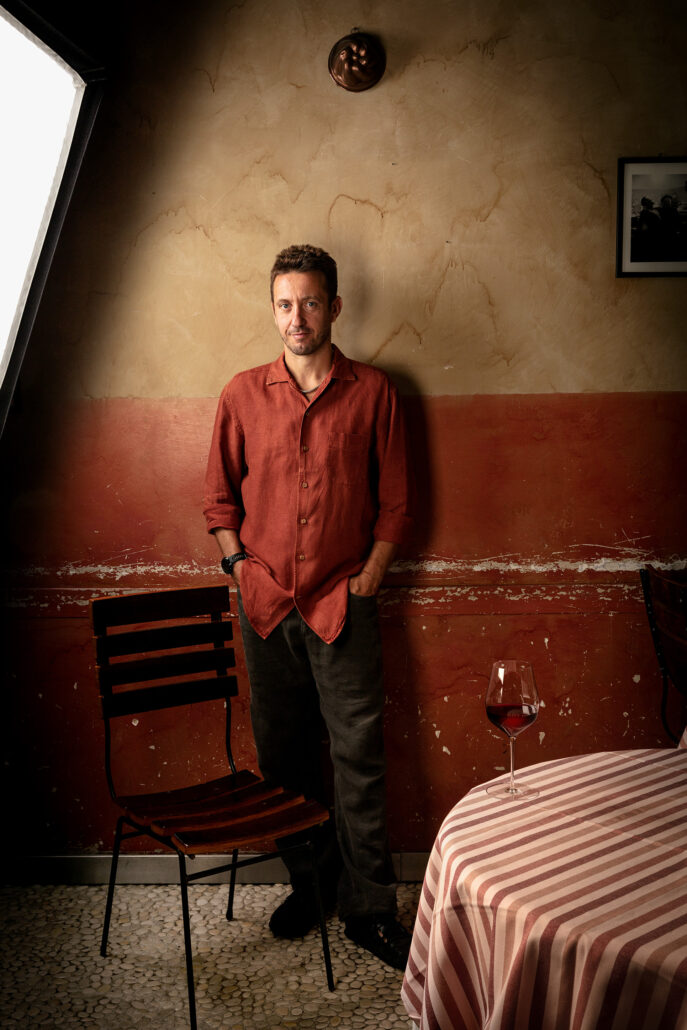
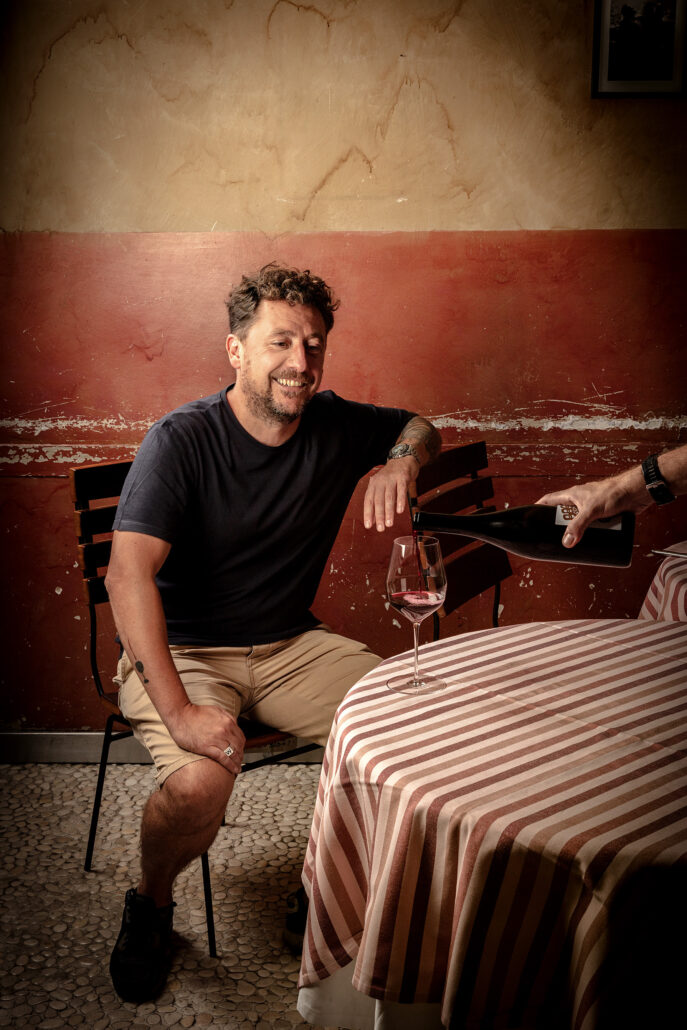
This was the case, for example, for Pietro and Andrea of Consorzio in Turin, one of the places that has done the most to define the features of what we now call the contemporary osteria – the most successful form of dining in Italy for quite some time now. An osteria that retains from the traditional one its informality, a certain bond with the territory, and prices that strive to be inclusive, but which, unlike the classic version, places the product rather than the recipe at the centre. It is attentive to its surroundings, yet unafraid to venture far; it uses tradition as a springboard rather than as a burden; it is more interested in the name of the farmer than in that of the grandmother; it does not have checkered tablecloths – if anything, they might be striped, more as a form of provocation than continuity.
And speaking of provocation – in that case an unintentional one – when Pietro Vergano and Andrea Gherra opened in 2008, now fourteen years ago, the place that would go on to become a model for so many osterias over the following decade, they chose to call it a ristorante. Choice, perhaps, is too strong a word, as Pietro tells me; the fact is that they found the name already there and did nothing to change it. They focused on substance, a defining trait of theirs since the very beginning. “In reality the name was already there and we liked it,” Pietro tells me. “In the rooms where we opened Consorzio, a number of different restaurants had come and gone before us, and one of the last had this name. It convinced us because it evoked the world of food production, of wine, of a community spirit. All elements that were – and still are – extremely important to us.”
We couldn’t find a place we truly liked, so we built it ourselves.
Pietro and Andrea, the first few times you see them together, might look like brothers. They resemble each other. They share a similar gaze, a few features you could almost overlap, and both have an outsized passion for Toro, for wine and, more broadly, for good things. But no. They are not brothers. They are close friends. They share a previous life, often spent together between the curva, DJ mixers, restaurants and wine bars. The idea of opening a place has been in their minds for a long time, without ever really taking shape, until the opportunity arises of a vacant space that seems to be just right for them.
From the very beginning they fill shelves and pantry with everything they like. They have worked in this world for a long time, both of them mainly selling wine, but never as protagonists. They have always been somewhat in the background, studying and developing a passion even before selling and telling stories. For this very reason, the early days of Consorzio are not particularly easy: they have to learn how to do this job, how to run the dining room and the kitchen, how to talk to customers. And there is another peculiarity: neither of them is a chef; they are both front-of-house men, but with very precise tastes and ideas, which they quickly find ways to convey to those working at the stoves. Amid all this bustle, however, the direction Consorzio will take is already perfectly clear. Before long, the restaurant wins over the palates of many people in Turin, and the reference guide notices straight away. Osterie d’Italia does not even let a year pass after the opening, and in the autumn of 2009 Consorzio appears among the new entries in Turin.
La scheda racconta di un’osteria giovane e intransigente, fondata sulla materia prima e sul vino naturale.
It’s quite striking to read that description today, because across Piedmont, the osterias for which reviewers at the time deemed it worth highlighting the presence of natural wines numbered only two others, out of more than a hundred listed (and we feature one of those elsewhere in this issue).
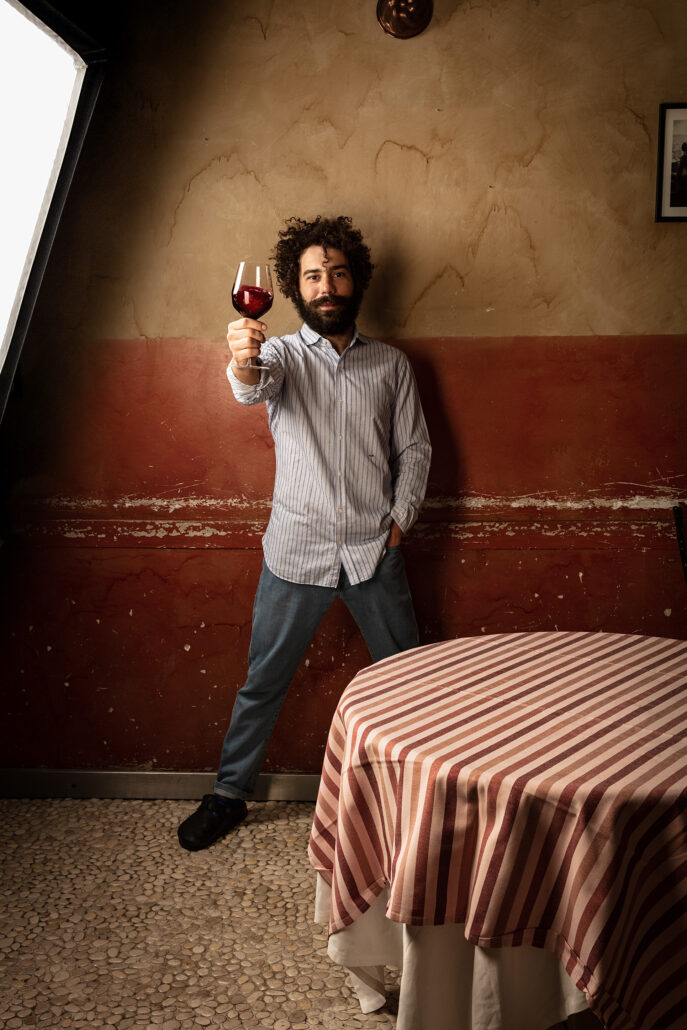
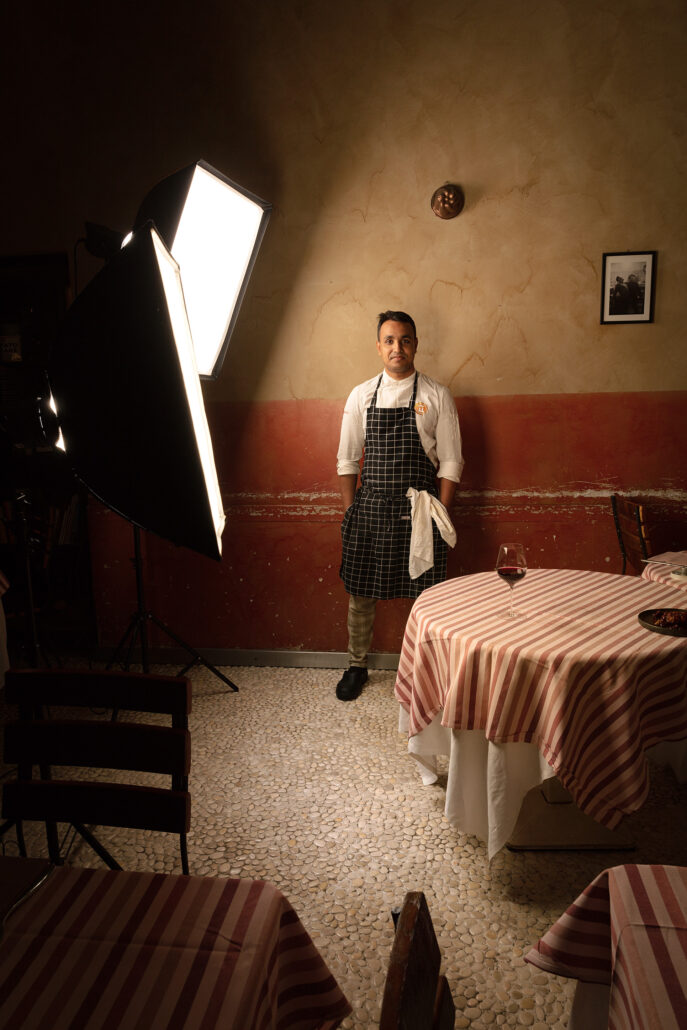
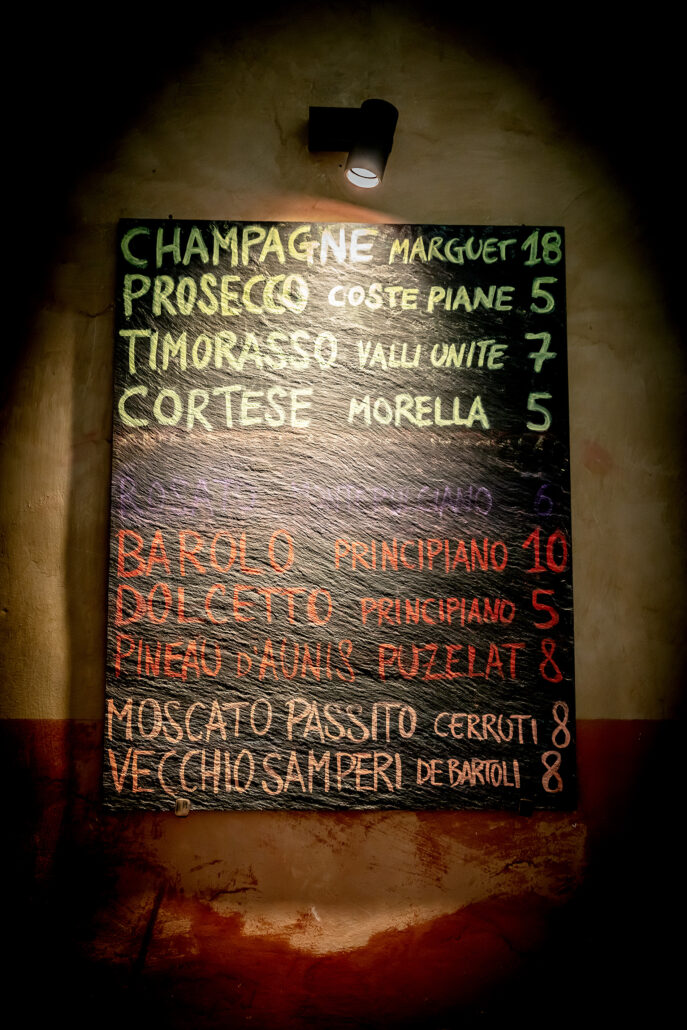
Here’s the wine.
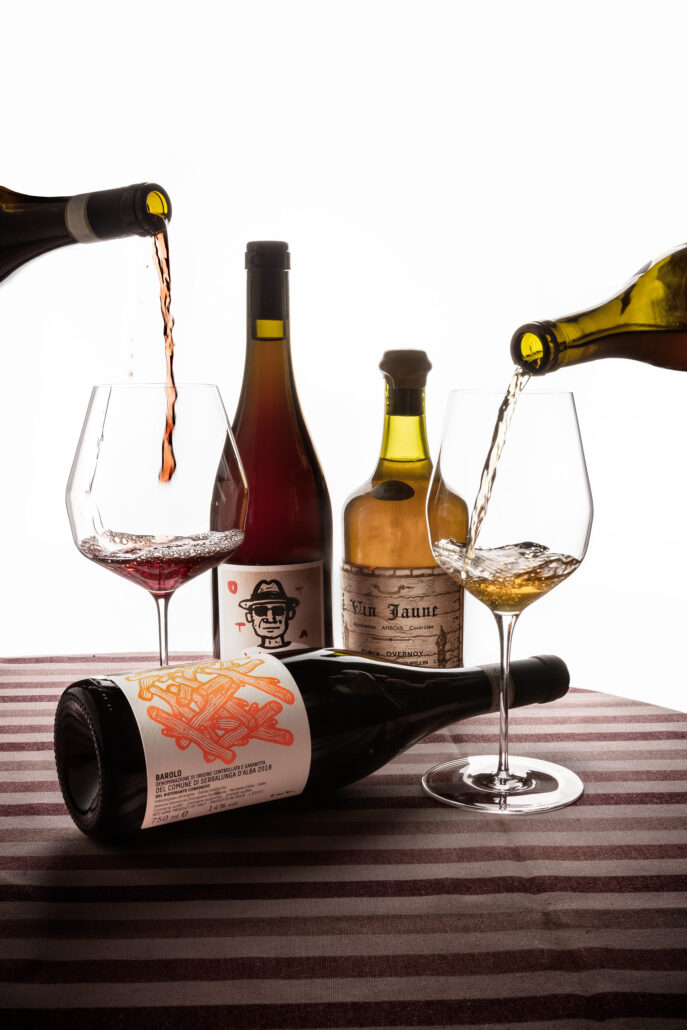
Wine plays a central role in this story. Not just because it is one of the great passions of its two protagonists, nor merely because Pietro is married to one of Piedmont’s most talented producers – Nadia Verrua of Cascina Tavijn in Scurzolengo, Asti – but because wine is, in fact, the driving force of this story. From the very beginning, Pietro and Andrea made their most radical choices around wine, perfectly encapsulated by the two words that have always graced the cover of their wine list and which serve, in a way, as the manifesto of this place: EXCESSES and REFLECTIONS.
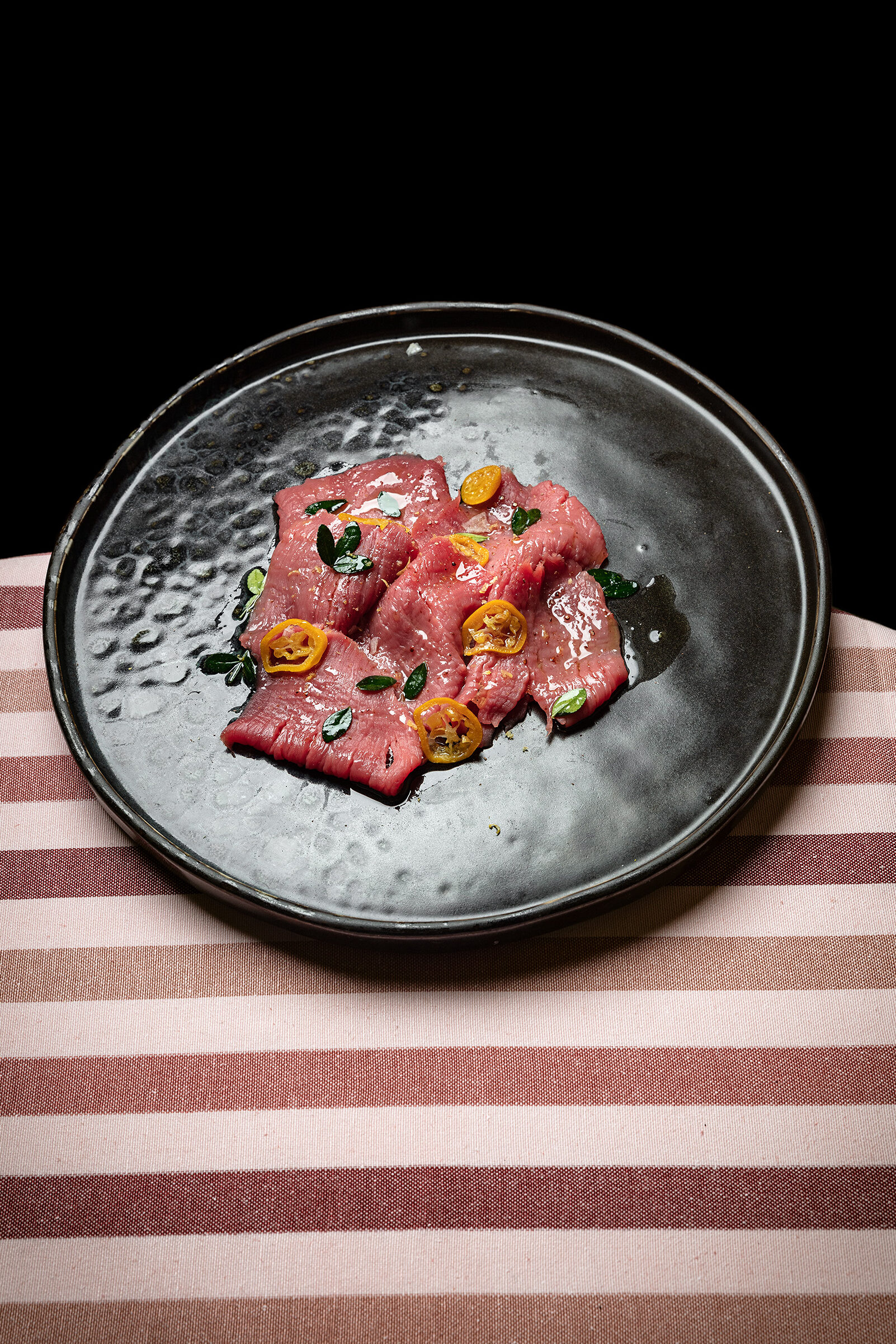
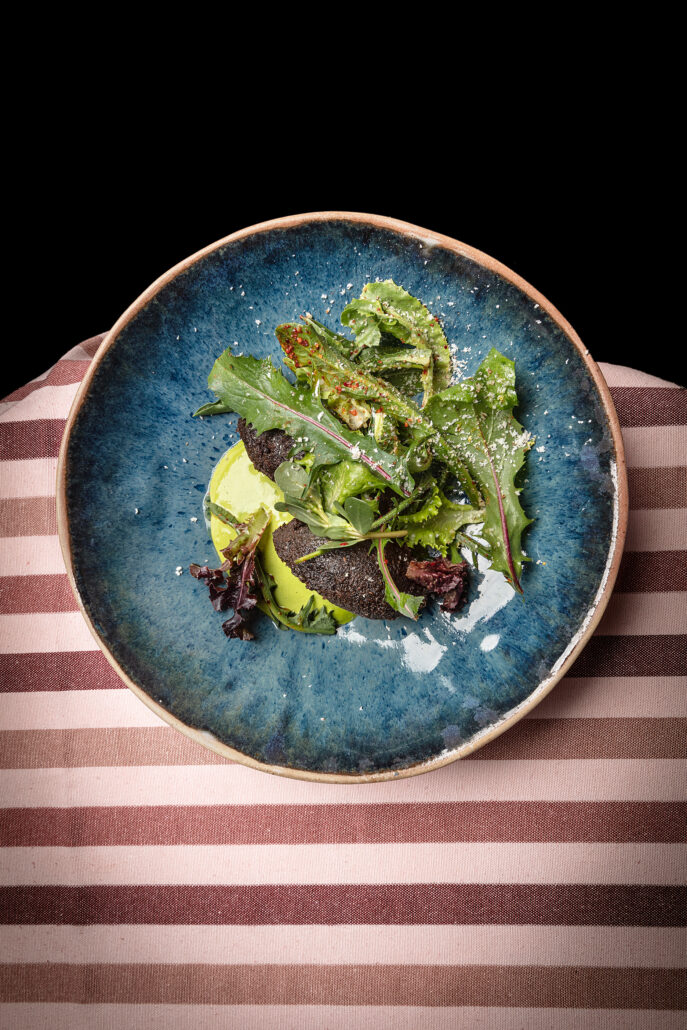
Excesses, of course.
Because Pietro and Andrea decided to dedicate themselves, initially almost exclusively and then entirely, to that world which, for convenience, we can label as natural wine production. A movement that is very trendy today, but at the time was still relatively young and for those like our two hosts who chose to follow it, it also carried risks. Chief among these was the risk of not being understood, because in the glass, more than today, one could encounter a wine that was ethically and environmentally impeccable, but less so in terms of taste at least according to the tasting standards of the period. And also because Consorzio is in Turin, in Piedmont, a region where people come also to drink, where the classics dominate, and where certain producers are considered untouchable. Yet… at Consorzio many of these classics were absent—and still are.
And the Piedmont region is present, but without being dominant. Rather, there is France, lots of France.
And there are lesser-known regions, which at that time were known only to the most dedicated enthusiasts who had visited them in person, such as Savoy or Catalonia.
And then come the reflections.
Because Consorzio is a restaurant that appears instinctive, but only at first glance. In reality, it is a place of thought. Every choice is made after dozens and dozens of careful considerations and never carries just a single meaning. Take the cheeses, another great passion of the two and one more reason to visit 13 Via Monte di Pietà. Their selection includes only producers who work with raw milk. And it’s not just about taste. It is, above all, a political choice, a conscious stance. The same kind of reasoning years ago led Consorzio to become the place to eat offal, which here has become so iconic that two of the untouchable, year-round dishes are the sweetbreads on the starter menu and the “Quinto Quarto” among the mains. But Pietro and Andrea’s reflections extend further: to the animals they choose, to seasonality, to the right approach to customers—a complex matter for those who work in this trade guided primarily by passion—and to the culinary line to adopt in a city like Turin, so attached to its traditions yet secretly eager for novelty and change.
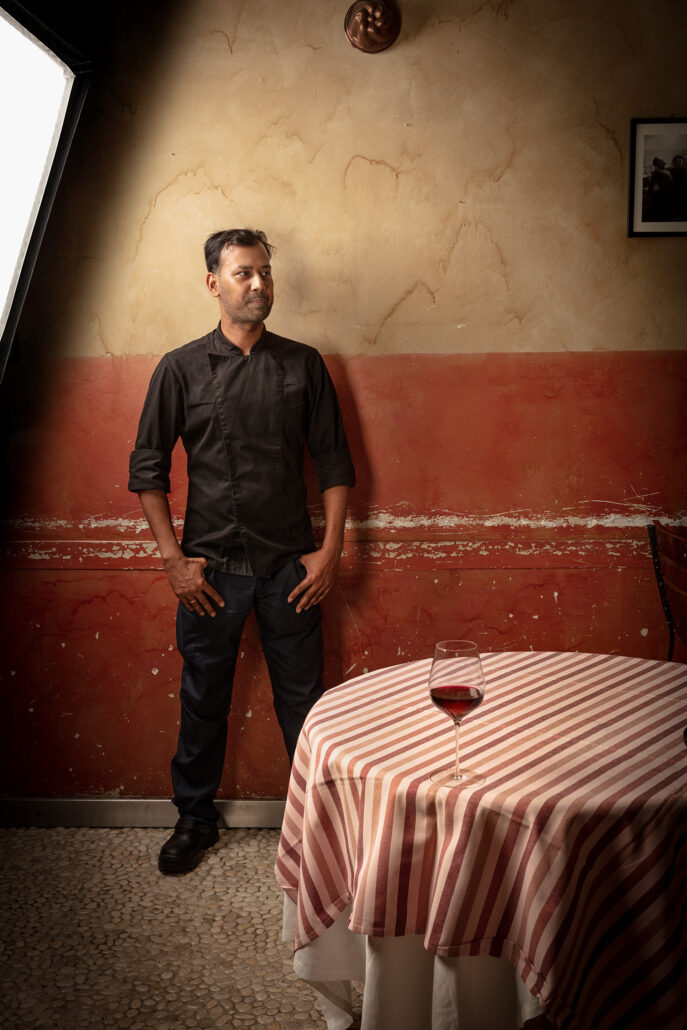
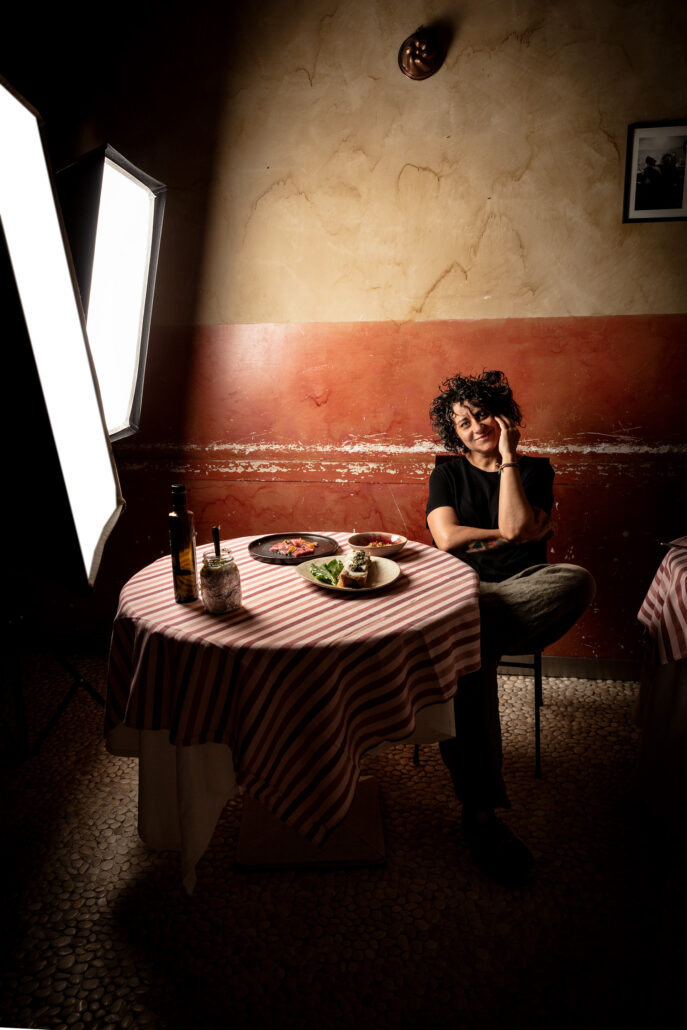
Perhaps it is in this last aspect that, over the past couple of years, a balance has been found one that had never before been felt so clearly and happily here. Since 2020, in fact, the third key figure at Consorzio has been Valentina Chiaramonte.
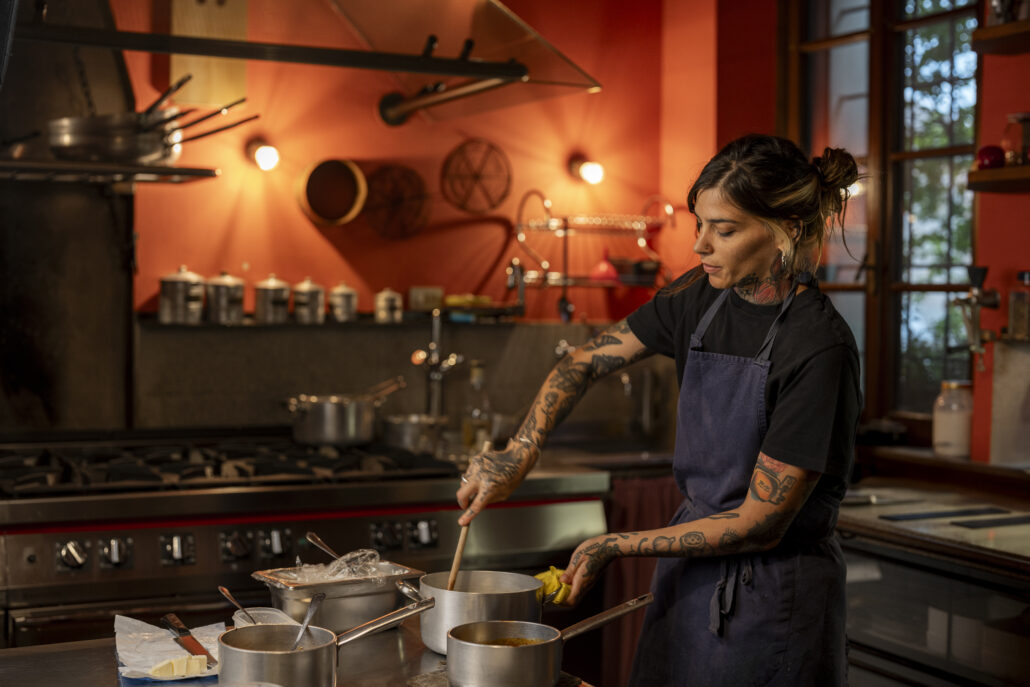
Valentina took on a challenging task: to bring her own vision of cooking into a place with an extraordinary identity, blending with it without overturning it.
And she has managed to carry it out with determination and grace. Valentina, a Sicilian, has anchored Consorzio firmly in the Mediterranean. She brought with her the freshness of vegetables and an approach to seasonality even more vibrant than before. She knew how to take a classic like the sweetbread, pass it through the intense heat of the grill instead of butter, then dress it with a fruit that changes with the season and a hazelnut butter which, used as a seasoning, doesn’t weigh down the bite but fills it with the scent of home. She looked at Piedmontese cuisine from a different perspective, giving it new energy by using herbs, vegetables, and fruits from her own land as accents sometimes to lighten the palate, sometimes to extend a perception, sometimes to deepen an aroma. She decided to take risks herself, just as Pietro and Andrea had done years before.
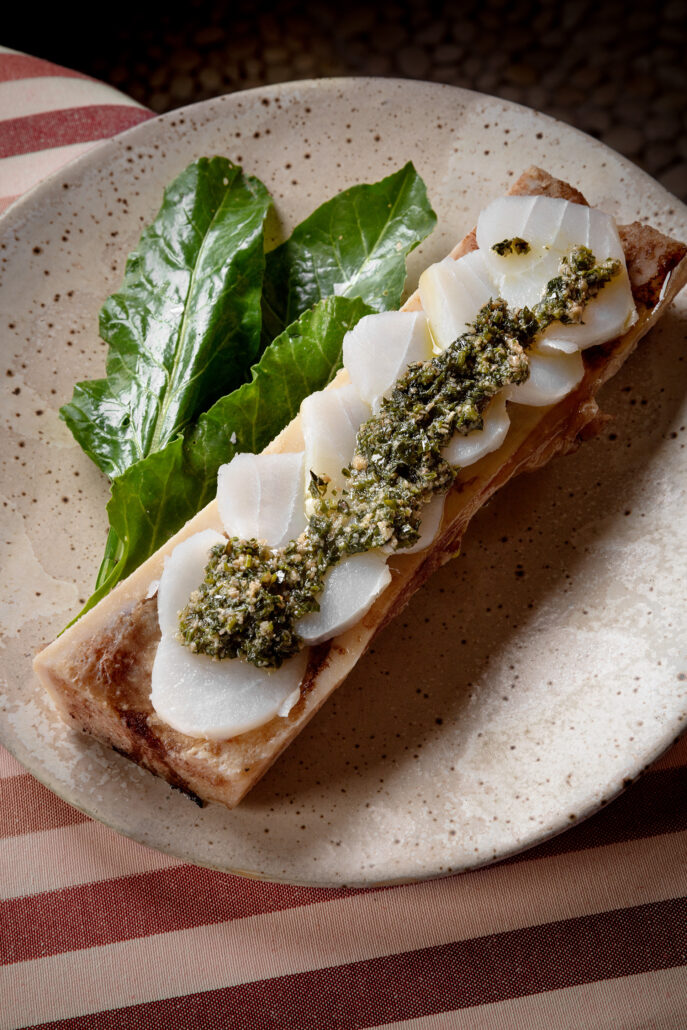
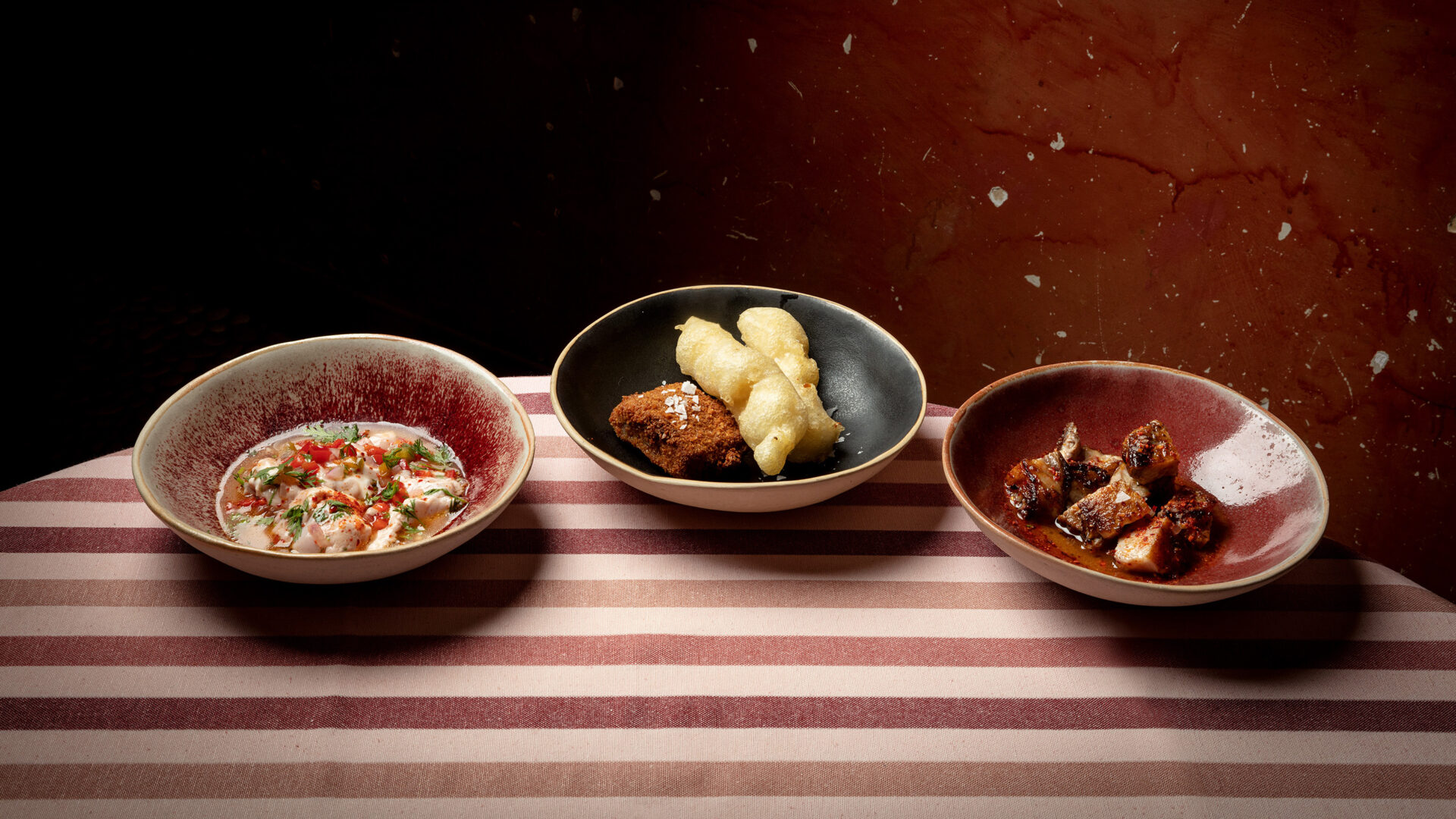
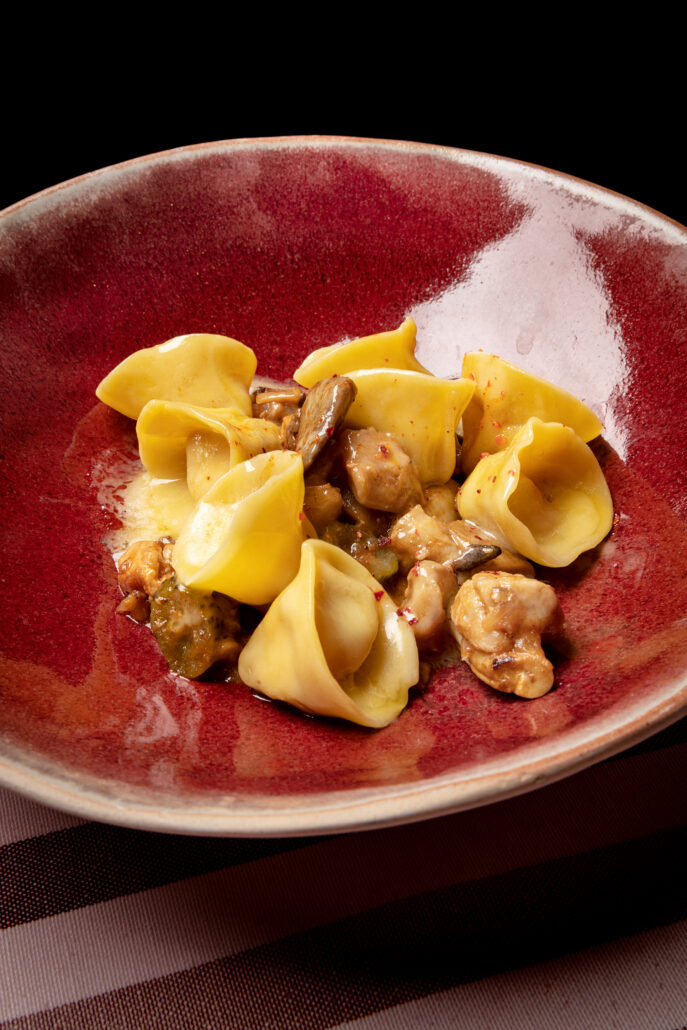
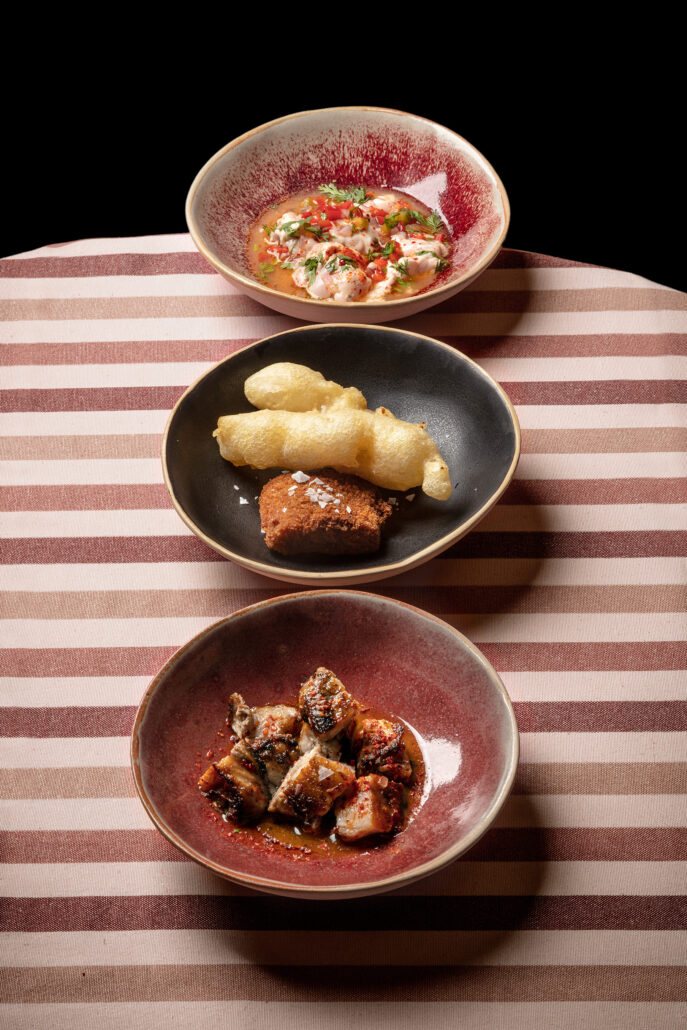
The Consorzio menu is a hymn to indulgence. It’s one of those lists where you want to order everything. Classic and avant-garde coexist so seamlessly that it’s hard to tell where one ends and the other begins. Take the cod, for instance: it’s served with its classic green sauce, yes, but resting on warm, melt-in-the-mouth marrow grilled to perfection. And the ravioles, elongated traditional potato gnocchi, are, of course, dressed with butter, its sweetness extended by hazelnuts, yet also refreshed with mandarin pollen. The finanziera is there, as are the agnolotti, but one is the filling of the other, and the tajarin isn’t a first course but a main, because it’s made with lamb tripe and presented like a warm, comforting winter soup.
And so, with Valentina pushing southward and Pietro and Andrea keeping their roots firmly planted while occasionally steering north,
Consorzio has thus become a kind of gastronomic bridge.
A link between tradition and the future, between the Mediterranean and Northern Europe. A place of dialogue, and at times of friction. Yes, because the choices made here are so clear-cut, so partisan, that they cannot please everyone. Consorzio is one of those places you either love or struggle to fully understand. And even this, to me, seems a hallmark of the most meaningful places. In the vast puzzle that is food and wine in Italy, Pietro and Andrea, now joined by Valentina, have added a piece that was missing, or perhaps already existed, but certainly had far less defined edges.