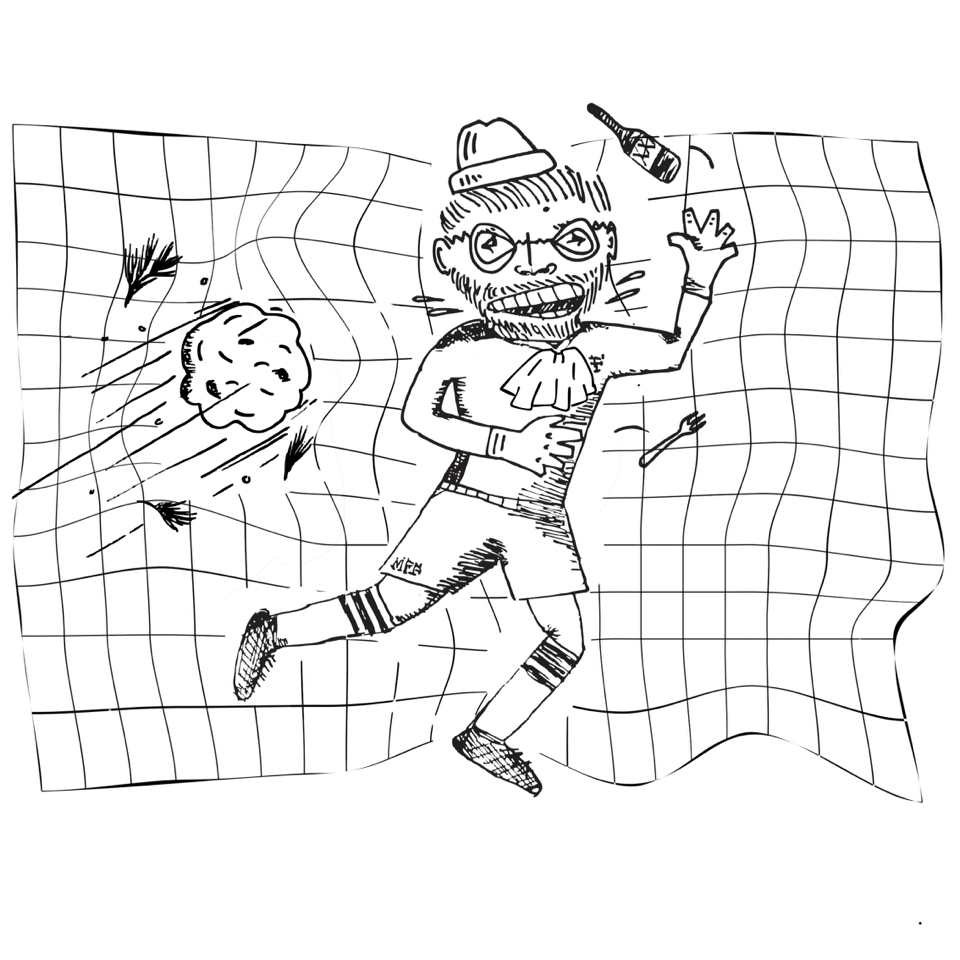
No, I’m not talking about that kind of competitive eating. Remember the whole world watching Kobayashi crush Nathan’s Famous International Hot Dog Eating Contest six years in a row? You just had to be there. The kind of sport I’m thinking of now is a different kind of challenge. It takes practice, real effort and sacrifice too. As a young waiter in Malmö, Sweden, a small city with a bustling restaurant culture blooming just across the Oresund from Copenhagen, I was pretty good at it. It was 2019 when I really got involved in eating with a competitive spirit. I ate like it was my job, because, well, it was. I was a card carrying member of modern globalized hospitality culture and felt it was my duty to eat at as many good (and bad!) restaurants as possible. I was eating to stay informed on the world of gastronomy, eating to brag about what I ate, eating to become my work. It was about pleasure as much as it was purpose. What others called gluttony, I used to call my life’s vocation.

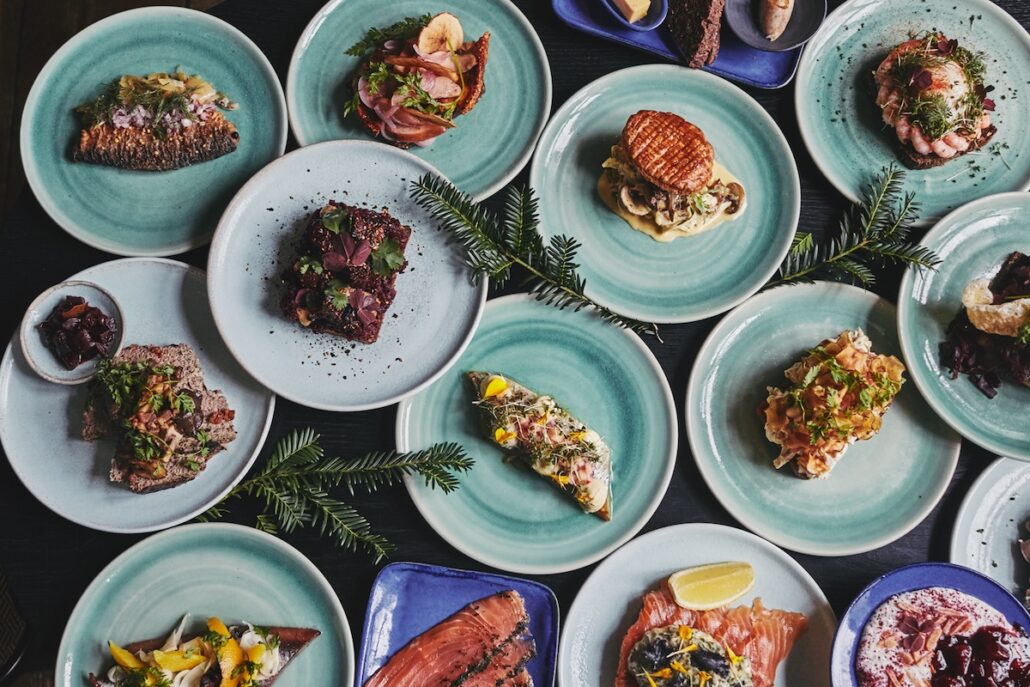
Like plenty of gastronomic tourists, I’ve done this most while travelling— stuffing my face in as many Roman trattorias as possible during a weekend trip, choking down bar snacks at St. JOHN between lunch at Quality Wines and dinner at Mangal II on a single day in London, walking from pinxto bar to pinxto bar to pinxto bar for a whole week in San Sebastian. All for what? So I can come home and say I did it?
Exactly.
The thing is, I’m not actually a competitive person. I was training my palate but I didn’t have an end goal in mind.
I wasn’t a chef, any research I was doing didn’t benefit the restaurant I was working in. To me it was a sport with no real rewards outside the satisfaction of a good meal, a little perspective, and the fleeting respect of my peers. Cooks and waiters are often the competitive kind, but caring about food that way started to feel both obsessive and shallow pretty fast. Really learning about a place through its food is best done over a prolonged period of time, where you can give each meal the proper pomp and circumstance.
In Malmö, I had the time. In Malmö, you can eat. It might not be the center of the New Nordic movement, but it has definitely captured some of the spirit. It’s only a thirty minute train ride to Copenhagen, I know because I took it often. When I first moved to Malmö in 2016, I was travelling across the bridge into Denmark every other week for concerts, food, and all the freewheeling vibes Copenhagen has to offer. It wasn’t until I started in hospitality that I really came to appreciate what Malmö could give, gastronomically speaking.
If Copenhagen is the major league, then Malmö is the movie Bull Durham: charming, smalltown, and just as outspoken as Susan Sarandon. There is a Malmö gastronomy of a sort: balanced but crunchy, and sometimes too subtle for its own good. Mostly it’s just right. If you’re looking for a Michelin starred multi-course experience, Malmö has it at Vollmers, but what the city really excels at is casually great food from all over the world and a hospitality community that looks after itself. There is a veritable restaurant scene in Malmö – one that includes a multitude of Neapolitan pizza joints, importers of Mediterranean products, a new-nordic French bistro, Hong Kong style barbecue, and more natural wine importers than there are actual wine bars.
It’s gone through waves of immigration that are completely traceable through its restaurants. Falafel was brought by Lebanese migrants in the late 80’s, the fall of Yugoslavia brought Serbo-Croatian cevapi and burek, and most recently the Syrian refugee crisis resulted in a plethora of kibbeh variants popping up around the city. For a city of only 370,000 people, it punches way above its weight-class and yet still feels unsung. It’s got something to prove, which makes it fertile ground for competition.
What I want to do is pitch you a perfect gastronomic day in Malmö, like Dock Ellis pitching a perfect game in 1970 for the Pittsburgh Pirates.
You don’t have to drop acid like he did, but opening your mind is recommended. There will be fastballs, curveballs, and Swedish meatballs right down the middle. There will be detours too. I want to give you options. I’ve done the practice, the warm ups, I’ve got seven seasons under my belt. I know where to go and where not to. There’s a lot of ways to play the game, but this is how I would play it.
We’ll start with breakfast.
Log in or subscribe.