For an almost 90-year-old dining room, it’s remarkably hard to get a table at Le Veau d’Or these days. Haven’t people had enough? Or has it just stayed that good the entire time? Of course, I’m being facetious. Some restaurants do garner that much attention for that long. In the case of LVD (Le Veau D’or), it has fallen in and out of favor during its long tenure, much like French food itself. From everything I’ve read it was a classic neighborhood spot with plenty of regulars over the years, including Orson Welles, James Beard, Truman Capote, and Jackie O. And while it has changed owners a few times since first opening in 1937, it is the oldest French bistro in New York and still very much conjures the past. Call it wonderfully old-fashioned or passé, that’s all part of the point. Lee Hanson and Riad Nasr purchased Le Veau D’or from the Tréboux family in 2019, renovated, and reopened the storied spot on E 60th Street in Manhattan in 2024. It’s what they call a legacy restaurant, what Daniel Bouloud refers to as, “part of the history of dining in New York.” Now they release tables exactly two weeks in advance at midnight and plenty are scooped up in seconds. I managed to get an 11:30 reservation for lunch on a Tuesday in May.
We almost couldn’t find the door. There was scaffolding outside covering up the sign. How chic, we thought. Just a door? A portal to a different world on the other side? Presumably, Paris by way of Manhattan was right behind it. So we stepped through a velvet curtain and into a bygone era, past a beautiful wooden bar to a table the waiter pushed aside, letting us on to the red leather banquette. It was a corner table with our back to the wall and a full spectrum view of the room. Low ceilings, panelled walls, black and red tiled zig-zagged floors, and history all over the place. If restaurant service is a stage, this is the stagiest place I’ve been to in a long time. It was genuinely a delight to marvel at – we couldn’t have asked for a better seat in the house.
It’s hard not to be instantly charmed by a room like Le Veau d’Or.
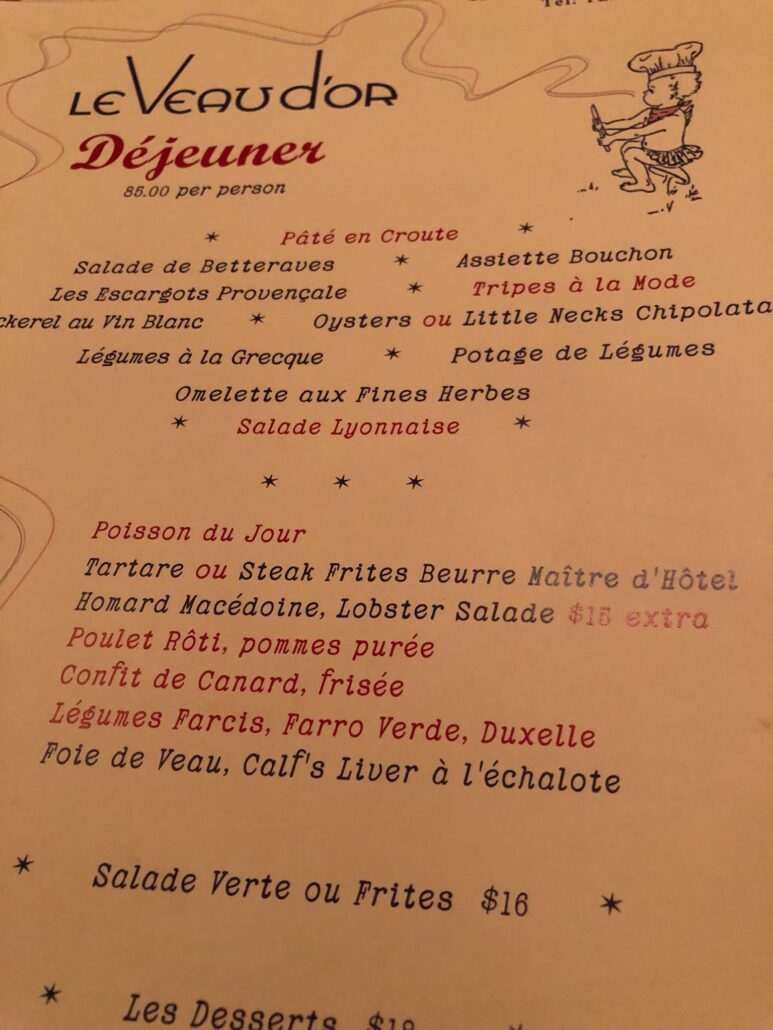
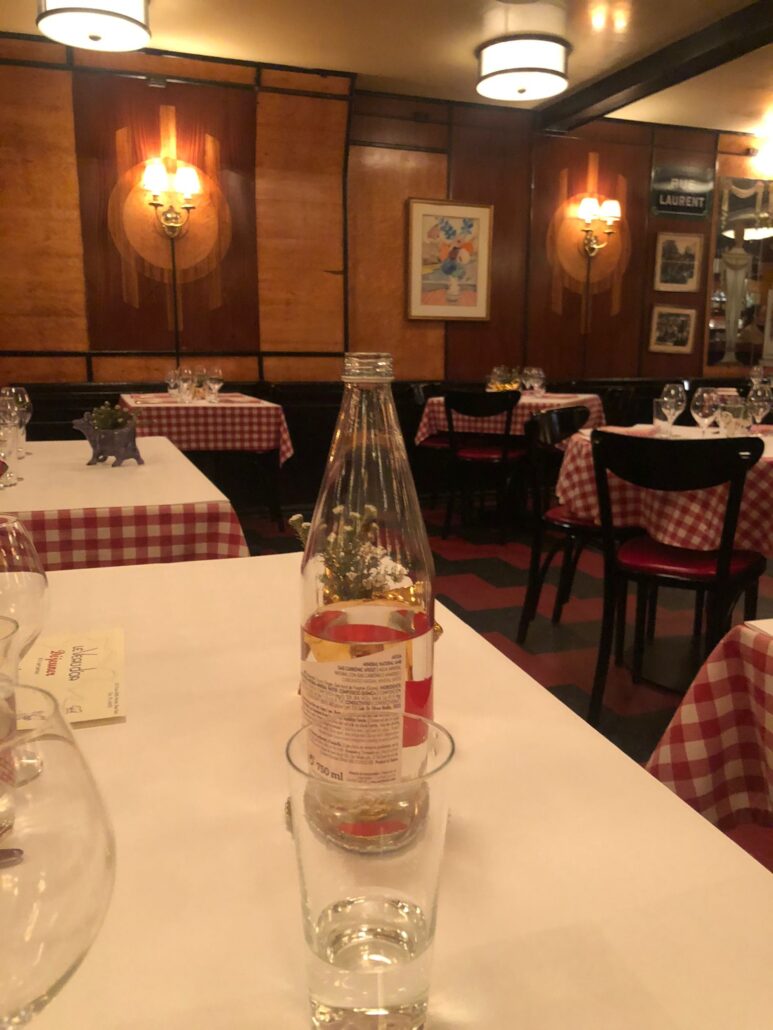
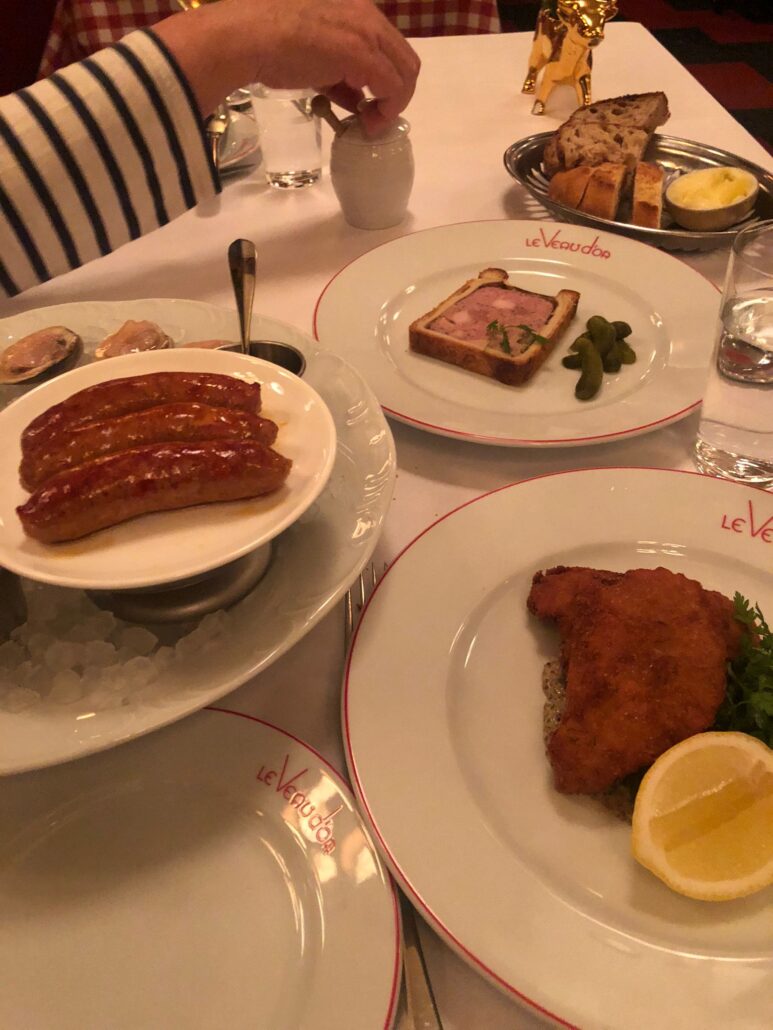
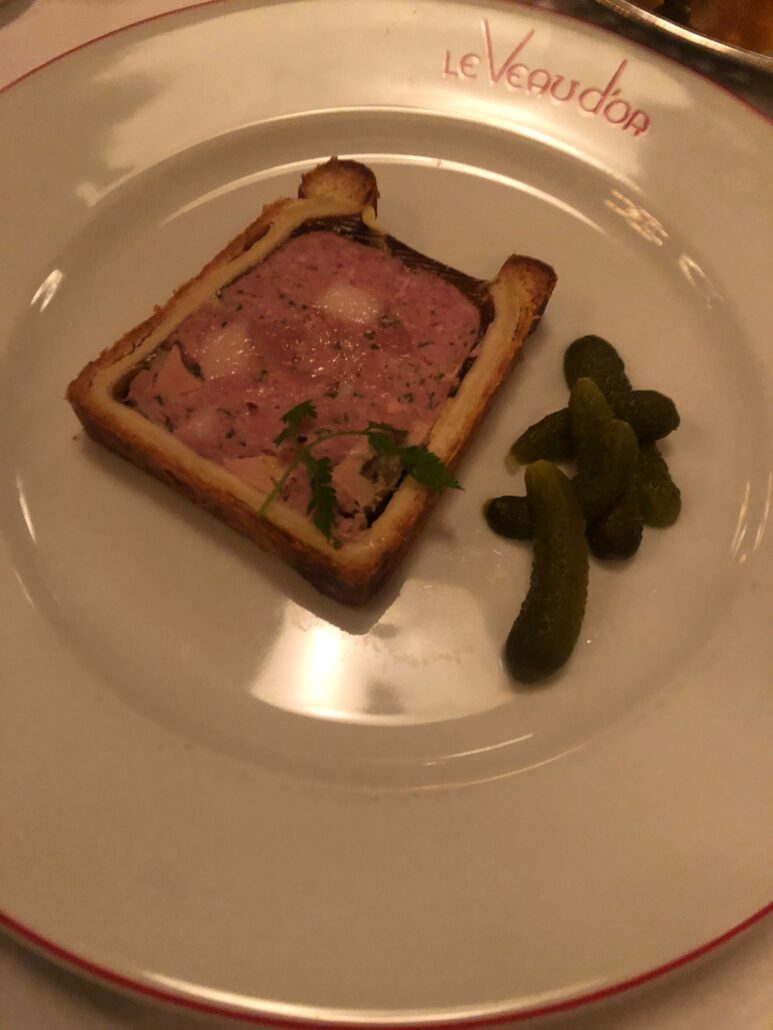
Even the staunchest francophobe would give a little. The service was warm and professional, the ambience buoyant and disarming, the food exactly what you want if you want this kind of food. I often do and I enjoyed it thoroughly then. The lunch menu is a two course pre-fixe, you get your choice between a number of French classics that Anthony Bourdain once said “old even when he was a kid.” We ordered Oysters, Tripe à la mode, Pâté en croûte, Confit de canard, Homard macédoine, and Foie de veau. All of it was perfectly executed and presented. I levitated out of my seat at the first bite of duck. The tripe that day was a deep fried blanquette, and not nearly tripe-y enough for my tastes, but I’ll take tripe however I can. The liver was probably the best I’ve ever eaten, and I am a likely candidate for vitamin D poisoning if there ever was one.
The fact that we left the restaurant with a smile across our face was not a surprise. We’re talking about a restaurant that was just voted 12th on the 50 Best List in North America here, one above Le Bernardin even. The biggest shock was walking through Central Park afterward and not along the Seine. In the two months since that lunch I’ve found myself wondering, why do we love a Parisian bistro in New York so much? Beyond the obvious physical pleasures of it.
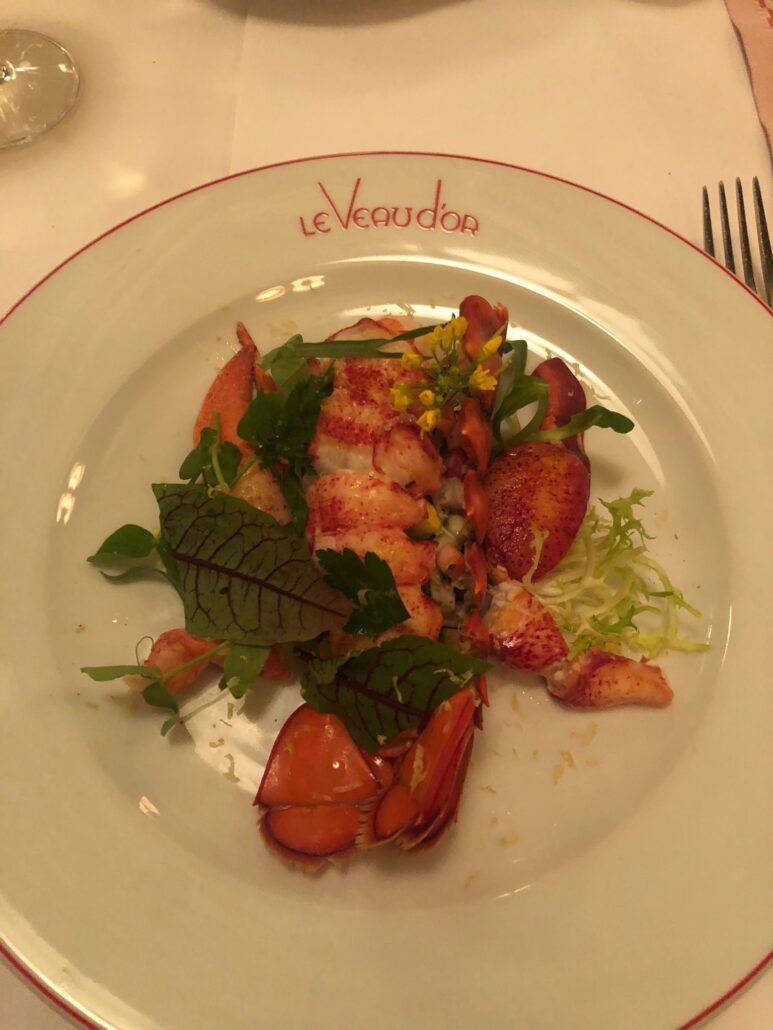
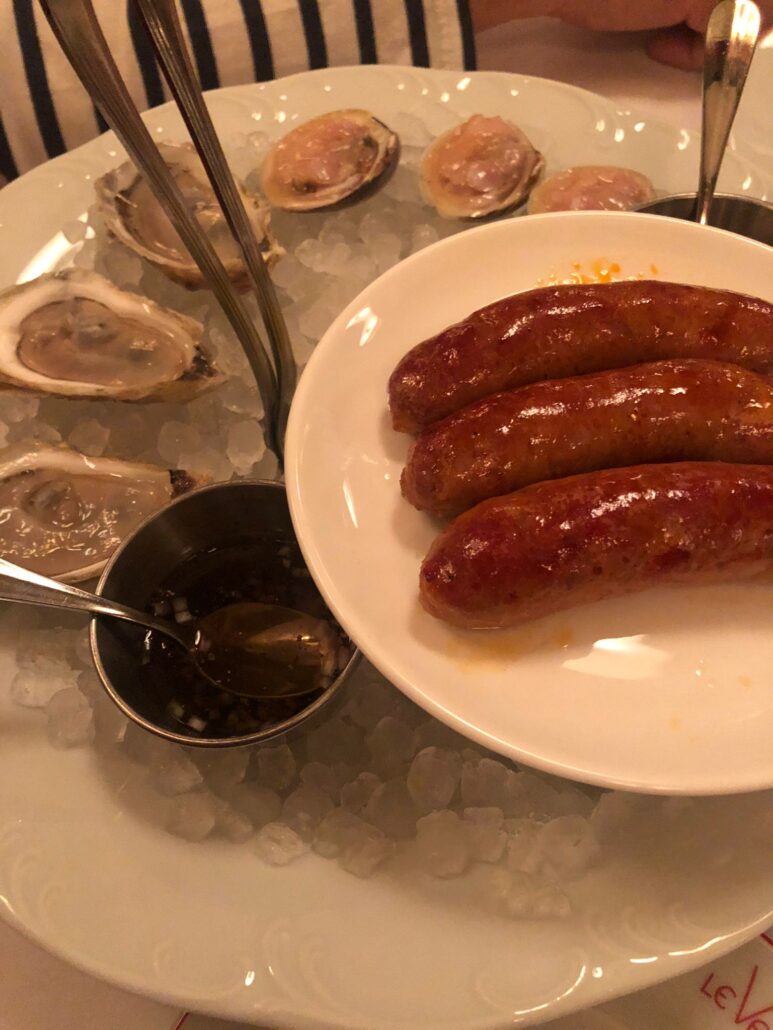
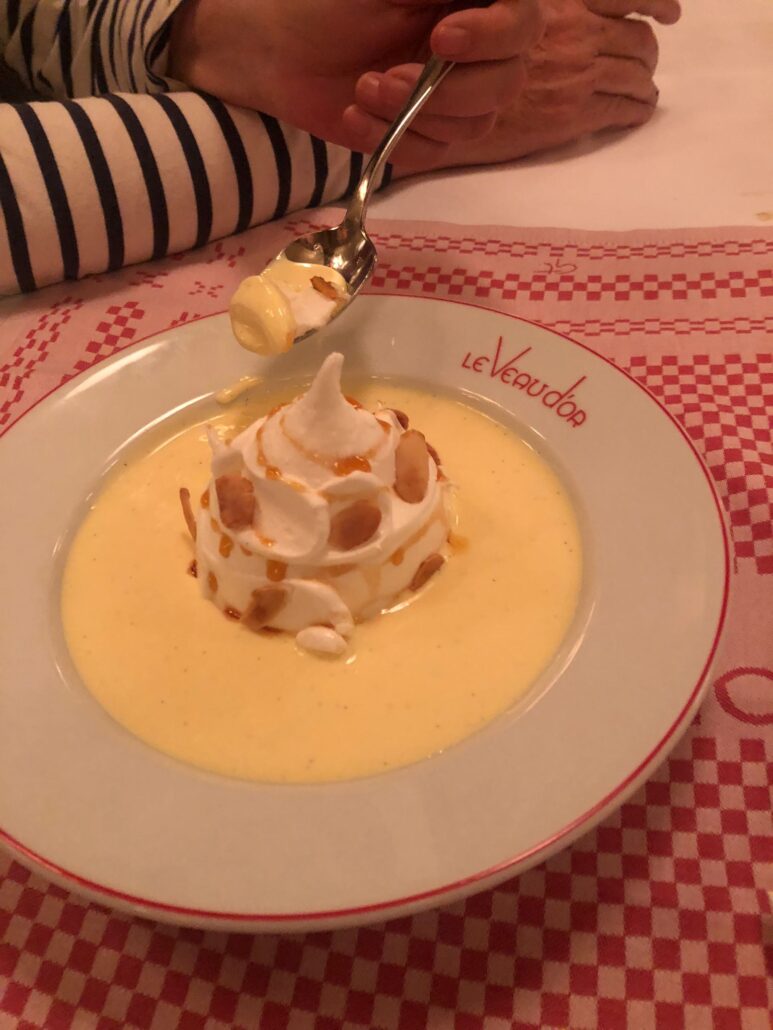
There is soft power to consider, of course. But where did it come from? The rise of French cuisine can and has been tracked through New York’s history. The 1939 World Fair brought restaurateur Henri Soulé and chef Pierre Franey to the city, where their fairground restaurant was a huge success. When WWII broke out, they stayed and opened Le Pavillion permanently in Midtown. It brought white tablecloths and French service to the forefront, and sparked plenty of imitations around the city. Post-WWIII New York saw the popularity of French food rise to its peak and stay there for decades. Haute cuisine was the gold standard in Manhattan from the 40’s on up to the 70’s, when formality started to loosen its grip on dining culture. Its imprint was codified in US culture when Jacqueline Kennedy brought in a French chef to run the White House kitchen in 1961.There she is at the scene, once again.
This is all to say that, when I took a bite of Homard macédoine at Le Veau D’or, I was tasting a little bit of cultural hegemony too. Did I love it because I’m told by the world to love it? Because they love it in films? Because of the lists? Did I order the liver because Ernest Hemingway used to order the liver too? As influential a city that New York is, the rest of the world must suffer through its trends or at least pretend to. Pretending, I think, has a lot to do with it.
The finest restaurants are often built on pretence. I am mostly fine with that. I am mostly fine with my food lying to me and the servers too. A charade is nice to enjoy for a few hours at a time. But I do question it. New restaurants in Paris hardly don’t even serve food like this anymore. Maybe it’s because I’ve been to France far more often than Manhattan in the last ten years, but why do people want to leave New York in the first place? I love a restaurant with a perspective, but the nostalgia here fell a little flat for me. Is this really the end all, be all, of gastronomic imagination? Is going back in time just a reaction to the anxious, bleak world of modern dining? Need it be anything more than a celebration of the classics? Intellectually speaking, I knew I shouldn’t love Le Veau d’Or as much as I did, but I did anyway.
C’est la vie.