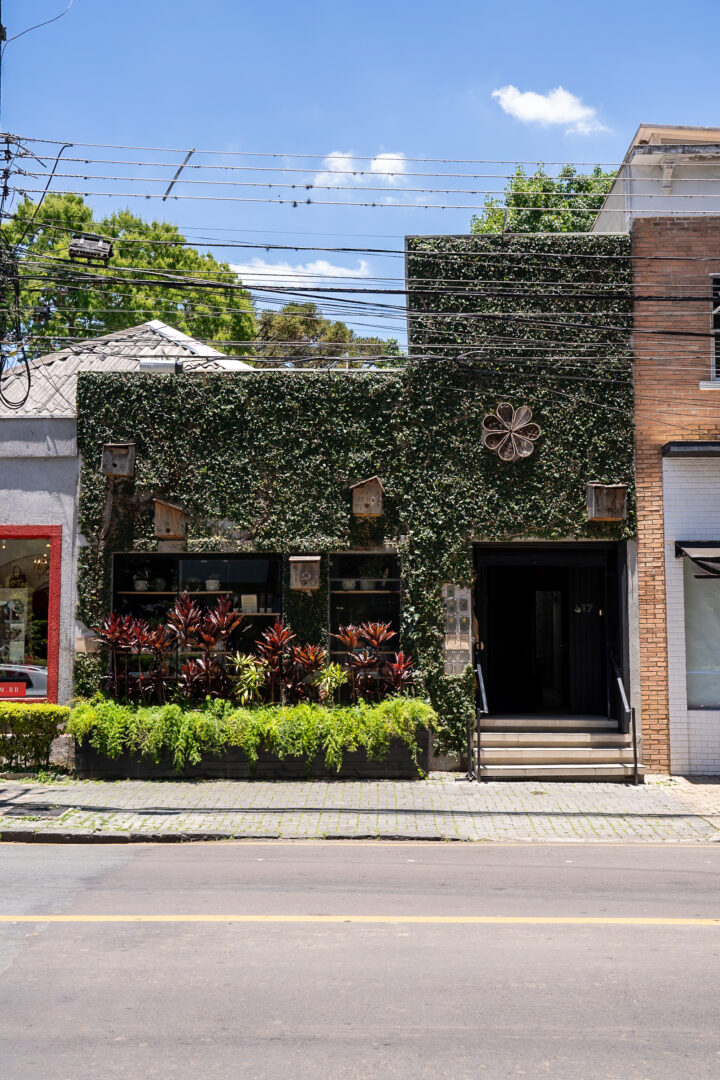
The bees arrive before the name. Before you even realise that the “vertical meadow” is the façade of a restaurant, before you see the door, before you read the name Manu. They’re already there, busy in their hives. They are families of mandaçaia, manduri, jataí, mirim guaçu, and mirim guaraipo – species of stingless bees native to Brazil. Bees are female, almost all of them, and for millions of years they have functioned through a collective intelligence that organizes without dominating. Those hives are not on the façade of the restaurant Manu as a mere aesthetic flourish, nor for some cosmic symbolism, nor even as a sustainability slogan. They are there to pollinate – aka to produce, to organise, to keep a system alive.
And in this, they closely resemble Manoella (Manu) Buffara. A woman who has chosen to think about cooking in the same way bees work: as an ecosystem in which every gesture has consequences, every ingredient carries responsibility, every choice points in a direction. Her vision is simple: to use food as a tool for transformation.
“Bees have always been present in my work in a quiet, almost invisible way, and yet absolutely essential. They represent something I deeply believe in: the idea that the most important forces in food are often the smallest ones.”
There is a natural complicity between Manu and her bees: both transform what they find. Manu Buffara cooks to transform her city, and she does so with an energy that seems inexhaustible, but is in reality simply extremely well organised. Like bees. “My daily goal is to be the change I want for the world my daughters will live in.” It’s a statement Manu repeats lightly, because that change is something she truly embodies, every single day. “What happens when a restaurant stops being an end and becomes a means?” she asked herself some time ago.
Log in or subscribe.