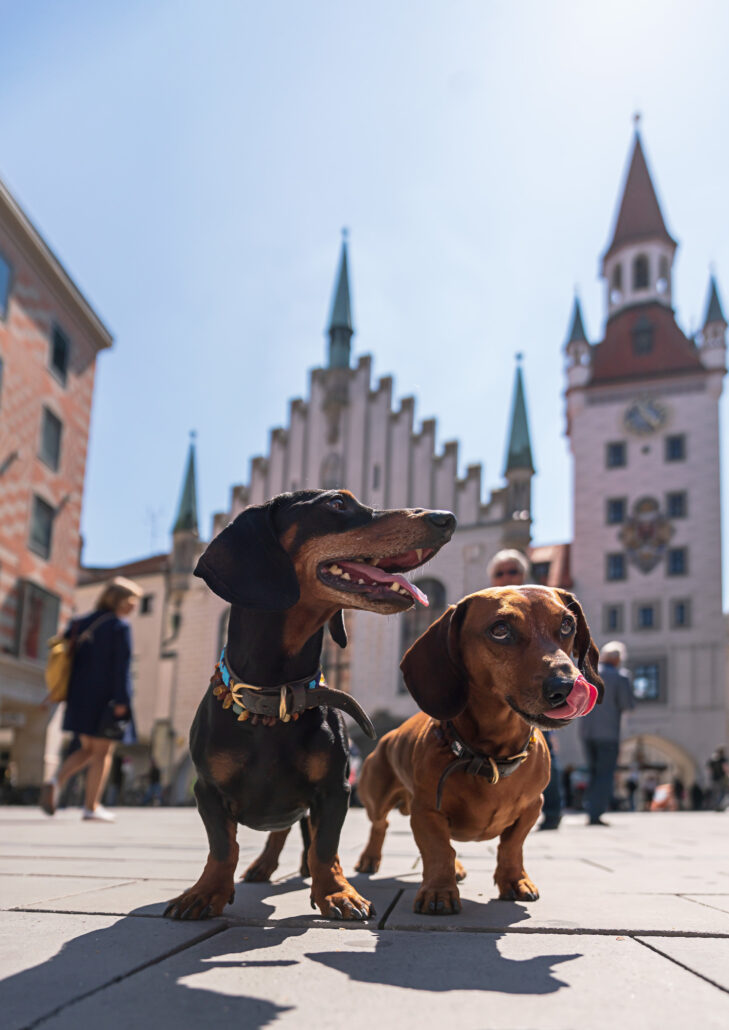
The Bavarian flag is white and blue and is related to beer: white as foam, blue as the sky you see while drinking it down. Be careful not to say the opposite, that the “blue and white” flag means BMW, which is also Bavarian, but the people of Munich like to set themselves apart. However, Munich is like its flag: a city that resembles a festive beer stein. It’s Oktoberfest, lederhosen, the dachshund, so loved that it was chosen as the mascot for the 1972 Munich Olympic Games. Munich is large mugs with comfortable handles for the countless cheers. Munich is that festive atmosphere that we all think we know before even going there. And yet, no. Or rather: yes, but not only.
There are many other hidden things about Munich that are worth discovering. For example, according to a curious German saying, Munich is “the northernmost Italian city”. While this may seem absurd to Italians, yet if we try to understand why, we find that there is a kernel of truth in the claim. It lies in the Bavarian conviviality, which is not just about beer but also about shared tables, easy conversations, a certain predisposition to extend lunch until it becomes dinner, and, in the way locals live outdoors, in courtyards and on terraces (is this an Italian thing? Good to know).
This is in the cult of eating well, without too many conceptualisms but with a underlying seriousness that strongly resembles Italian way of life.
And there is, above all, in the relationship between tradition – of weisswurst and pretzels everywhere – and an impressive fine dining scene with international scope.
This is a small gastronomic journey through Munich, through three places of strong historical significance that tell the city from different angles: a grand hotel that is a city within the city, a brewery that is a global institution, and a temple of fine dining that has been the laboratory of German nouvelle cuisine and has propelled Munich to “compete” with the gastronomic capitals of Europe.
Hotel Bayerischer Hof
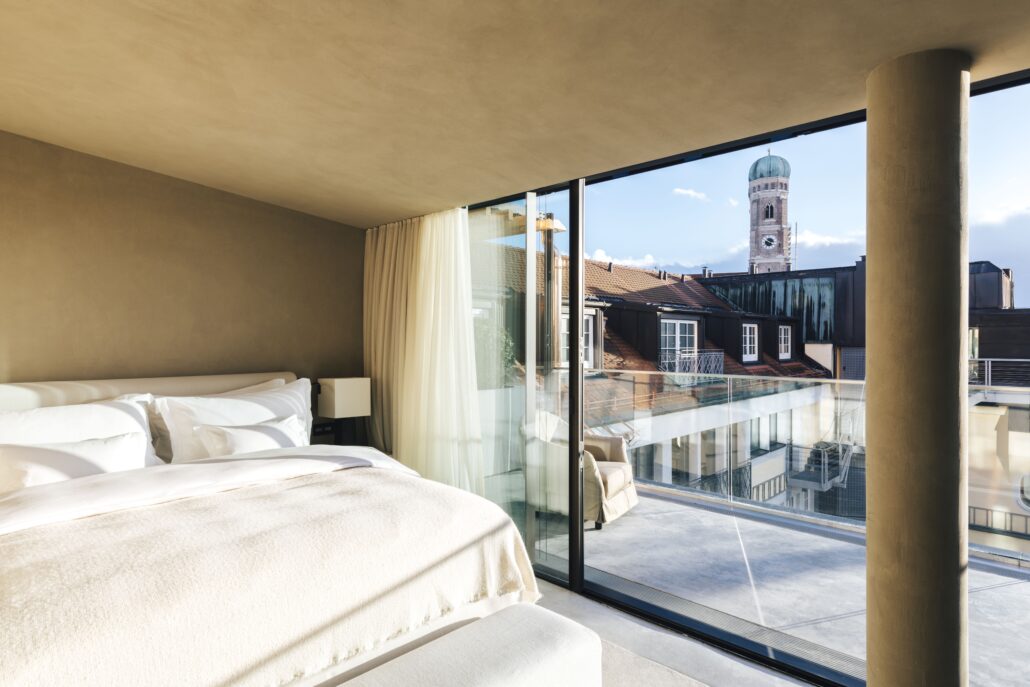
The Hotel Bayerischer Hof is not just a hotel. Or rather: it is, of course. But it is also a microcosm, a parallel universe. Founded in the 19th century and grown alongside the city, since 1897 it has been owned by the Volkhardt family, with Innegrit Volkhardt specifically taking over in 1992 as the fourth generation to lead the establishment. Over the course of these three decades, Innegrit has invested in modernizing the hotel, blending historical features with new minimalist design elements to create timeless elegance and a calm, relaxed atmosphere, thanks in large part to the renowned Belgian designer Axel Vervoordt’s work. The Bayerischer Hof is one of those places that has witnessed both grand and frivolous history. Politicians, artists, musicians, actors – everyone, sooner or later, has passed through here and continues to do so. In fact, during my stay, it hosted the Deutscher Filmball, one of the main events in the German film industry, complete with a red carpet inside the hotel, paparazzi, and celebrities milling around. And the great thing is that it doesn’t put on airs.
It’s like stepping into an elegant yet unassuming Munich, where luxury isn’t about showing off, enveloped in the strange and intriguing feeling of being immersed in a modern, sumptuous past that feels both alive and unchanged. The corridors seem endless, the rooms change atmosphere at every turn, and there’s always the feeling that somewhere behind a door, something interesting is happening. With over 330 rooms, 74 suites, 5 restaurants, 6 bars, and a nightclub, it’s not just a hotel; it’s a small urban village. It even has a panoramic spa, cinema, theater, and jazz club, suggesting that if you stay here for a week, you won’t get bored and it’s not even necessary to leave the hotel to enjoy the best of the city.
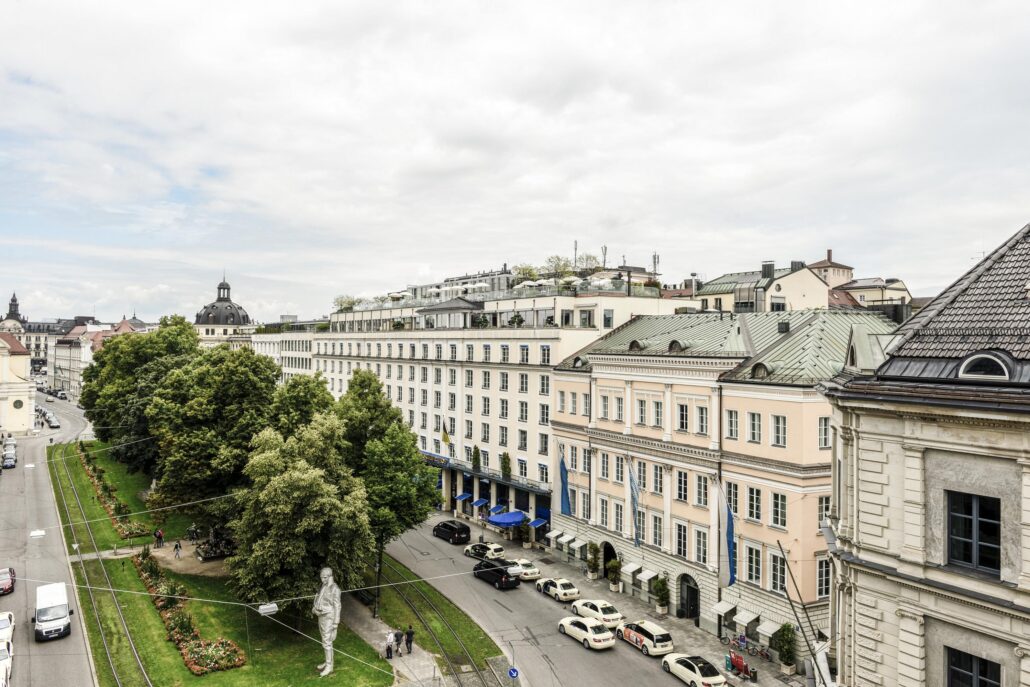
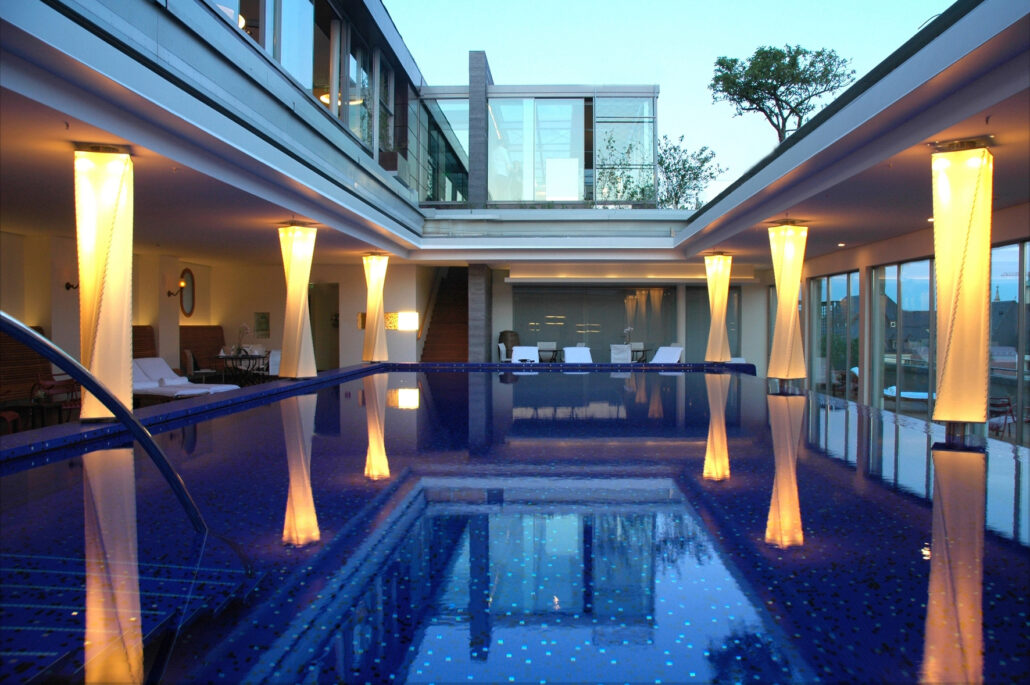
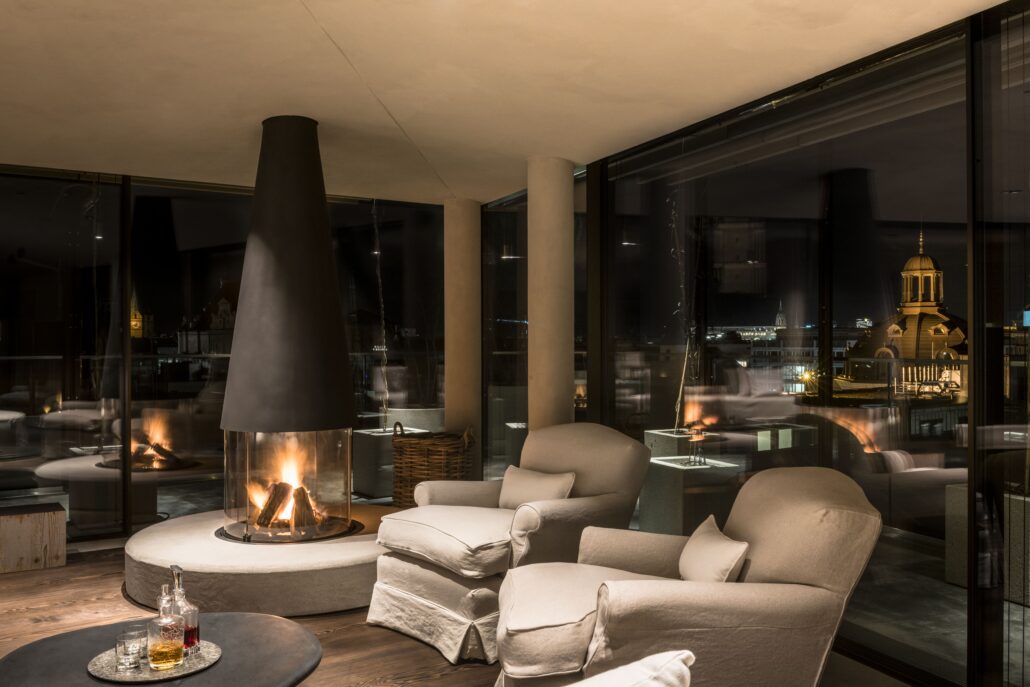
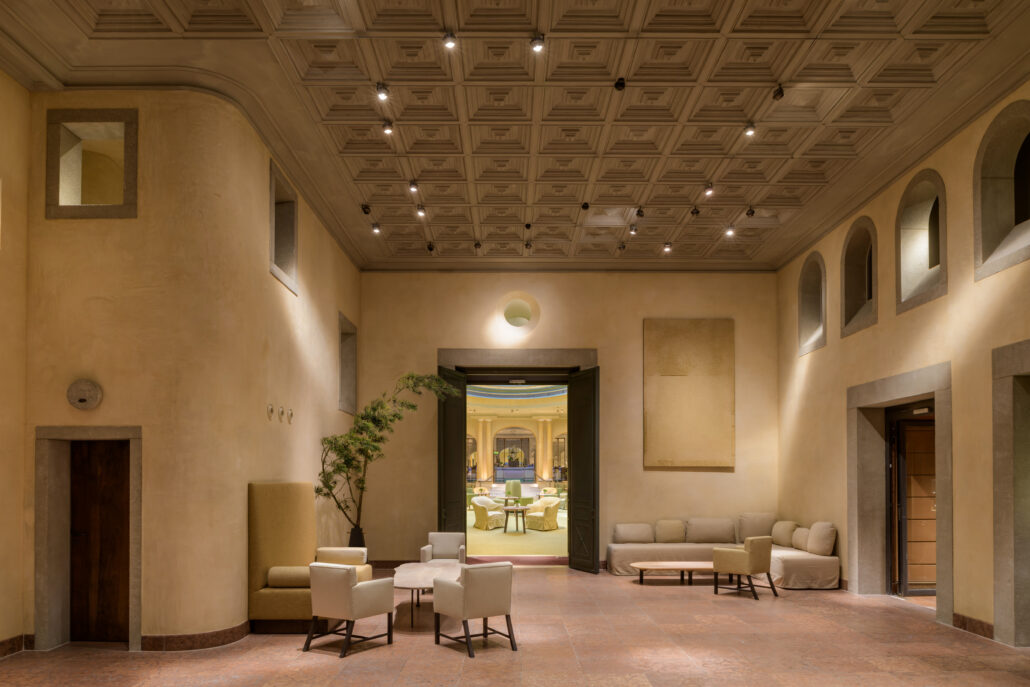
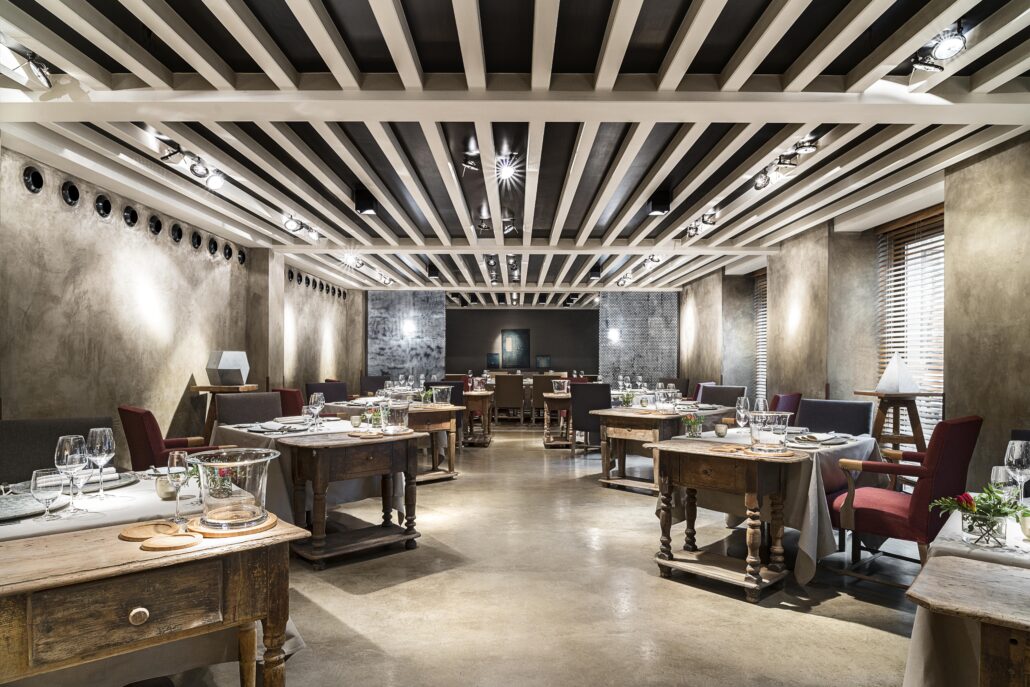
From a gastronomic perspective, the Bayerischer Hof is a small labyrinth with formal restaurants and informal bars, kitchens that look out to the world, and others that remain firmly rooted in Bavarian tradition. For instance, the Palais Keller originates from a 15th-century warehouse and is now a restaurant serving Bavarian cuisine under historic arches. Then there’s Trader Vic’s and Menehune, a restaurant and cocktail bar in tiki-style that transports you into Polynesian exoticism, as unexpected as it is fun. And then there’s the Atelier, the flagship of the establishment with its 2 Michelin stars and a history as the city’s first three Michelin-starred restaurant when the kitchen was under Jan Hartwig (now a three Michelin-star chef in his own project, Jan). Currently under the temporary guidance of chef Valentin Krehl and awaiting a new resident chef to replace Anton Gschwendtne who recently left the establishment due to family reasons. It offers an international cuisine with a French touch and Asian influences, using seasonal and regional products with great technique, precision, and care aiming to continue the successful path of Atelier. A couple of examples: the Norwegian Lobster with hoshihikari rice and carrots, a classic dish with a subtle Asian twist and Périgord Truffle with Parisienne gnocchi at the base accompanied by a play of vegetable elements enhancing the truffle. It’s the dining room, led by the charismatic sommelier Shahzad Talukder, that then transitions the culinary experience from contemporary fine dining into something noteworthy and comfortable with discretion and attention to detail. Ultimately, the kitchen is only 50% of the experience, and the combination of both elements makes you eager to return.
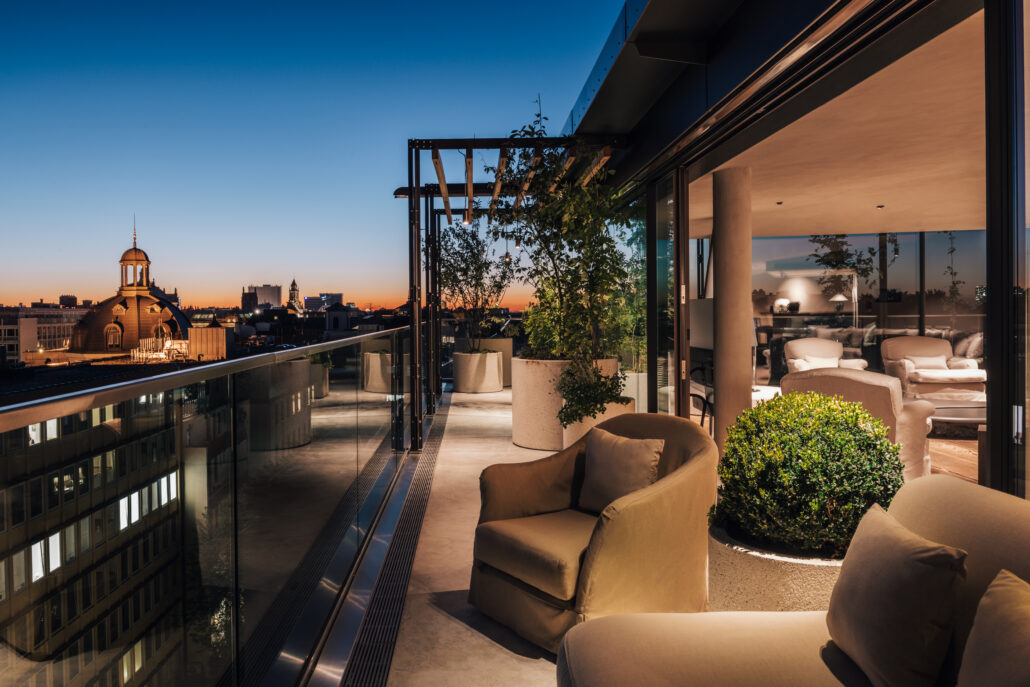
From the panoramic terrace of the Bayerischer Hof, you can see all of Munich: the red roofs, the church spires, the parks scattered throughout the streets. Looking at the city from here makes you understand that Munich is a grand, elegant city, well-organized (and with very little traffic, which might be due to the typical moderation of late January), yet it still has an almost provincial soul, in the best sense of the term.
Hofbräuhaus
If the Bayerischer Hof is the elegant head, the Hofbräuhaus is the heart of the city: crowded, noisy, touristic, at times almost caricatural, it cannot be ignored. It is arguably the most famous beer hall in the world, and a symbolic place of Bavarian culture with its unmistakable HB brand and merchandise. Officially founded in 1589 by the Bavarian Duke William V initially to supply the Bavarian court, it became the people’s beer hall in 1828 under King Ludwig I. It has always been a source of gathering and rooted cultural tradition, historically linked to the beginning of the Oktoberfest, when the royal celebrations of 1810 gave birth to what is now the most famous popular festival on the planet.
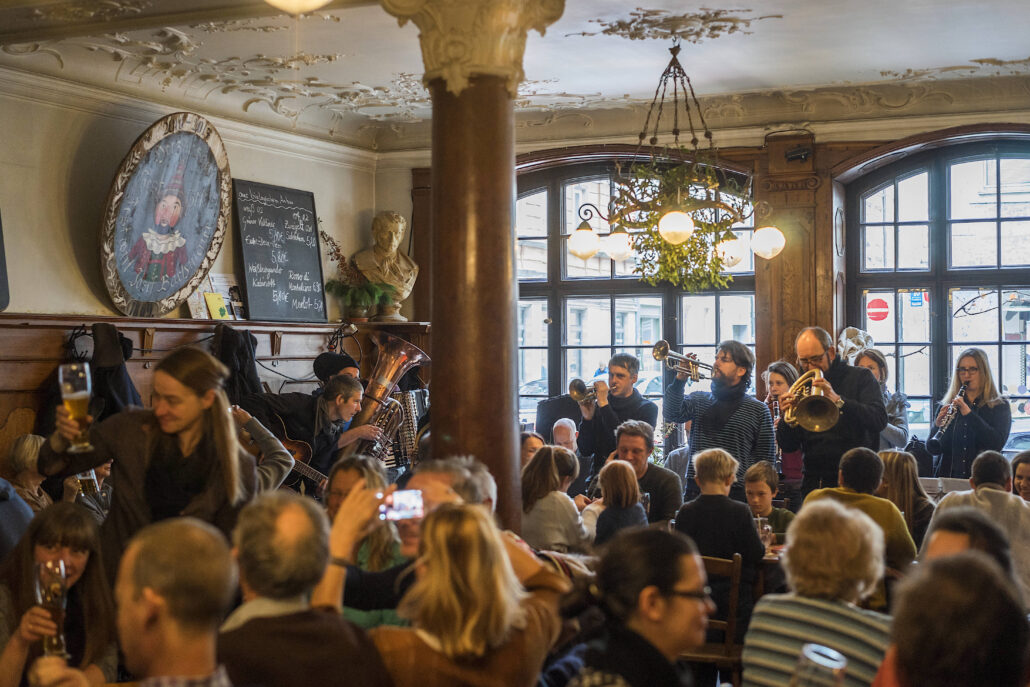
Entering it is a way to experience the Oktoberfest chaos off-season, but also to immerse yourself in a sort of beer playground that may seem like a tourist trap, but is actually still deeply a meeting place for the city’s residents. Just think that there are 125 tables reserved for regular customers among the approximately 3,500 people who frequent the brewery, with 616 of them keeping their ceramic beer mugs locked in a safe with a padlock. It’s a huge place, immense with constant noise, a background of voices, laughter, toasts, and live music at any hour (it’s never too early for a pint), with waiters juggling and dancing with countless heavy beer steins in hand. An impressive number of people pass through here: around twenty-five thousand per day. Fun fact: the Hofbräuhaus has no dishwashers, only a “glasswasher”; dishes and cutlery are treated like catering and taken away in the evening, then returned the next morning as new in sufficient quantities to handle the day.
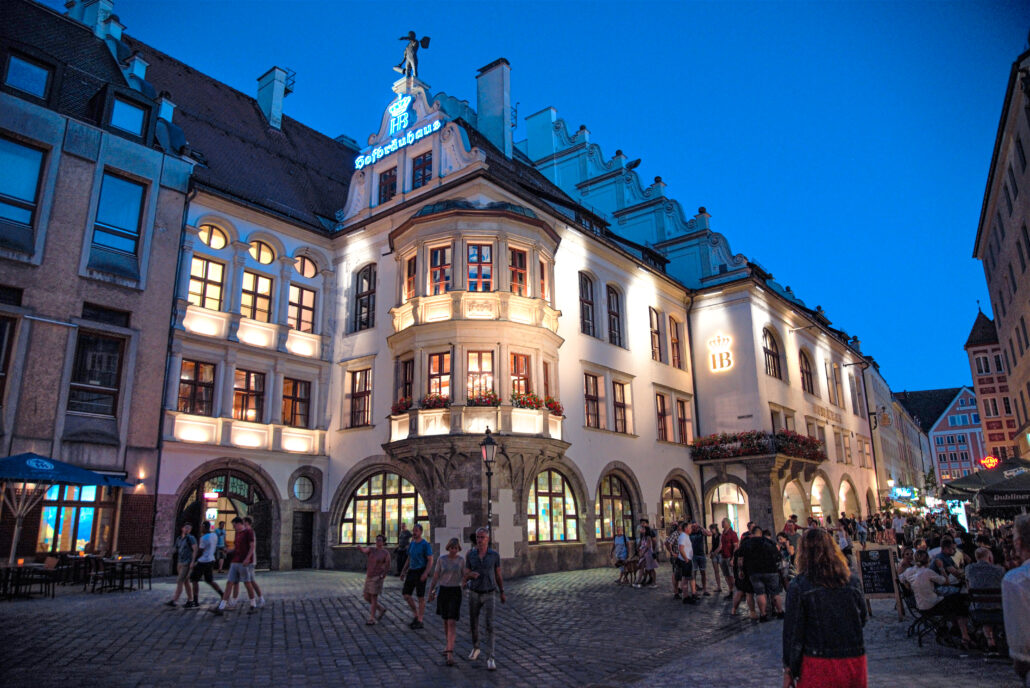
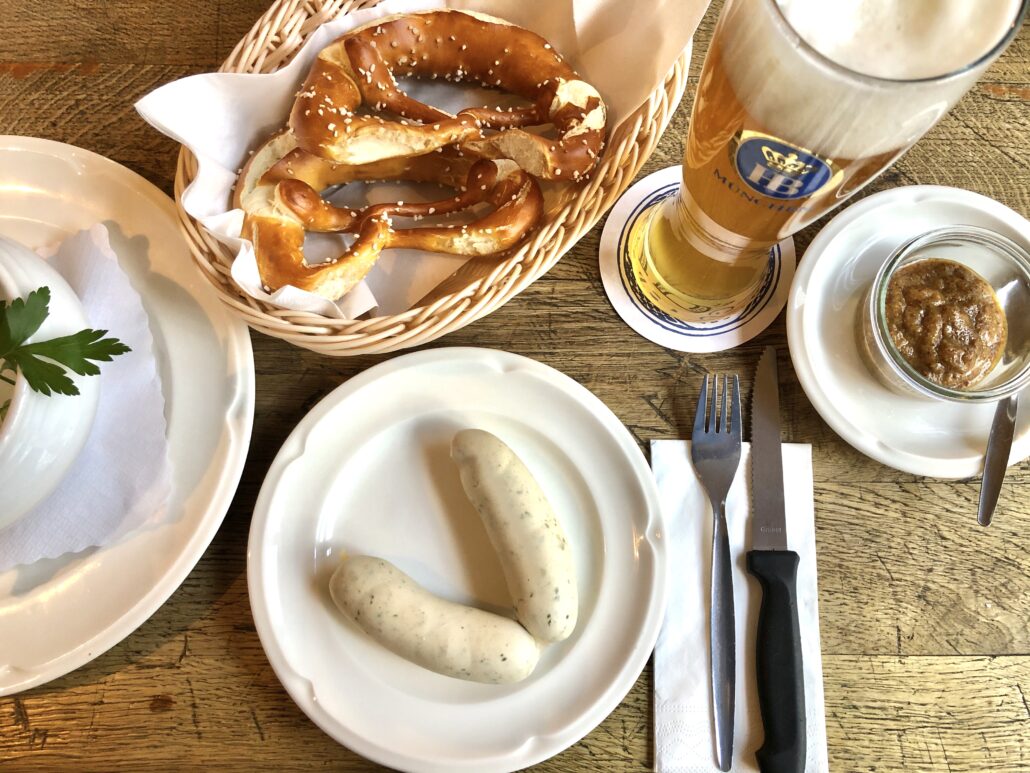
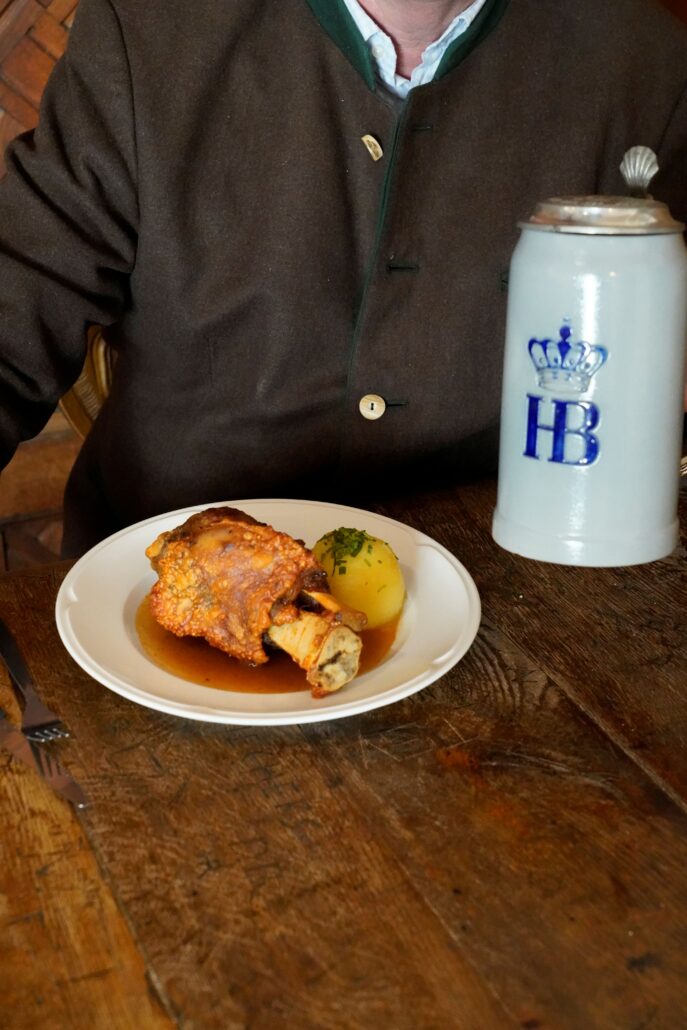
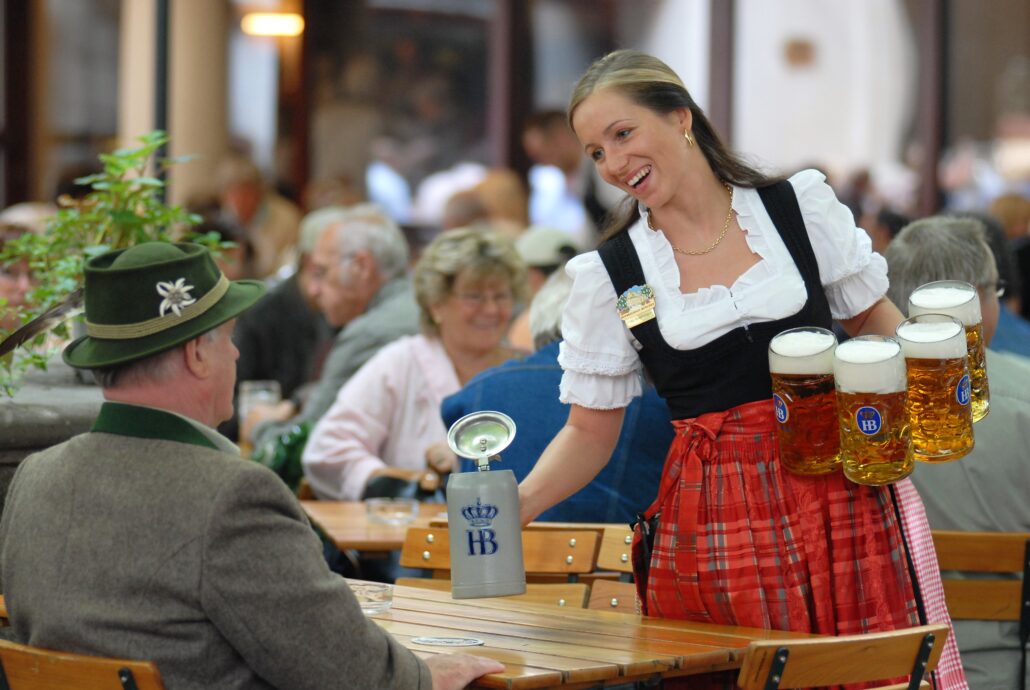
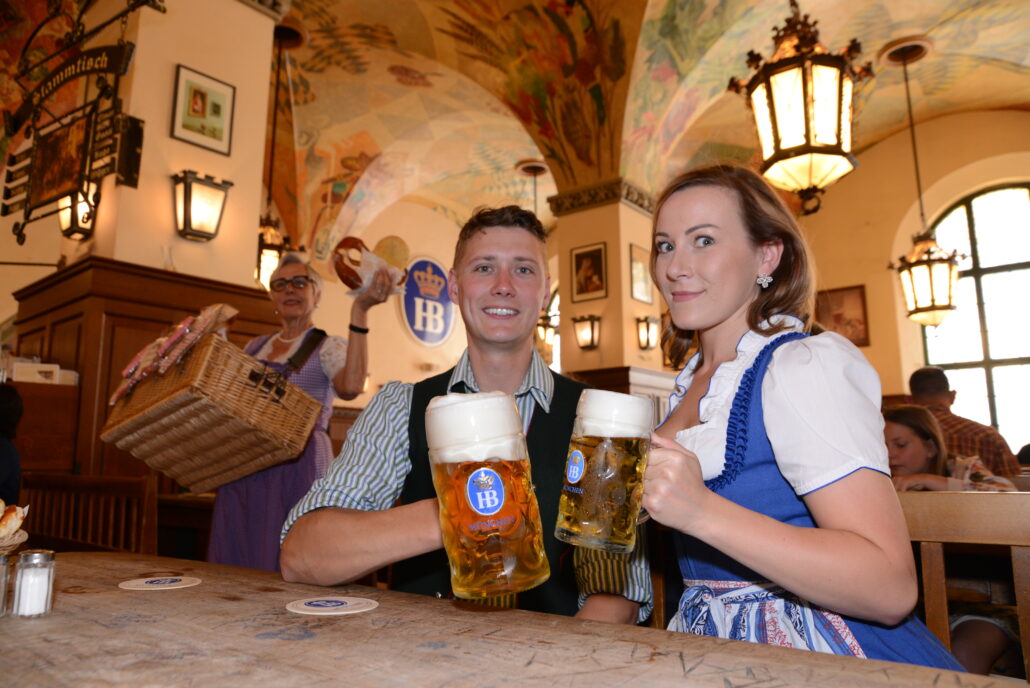
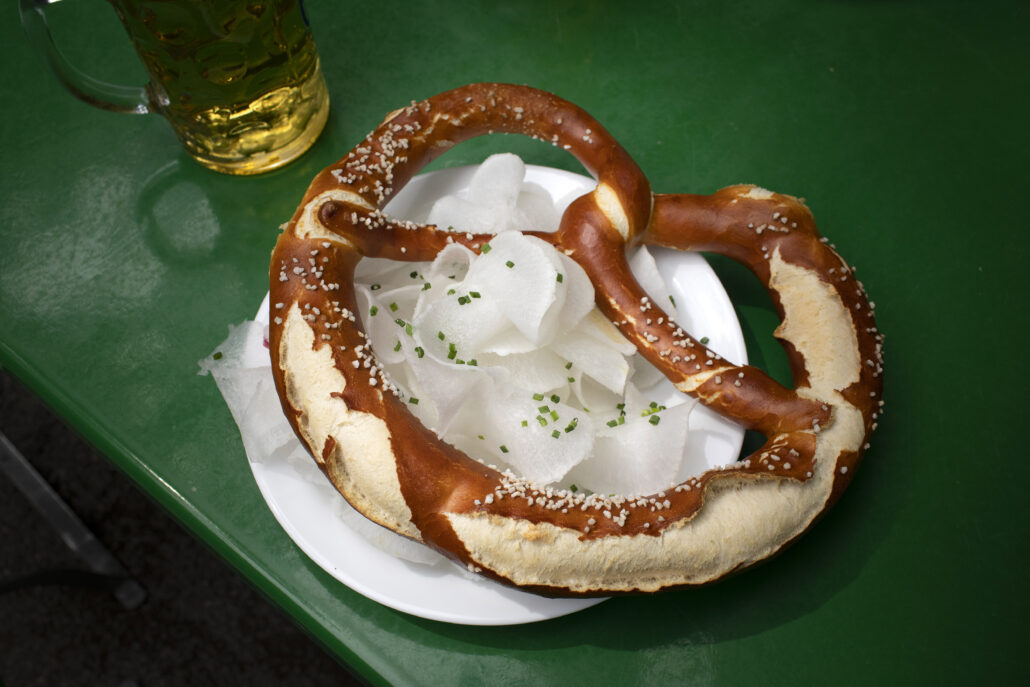
The tables are long, communal, and it doesn’t matter where you’re from: the rule of beer is that it should be drunk here without much thought, with the liter as the standard measure of classic German blonde beer. The food is exactly what you would expect to find in a Bavarian beer hall: hearty, high-energy, fatty, with no hint of frills. Sausages (in plural, there are at least seven versions here, including the inevitable weisswurst, the white sausages prepared by the Hofbräuhaus’s own butcher shop), sauerkraut, pretzels, all in large portions. Here you find in person everything that is a cliché when they talk about Munich but the Hofbräuhaus is not just folklore. It’s a piece of Bavarian identity, a place that has traversed the centuries and continues to function because it meets a very simple need: to be together. Every day, all day, from opening. “We only closed during the pandemic (of course) and we were so unprepared that we didn’t know where the keys to some doors were that we always left open,” they say with a hint of pride in being the city’s stronghold.
“Munich without the Hofbräuhaus would be a little less Munich. You have to go there with the right spirit: don’t expect intimacy, don’t imagine the best weisswurst (although they are really good). You have to step in, sit down, order, and let yourself be carried away by the atmosphere. Just as it happens at well-made country festivals.”
Tantris Maison Culinaire
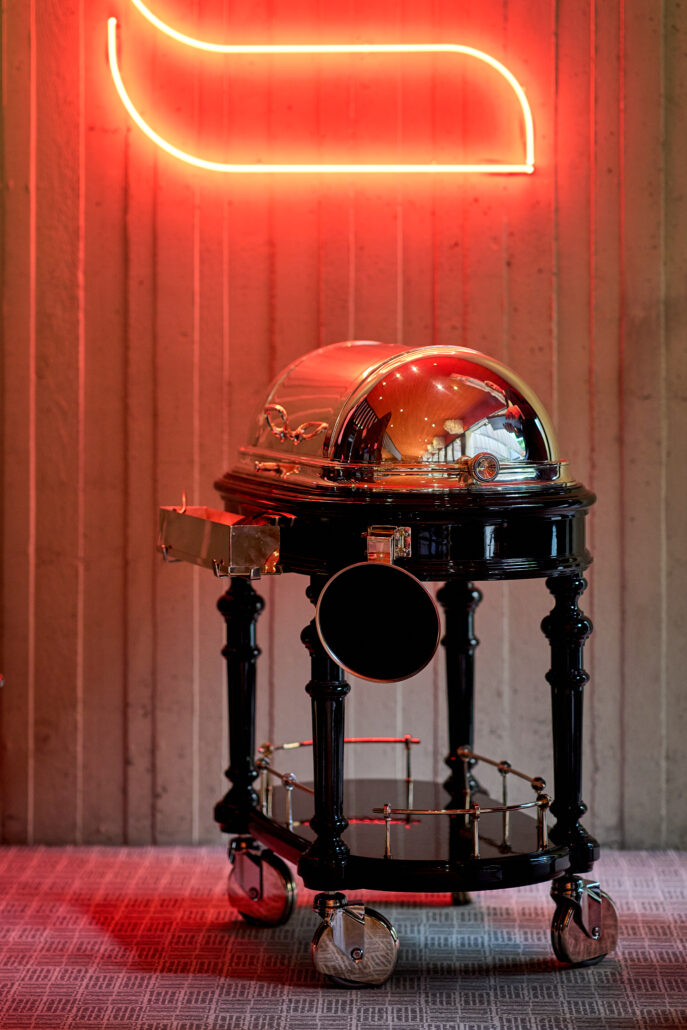
And if the Hofbräuhaus is the popular heart of Munich, the **Tantris** is its gastronomic brain, the creative, multisensory part. Opened in the seventies, it forever changed the way fine dining was perceived in Germany, and this is a historical fact. Here, fine dining was discussed when it wasn’t even a familiar term, looking to France without copying it entirely, building a strong and recognizable identity. It was born from the imagination of **Fritz Eichbauer**, who in his life did something completely different – he ran a construction company – tired of having to go to France to enjoy a gourmet meal. Today, it remains in the hands of the Eichbauer family, with Sabine, an architect and vigneron in Chianti (but that’s another story), now handling a undoubtedly burdensome but particularly stimulating historical legacy. Stepping into Tantris is like entering a parallel dimension, with its imposing architecture from the outside, intense colors dominated by fiery red, and impactful pieces of art in every corner.
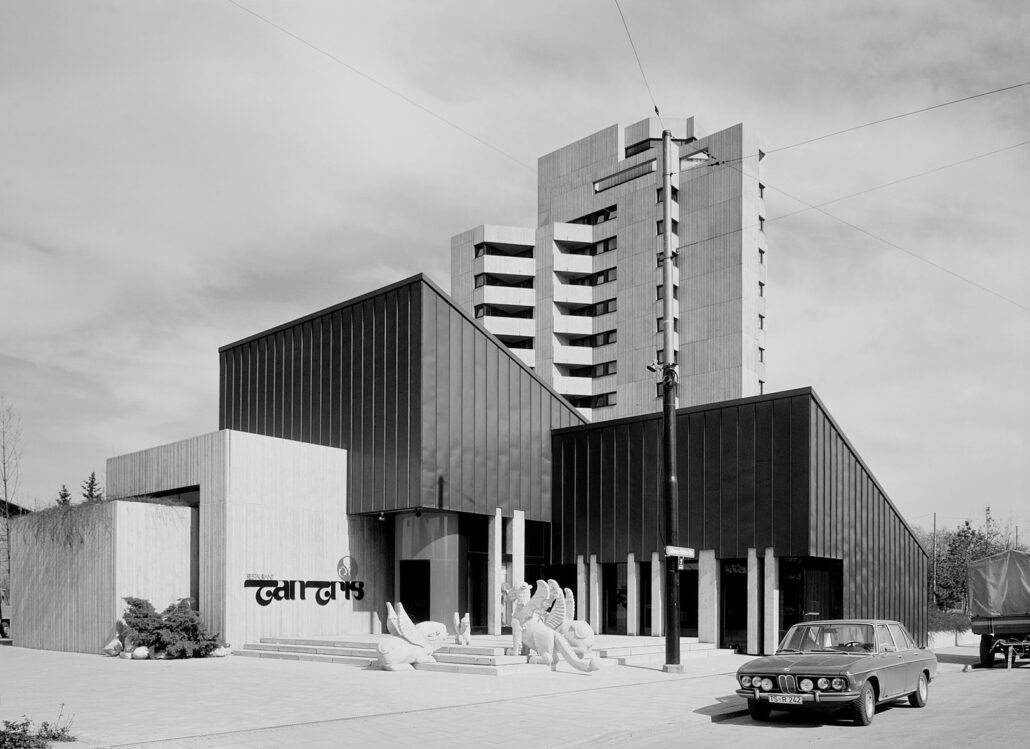
The Tantris has made history and continues to do so. In fifty years of its career, only three chefs have alternated in leading the kitchen in the pursuit of perfection (which is the meaning of the word that gives the place its name), not so much in individual dishes but in the multisensory experience of Tantris. Today it is Tantris Maison Culinaire, a “culinary house” made up of two souls coexisting in the same space, two establishments within the same location with distinct identities but sharing the same essence. It’s not about a “haute cuisine restaurant + casual bistro” setup; we are talking about two prominent restaurants side by side, Tantris and Tantris DNA (the former with two Michelin stars and the latter with one). It’s a venue designed as a grand restaurant operating as a single entity: a workshop where multiple culinary spaces come together under one roof. It’s a unity of diversity, a common thread, and the idea that quality commitment lies at the heart of every detail, from the ingredients to the paper the menus are printed on, sourced from Gmund on Lake Tegernsee.
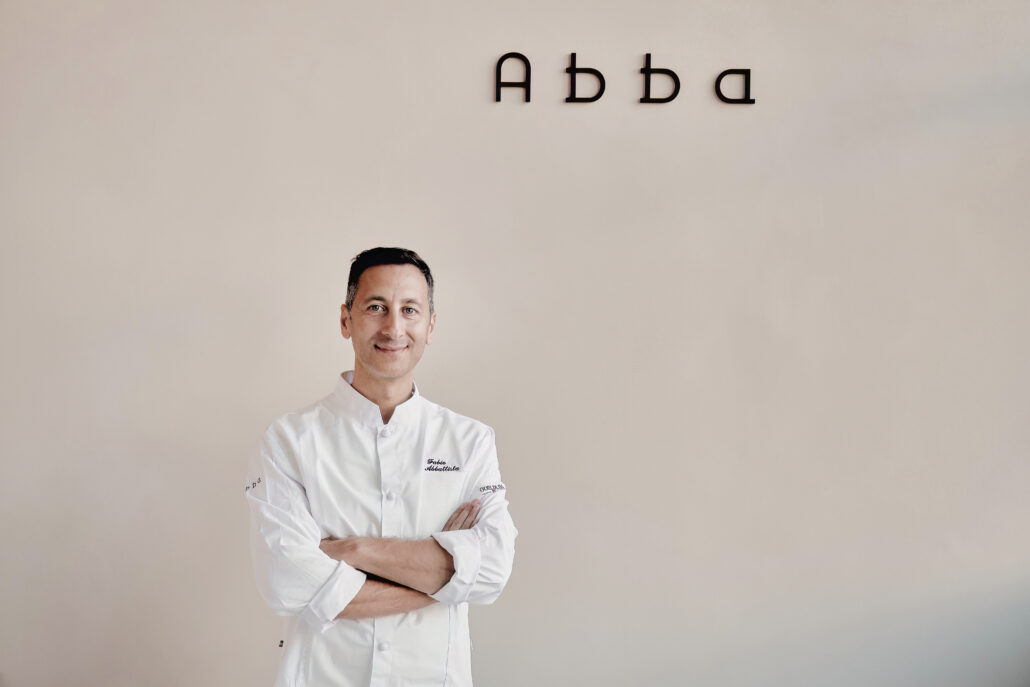
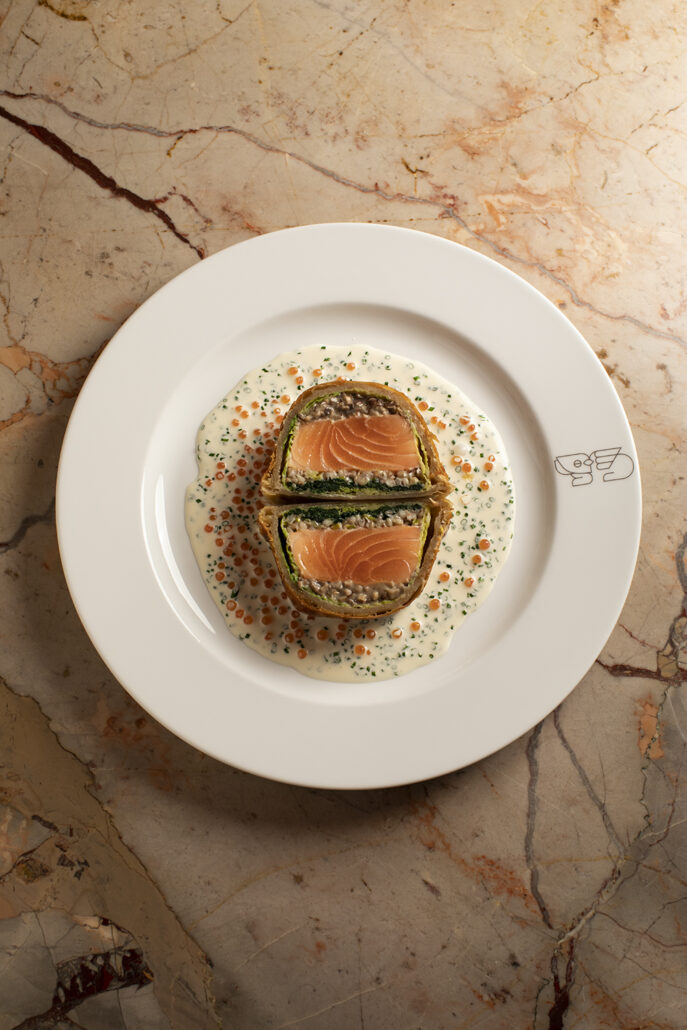
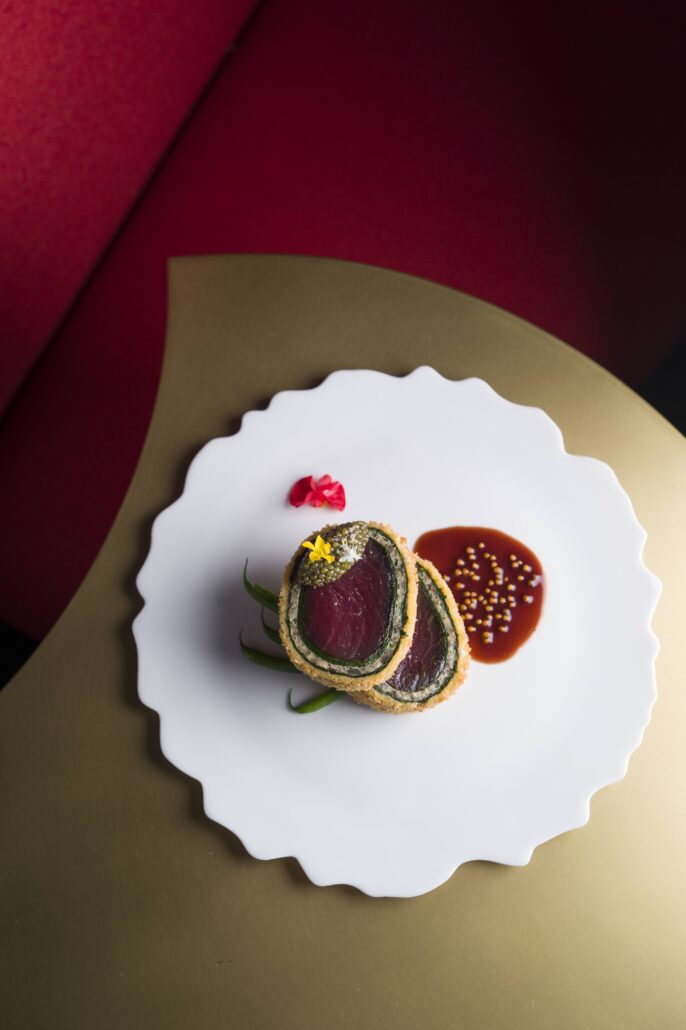
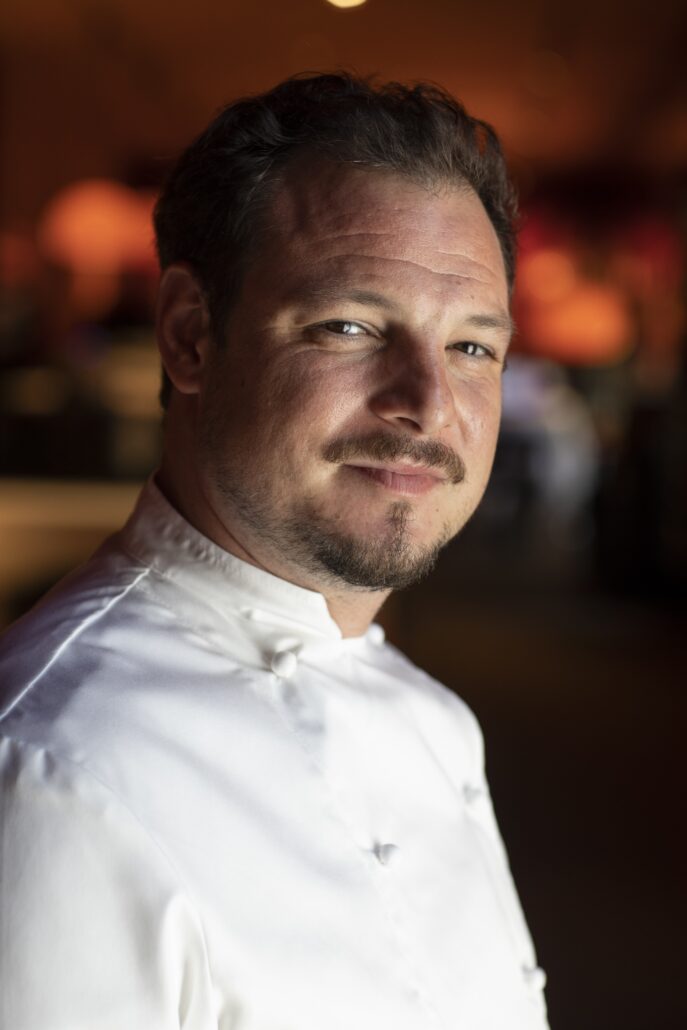
The heart of Tantris lies in its French influence, or rather the interpretation of French cuisine: rigorous, technical, precise, yet reinterpreted with Bavarian sensitivity without aiming for the wow factor but focusing on depth of flavor. Legendary German chefs like Eckart Witzigmann and Heinz Winkler have worked here, and today Benjamin Chmura continues the path set by his predecessors with his own personality. In the starred Tantris, creativity leads the menu: as seen in the Scallops in a crust with truffle and vin jaune sauce, a deeply classical dish presented in a completely new, seductive, daring way, or the elegant Red Tuna Wellington.
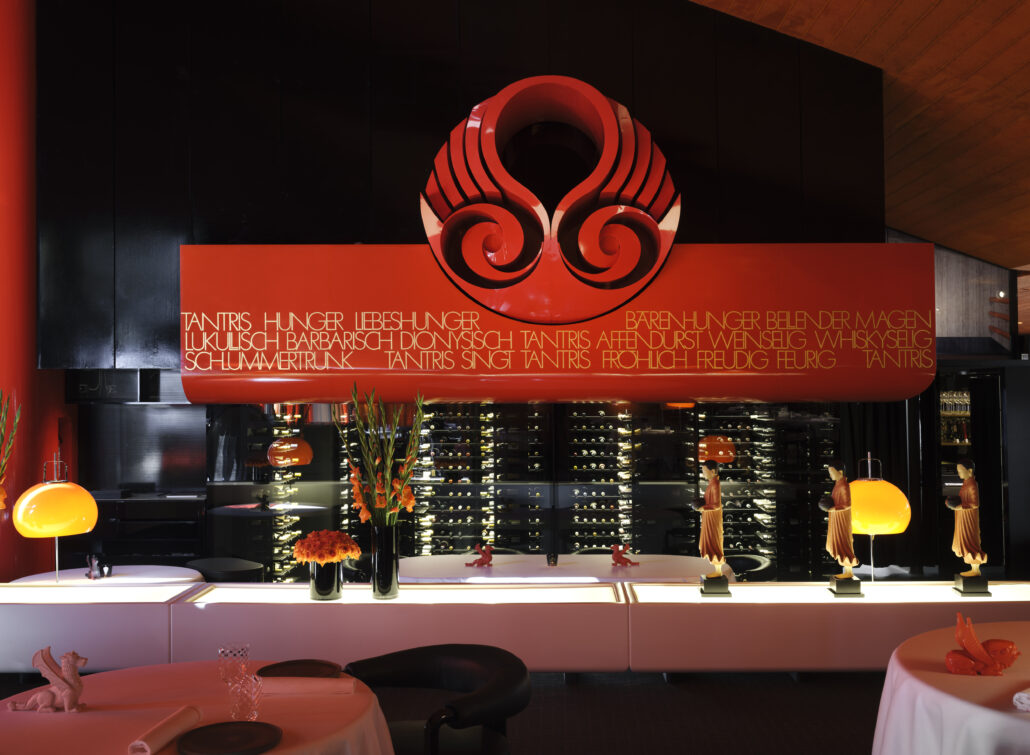
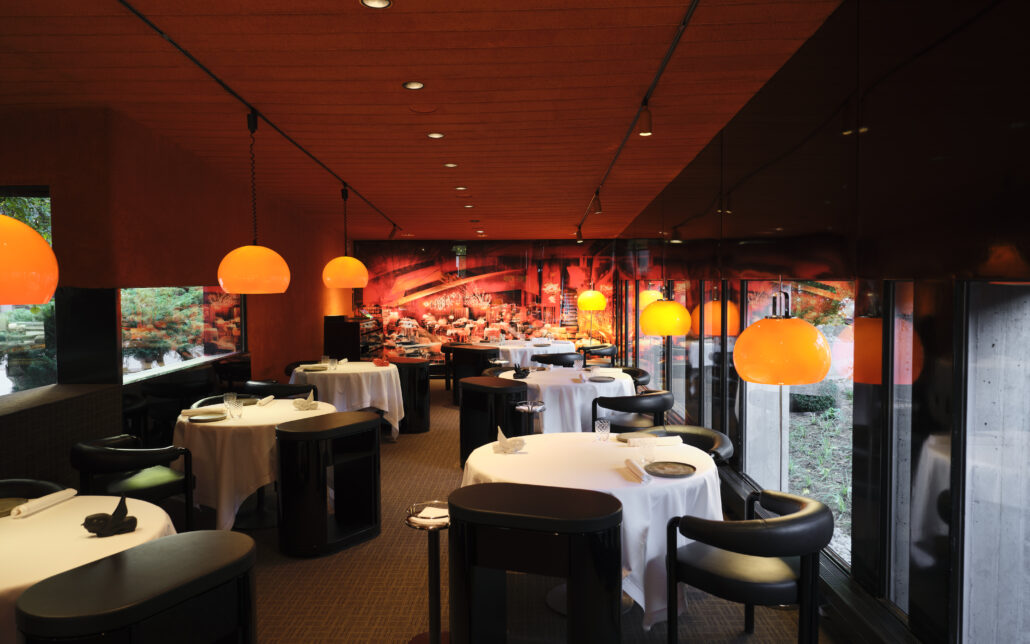
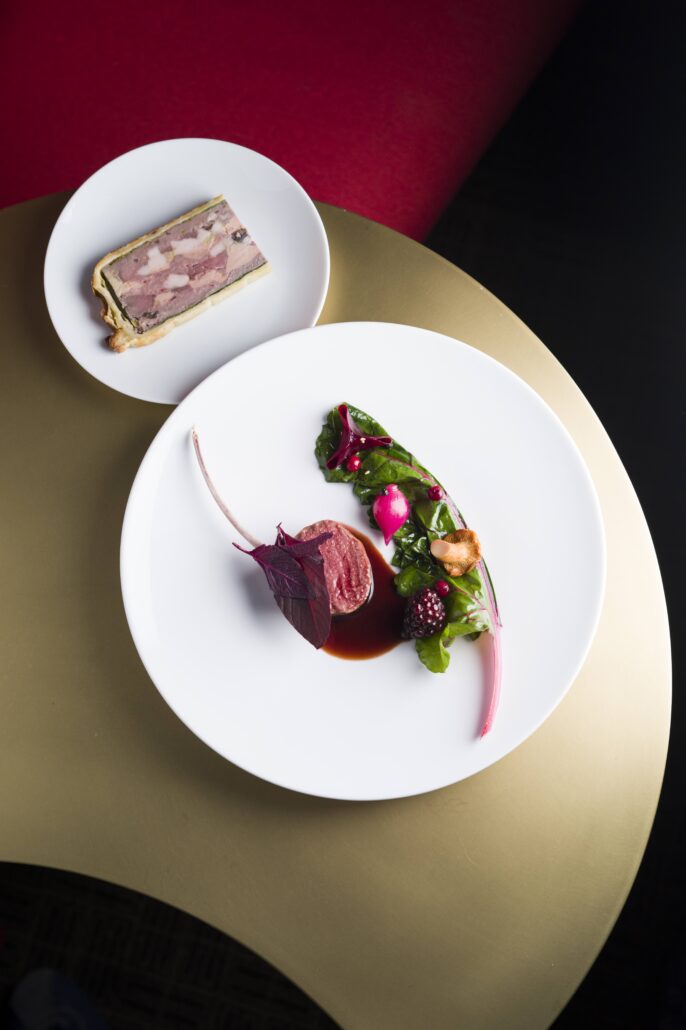
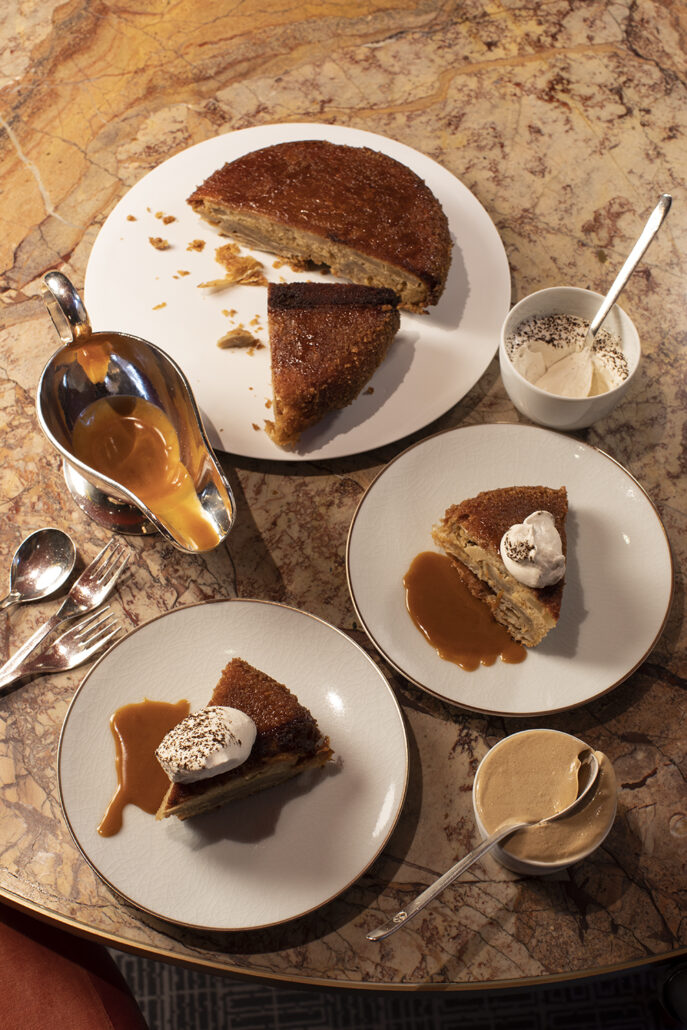
The Tantris DNA, on the other hand, is what we would call a timeless cuisine: it is the à la carte restaurant that focuses on classic French culinary art and the dishes that have accompanied Tantris’s history over these five decades: from Brittany Galette with lobster, caviar, and wood sorrel, to Pâte en croûte “bourgeois”, to Hare à la Senator Couteaux. It’s a cult, a sort of historical reenactment firmly rooted in contemporaneity, delicious, impeccable in every shade. With menu references to the signature dishes of Witzigmann, who, for those who don’t know, is a legendary figure in German gastronomy and has held the title of Chef of the Century since 1994, awarded so far by Gault & Millau globally only four times, including to Paul Bocuse (of whom Witzigmann was a student).
The wine cellar of Tantris is legendary, it seems to be the most impressive in Munich, certainly very interesting. The selection includes over 1,500 labels of French and international wines, with a preference for great Bordeaux, Burgundy, and Champagne, but also featuring small organic and biodynamic international productions. To ensure that each dish has its perfect alcoholic companion, there is Noris Conrad, a talent in sommelier and restaurant empathy. Another piece that makes the Tantris experience something all-encompassing, well beyond “just” great cuisine.
Munich, after all
These three places tell the story of three souls of Munich: elegant and welcoming, folkloric and convivial, creative and refined.
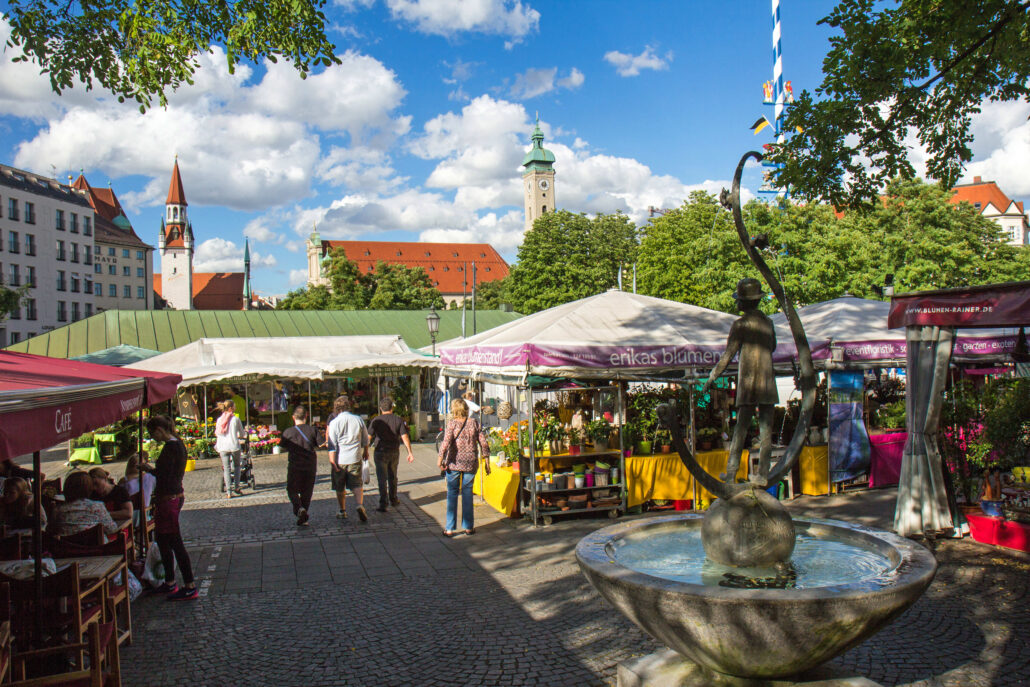
They tell of a city that knows how to be both popular and sophisticated, noisy and silent, traditional and avant-garde. Munich is not just the city of beer, nor is it only the city of museums or big companies, and it is best discovered on foot: wandering through the Viktualienmarkt (the historic market that also houses a popular beer garden along with street food and local specialties of all kinds), Marienplatz and the famous Glockenspiel carillon on the tower of the new city hall that chimes at 11 and 12 every day while moving statues recreate scenes from the city’s history, the baroque palaces, the Englischer Garten (one of the largest urban parks in the world). It is a city that thrives on balance, holding together opposites with disarming naturalness.
And perhaps, living there, you can understand why they call it the most northern Italian city. Not for the climate, not for the language, but for that very particular way of taking pleasure seriously. Of eating, drinking, and sitting at the table.
There is yet another place in Munich worth the trip, and that is Jan, one of the city’s two three Michelin-starred restaurants. But we will talk about that in the next journey.