Who, how, what, when: the questions any writer answers. Here, the most crucial one is where. Through progressive zoom-out movements: in the Galleria Principe di Napoli, in the Mediterranean.
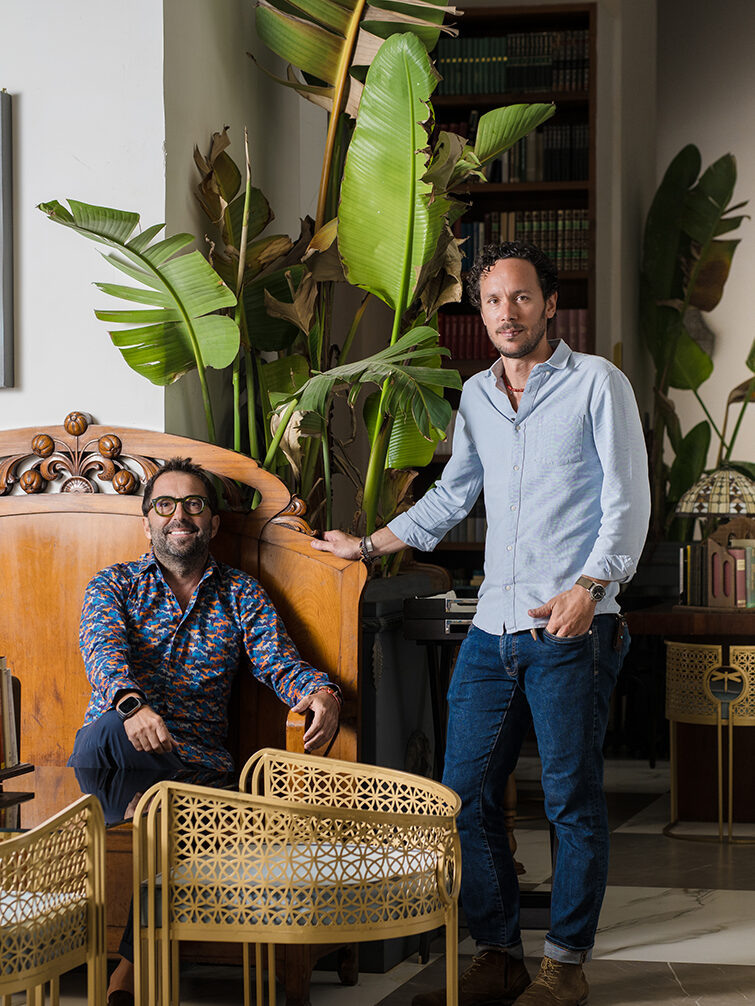
Since last spring, Marco Ambrosino has been the chef of ScottoJonno and Sustanza, respectively a bistro and a fine-dining restaurant located in the Galleria Principe di Napoli, directly opposite the National Archaeological Museum. In accepting the offer from restaurateur Luca Iannuzzi, Ambrosino left the kitchen of 28Posti, a restaurant in Milan’s Navigli, which owes its sustained success over nine years to the Procida-born chef (years spent running restaurants in the Navigli are like dog years: one there is worth seven elsewhere). Milan, as the common view goes, offers many professional opportunities, but at the same time demands a great deal from its inhabitants. This is why one of the most quintessentially Milanese sayings carries a passive-aggressive edge: “chi volta el cu a Milan, volta el cu al pan” – whoever turns their back on Milan turns their back on bread. That is not the case with Ambrosino: this new role is, on the contrary, a decisive promotion and a true test. A very large, very beautiful venue, the result of a significant investment; tailored to the mature talent of a chef with a sharp and original mind.
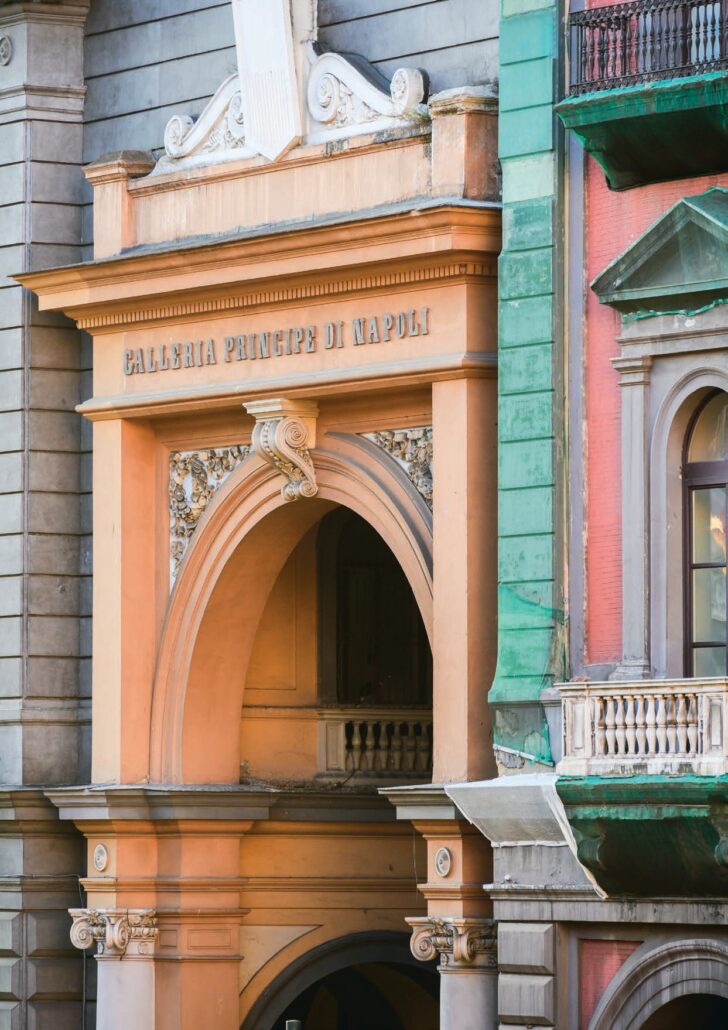

Let us begin close up: in front of the National Archaeological Museum of Naples, from the sixteenth century onwards, there were the Fosse del Grano, used for the storage of cereals, and which, in the final decades of the Bourbon Kingdom were converted into prisons. In 1883 the Galleria Principe Umberto was inaugurated – a sumptuous structure with an iron-and-glass roof – where, ten years later, the Procida-born Vincenzo Scotto Jonno, the son of a sailor, opened a café chantant, where patrons listened to Neapolitan popular music and ate ice cream.
During the Fascist period, the café was requisitioned and turned into a cinema screening propaganda films; in the post-war years it was repurposed as the municipal Treasury. Deprived of commercial spaces, the Galleria never managed to attract visitors, eventually falling into a state of decay that has so far only been contained by frequent renovations. In mid-March of last year, in the spaces of the former Treasury, whose name is still displayed in gilded letters on the sign, a 600-square-metre venue opened, laid out over two floors: on the ground floor is ScottoJonno, a bar and bistro open from 9 a.m. to 2 a.m., Tuesday to Sunday; and at the end of April, the gourmet restaurant Sustanza followed.
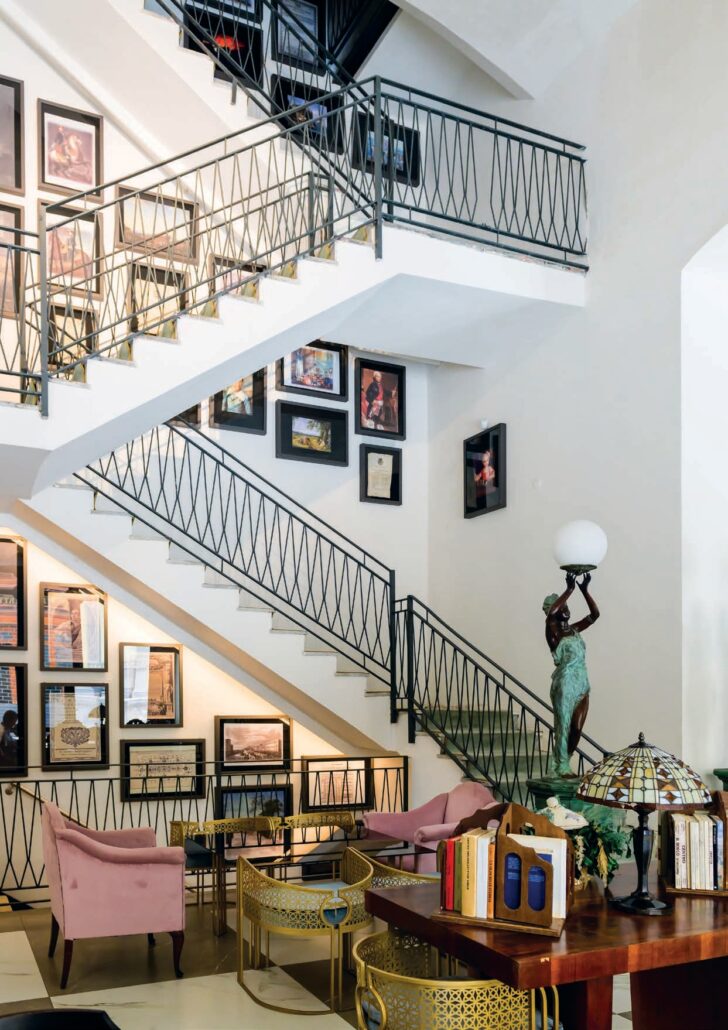
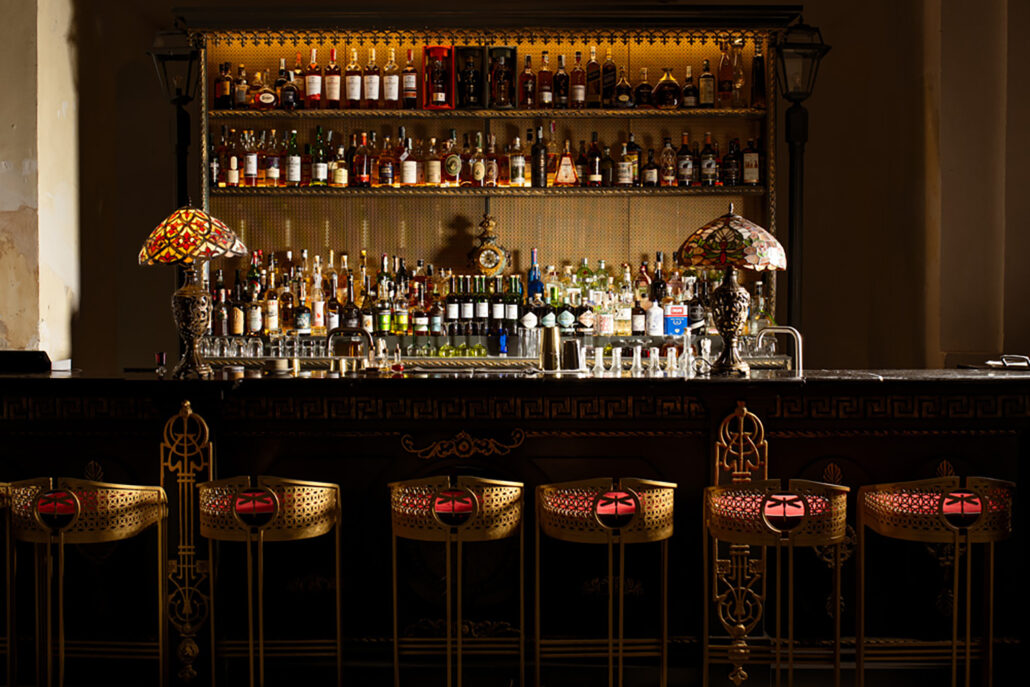
The interior design pays homage to the café chantant of the past: since no photographs from that period exist, Eugenio Tibaldi, in charge of the furniture design, worked through a philological approach, recreating an Art Deco style. Some of the furnishings already belonged to Iannuzzi, who enjoys collecting pieces from antique dealers and flea markets. While certain items have taken on the function they were originally designed for, others have pursued a career as objets trouvés: the Pozzuoli-based craftsman Rosario Innocenzi identified magnetic currents that seemed to draw the pieces towards one another, recombining them. Thus, the wine coolers in each of Sustanza’s dining rooms are pairs of bedside tables joined together, while opposite the kitchen – partially visible, as it opens onto the empty void of a former doorway – is a table made from the fusion of two sideboards.
By virtue of its position, it would naturally be the coveted chef’s table, yet Ambrosino instead reserves it for a format based exclusively on shared dishes. In fact, no plates at all: guests eat straight from the pots. The table is set aside for small groups who book together; in theory nothing would prevent sharing the experience with unknown diners, but the long pandemic phase has made us all a little more germ-phobic, and the era of the social table (a fixed idea of interior designers in restaurants around the early 2010s) seems to have waned. Those who dine here share large cuts of meat served on the bone, or even whole animals: guests are asked for an extra effort, a kind of knife work that brings them closer again to the animal’s nature. “In the act of eating a dish, the gesture matters: at this table, that aspect is amplified,” Ambrosino explains. The Frankenstein table is, by nature, less ergonomic, and the seating sits at an unusual height; these factors, combined with the additional effort required, make the chef’s table “not the best table in the restaurant but, if you like, the opposite: the worst table at Sustanza.” Jokes aside, for Ambrosino this judgement on a specific table is a comment on his craft as a whole: “The best table in a restaurant shouldn’t really exist, just as there shouldn’t be a chef’s best dish.” The point being that when one works with intellectual honesty, without resorting to gimmicks, the usual criteria of value lose their relevance.
Each room at Sustanza is different: the flooring changes from one to the next, as do the wall coverings, made of exquisitely elegant silk that also softens voices and sounds. This choice stemmed from a constraint: the fabrics come from the Manifattura di San Leucio in Caserta, established by royal decree in 1778. This factory was the first in Italy to introduce the Jacquard loom, which made it possible to produce exceptionally fine textiles using silk from the silkworm farms of the Nolano and the Sannio. The Manifattura closed permanently in 2015, and for each pattern only a few metres remained, just enough to upholster a single room. The chairs are handmade, designed by Eugenio Tibaldi himself: the recurring dragonfly motif is a classic Art Deco element, in continuity with the spaces occupied by Sustanza, and a symbol of rebirth that also appears in the flyers announcing the programmes of the café chantant.
Rebirth, precisely: thanks to an approved project already financed with €10 million in European funds, the Galleria Principe di Napoli now seems poised – after a centuries long history of alternating splendour and decay – to enter a new phase (what is the ultimate irony for a Galleria? Finally seeing the end of the tunnel). So empty has it been, and for so long, that the smooth marble of its floor has been claimed as a semi-official dance hall by small groups who come here on a weekly basis, each on their own day and each with their own portable stereo: Sri Lankans performing folk dances, enthusiasts dancing tango, and young people practising capoeira.
Today, the publishing house Intra Moenia is about to open a second literary café after the first one in Piazza Bellini; two further venues linked to the MANN, the Museo Archeologico Nazionale di Napoli, will follow. At the opposite entrance there is a bar run by Le Lazzarelle, a coffee roastery founded by a cooperative of former inmates of the Pozzuoli women’s prison; next to it is Bicycle House, a bar/workshop/bike-rental space that, even on a sweltering day in late July, is besieged by tourists wearing cycling helmets, ready to take on extreme temperatures and the unforgiving city traffic.
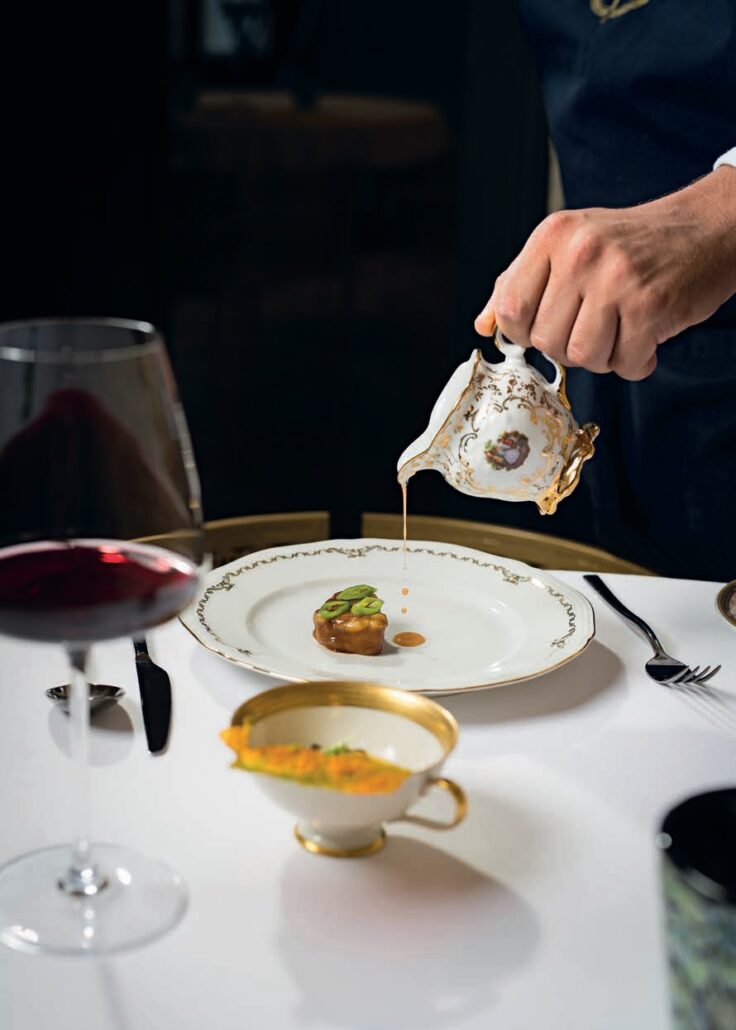
On the opposite corner is the goldsmith workshop of Albachiara Gatto, who creates jewellery inspired by Neapolitan legends. Ambrosino shares with her a fascination for the symbolic richness of local popular culture: “I was immediately struck by her ex-votos, symbols of absolute devotion yet closer to the pagan; Albachiara draws on references linked to Naples for her jewellery without ever slipping into the didactic, so prevalent in the city”, he explains. Inspired by Gatto’s collection dedicated to ex-votos, Ambrosino commissioned her to create some pieces for the mise en table at Sustanza: “My idea was to transform objects that served to ‘certify’ the exchange between deity and supplicant into supports for food, thus turning into the tangible what was originally mystical”. Albachiara then developed the concept further by repurposing old foundry moulds previously used to make classic good-luck charms, such as horns, hunchbacks, superstitious numbers, and horseshoes.
In addition to her ex-voto collection, Gatto has created a series of porcelain jewellery shaped like breasts and drops of milk, inspired by the Spinacorona Fountain (nicknamed “delle zizze”), which depicts the siren Partenope, symbol of the city, extinguishing the flames of Vesuvius with water flowing from her breasts. It’s a legend, but also a metaphor: it’s the beauty of Naples that redeems it, preventing Vesuvius from burning the city (and, naturally, from overwhelming its ills). At the ScottoJonno bar, where the drink list is curated by the renowned mixologist Dom Carella, the siren reappears in a cocktail aptly named “Fontana delle Zizze”: re-distilled Pisco with jasmine, dill and pear cordial, topped with soda, served in a deep glass in which a siren is immersed – “3D-printed in plastic that does not degrade in contact with alcohol,” explains Ambrosino, who in his spare time also oversaw these details.
We now turn to Ambrosino’s cuisine, which, in designing the menu for Sustanza, he approached as a cartographer of the Mediterranean: a final broadening of perspective. Ambrosino “tries to start from other points, not gastronomic, but rather humanistic”, thinking of cooking first in terms of relationships: between the coasts of our sea, the peoples who inhabit them, and within families. The sea is an ever-present force, both for what it gives and what it takes, like the empty place at the table of sailors away from home for many months in his native Procida, and it is the marine world that generates the archetypes of Ambrosino’s cuisine: water, salt, navigation, island life.
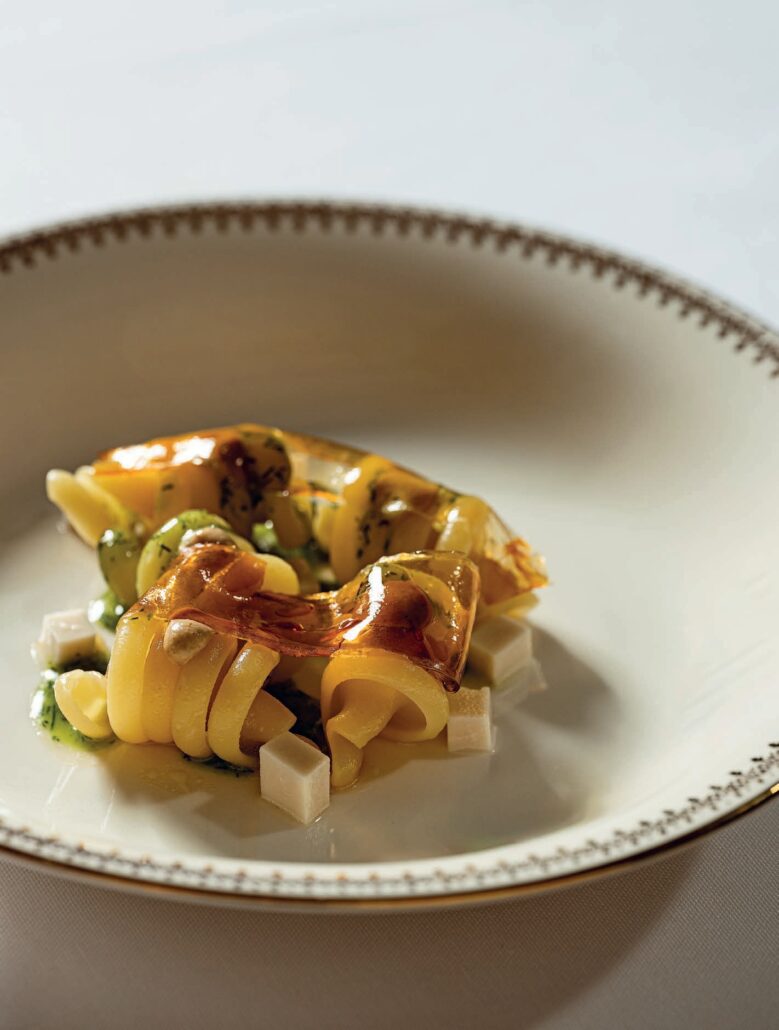
On the subject of anchovies – “a symbol of subsistence” – Ambrosino entrusts a dish that is also a manifesto, composed of three elements: chickling vetch tempeh, salted anchovies, saffron; citrus marshmallow with carob sauce; anchovy tartare with grilled kombucha mother.
“This dish expresses my way of approaching this work – he explains – that is, the use of ‘humble’ raw materials intertwined with products (and stories) peculiar to the Mediterranean region. Saffron, sumac, carob, honey are employed to evoke an imaginary tour of the Mediterranean becoming a symbol of how mixture — Mediterranean creolity — has sparked so much in the past and stands as an added value for the future”.
As central as the ingredient itself is the process it undergoes: very often a fermentation, a technique originally developed to preserve – i.e., to extend the life of – highly perishable foods such as fish, fruit, and vegetables. Ambrosino engages with methods from his own tradition, such as salt preservation and lacto-fermentation; yet, following the Mediterranean and its flow between Southern Europe and North Africa, he also ventures as far as Asia, employing ingredients like kombucha mother: the pellicle, or more precisely the biofilm, of acetic acid bacteria and yeast species used to ferment sweetened tea.
Everything comes from Sustanza’s own kitchen: to avoid buying semi-processed products. Ambrosino doesn’t use cheese; even the butter is homemade. “I like to complicate my life and give myself many constraints”, he explains with a shrug, then adds, chuckling, “I recognise it’s an unhealthy attitude”. But it’s a way of deflecting – words meant more to shield his work from accusations of intellectualism – or worse, excessive storytelling, than out of conviction. Fermentations and reflections on the edible realm (what else were the lichen snacks or ants in salad?) are part of the cultural legacy of Noma, where Ambrosino did a brief stage in 2012 that was an epiphany for him: a model that was once dominant and now seems in decline, but one that the Procida-born chef clearly adopted with the originality of intelligent people. For him, this was the ultimate lesson: “What’s the positive aspect of gathering herbs behind the restaurant?” he says, referring to the iconic foraging expeditions around Noma in which the kitchen staff participated. “It’s avoiding the tendency to simplify. Not losing sight of the artisanal aspect”.
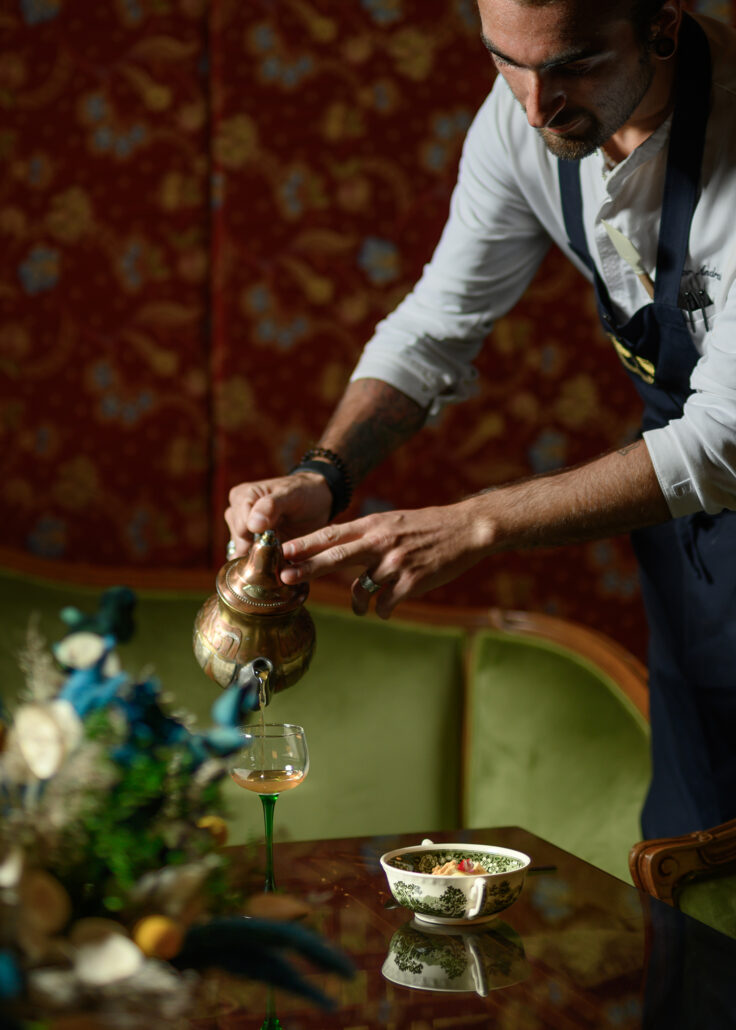
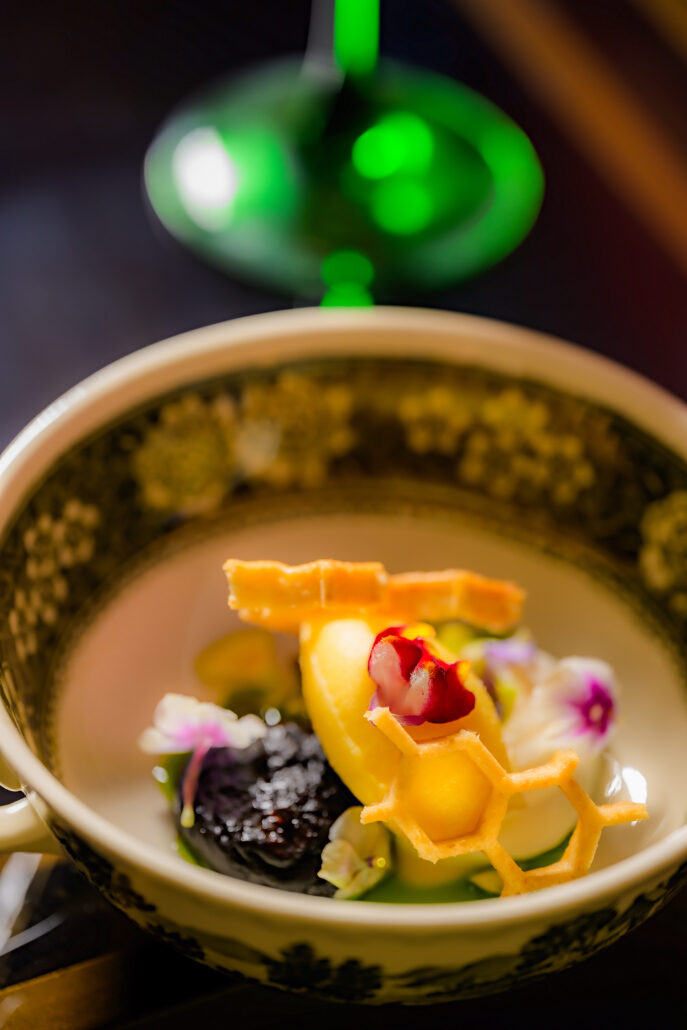
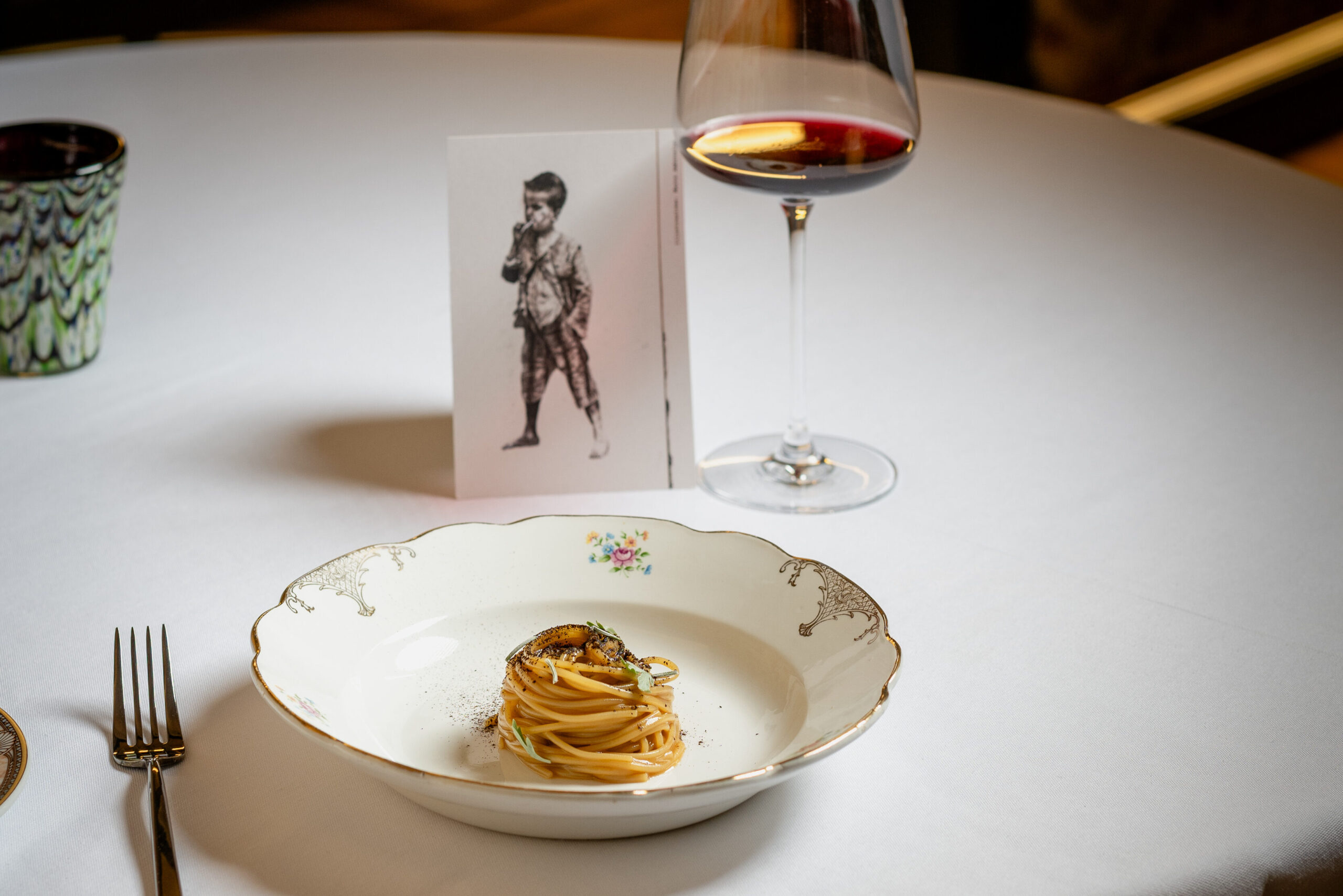
The dish Tomato, Almond, Black Truffle, Nutmeg and Argan Oil was born as a continuation of work he started many years earlier, originating from a “small challenge, namely to combine ingredients that usually don’t work together. From that technical challenge, the idea expanded to include geographical references, such as the use of spices and the use of argan oil, which for us is a fetish ingredient. The Argania spinosa, from which the oil is obtained, is used as a barrier against desertification because it gives the land more than it takes”, he explains.
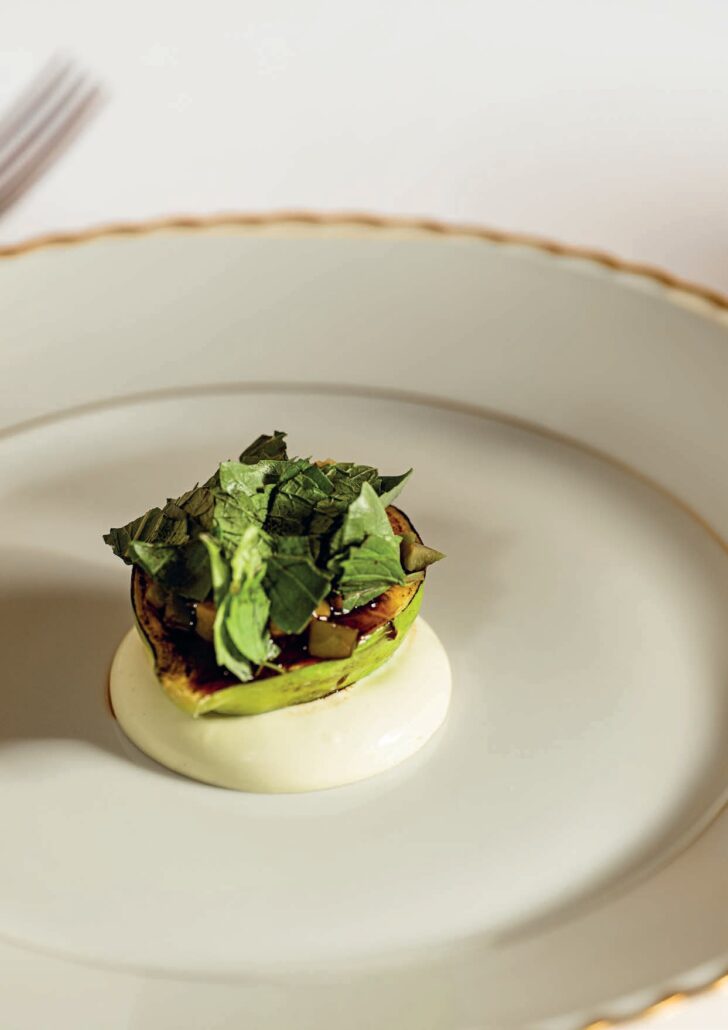
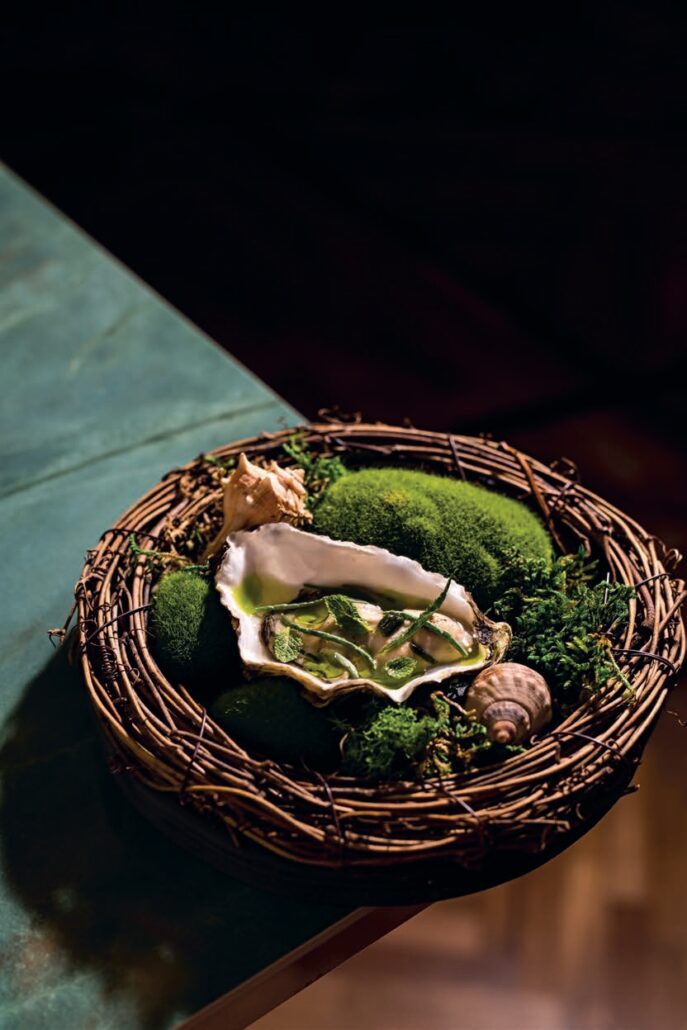
Some other dishes from last summer’s menu: Grilled oyster with aronia and zammù (a homemade Sicilian distillate used as a refreshing element, also called “the Sicilians’ Coca-Cola”), served with bread and Mediterranean olive oil; Grilled fig with fig leaf emulsion, vegetable brown sauce with star anise, Nocellara olives in brine, toasted Itrana olives, basil and mint; Zucchini tagine with fermented zucchini and mastic (lentisk) oil.
It should come as no surprise that in this menu meat plays a marginal and highly symbolic role. In peasant societies, meat during the weekdays is a rarity; animals that are old, weak, or no longer productive are eaten, while only on feast days is a young animal slaughtered. The sacrifice is therefore twofold: that of the animal, which gives its life, and that of the family, which forgoes what the animal could still have contributed. One dish brings together lamb and sheep: the lamb cooked in hay, the sheep prepared according to the ancient Arbëreshë tradition (the Albanians of Italy), a stew left “forgotten” on the stove, with the family leaving in the morning for work and returning in the evening. To avoid burning everything, the pot requires a lot of water; thus, along with the meat, a broth is produced, creating more meals from what was originally just one.
Ambrosino says that his aim is to practice a form of dining “adapted to contemporary times: this isn’t a deli where you just buy food and sustenance; my dishes don’t want to be merely tasty, but also uncomfortable and challenging”. Without venturing into the debate around the notion of “ugly art,” we can keep it simple, almost like a social media motivational quote: Ambrosino invites us to “step out of our comfort zone”. In his view, this effort “ennobles the superfluous associated with the restaurant”. It all makes sense, yet one element is missing from this analysis, something that the dishes themselves reveal: a certain sense of fun and a playful approach to cooking. Asked about this, Ambrosino becomes almost Montessori-like, declaring that “there is learning in play”. And yet, the Procidian chef demonstrates a lightness in the kitchen that his words don’t convey: as the saying goes, there are two ways to truly understand someone, see them driving and see them playing. In this case, it is both at once.
Ambrosino has made himself a navigator of his own idea of the Mediterranean: he sails close-hauled, tacking against the wind; he recalls by heart the shores scented with helichrysum, heather, and caper as he sails offshore, like a seasoned seafarer mastering his craft.
Above all, he sails unburdened.