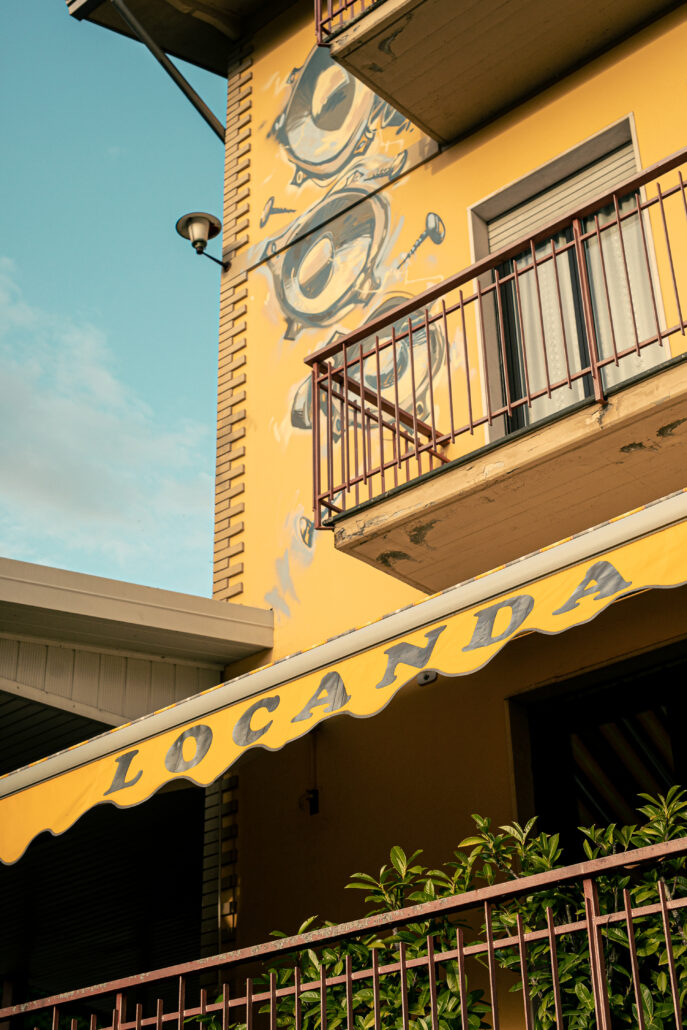
“Not for money, not for glory, or for popularity. But for love, yes, deep and disruptive love. And a bit for thirst, but only for good things to drink. A reflection that becomes obvious after just a few minutes of entering the microcosm of Locanda Mariella in Calestano. The actual village is Fragnolo, a small urban area near Parma that is not the easiest to find if you don’t have a good reason to venture there. The best reason is embodied by this inn, which over the years has become a stronghold for foodies and wine enthusiasts converging from all over. Although the surrounding area may give off scents of typical trattorias or traditional flavors, you’ll need to reset your expectations if you’re heading this way. The main characters, cuisine, and identity stand out from any other place you may find in the neighborhood. Not just here, but in the vicinity as well. When we step outside, we immediately notice a world-famous street artist – Paolo Capezzuoli AKA Zero-T – painting the walls of the structure with a huge mural paying homage to the passions of the two owners. “Commissioning these graffiti is our way of leaving an artistic mark over time,” explains Mariella Gennari, the owner after whom the sign is named. “We consume food and wine too quickly, while we hope this artwork remains imprinted longer as a legacy of who we are.”


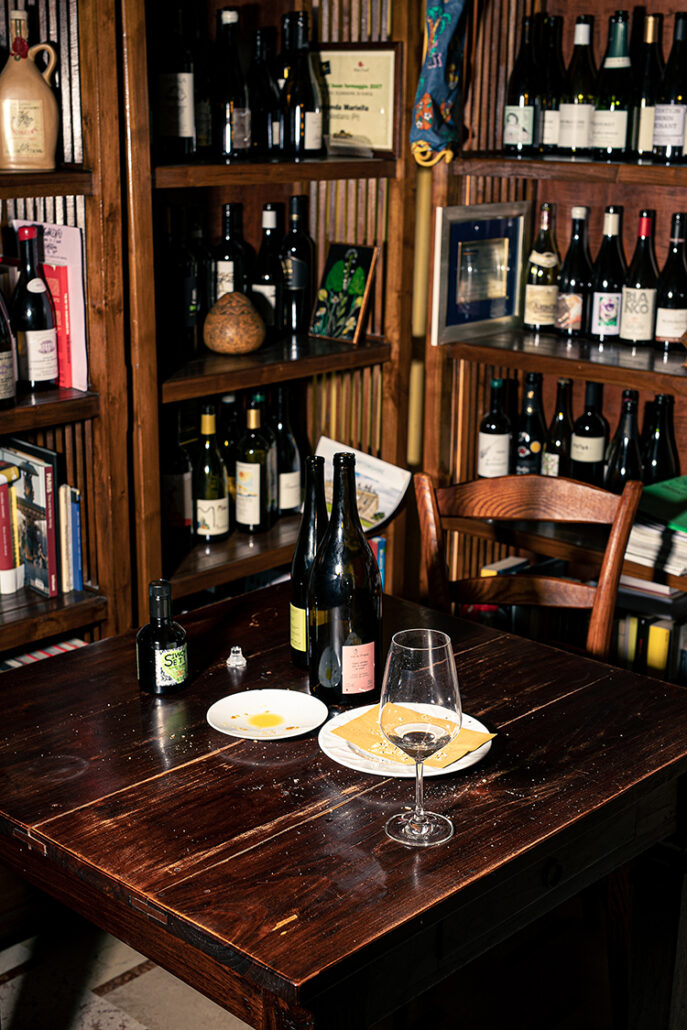
Paolo creates a whole wall of stylized bottles at the entrance, using swirling sprays and chromatic reflections, just below a cemetery of vintage labels placed in vases as a testament to many past drinks. “We prefer bottles over flowers because they need less water,” says Mariella wittily, joking about the surroundings. She’s quite a tough lady. With a neatly freakish look – wearing a Che Guevara t-shirt – and always ready with a joke from someone who has truly seen and experienced a lot. We are welcomed into a retro-chic dining area, where we are offered bread, oil, some slices of salami, and extra tasty Parmigiano shavings. “I get everything, when possible, from local artisans or small niche realities,” she says. “Even the bread. It may not be perfect, but it’s from the last serious bakery in the area. I prefer to support the local area as much as I can with these small gestures. If something more specific is needed, however, we also don’t refuse distributors. The important thing is to always be consistent and respectful.”
“The aperitif unravels the languor and predisposes well to listen to the story of the Inn.”
A journey of wine and passion
“It all started with my parents, Adriana and Virginio Gennari, baptized “Il Vergio” by friends – tells Mariella – they had a grocery store with the appearance of an old inn in the center of the village, where my grandmother would cook on the stoves. However, food was only a small part, in fact, it was cooked when needed. You could see her crossing the street with plates in hand to deliver to customers. It was more of a meeting place that provided cold cuts and essential items. An address that in past years was frequented by tourists looking for the coolness of the Apennines or by visitors of the nearby hunting estates. An unusual flow of vacationers, which prompted my parents to take the bold step of building the current structure for hospitality. It was the mid-60s and my father built this place from scratch with five small rooms and a bar-tobacco corner, putting himself at the stove as a complete self-taught. Supporting him in the culinary venture were my two grandmothers Enrichetta and Luisa, called Gigenna. I grew up surrounded by those aromas and the ‘fauna’ of the time. Often elderly people who were actively involved in the maintenance of the inn – laughs – my father and mother were humble and determined people, who treated everyone the same. Whether wealthy customers or not, it didn’t matter much. They could be encouraged to water the plants between a card game and a few rounds of drinks. The ambulance was often parked outside because they would get seriously drunk. During that atypical tourism boom, which then waned, my father was busy with traditional dishes and also organized weddings banquets in the downstairs hall, where the cellar is now located. As a young girl, I wanted nothing to do with it and went to Bologna to study Contemporary History at the university. I passed all the exams, but never finished because it was a tough time to live in that city. Amidst riots and rampant drug use, I felt I had to escape and return home to feel good and find myself. In the meantime, my passion for wine had already blossomed within me, combined with my love for travel. I then insisted on taking care of the labels of the inn, without interfering in the kitchen work. Looking back, I was the ruin of my parents. After obtaining my sommelier diploma in ’86, I was completely captivated by the world of guides and had an almost compulsive desire to taste every new release. In the early ’90s, I traveled to wineries and tastings, curious and eager to get my hands on bottles that perhaps today I wouldn’t drink. It was at a Riesling tasting where I met Guido. I think that’s why I’m not too keen on those wines anymore,” she chuckles cheerfully”.
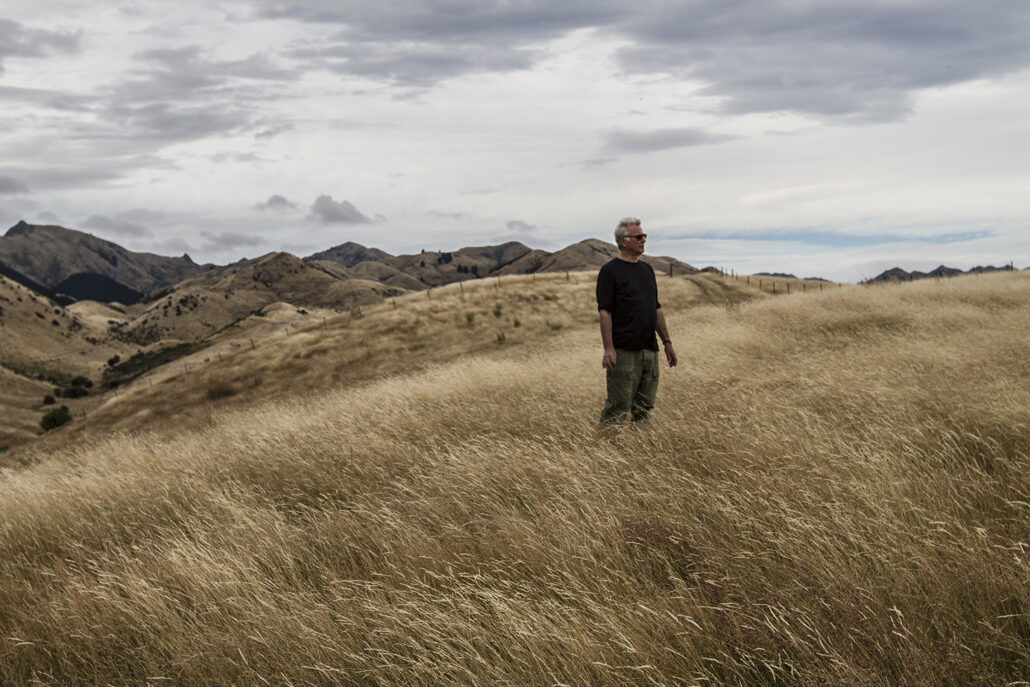
Guido Cerioni, his other half, is the complementary soul of the Locanda. As we prepare to sit at the table, he – with the mood of a handyman – is helping Paolo set up the scaffolding to paint the facades of the second floor. A shy character, hidden behind thick glasses, he contrasts with a hypnotic and fluent dialectic when he wields the wine glass. Ready to narrate the life, death, and miracles of grape varieties, producers, and terroirs dear to him. Landscapes and winemakers that he, together with Mariella, has deeply explored, traveling far and wide along the wine routes, among Australia, Chile, Patagonia, South Africa, and France. Although Guido’s professional nature stems from the world of music, specifically Hi-Fi, which he still tinkers with at high levels. In the beginning, their relationship wasn’t quite so simple. “My mother didn’t want me to hang out with him – Mariella says with a smile – then he had the courage to show up late, booking for one, finishing a whole bottle of whisky by himself to win my father’s trust. After a few days, I found him sleeping in the hotel room indefinitely.”
True sustainability
After their journeys abroad ceased, in 1999 they chose to unify their passions by opening a shop that sells Hi-Fi and wine in Parma: Hi Fi News – Musica da tavola. A truly unique container of its kind, putting them to the test by making them rush back and forth from the inn at unsustainable speeds. “When my parents fell ill, we decided to hand over the wine part to our partners to focus on our family business. However, we developed our own approach.” Mariella elaborates:
“The work of catering should also be a political job, striving to protect the quality of life of those who work. As a child of ’68 in spirit, I tried to find a human-centric formula that would be respectful to the customer, as well as to the employees and ourselves.”
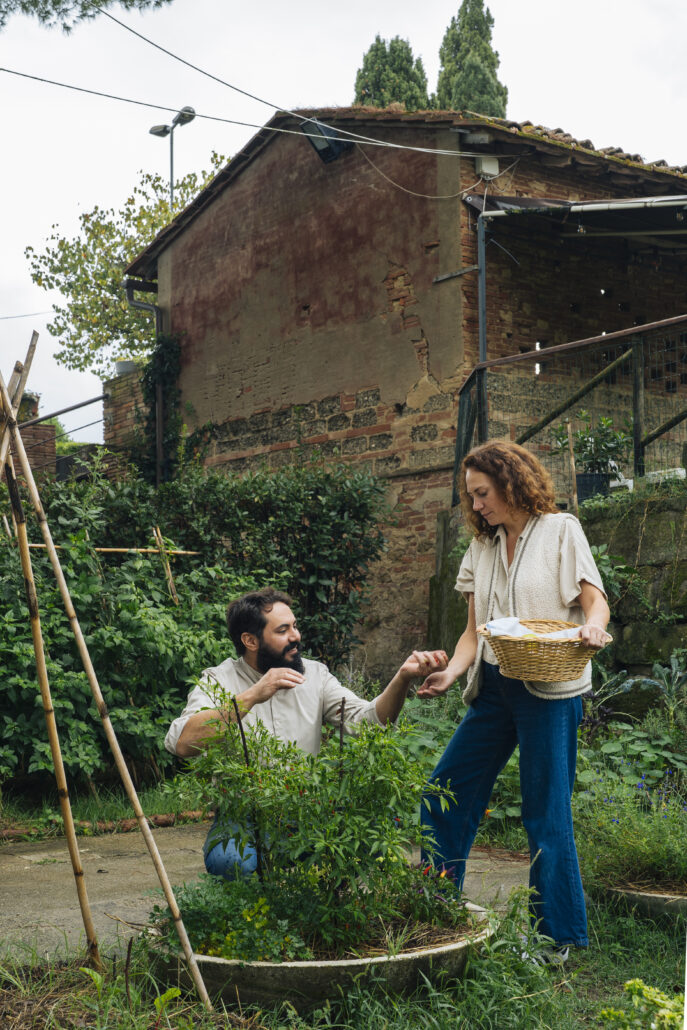
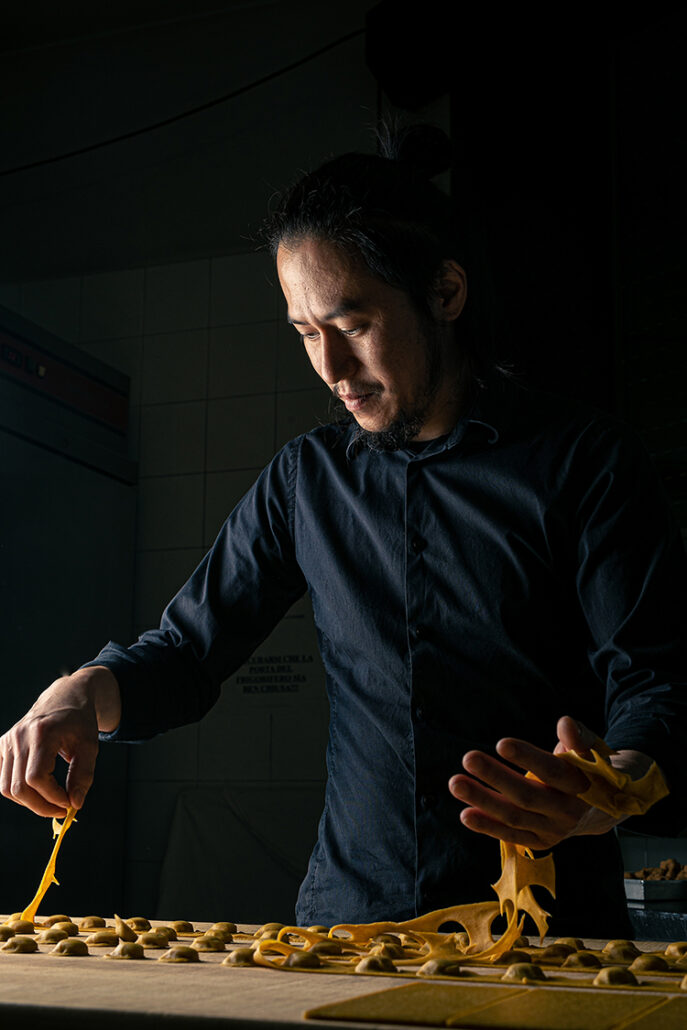
The team, which is actually an integral part of the family, consists of only three elements: Zara, the all-rounder from Morocco; Joyce, the assistant chef from Novellara; and Kuni Onuma, the Japanese chef who landed here directly from Yokohama.
The model chosen by Guido and Mariella is straightforward, fundamental, and immediate: only three tasting menus – of sea, land, and tradition – to be ordered at the time of booking for a maximum of 12/14 guests. With the intention of minimizing waste; protecting softer work rhythms; and ensuring fresh and expressive cuisine every day. Do you now understand the utopian level of sustainability adopted here? “The real turning point came on the brink of the lockdown,” argues Guido. “We realized that to come out healthy, we could either close down completely or transform this place into a club. Faced with the bureaucratic uncertainties of such a drastic change to the inn, we chose the current formula.
“We cook and work according to the human scale, with predetermined portions and expenses made in relation to the number of bookings.”
“The whole team is now set on this system, and sometimes just two more guests are enough to drive them crazy. Serving 12 people means finding a new intimacy. It’s the only way to rediscover the rhythms of a different life.”
Japanese-Parma Cuisine
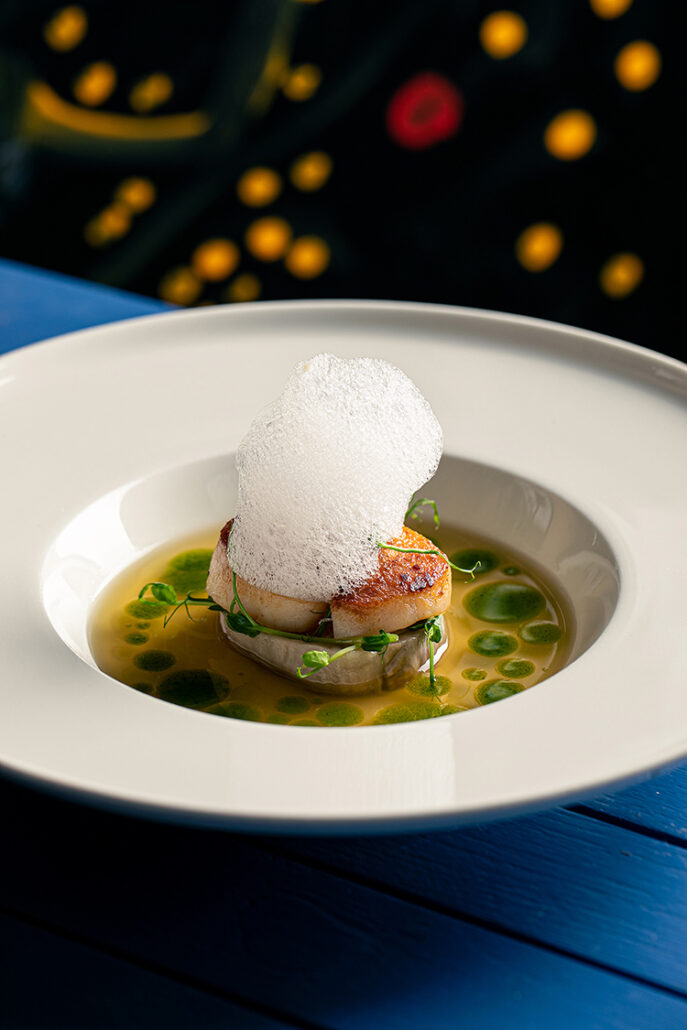
“When my father stopped cooking, several very talented chefs took turns, but often too fixated on their ego, they couldn’t grasp the essence of this place,” argues Mariella while delivering freshly baked snacks for the occasion. “First Daniele Lunghi, with a very French background; then Jacopo Malpeli, with a good hand but focused on fine dining. Finally, I found myself browsing online to find a cook named Paco Zanobini, who had ended up working in India from the former Osteria del Teatro. Paco was a reference point for us until he decided to pursue an individual path, but it was thanks to him that we met Kuni.” A fortuitous and somewhat magical intertwining of contaminations and human alignments that grants us dishes brimming with mastery and talent. Following the start of Focaccia with pata-cotto (cooked ham from Patanegra) and the Giapponiera (oriental-style pickles), mind-blowing appetizers land on the table: Scallops roasted to perfection in a persistent similar-dashi broth with a pedestal of tender eggplant; Local porcini mushrooms in tempura with a pungent green sauce and a slice of Langhirano prosciutto; or even a supersonic Melanzana fondente draped with Parmigiano Reggiano cream and tomato crumble with a striking Mediterranean sharpness.”
To better connect with Kuni’s mindset, all it takes is to ask him what brought him to stop here in Fragnolo. His prompt response?
“Wine, countryside, people… and more wine.”
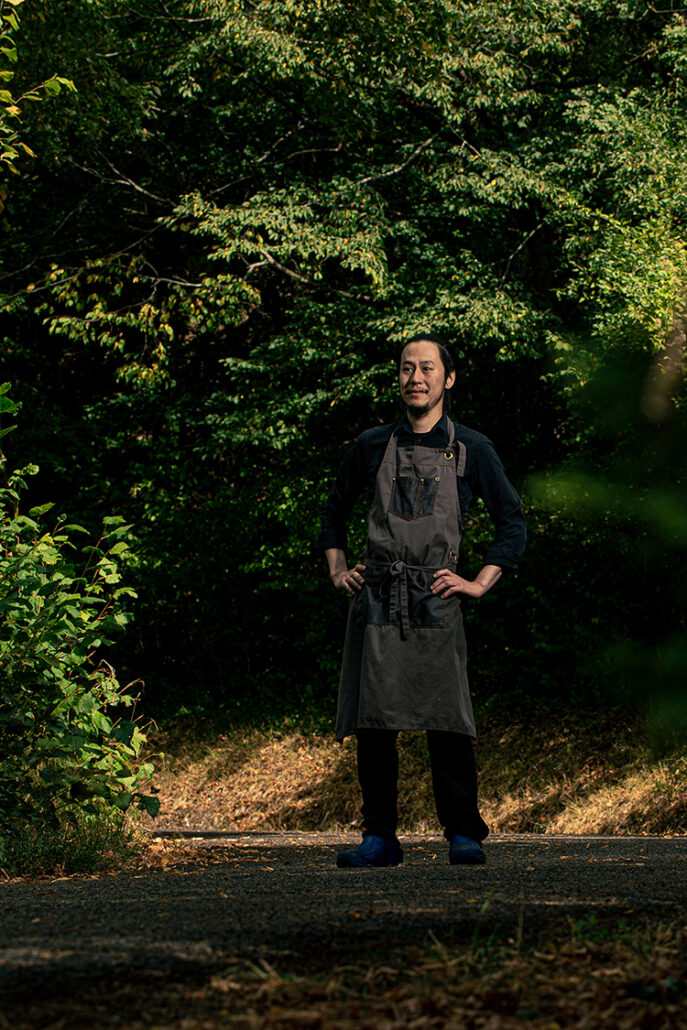
The chef from the Land of the Rising Sun is a man of few words, but he demonstrates more eloquence when he tastes some labels uncorked by Guido for the occasion. It turns out that his background is a mix of an architecture degree in Japan and experience as a kitchen hand from the age of seventeen, before working in various local restaurants and trattorias, including Italian ones. His love for the nuances of dishes shines through, and he embarks on a journey through the Boot, developing trays and a super-solid gastro-cultural passport on regional recipes. Some bumps due to his residence permit slow down his journey, until the intermediary with Zanobini guides him into the familial belly of Mariella & Co. “The dimension here is like paradise,” Kuni adds, “I live amid the woods, in a tower that was Mariella’s aunt Marisa’s house,” he says, pointing up a rising lane that winds through the trees. “For me, it’s a wonderful setting, much better than the city. The most important thing I’ve learned from cooking here is respect for food and guests, almost spiritual. Additionally, I’m always encouraged to do my best because when I compare myself with traditional dishes, they’re already excellent, and I don’t want to distort them. I can make variations on the ingredients, lighten the sautés, experiment with cooking methods, or add an oriental touch to broths, but the taste must remain faithful to the essence of the dish and the products from the suppliers, as they are all friends.”
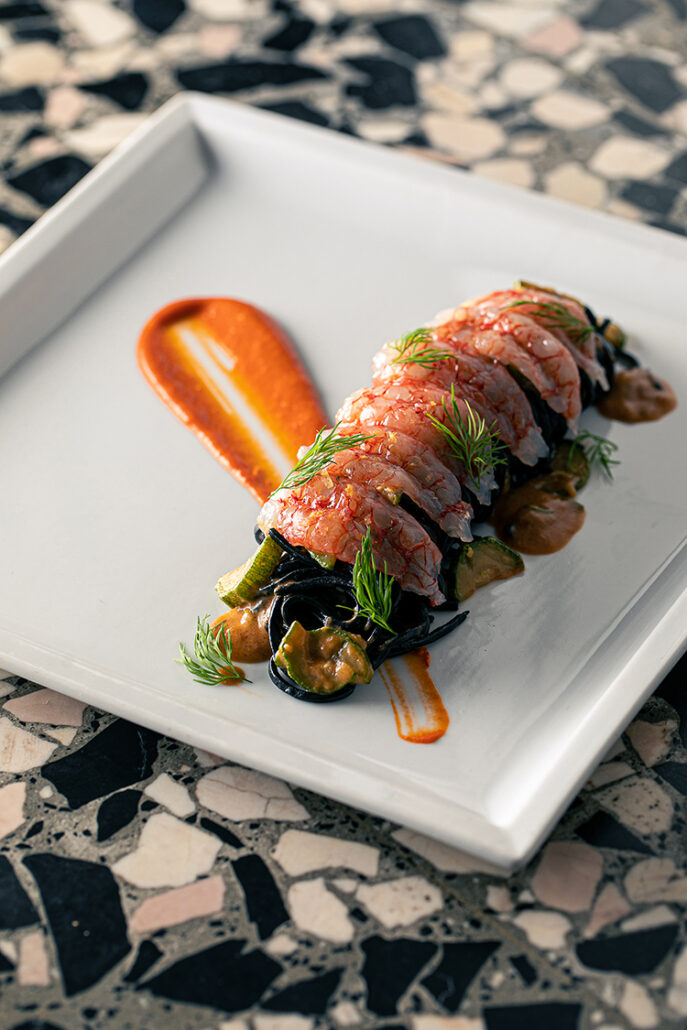
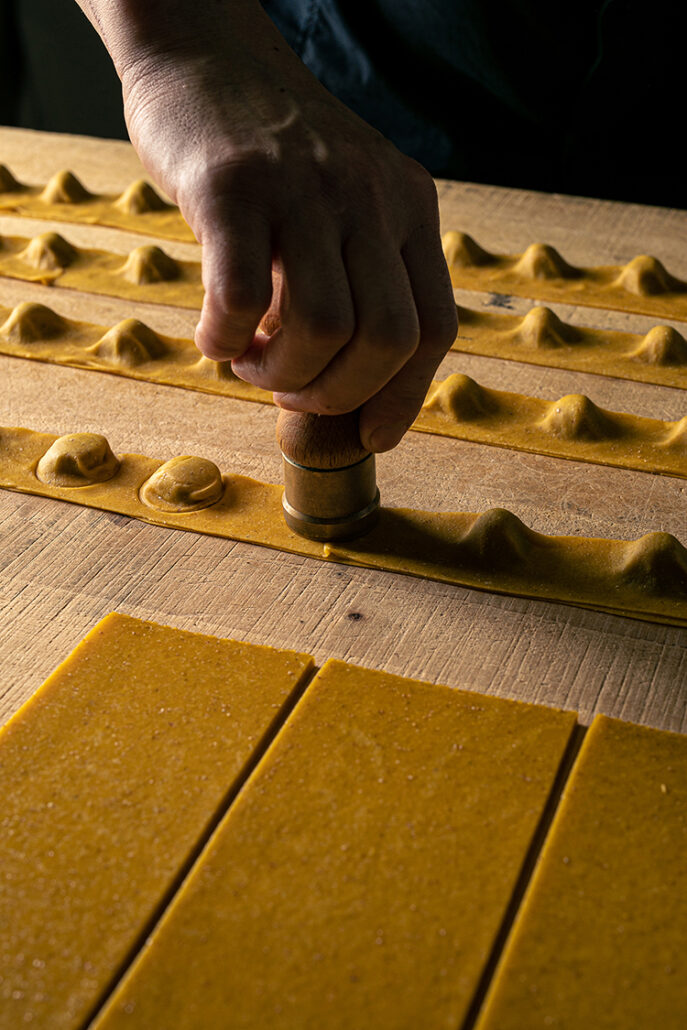
To emphasize the concept, the sequence of first courses takes the spotlight. An atomic Tagliolino al nero – flirtatious as soba for elasticity and temperature – with a seductive almond cream, delicate zucchini, tomato coulis, and raw red shrimp to lend iodine richness. The tantalizing Cappellacci filled with liquid goat cheese (from a small local dairy) permeated with a soothing twist of cacio e pepe. Lastly, the iconic Anolini in beef and hen broth, filled – as Parmesan liturgy demands – with beef stew, “priest’s hat” pasta, Parmigiano Reggiano, egg, roast gravy, and toasted bread. The amber color of the pasta, revealing evolving papillary edges, reignites Kuni’s discourse on dough-making. “For the tagliolini, I use a hard wheat flour because consistency is important, not taste” he alludes to 0-type flour. “For the anolini and cappellaccio instead, I use a mix of whole and stone-ground flours as they provide more intensity.”
Meanwhile, Guido enchants us by pouring – and narrating – Champagne from small winemakers; sharp Sancerre; Loire wines; a massive Fleurie; and dizzying treasures sourced from his favorite terroir: Jura.
“The wine list at this point ceased to exist”.
He adds as he refills the glasses: “With the excuse of the breadth of our cellar and moderate prices, people who distorted our wine philosophy used to come flocking. So, we chose to take on the role of a speaking menu ourselves, reassuring the customers that we drink and live wine for over 30 years. We always propose bottles within €30 as the default. If I dare to pick something more expensive, because I perceive the right context, I’m always the first to emphasize it to safeguard the guests’ expenses. Good service doesn’t mean just serving but implies a form of respect and collectivity that shapes the dining experience. Some wines can give you magic, a vital tension that becomes even more beautiful when shared. Having lived a life between analog and digital, I now define our work in the dining room as a humanistic technician’s approach.”
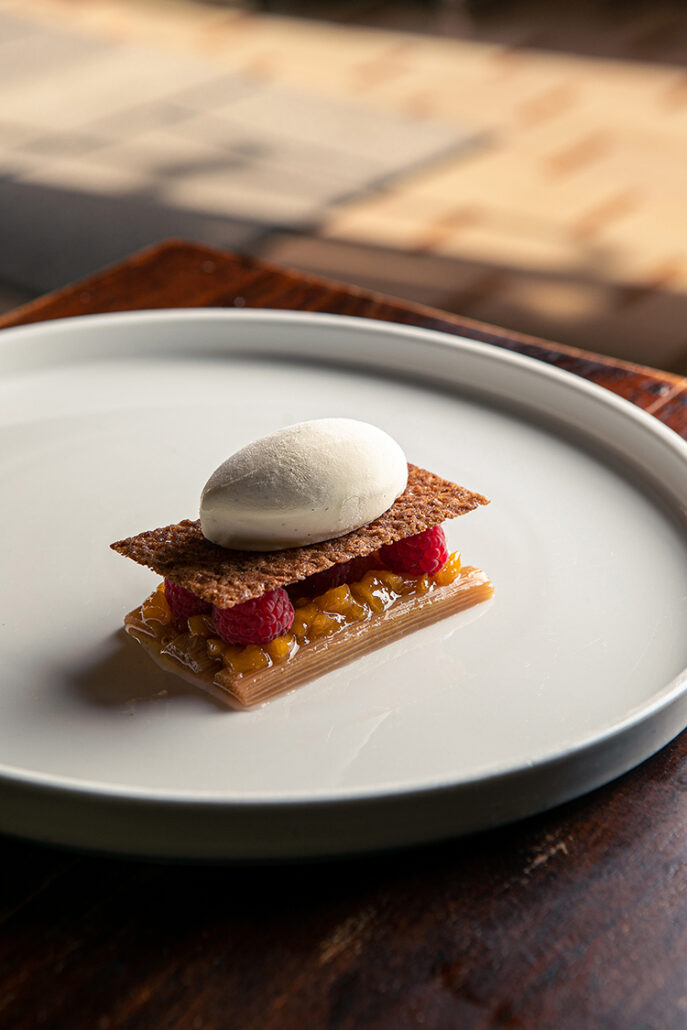
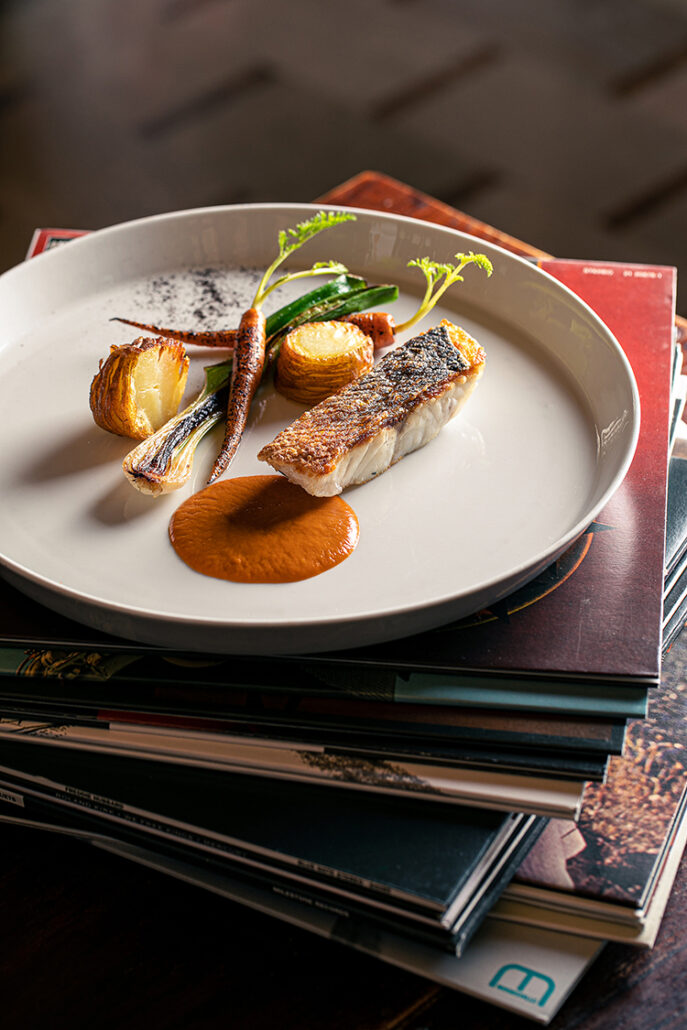
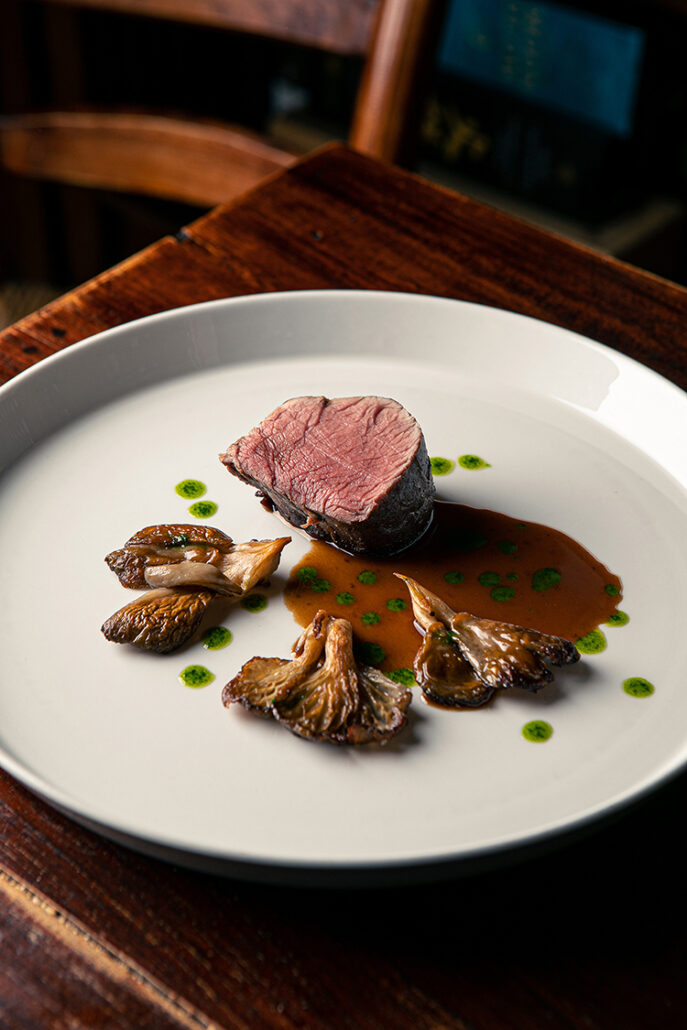
Kuni continues to amaze us with plump slices of Fish with ultra-crispy skin and sautéed vegetables; a silky Braised Cheek in red wine and mashed potatoes (directly inherited from Vergio’s recipe book); Lamb with a sweet and sour mustard sauce alongside incredibly crunchy potatoes and a succulent Tranquillo® Pork Fillet (from breeder Bettella, featured in Cook_inc. 28, ndr) cooked to a perfect pink with white wine sauce and grilled mushrooms. The desserts, created by the very young Joyce, highlight modern pastry aesthetics and contrasts: Spicy pineapple and ricotta; Chocolate dome and nougat; Rhubarb with tonka bean, peach jam, honey wafer, and vanilla ice cream. To end, a deconstructed English trifle that leaves a lasting impact on the palate. Sipping a fortified Madeira, we step outside to admire Paolo as he paints graceful wine glasses, pitchers, cutlery, heads, and Hi-Fi-inspired subjects on the facade of the inn, paying tribute to Guido and Mariella’s passionate journeys. The sun’s rays illuminate the violet grapes of a gracefully drawn bunch,
as we are certain that the unique spirit of this place brimming with humanity will continue to shine over time.