Of all the places where we socialise, the cocktail bar has undergone the most evolution, transformation, layering and cross-pollination. While taking a seat at a bar may seem to many like a simple act with an obvious outcome – ordering and drinking a drink – for many industry professionals, enthusiasts and devotees of mixology, stepping into a cocktail bar is always a journey. Over time, pubs, taverns, hotel bars, American bars and cocktail lounges have given different forms to a largely unchanged habit. Meeting over a drink inevitably involves conversation, casual and curious exchanges, the sharing of opinions. Sometimes, the person who serves you that drink also takes on a soothing, almost therapeutic role. It is easier to break through the ice of shyness and reserve after the first couple of sips of an ice-cold Martini than with nothing to drink. Plenty of people will vouch for that! Then there is the fact that, long before anyone coined expressions such as interior design, cocktail strategy, design concept or hospitality design (and we could go on), a place’s so-called design (its interior scheme) was determined far more by its spatial volumes, its bare architecture and the building’s original purpose.
Although Europe is not the birthplace of mixed drinks, our continent has seen its cocktail bar landscape branch out into highly distinctive, often instantly recognisable spaces. Think of the British pub – intimate, defined by wood, low lighting and the commanding presence of the bar counter – or the more elegant, cosmopolitan American bars of grand hotels, which helped spread a new way of drinking and meeting between the late nineteenth and early twentieth centuries. Think of Paris, the ville lumière, where bars, brasseries, cabarets and nightlife have enlivened the nights of artists, locals and travellers. Italy occupies a distinctive place in this picture, as its devotion to coffee on the one hand and the ritual of the aperitivo on the other have created venues that are unintentionally hybrid yet necessarily fluid in what they offer, their opening hours, their clientele and, consequently, the relationship between counter, seating area, hospitality and how people use the space. Over the course of the twentieth century, partly as cocktail culture became more established and continued to evolve, cocktail lounges, nightclubs and hotel bars joined the mix, each with a stylistic vocabulary that developed over time.
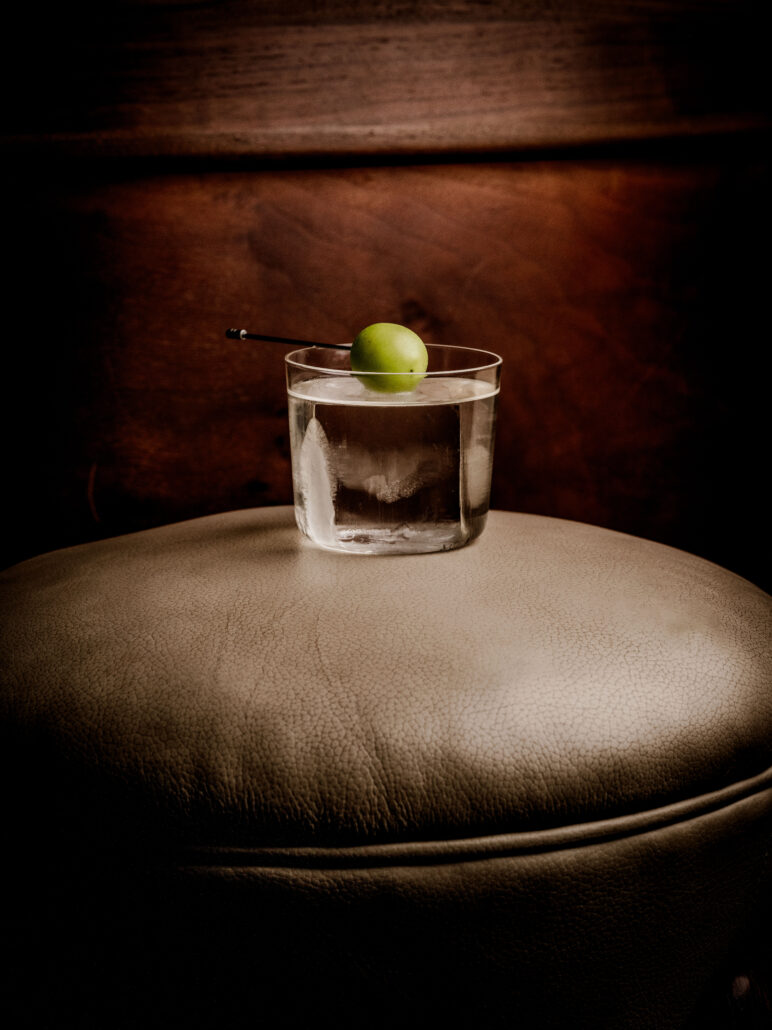

Some of these images have become almost archetypal: dark wood and brass, velvet and table lamps, illuminated bottle displays, stools lined up along the counter and sofas tucked into corners. Elements that span cities and decades, and that you will no doubt have noticed as signature details in many newly opened bars. While in some cases they may seem like purely decorative choices, they have their roots in the history of these spaces and have helped shape our collective imagery of drinking, from grand hotels to street bars and the speakeasy boom.
Alcune di queste immagini sono diventate quasi degli archetipi: il legno scuro e gli ottoni, il velluto e le lampade da tavolo, la bottigliera illuminata, gli sgabelli allineati al banco e i divani raccolti negli angoli. Elementi che attraversano città e decenni e che vi sarà sicuramente capitato di notare come dettagli distintivi di tante nuove aperture. Per quanto in alcuni casi possano sembrare delle semplici scelte decorative, hanno una loro genesi nella storia di questi ambienti e hanno contribuito ad animare un immaginario del bere, dal grand hotel agli street bar, sino al boom degli speakeasy.
Design, then, has always been part of the bar’s story.
What has changed today is not so much its importance as the freedom and thinking behind its use. The contemporary cocktail bar seems to have gradually freed itself from the need to look like a cocktail bar at all. It can draw freely on art, fashion, architecture, music, the landscape or the history of the building it occupies. Nothing seems essential any more – a bar counter, for instance, or conventional seating with tables and chairs – and nothing necessarily has to serve a practical purpose for the guest (with the risk that, in some cases, this leads to overly extreme and distinctly uncomfortable spaces). Yet it is precisely this freedom that has made cocktail bars one of the most interesting areas of contemporary hospitality design.
One of the most radical examples of this approach is A Bar with Shapes for a Name in London, a project developed during the pandemic by renowned bartenders and entrepreneurs Remy Savage and Paul Lougrat. A Frenchman with a truly brilliant mind and an unusually rich visual culture, Savage has always shown a particular affinity for art, architecture, graphic design and fashion. Here, the starting point is the Bauhaus, adopted not merely as an aesthetic reference but as a framework for building the bar’s entire identity. The original design divided the venue into three areas: bar, laboratory and classroom. When the bar expanded into the basement in 2023, this principle was taken further still. Working with architecture studio CAKE, Savage and Lougrat began with the idea that “the party always ends up in the kitchen: instead of hiding the production side, we brought it centre stage. Refrigeration and laboratory equipment remain visible, and guests find themselves, quite literally, in a space where production and consumption coexist,” the pair explain.
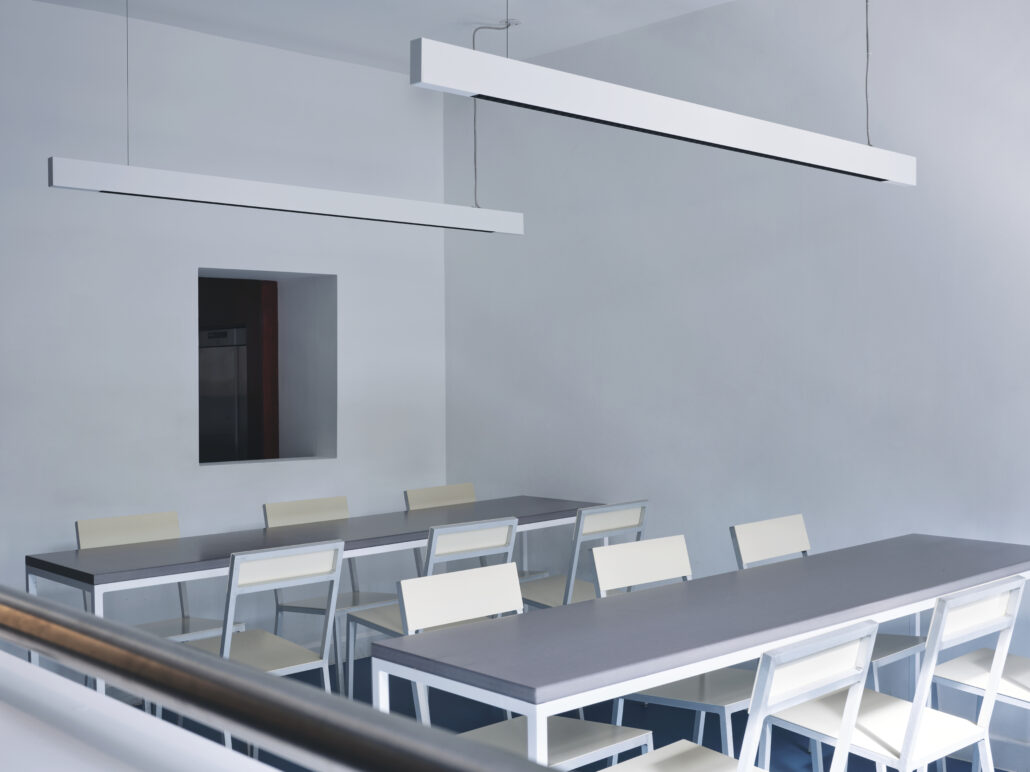
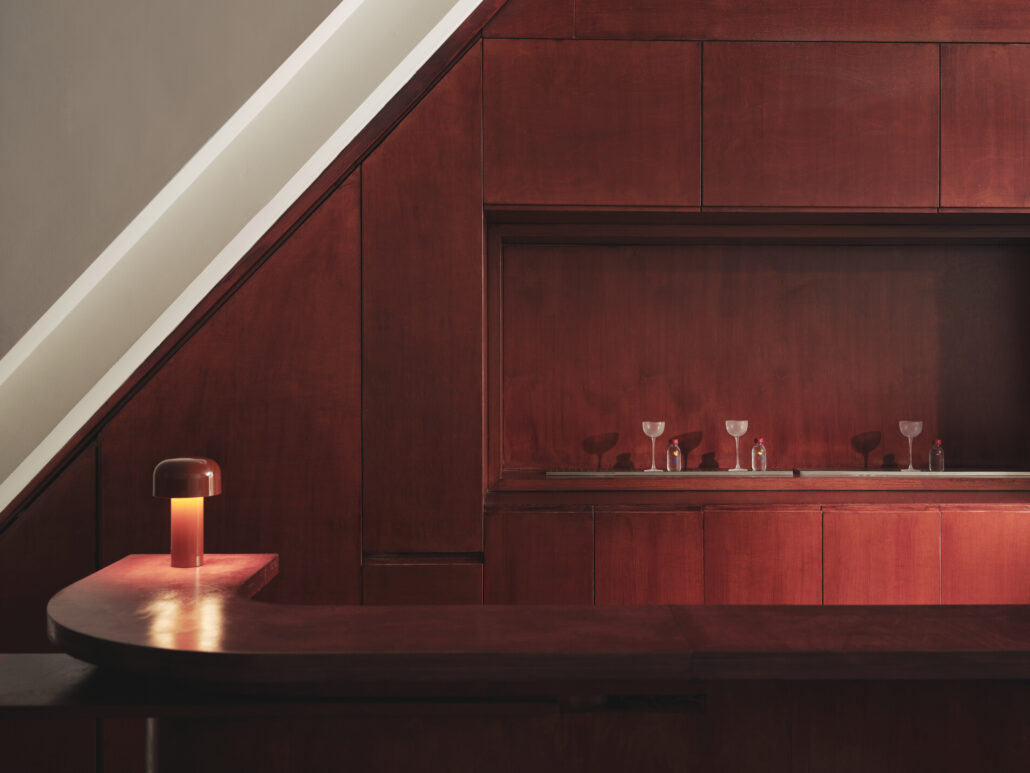
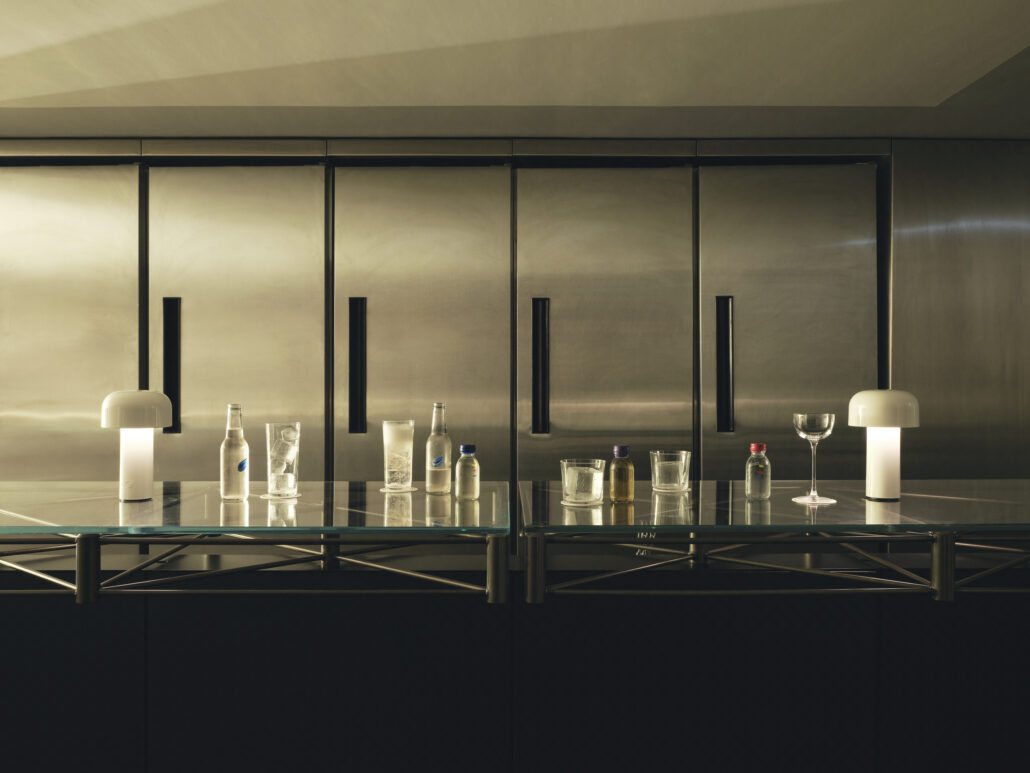
The name A Bar with Shapes for a Name (not an easy one to remember) consists of three geometric shapes – a yellow triangle, a red square and a blue circle – that recur throughout the space. Step inside and you might feel as though you have entered a site-specific installation in a museum, with pared-back interiors, crisp geometries, primary colours, bespoke furniture and virtually no decorative elements. The same approach carries through to the glass. The cocktails echo the language of colour and form that defines the surroundings: visually spare compositions, often served in small, pre-filled bottles alongside square glasses or glassware with minimalist shapes. Simplification and subtraction in the service of a clearer, more direct message. The result? An experience first, a welcoming space second, and, certainly, unforgettable.
Thousands of kilometres away, in another hemisphere altogether, Melbourne calls for a stop. The team behind Caretaker’s Cottage have created a bar with a strikingly unconventional aesthetic. The building’s story began long before the bar arrived: once the caretaker’s home for Wesley Church, this small early-twentieth-century cottage has retained its domestic proportions and character.
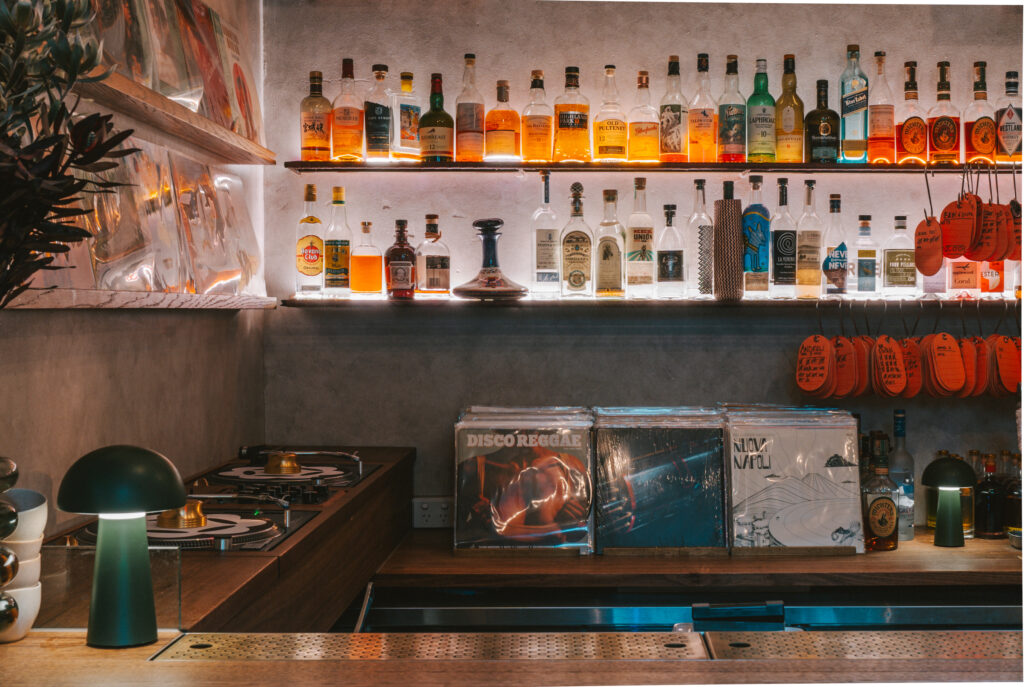
Onto this existing identity, founders Rob Libecans, Ryan Noreiks and Matt Stirling have layered a shared passion: music. Vinyl records, turntables and two imposing handcrafted speakers in bronze and oak are integral to the furnishings, so much so that around thirty per cent of the initial budget reportedly went towards the sound system. Music and cocktails are not necessarily paired, but they belong to the same vision: alongside the Martini and Guinness, vinyl has become one of Caretaker’s signatures. The result retains something of a home, something of a British pub and the atmosphere of a listening space, with a particularly fun, informal feel.
If an old building helps shape a bar’s identity in Melbourne, in Hong Kong the opposite is true. In the basement of Jardine House, one of the financial district’s modernist landmarks, recognisable by its façade punctuated with hundreds of circular windows, sits a cocktail bar that seems to have arrived straight from the future. Beneath the skyscraper’s rational architecture, Nelson Chow, founder of NC Design and Architecture Ltd., creates an entirely different world. The references are seemingly far removed from one another – underground cisterns, brutalism, the atmosphere of science fiction – and take shape in an interior of vaults, curved surfaces and almost unreal geometries.
In a space entirely without windows, light becomes part of the architecture. The lighting scheme by LightOrigin Studio, recognised at the Dezeen Awards 2024, alternates between shadow and indirect light, tracing curved surfaces and bringing out materials and volumes without lighting the space evenly. There is even an artificial “sun”, a large circular source of warm light that evokes something of a sunset. Rather than simply compensating for the absence of natural light, Artifact seems to invent its own: a way of giving an underground space not just an atmosphere, but almost a different sense of time.


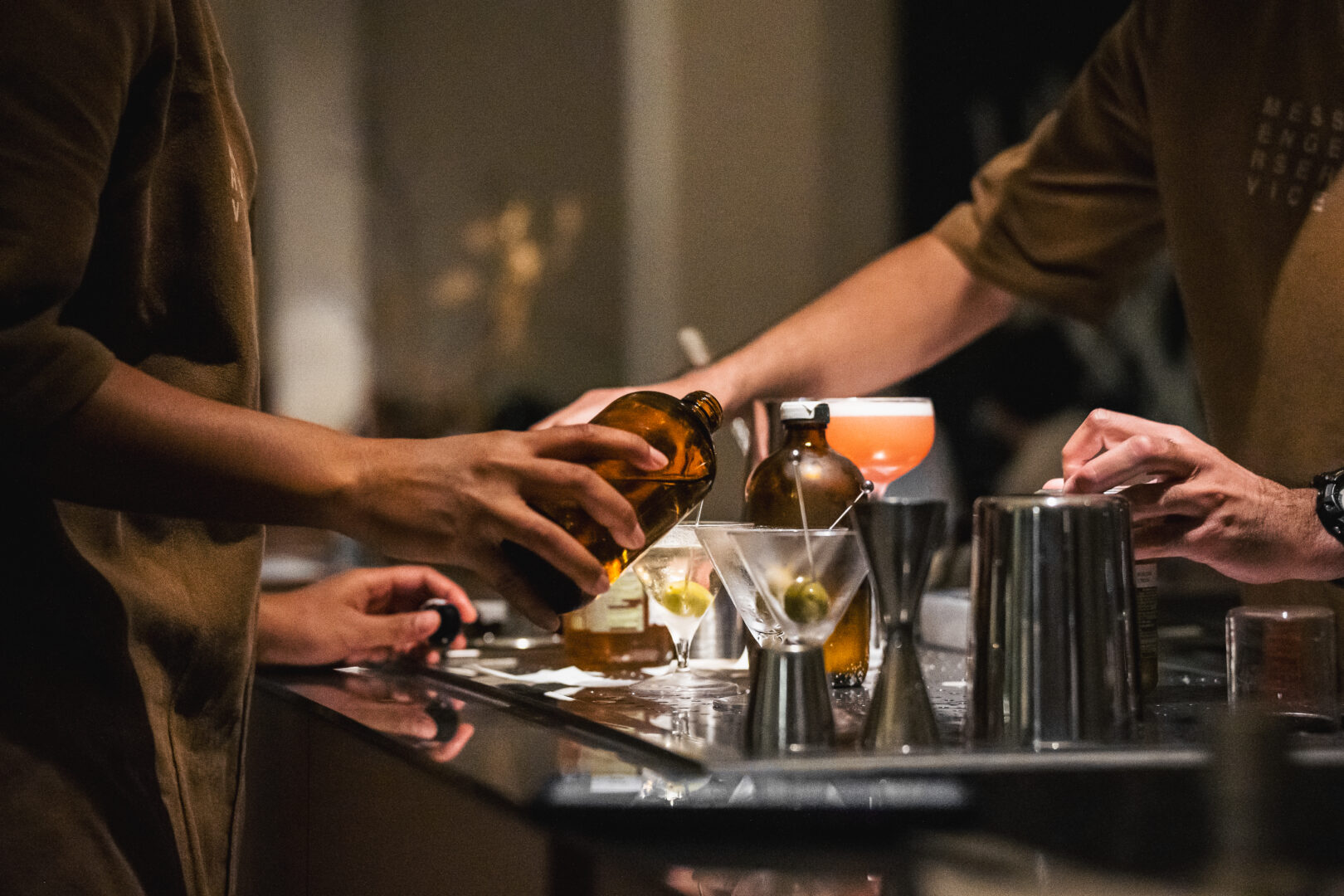
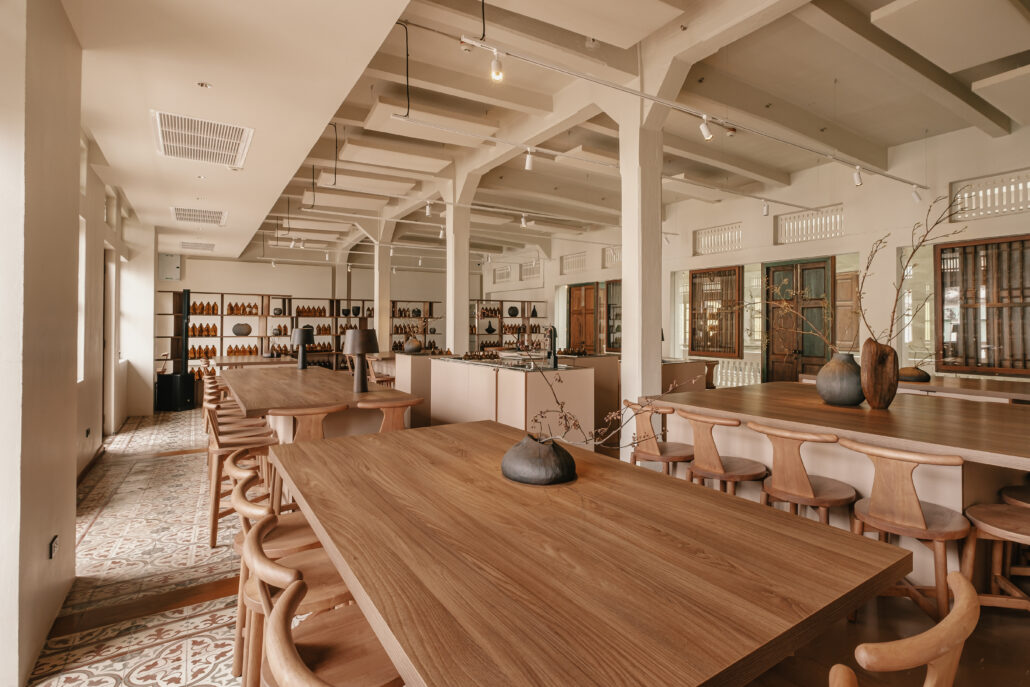
In Southeast Asia, another essential stop is Bangkok, where the cocktail scene has grown exponentially over the past ten, if not fifteen, years. Among the countless combinations of formats, particular attention has also been paid to the identity of the spaces themselves. Messengerservice comes from the duo behind the better-known Bar Us – “Taln” Rojanavanich and Veerach “Aum” Sawaengsupt – who have once again embraced “a vision of hospitality rooted in creativity and sincerity. The team does more than serve drinks: they share their creative process, test ideas in real time and invite guests to take a closer look at the work behind each cocktail. It is a place where experimentation meets hospitality, and every visit feels both personal and different from the last. The space reflects this approach through carefully considered cocktail research, aesthetics and service,” the two founders explain. The cocktail list, too, is built around a clearly defined concept: Delivered from the Groceries borrows the logic of a grocery shop, with fruit, vegetables, grains, condiments and other products becoming the categories through which to explore the drinks. The same pared-back approach returns in the design of the space, where the architecture of the historic shophouse meets a contemporary, minimalist language, a combination that, fittingly, earned them the Best Bar Design Award from Asia’s 50 Best Bars.

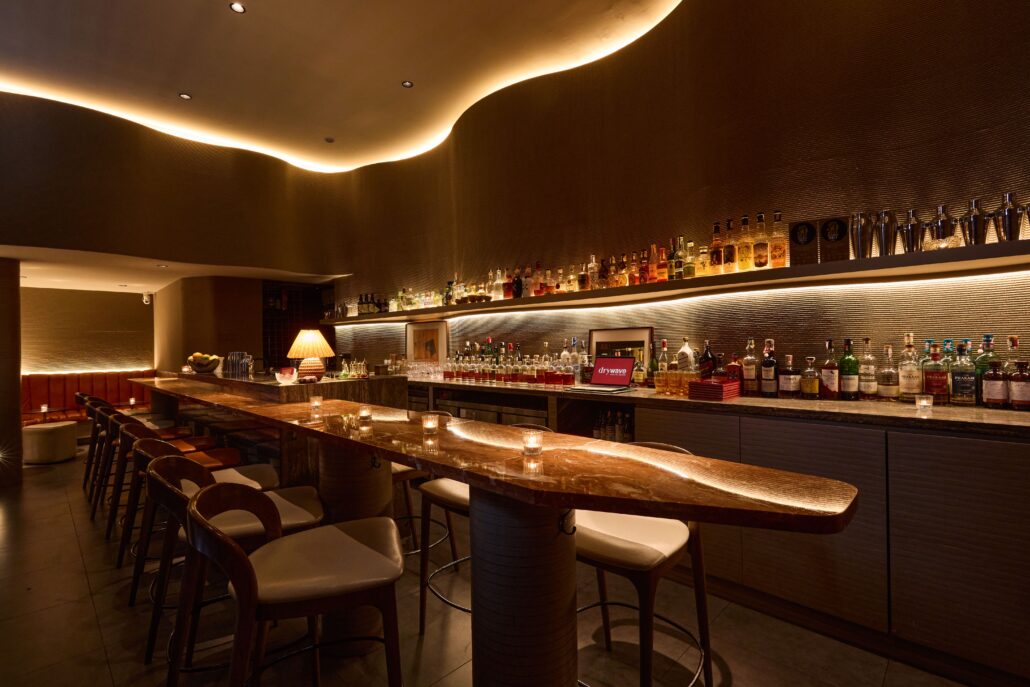
Bangkok offers many more examples of this attention to design. Dry Wave Cocktail Studio, designed by Thai architecture studio Nitaprow, hints at its visual world in its very name. Continuous, curving walls flow through the interiors, evoking the movement of a wave without resorting to the more predictable codes of a marine aesthetic. Sandstone, terracotta-toned marble and textured surfaces keep the palette warm and natural. The bar occupies the first floor overlooking an inner courtyard off a rather dark street – the sort of setting that might seem unusual, even a little inconvenient, in Europe but is perfectly normal in this city. On the terrace, a large existing tree has been preserved and incorporated into the structure, becoming part of the bar’s architecture.
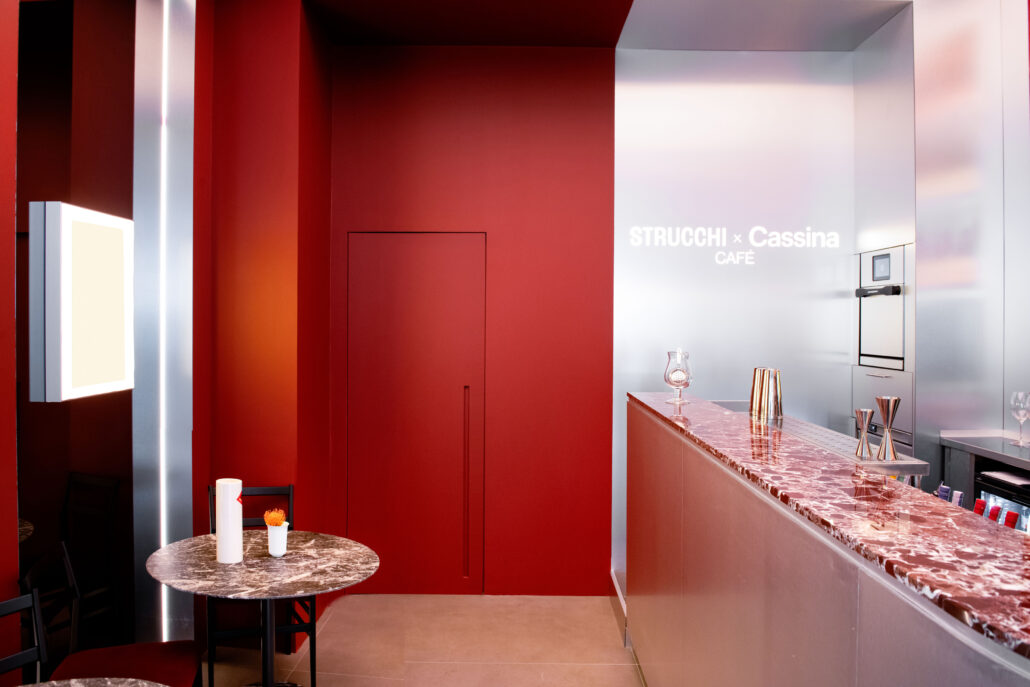
The dialogue between cocktails and design finds an almost natural home in Milan at the new Strucchi x Cassina Café, a collaboration between Cassina – one of the leading names in high-end Italian design – and Strucchi, a new-generation vermouth brand created by Paolo Dalla Mora. Beside the flagship store on Via Durini, the two identities meet in a space that is both a bar and somewhere to spend time: Cassina’s furniture moves beyond the showroom to become part of the social experience, while vermouth and the aperitivo introduce customers and the design world to a deeply Milanese ritual. A compact bar – there are just two small tables inside, with the rest of the seating outdoors – where design serves both furnishing and function, helping staff work efficiently and keeping service flowing.

In New York, meanwhile, the relationship between cocktails and architecture takes on yet another scale. Overstory – one of those places you might now call #soNewYork – occupies the sixty-fourth floor of 70 Pine Street, one of the Art Deco skyscrapers that shape the Lower Manhattan skyline. Designed by Modellus Novus, its oval layout echoes one of the building’s original boardrooms, reimagined as a room encircled by a terrace with 360-degree views of the city. Looking down over this metropolis is always mesmerising, and seeing it lit up at night makes it more captivating still. Modellus Novus’s other stated reference is the glamorous interiors of international ocean liners of the 1940s. The result is a soft, almost seductive and intimate setting: just 26 seats, silk wall panels, columns clad in pink Calacatta marble and a palette of pink, peach and copper. These tones were chosen to create a kind of sunset glow, connecting the view outside with the interior.
Nearby, Clemente Bar takes this relationship between disciplines further still. Opened above Eleven Madison Park and designed by Allied Works, it takes its name from Francesco Clemente, the Italian artist commissioned to create a site-specific installation for the space. Painting, architecture, furniture and light are conceived as parts of a single environment, closer in atmosphere to a private sitting room than to the traditional image of a cocktail bar. Here, too, as at Artifact, light plays a particularly subtle role. The lighting scheme by L’Observatoire International moves fluidly across artworks and surfaces, creating a deliberately intimate, secluded setting. The boundary between bar and gallery remains blurred, the two merging seamlessly.
Poco distante, Clemente Bar porta il rapporto tra le discipline ancora più avanti. Aperto sopra Eleven Madison Park e progettato dallo studio Allied Works, prende il nome da Francesco Clemente, l’artista italiano chiamato a realizzare un’installazione site specific per lo spazio. Pittura, architettura, arredi e luce vengono così pensati come parti dello stesso ambiente, più vicino per atmosfera a un salotto privato che all’immagine tradizionale del cocktail bar. Anche qui, come Artifact, la luce ha un ruolo particolarmente sottile. Il progetto illuminotecnico di L’Observatoire International accompagna le opere e le superfici in modo fluido, costruendo un ambiente volutamente intimo e raccolto. Il confine tra bar e galleria rimane sfumato e le due dimensioni si fondono in continuità.
At this point, it is difficult to say what a contemporary cocktail bar should look like. And that is probably the most interesting part. With many of the codes that defined its imagery for decades falling away, design has become a space of freedom: it can begin with the Bauhaus or a vinyl collection, a building’s history or a view over a city, turn light into a material or let a work of art determine the character of a room. There was a moment in contemporary art when the gallery became a white cube, deliberately made neutral to accommodate every form of expression. Today, the design of a new bar is far more likely to begin with an aesthetic idea, a vision of space that considers light, shapes and angles, than with an approach to cocktail-making. The two then come together, but one follows the other.
Space is integral to the experience we choose to have, often before we have even had it.
We see a bar before entering it, through an image, a published design project, a photograph circulating on social media, and decide we want to see it for ourselves before we even know what it serves.

Let’s not forget that there is another side to design – increasingly overlooked, but still there – that guests barely see, yet can shape the quality of what happens just as profoundly. The entire operational side, for instance: acoustics, refrigeration, ice, storage, workstations and equipment. A few centimetres can mean one less movement repeated hundreds of times during a service. It is the least photographed side of bar design, but probably the one where form and function come together in their most tangible sense. Architecture and interior design can become reasons to cross a city, book a table or simply push open a door. Once inside, they continue to influence what we perceive. The light in which we see a drink and the people opposite us, the distance between tables, the materials we touch, the sound, the relationship with what is happening outside. A design can put us at ease or intimidate us. It can look striking in photographs and feel far less convincing in person. Let’s remember that a strong aesthetic and beautiful décor can help a place become known and desirable, but they are not enough to give it a soul. The true essence of a cocktail bar remains its people and that magical alchemy between one sip of a Martini and the next, between a guest’s satisfied look and the bartender’s knowing nod at a mission accomplished.
Perhaps this is the measure of successful hospitality design. Not just the ability to create a recognisable identity, but to turn it into a place that someone first wants to choose and then, once there, truly wants to spend time in.