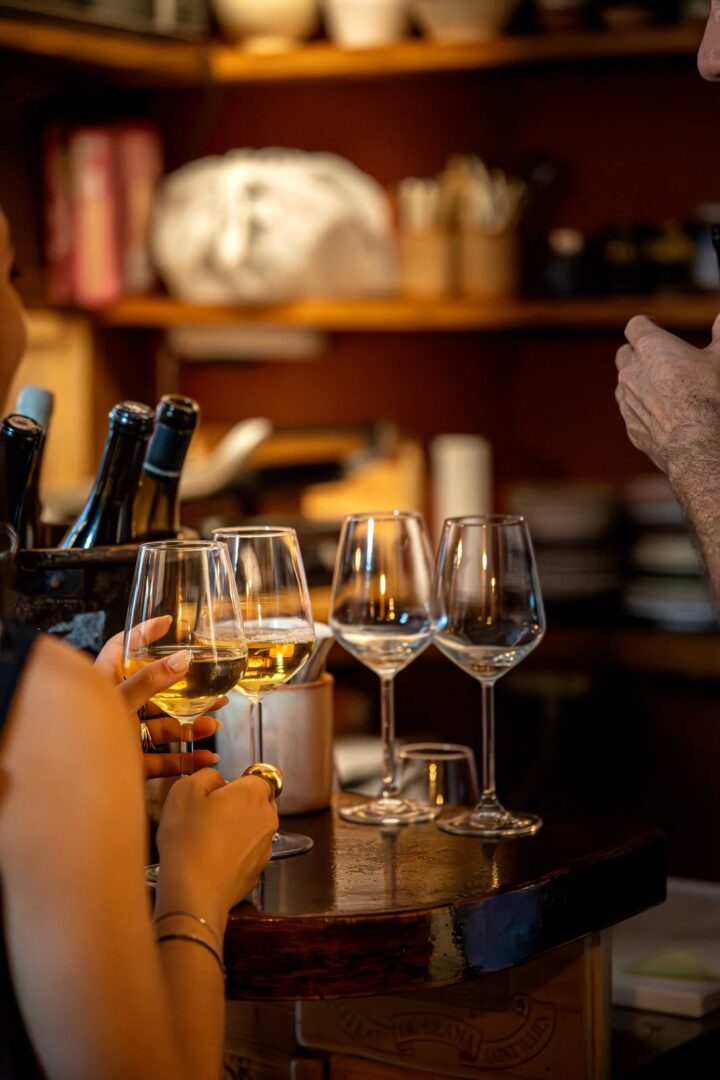
Can we still recapture the atmosphere of bars as they once were? Bars used to be melting pots of encounters, fertile ground for forging relationships and bridging social divides. They were places where political movements were born, texts became works of literature and sketches were transformed into masterpieces. These days, we often wonder whether that same genuine, spontaneous sense of conviviality can still exist, where there was nothing to prove and simply being was enough. Perhaps the answer lies in wine bars. Or rather, in certain wine bars, where hosts and guests can swap roles and everyone feels at home.
Within the boundaries of Bologna, places like these still exist. Places that have little interest in chasing the “wow” factor, that tend to shy away from social media, and that have remained welcoming and true to themselves over the years. In alphabetical order, they are Bibe, Bivio, Drogheria delle Api, LOrtica and Scovami. I spoke to the people behind each of them, and what followed were genuine, unguarded conversations in which wine, as so often happens, provided the common thread from which all manner of discussions could unfold.
I’ve lost count of the times I’ve sat at the bar or around the tables of these wine bars. I’ve tasted wines from all over Italy and beyond, discovered small artisan producers whose products I’ve since started buying, and listened to winemakers talk firsthand about the fruits of their labour. I’ve been a regular at these places for years, and I’ve come to appreciate each of them for its own distinct character. I’ve laughed in all of them, cried in a few, and been happy in every single one. I’d recommend them wholeheartedly, because it’s precisely that same heart that drives the people who run them.
For all their individual quirks and personalities, these five wine bars have a few things in common: an uncompromising commitment to quality, a love of travel as a source of inspiration and a way to discover new producers, a constant desire to learn, strong ties to their neighbourhoods and, above all, a passion for what they do. It’s a profession that comes with ever-growing challenges and uncertainties, yet somehow, despite it all, it still makes them happy.
Wine as a journey of self-discovery and connection
Running a wine bar as a business while also welcoming guests, sourcing ingredients, keeping track of stock, waiting tables and making sure the numbers add up is no easy task. But neither is knowing how to pick up on what customers really want, those unspoken needs that only vaguely emerge when they come to order. Or knowing how to engage with them naturally, effortlessly and on equal terms.
Andrea Rubbi, Angelo Di Stani, Davide Avati, Lorenzo Musi and Sofia Di Palma are either sole owners or co-owners of their respective businesses. Every day, they find themselves navigating, and sometimes grappling with, changes in society, consumer habits and the way people drink. Fully aware of the challenges, yet clear-headed and optimistic, they all agree on one thing: as long as their work continues to be appreciated and brings them personal satisfaction, they have no intention of giving it up.
Whether they’ve been in the business for years or are relatively new to it, I sensed in each of them such a deep-rooted enthusiasm that it genuinely moved me. As they told me how their offerings had evolved over time, each of them opened a window onto their inner world.
“Running a wine bar has made me a better person,” one of them told me. “I’ve changed, and my place has changed with me.”
These places are cut from the same cloth as the people who run them. They wear their personalities and speak their language. One has a distinctly Piedmontese soul, thanks to Sofia’s (Bibe) passion for Timorasso and its characteristic hydrocarbon notes. Another has its sights set on Andalusia and Galicia, reflecting Lorenzo’s (Bivio) current interests. Then there’s one that shares Angelo’s (Drogheria delle Api) fascination with the countless facets of Chenin Blanc, while another is discovering the wonders of the Mosel through Andrea (LOrtica): “Wonderful wines and fantastic people,” as he puts it. And finally, there’s one that knows every nuance of Etna, thanks to Davide (Scovami). Personal tastes evolve, and the wine selection evolves with them. Guests can simply go along with this constant movement, allowing themselves to be carried towards new discoveries each time. That old bar atmosphere we spoke of at the beginning is partly about this, too: stepping into a place that feels like a second home to the person standing opposite you behind the counter. And that’s when the host becomes a bit of a guest, too.
Drogheria delle Api
Drogheria delle Api
Wine and food
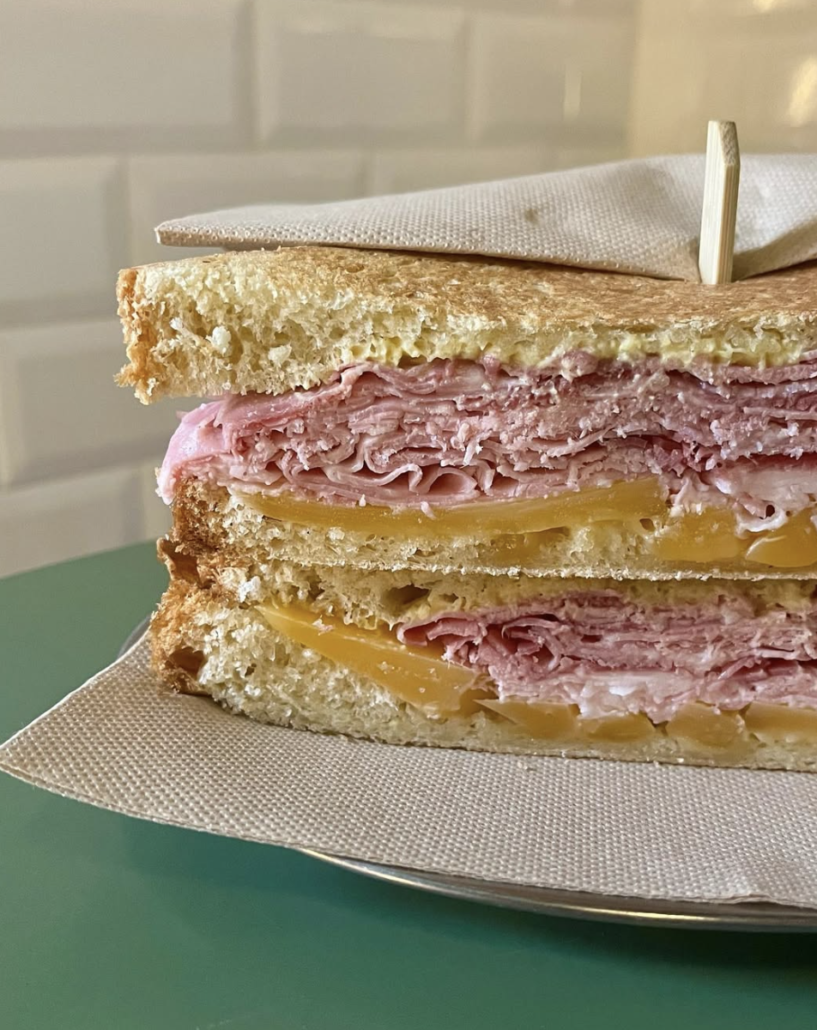
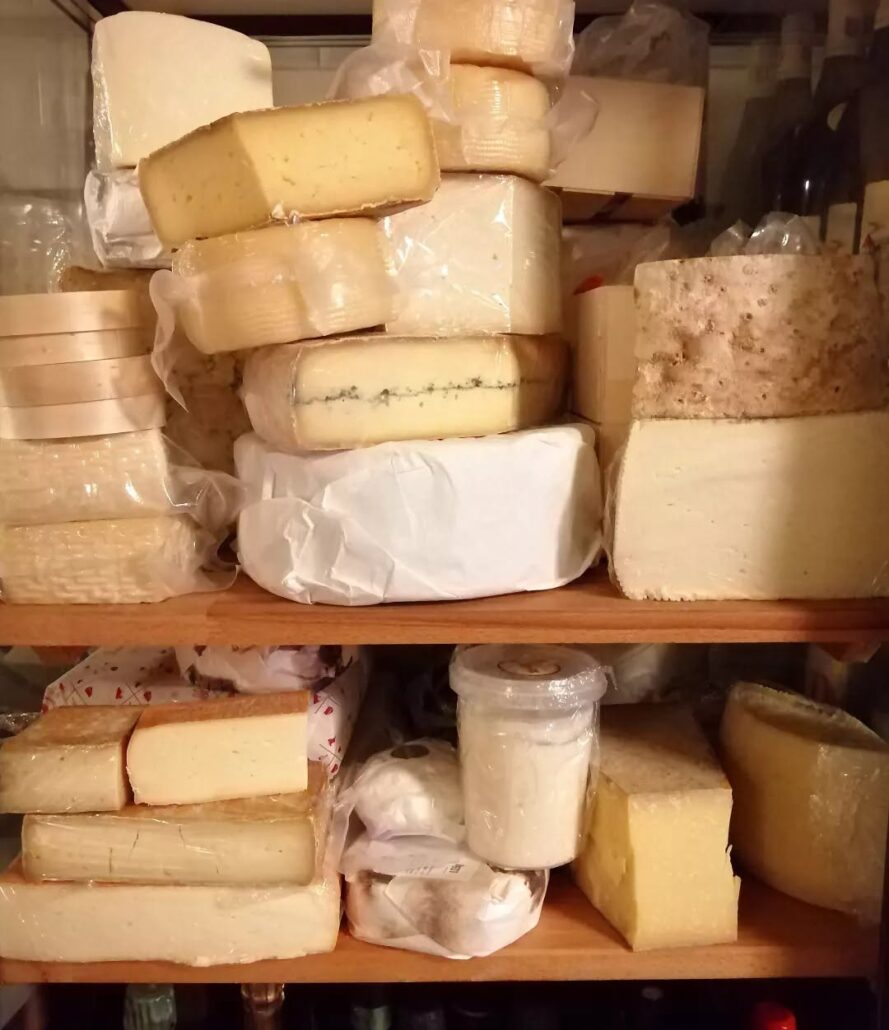
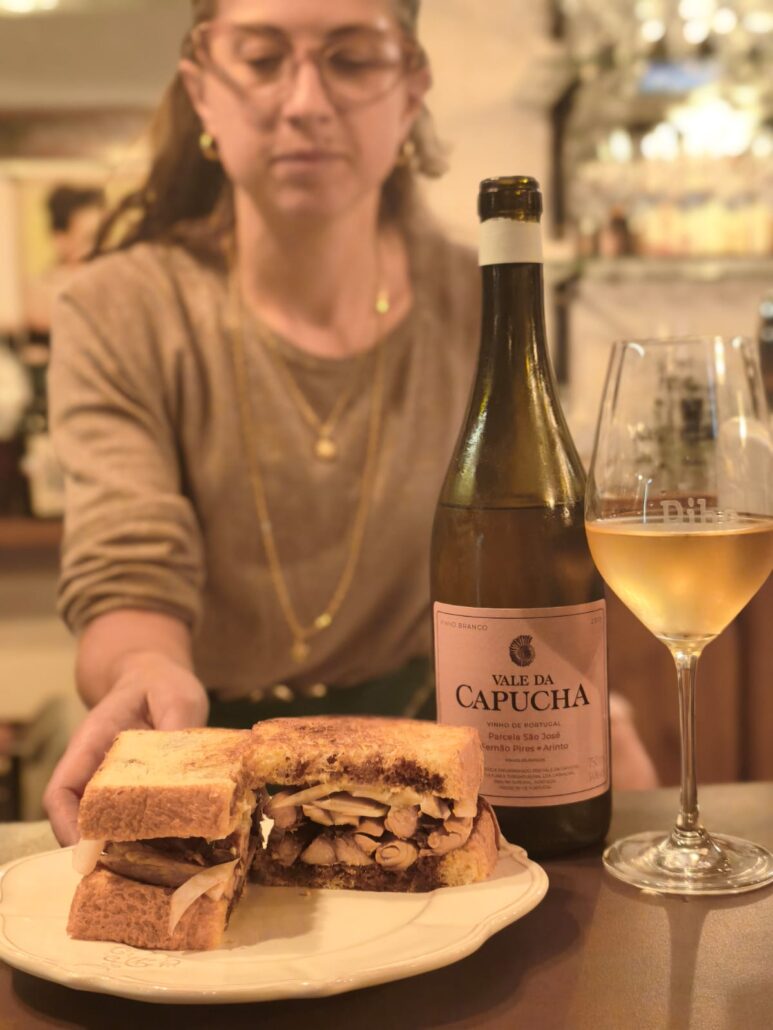
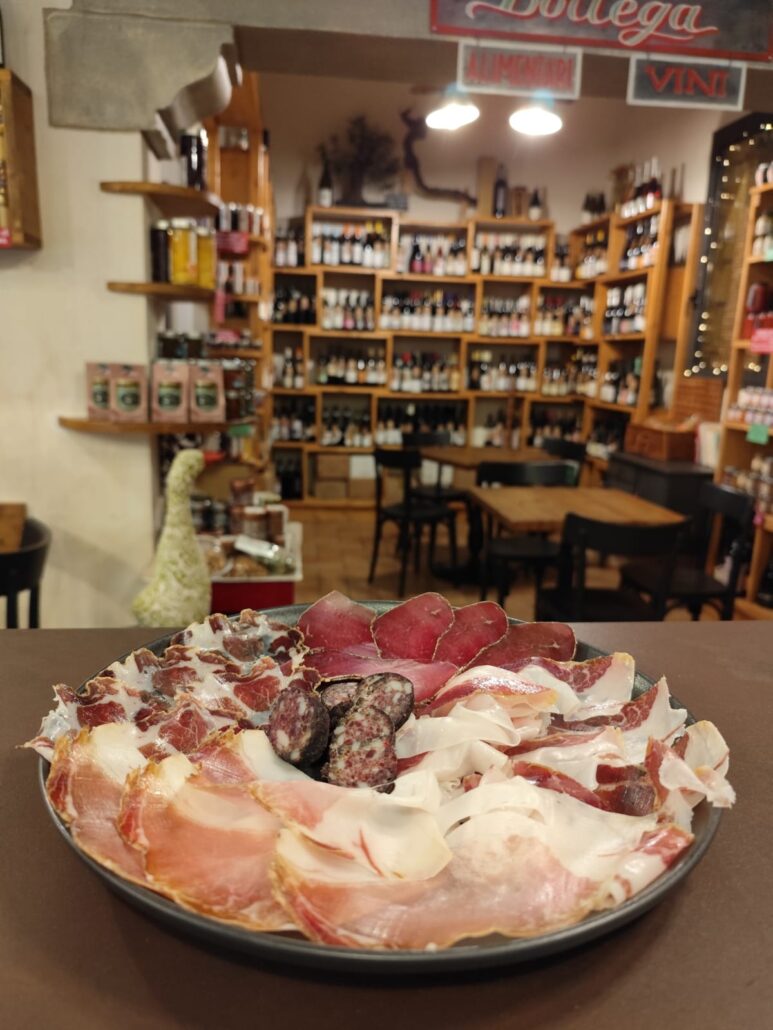
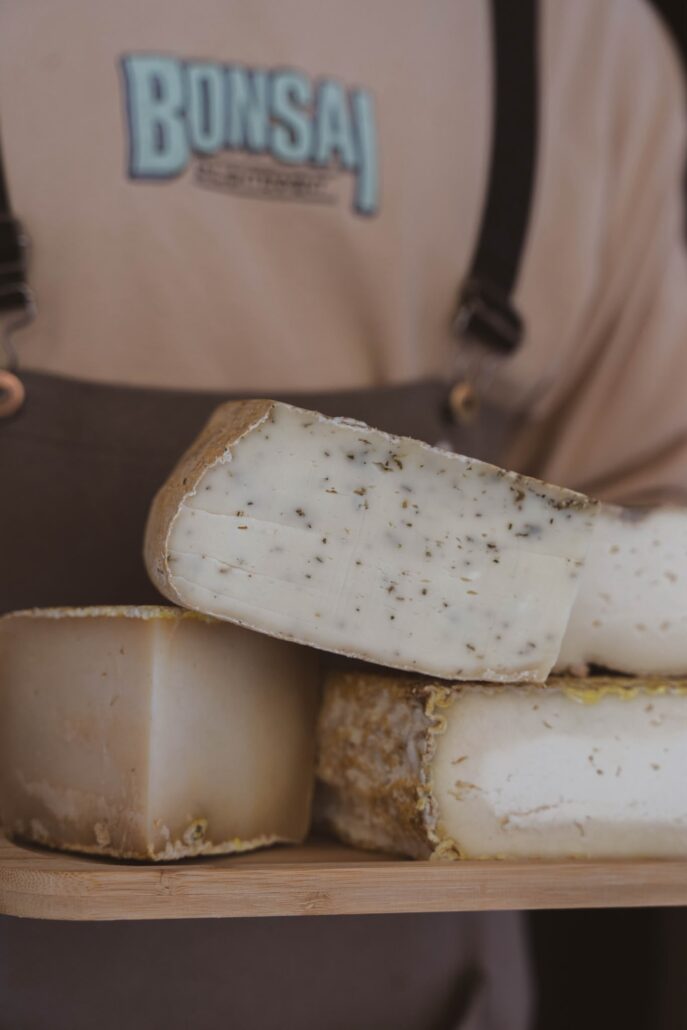
These wine bars are treasure troves of exceptional food and drink. Beyond their wine selections, they champion the work of small artisan producers, chosen for their shared values and outlook. “Every product reflects my own philosophy of food and wine,” explains Davide of Scovami. He also emphasises what he sees as part of his responsibility as a host: gently helping people understand the value of quality produce. Many of these wine bars also sell pantry staples, from preserves, pasta, sauces and condiments to sweet treats and, in some cases, cured meats and cheeses sold by weight, much like a traditional Italian bottega. You can take them home or enjoy them on the premises. Each of these places offers different ways to experience it, and that’s precisely the beauty of them: being able to choose whatever suits your mood. Popping in for a glass of wine, meeting friends for an aperitivo that turns into dinner, picking up a bottle to take home, or shopping for yourself or someone you love. What makes these moments so special is the exchange with the person behind the counter, who becomes a guide, an adviser, a listener, a friend. “Sometimes you’re a psychologist, sometimes a confessor,” jokes Andrea of LOrtica, who has heard his fair share of stories and anecdotes over sixteen years in the business.
At Bibe, Sofia uses a light, engaging approach to storytelling to shine a light on the work of the producers whose products she serves. The real challenge is conveying the effort, dedication and care behind every carefully chosen product without boring guests or getting bogged down in technicalities. Customers see what’s in their glass or on their plate, but Lorenzo of Bivio encourages them to go and see where it all comes from for themselves. “Walk between the rows of vines in a vineyard that hasn’t been treated with chemicals, watch the animals grazing freely whose milk goes into making that cheese you love so much.” Every little detail plays its part in creating a product that, in a sense, is never truly finished.
Wine as a means to an end
“It always comes down to people, doesn’t it?” says Angelo of Drogheria delle Api, as he tells me about the producers who captivated him on a trip to the Loire Valley. Running a wine bar offers the opportunity to get to know, and tell the stories of, an entire supply chain, tracing it back to its origins. A world of producers and artisans, each with their own faces, names, choices and anecdotes, stories that might otherwise go untold without someone passionate enough to share them. Wine leaves the winery, passes through the hands of distributors and eventually reaches the wine bar, where it is served by the glass or sold by the bottle. This is where everything comes together: the person behind the counter has the chance to convey what happens in the vineyard and the cellar, painting a picture that goes far beyond the wine itself. “Drinking a living, artisan wine can be just as stimulating as watching a film,” says Andrea of LOrtica. Flavours evolve on the palate, and the subjective and the objective intertwine. The wine’s journey continues around the tables of wine bars and into people’s homes. It sparks connections, new friendships and even love stories. Angelo smiles as he recalls the couples who first met as complete strangers in his bar. A vehicle for values, a reason for living, a source of pleasure and discovery: all this, and so much more, in something that comes from the earth.
Wine and balance
There are plenty of directions we could take with a heading like this, but let’s focus on work-life balance. Although I never asked about it directly, the subject came up spontaneously in every interview. That alone says something about how increasingly important it has become to know where we want to be in life, while remaining realistic about what is actually possible. One remark in particular has stayed with me: “This is my passion, my job, but there’s more to my life than work.” Andrea, Angelo, Davide, Lorenzo and Sofia all have interests that begin with wine and, in one way or another, lead back to it. But they also have a passion for nature, travel, music and much more. They acknowledge just how difficult it can be to balance time for themselves and the people they care about with the demands of running a business, yet they are determined to find a way. It takes sacrifice, but, as one of them put it, “it’s better for your health”.
Now it’s worth shifting our focus from the bigger picture to the individual stories behind these places.
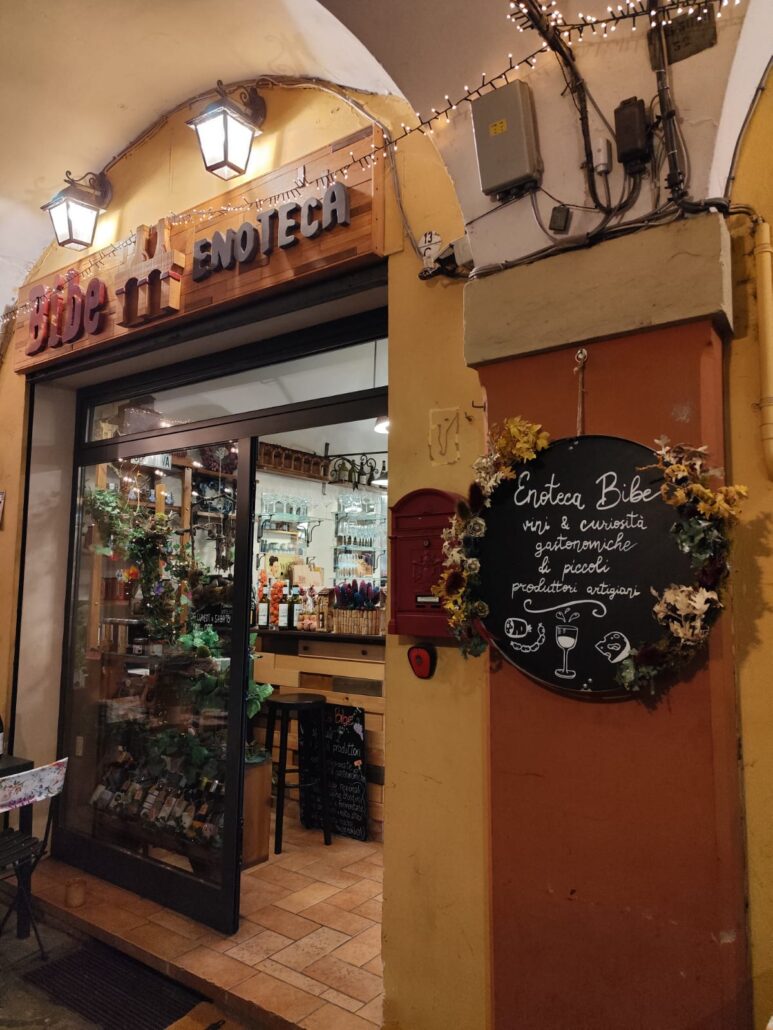
Bibe
Sofia describes herself as a practical person. From her family, she inherited a level-headed, clear-sighted approach to life, which helped her realise that the legal profession she had been studying for wasn’t where her future lay. After gaining some experience in hospitality, she enrolled on a degree course in oenology. Having completed her studies, and still taking time to work out what she wanted to do next, she decided to open Bibe with her father in 2018. As for the neighbourhood, there was never any doubt: just outside Porta Maggiore, on Via Mazzini, where she was born and raised. Sofia knew the land and understood plants inside out, but she was still finding her feet as an entrepreneur. By bringing together her practical nature, her heart, her studies and her constant desire to improve, she has made Bibe a wine bar where quality ingredients are handled with care and presented with a refreshingly light touch. She smiles as she tells me how she and her colleagues sometimes burst into a rendition of Ambra Angiolini’s T’appartengo at the end of the evening, then turns serious when she explains how important it is to her to strike a balance between work and time with her family. Nature and the people she loves are constants in her life, both inside and outside work. She makes sure her children spend plenty of time outdoors, and loves the fact that her mother decorates the Christmas gift hampers in the shop with pine cones and oak galls gathered in the woods. Sofia always seems to be smiling, yet behind that smile lies the tenacity, determination and considerable empathy with which she runs her wine bar so successfully.
Bivio
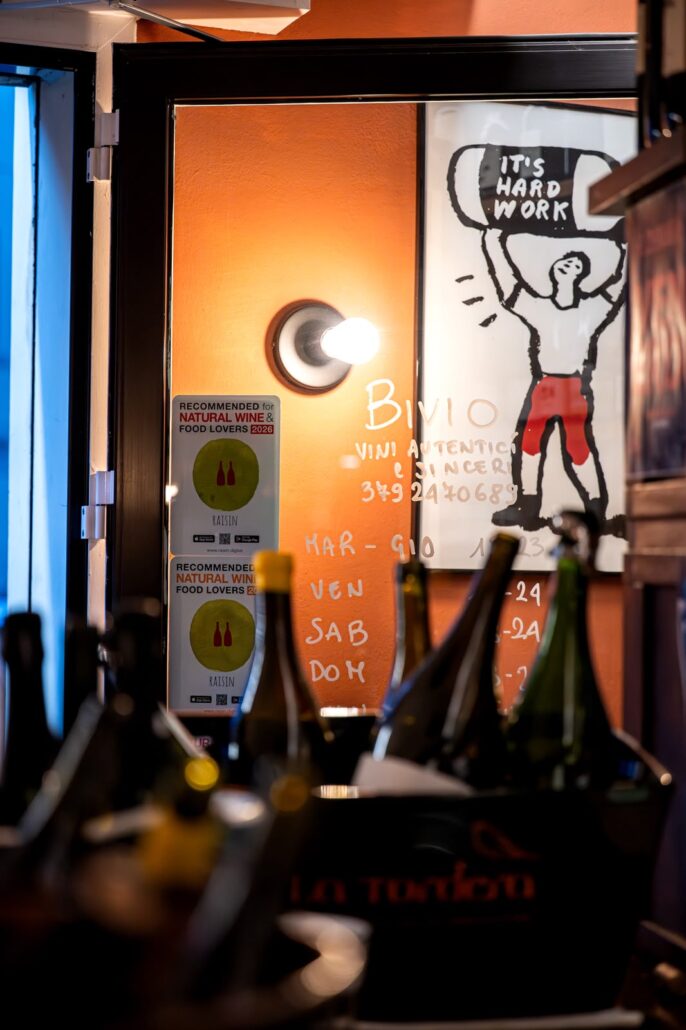
“I’m not used to being interviewed,” Lorenzo admits straight away. He feels more comfortable talking about his work than about himself, almost as though Bivio comes before everything else. After all, for him, Bivio “has always been, and still is, a labour of love”.The name Bivio, meaning crossroads, comes from a junction that holds symbolic significance as well as marking its geographical location. Situated on the slope where Via Saragozza and Via Urbana meet, the wine bar opened in June 2022, run by Lorenzo and Davide Avati. A year later, their paths naturally began to diverge: Lorenzo took over the running of Bivio entirely, while Davide decided to pursue a different kind of venture, opening Scovami a few months later.
His passion for wine developed alongside, but independently of, his professional career, which has taken him through a variety of settings, some more formal than others. He recalls attending a natural wine tasting with his father. That was what first sparked his interest, which he went on to nurture and deepen through his own independent study. The wine closest to his heart is Terre Silvate by Corrado Dottori, whose books he had read long before ever tasting his wines. “When I finally tasted it, everything fell into place. It all came full circle.” Bivio came into Lorenzo’s life partly by chance, and has been an integral part of it ever since. He is determined to keep it a place for people to meet and spend time together, somewhere that opens doors and brings people closer. Away from social media and untouched by passing trends, Lorenzo proudly describes it as “a little outside of time”, yet perfectly in tune with the life he leads and the things he loves today.
Drogheria delle Api
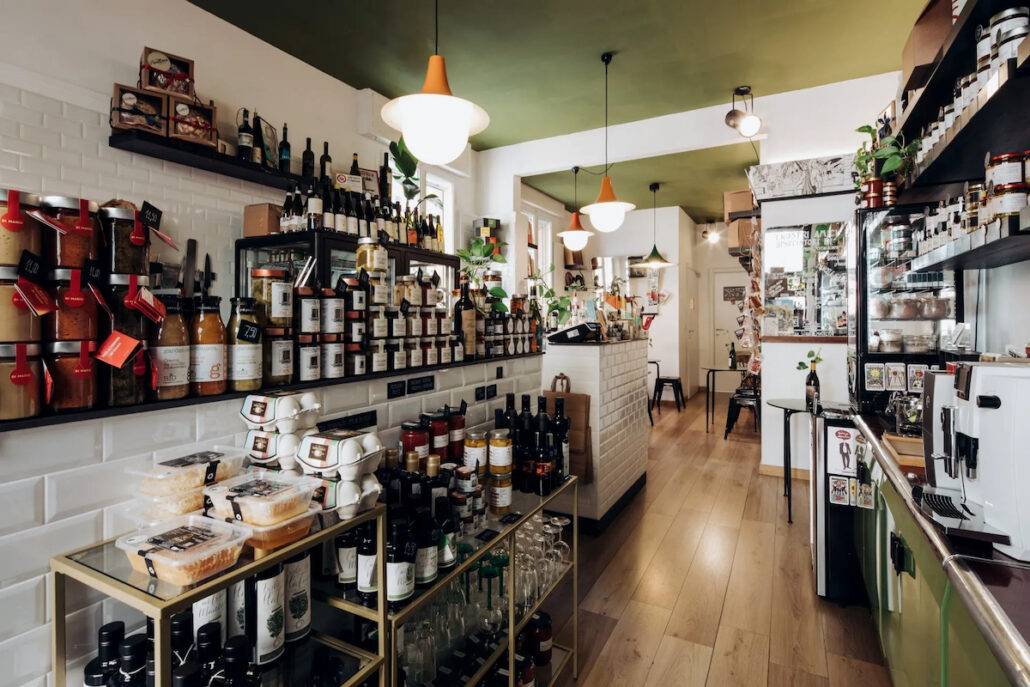
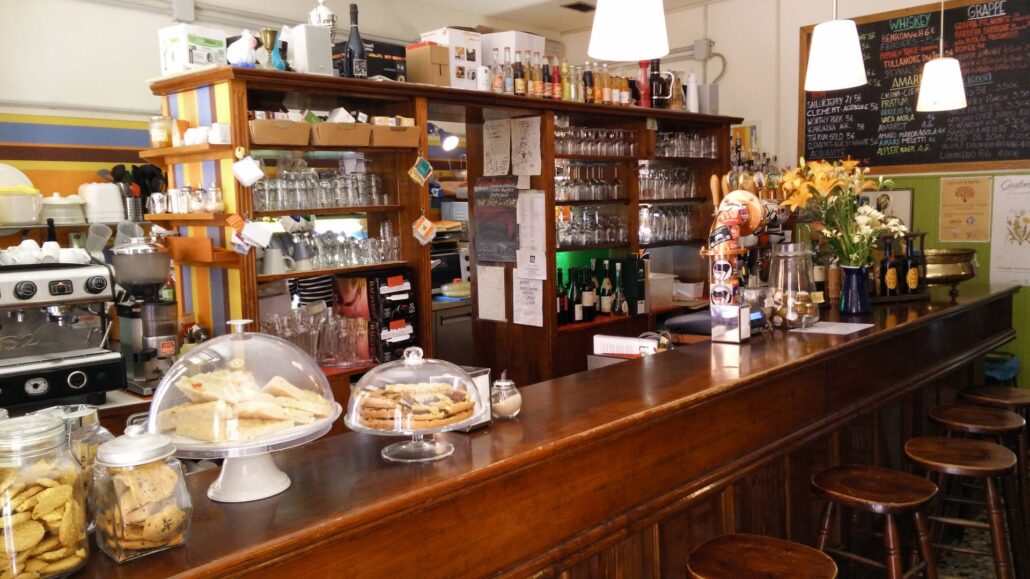
Drogheria delle Api has three faces, each reflecting a different side of the business: Angelo looks after the guests, Iacopo Gerussi takes care of the wines, and Cristina Moscuzza oversees the selection and service of food. Angelo and Iacopo first met while working front of house at a restaurant in Bologna. They quickly recognised their shared passions and became friends almost immediately. Around the same time, Angelo’s path crossed Cristina’s. Another spark, another kindred spirit who shared his ambitions and would also become his partner in life. With their goals aligned, Angelo, Cristina and Iacopo decided to embark on a venture together. They spent two years searching for the right premises, only for the pandemic to arrive, bringing fresh uncertainties and forcing them to rethink their plans. Drogheria delle Api eventually opened in 2021, in the Murri neighbourhood, a leafy residential area not far from Bologna’s city centre. Angelo’s enthusiasm is unmistakable when he talks about the neighbourhood, which is, in fact, where most of their customers come from. As we sit together, almost everyone who walks past greets him with a smile or a wave, a testament to the genuine relationships he has built over time with the people who live and work nearby. “We started out with an idea, but then the drogheria took on a life of its own and found its own way.” What began as a shop where people could buy groceries has evolved into somewhere to spend an entire evening, treat yourself to breakfast at the weekend or simply stop by for an afternoon snack. “We’ve rediscovered the time and passion for exploring and discovering new things, the very curiosity that first drew us into hospitality, but which the relentless pace of restaurant work had made almost impossible to pursue.”
Angelo tells me about some of the producers and suppliers who have become close friends over the years. He lingers over the stories of how they first met, choosing his words carefully, such is the affection and respect he feels for them. He readily admits how much he has learnt from Cristina and Iacopo, both exceptionally skilled in their respective fields. A graduate of ALMA, Cristina has worked in both bakeries and pastry kitchens. A knowledgeable and passionate researcher with a keen eye for quality, she looks after the selection of products on the shelves as well as the preparation of food. Iacopo brings a wealth of knowledge and experience in wine, which he shares with sensitivity and empathy whenever he tells the story behind a bottle. Drogheria delle Api still thrives on word of mouth and the energy of a neighbourhood they feel very much part of. Not even Angelo knows what the future holds for Drogheria delle Api, but one thing is certain: they are happy with what it has become.
Scovami
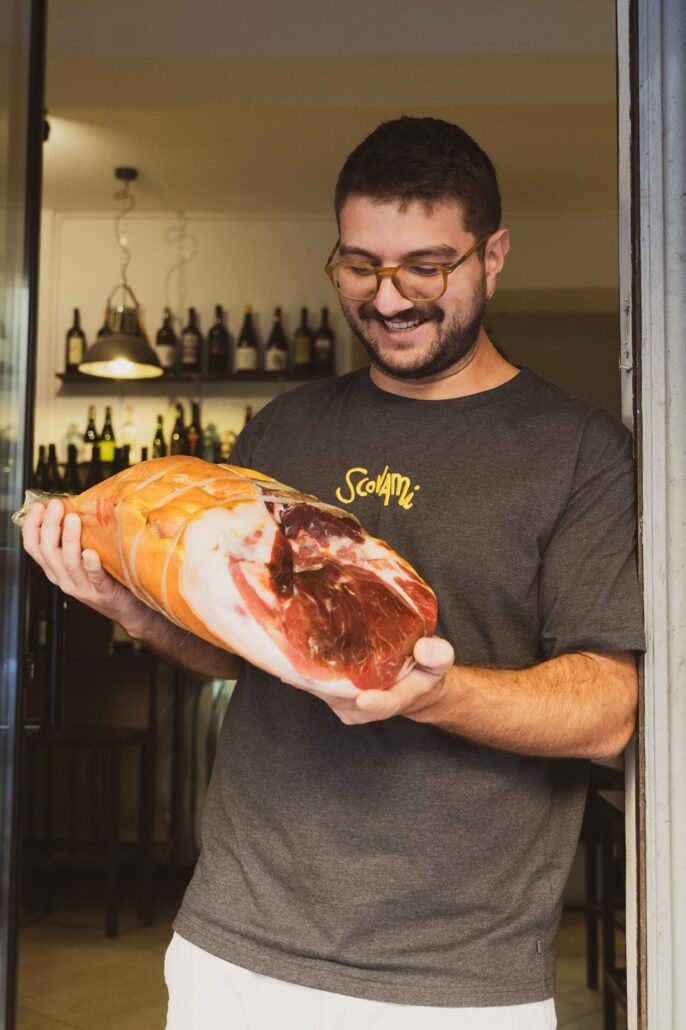
Davide is the youngest of these five wine bar owners, yet his maturity and experience give him a clear vision and a refreshingly straightforward way of communicating. He opened Scovami in November 2023 with the aim of bringing together a delicatessen, a food shop and a wine bar under one roof. It was the kind of place he himself had felt was missing, somewhere you could find an abundance of exceptional products all in one place. He chose Via Castiglione, a street known for its independent businesses, with which he has built relationships based on mutual respect and trust.
As he tells me about the opening, a table of customers calls him over, eager to tell him about their upcoming travels. He returns to his seat, only to step behind the counter a few moments later to introduce some cheeses that have just arrived. In both situations, his expertise shines through. He moves with confidence, engaging with people and weaving his own experiences of a particular food or the producer behind it into his descriptions. In fact, Davide personally visits almost all the artisans he buys from. He asks them to recommend other producers in the area, building a network of connections on a small scale, which he then brings back to Bologna and onto the shelves of Scovami. Davide is reserved and composed, until the conversation turns to Etna. The moment he mentions this part of Sicily, emotion takes over. Every slope of the volcano seems to bring back memories of a place that has become a second home to him. He smiles, pauses, and considers which female producer to tell me about or which wine to describe. I’ll borrow his own words: “What fascinates me is discovering how the same work is carried out in different parts of the world, under completely different conditions. There are a thousand different nuances, and every one of them is valid.” Davide has a remarkable ability to convey all this complexity from behind the counter at Scovami.
LOrtica
It was 2010 when Andrea opened the doors of LOrtica with three business partners on Via Mascarella, in the heart of Bologna’s university district. “It wasn’t easy at first,” he admits. “Groups of twenty students would come in asking for cocktails or shots, and we’d firmly tell them we didn’t serve either.” From the very beginning, LOrtica was defined by its refusal to compromise, driven by both a desire to challenge expectations and a determination to prove itself. Initially, craft beer took centre stage, thanks to the chance discovery of a beer tap already installed on the premises. But wine, Andrea’s “first love”, soon found its way back, eventually becoming the driving force behind the business. They began organising tasting evenings to reintroduce customers to the drink that had inspired the whole venture in the first place. A few months later, a space became available across the street, next to their storeroom. The partners unanimously agreed that the time had come to take another step towards their original vision. They rented the premises and named it Bottega de LOrtica. The offering at LOrtica and Bottega de LOrtica revolves around three pillars: natural wine, craft beer and a small kitchen serving seasonal produce. “No tomatoes in December,” Andrea sums up. Sixteen years on, Andrea could proudly claim to have won that bet, but that’s not really what matters to him. What gives him satisfaction, even though he never feels he has quite arrived, is having created a place where he can grow, keep exploring and learning, and still genuinely enjoy turning up to work.
Andrea loves sharing his knowledge and has recently discovered a passion for teaching through Socmelier, a course designed to introduce people to the world of natural wine. The name is a playful blend of soccia, a typically Bolognese exclamation of surprise, roughly equivalent to sorbole, and the word sommelier. The idea is to make natural wine approachable and accessible to everyone, both in terms of price and the language used to talk about it. No previous knowledge is required; what matters more is a willingness to have fun, get involved and try something new. Socmelier is now in its fourth year, with a growing number of participants. And alongside Andrea, behind the counter, is Lorenzo Musi of Bivio.
Andrea feeds his passion for wine, particularly skin-contact wines, by travelling whenever he can. He believes that the starting point is always getting to know the place you come from, although for him, that means more than one place. Born in Imola, he has lived in Bologna for many years, but also considers Sardinia a second home, thanks to his family roots. His enthusiasm is infectious. He tells me how Nebbiolo changed his life, how he and Eduardo, his friend and colleague, listen to Extraliscio at the end of the evening, before switching to Massive Attack’s Protection to slow things down on the way home. LOrtica was ahead of its time when it first opened, and has remained true to itself ever since. Andrea describes it as a neighbourhood bar. Could this be the very kind of welcoming, unpretentious atmosphere we were wondering whether it was still possible to find?
If building a sense of community is the way forward, these wine bars recognised the need long before anyone started talking about it. Santé!