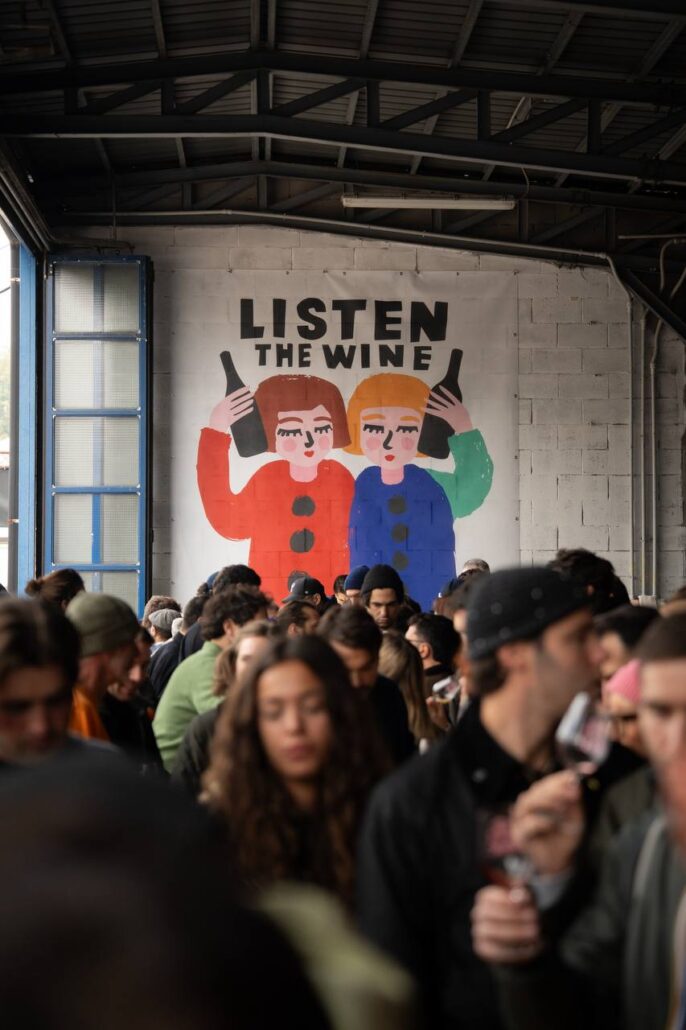
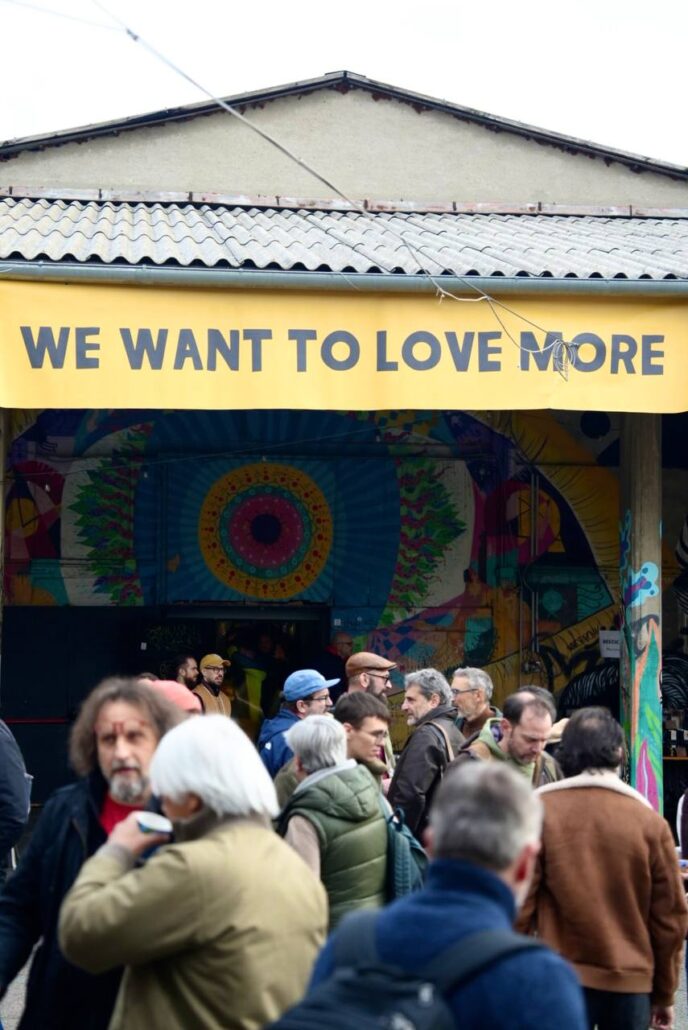
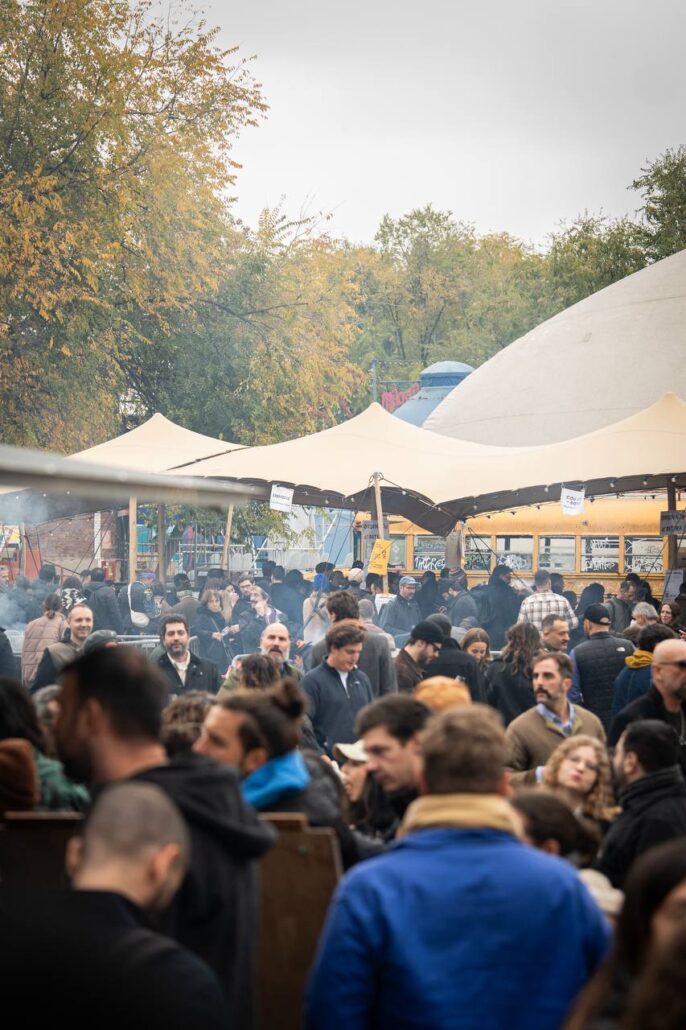
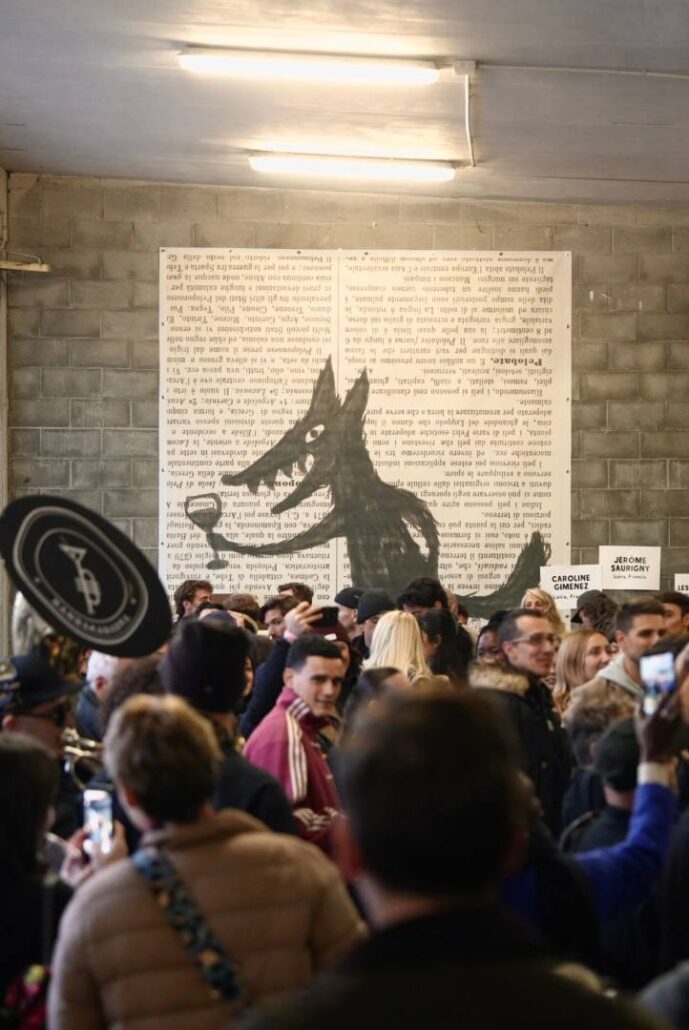
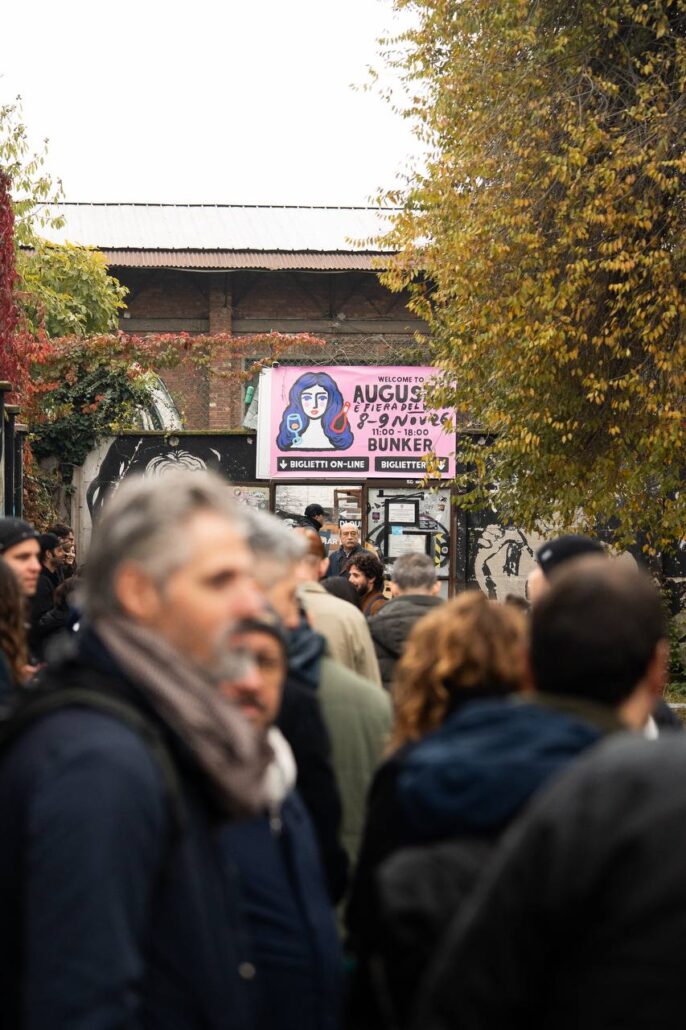
By now, it’s become something of a fixture. Every November, a trip to Turin means one thing: Augusta, the natural wine fair. It’s set in the calendar, with the ‘repeat every year’ box firmly ticked. We knew it from the very first time we set foot in the Bunker, Turin’s urban cultural centre, which has hosted the event since day one. And judging by the crowds gathered around the stands again this year – wine lovers on Sunday, industry professionals on Monday – we’re clearly not the only ones. Around 4,200 people attended over the couse of two days, including 1,300 accredited trade visitors.
Now in its fourth edition, Augusta has managed to build a genuine community, one that has come together and grown with a sense of ease and authenticity that feels increasingly rare these days. And it all starts on the other side of the tasting table. Ask a group of vignerons about Augusta and many will tell you it’s one of the fairs they genuinely look forward to attending, not just for the atmosphere, but for the people it brings together and the chance to spend time with one another. At a time when making a living from the land is becoming increasingly difficult, being able to exchange ideas with those facing the same questions and recognise something of your own work in theirs is extremely valuable.
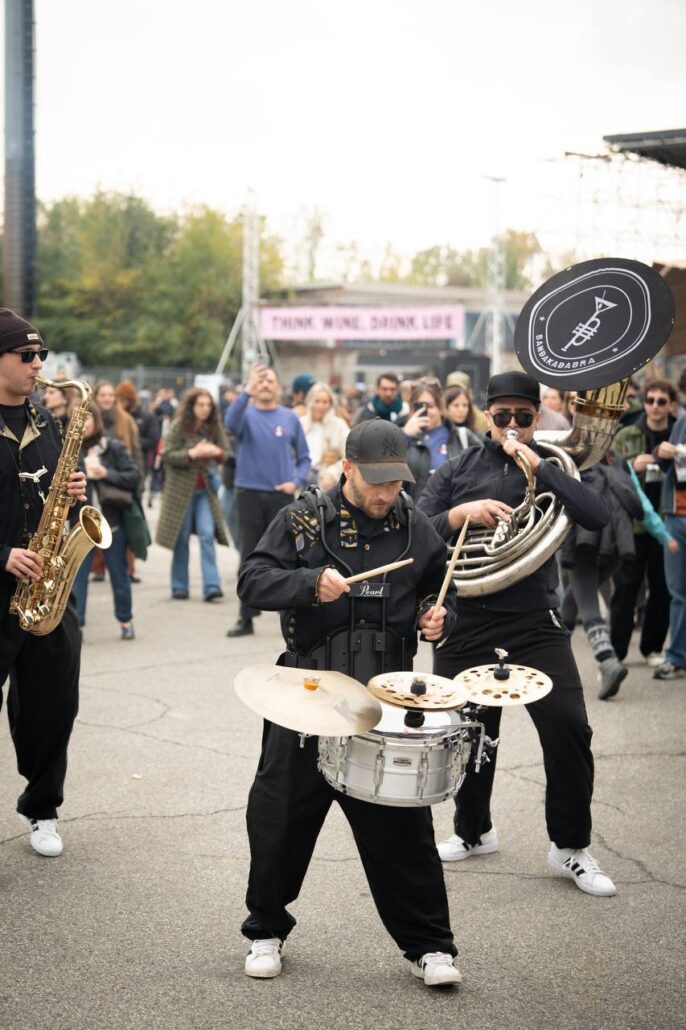
Of course, people come to Augusta for the wine, but also to catch up, to taste, to learn and to meet new people. And, why not, to have a little dance to Bandakadabra, the “techno marching band” that makes its way between the tasting stands at various points throughout the day. For a moment, everyone puts their glass down, jumps about and smiles before getting back to tasting. Just another sign of a fair that doesn’t take itself too seriously.
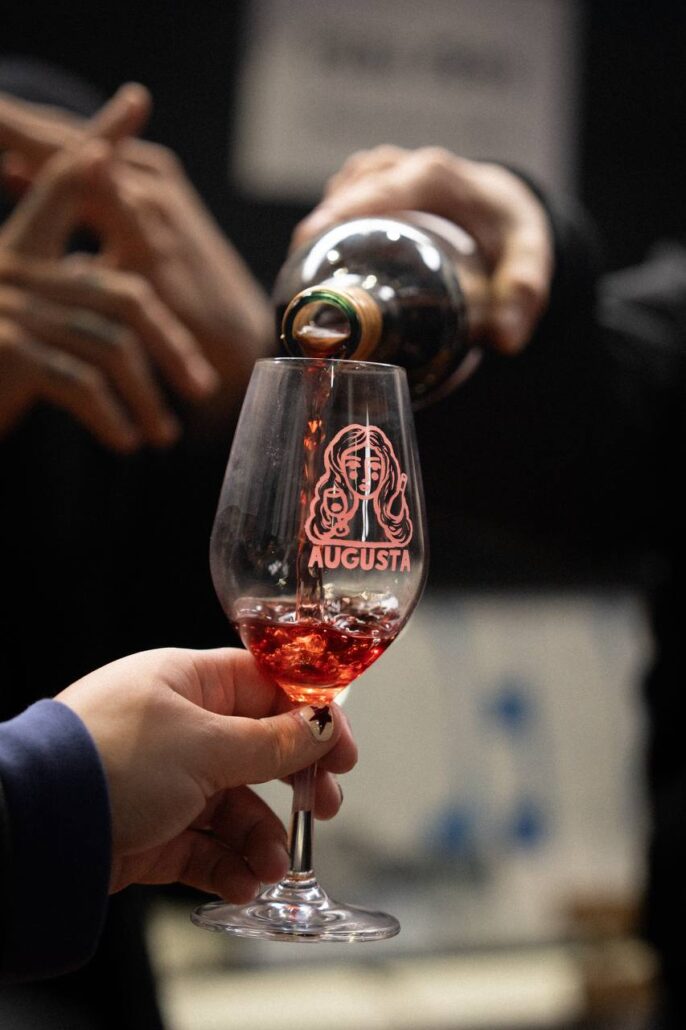
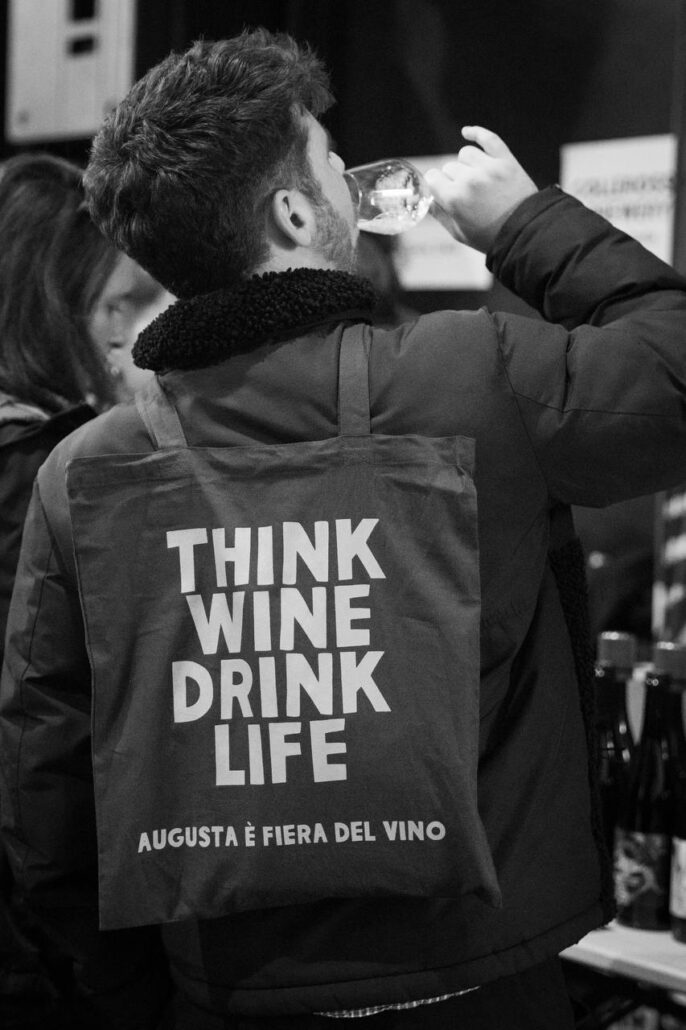
There are no sales targets at Augusta, no endless queues, and no chance of getting bored. There’s time to ask one more question, discover a new producer and somehow end up taking home more bottles than your suitcase can possibly hold. Then, one day, back home with friends, you may open one of them and remember the conversation with the person who sold it to you, the story behind their work and the thinking behind certain choices. As you pour the wine, you find yourself passing that story on to the people around the table. The bottle becomes a kind of “liquid word of mouth”, bringing those who make wine closer to those who drink it, while offering a tangible sense of what it means to produce wine naturally, ethically and responsibly today.
So, who did we meet this year at Augusta?
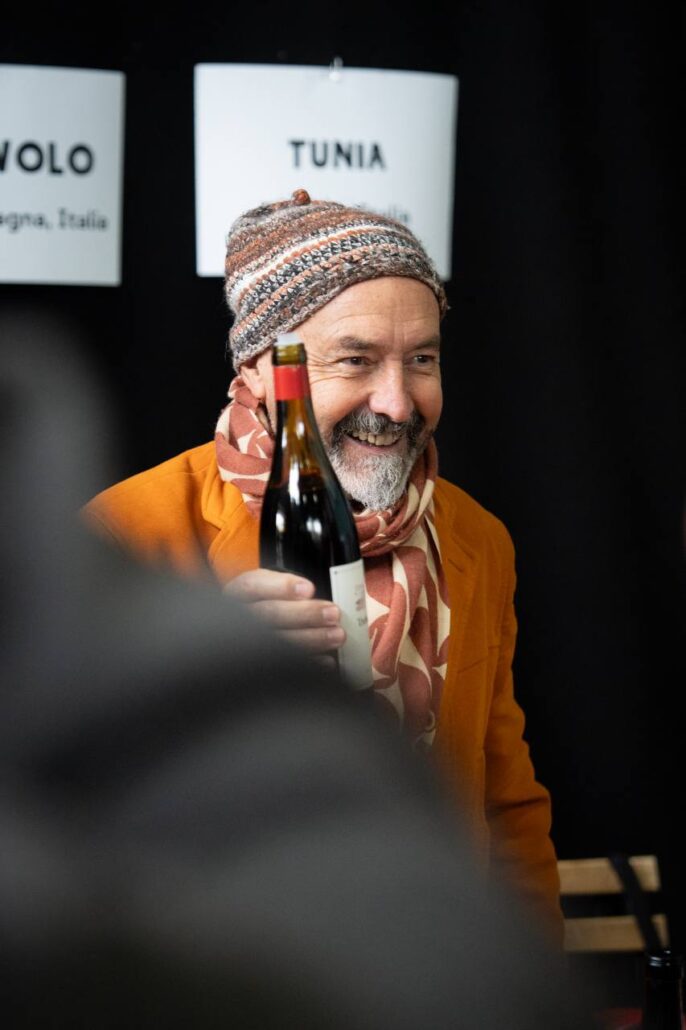
Of the 98 producers exhibiting this year, 62 came from outside Italy. The French contingent was particularly strong, and one of the things we love most about Augusta is precisely this: how often do you come across 44 French exhibitors at an Italian wine fair? There was plenty of ground to cover among the Italian producers too, from Friuli to Pantelleria, with Sardinia along the way. Another highlight this year was the Austrian presence, with seven wineries taking part and a particular focus on Styria, the ‘cradle’ of Austrian natural wine. From there, the journey continued through Germany, Slovenia and Switzerland, as well as Hungary, Spain and Portugal.
The beauty of such a mix is that you can move from one stand to the next, tasting wines that are worlds apart, yet discovering a shared approach to working in the vineyard and caring for the land. We’ll be taking a closer look at some of the lovely people we met and their wines in upcoming instalments of Augusta Stories – Cook_inc.’s column dedicated to the stories of this ever-growing community.
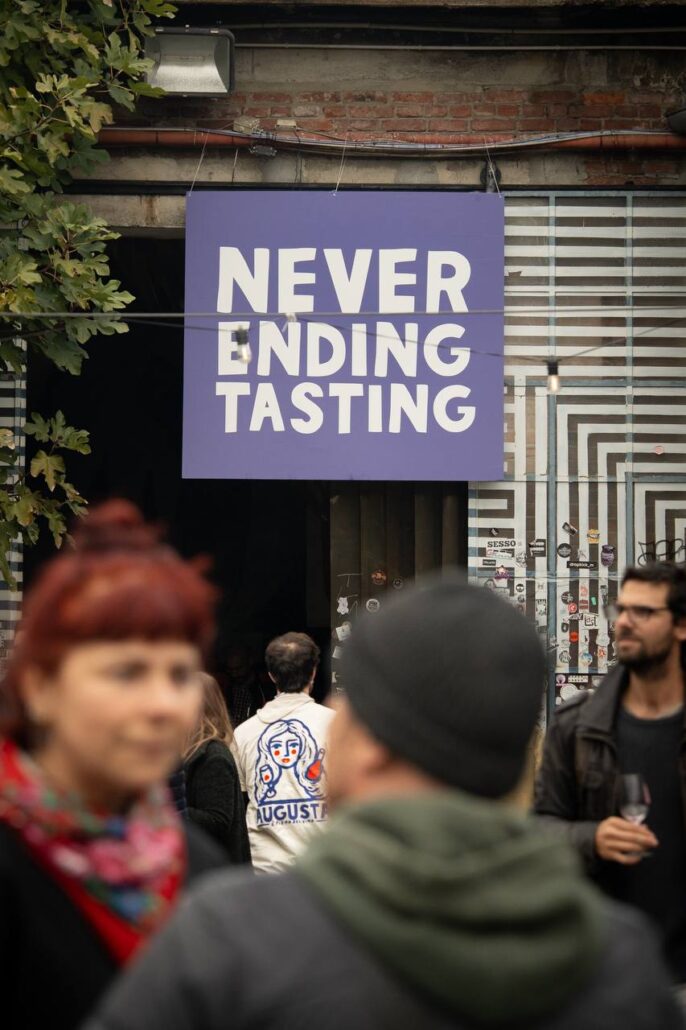
But Augusta is also a fair that makes space for culture, something that perhaps matters more than ever today. Some of the questions that come up in conversations between the stands also find their way into the talks scheduled over the two days. For now, they may attract a smaller audience, but the fact that the organisers dedicate time and space to them says a great deal about the importance they place on reflection, alongside the pleasure of coming together.
During the talk “Wine According to Augusta”, moderated by Eugenio Signoroni, Elena Pantaleoni (La Stoppa), Franz Strohmeier (Strohmeier), Alice Feiring and Nicola Perullo discussed how the world of natural wine has changed and what it means to be part of it today. Feiring looked back to the 1990s, when many winemakers were simply trying to reclaim their own way of making wine. The adjective “natural” came later, along with the movement’s growing popularity and a certain fashion for funky wines, which ultimately blurred the distinction between an agricultural choice and a matter of taste. Perullo, meanwhile, turned his attention to the act of tasting itself: if we care about the attention and care that go into making a wine, how much attention do we give it when we actually drink it?
For Elena Pantaleoni, the nature of these exchanges has changed over the years too. Twenty-five years ago, she says, what she needed most was to find other vignerons who had made similar choices to her own. Today, she wants to open up the winery and welcome influences from other craftspeople too, whether they make bread or cheese, for example. The idea is to share experiences and learn from one another’s work. For her, supporting agricultural work also means offering practical, material help to young people who want to start making wine. Faced with the difficulties currently affecting those who work the land, changing our habits is a first step, but Pantaleoni believes collective action is essential. She never imagined she would have to speak out publicly herself, yet today she feels more strongly than ever that people need to become activists. And that is where the conversation takes on a political dimension too.
Strohmeier, meanwhile, brought the discussion back to the winery, explaining how, over time, he has let go of his own ideas about what his wine should be. His role, he says, is to “guide it while allowing it to develop a personality of its own, a bit like raising children.” Once the wine reaches the table, what happens around the glass matters too: how we perceive a wine is shaped not only by what we drink, but also by what we eat and the people we share it with.
While the adults taste and debate, younger visitors have a space of their own too. It’s called Augustina, a programme for children aged six and over, featuring a workshop on saving grapes and another in which they can create their own fanzine. It’s another indication of just how broad Augusta’s idea of who belongs at a wine fair really is.
In fact, the cultural programme begins even before the doors of the Bunker open. On Saturday, a group gathered on the steps outside Libreria Luxemburg, in the beautiful Galleria Subalpina, to hear Rachel Signer present her latest book, Bere il vino naturale (Slow Food Editore). Written for those approaching the world of natural wine for the first time, it offers a way in without getting lost in technical jargon. In the months leading up to the fair, the series of events Il sapore vero delle cose non esiste had already brought people together for conversations around the city, taking the discussion well beyond wine. If we’re interested in how something is grown, who is behind a bottle and what choices we make when buying it, surely the same questions are worth asking when faced with a bar of chocolate or a cup of coffee. And that’s when you realise that chocolate, wine and coffee, when produced with the same principles in mind, have far more in common than you might think (we explored this in more detail here). The same thread leads us back to the fair, to the Augusta farmers’ market, where bread, dandelion honey, cured meats, cheeses, baked goods, preserves, mustard, vinegar and even sweets all reflect, in their own different ways, a shared approach to work and to the land.
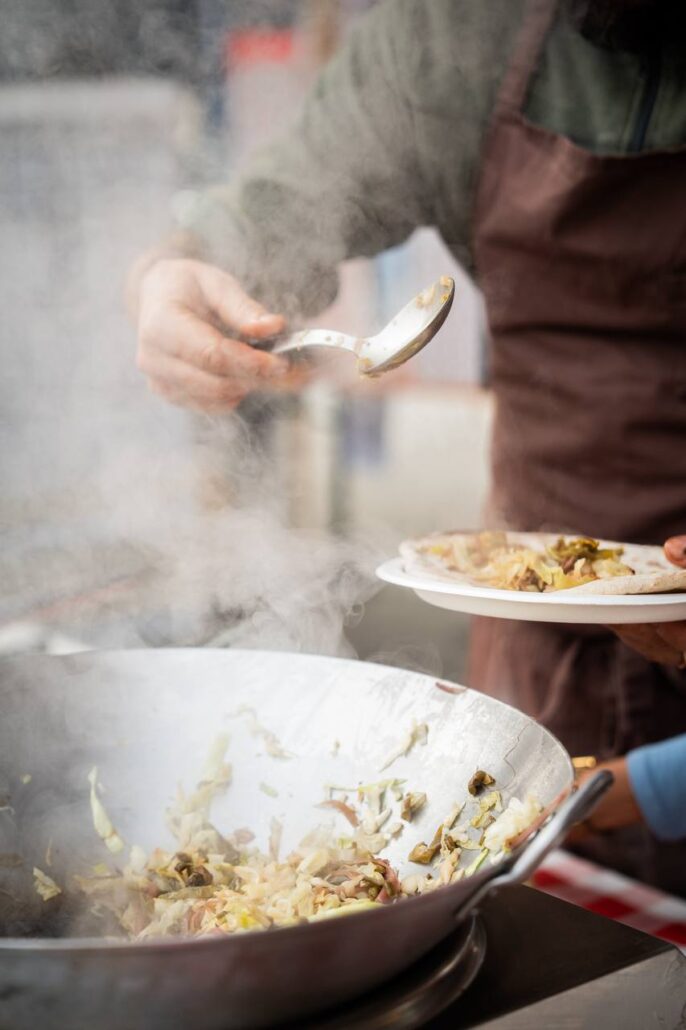
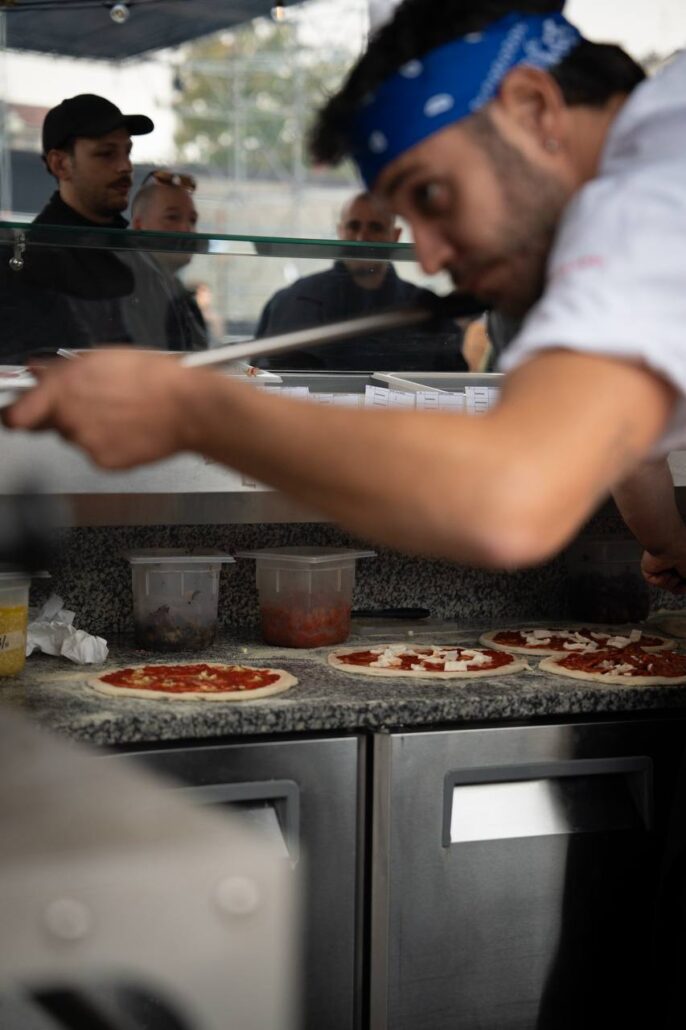
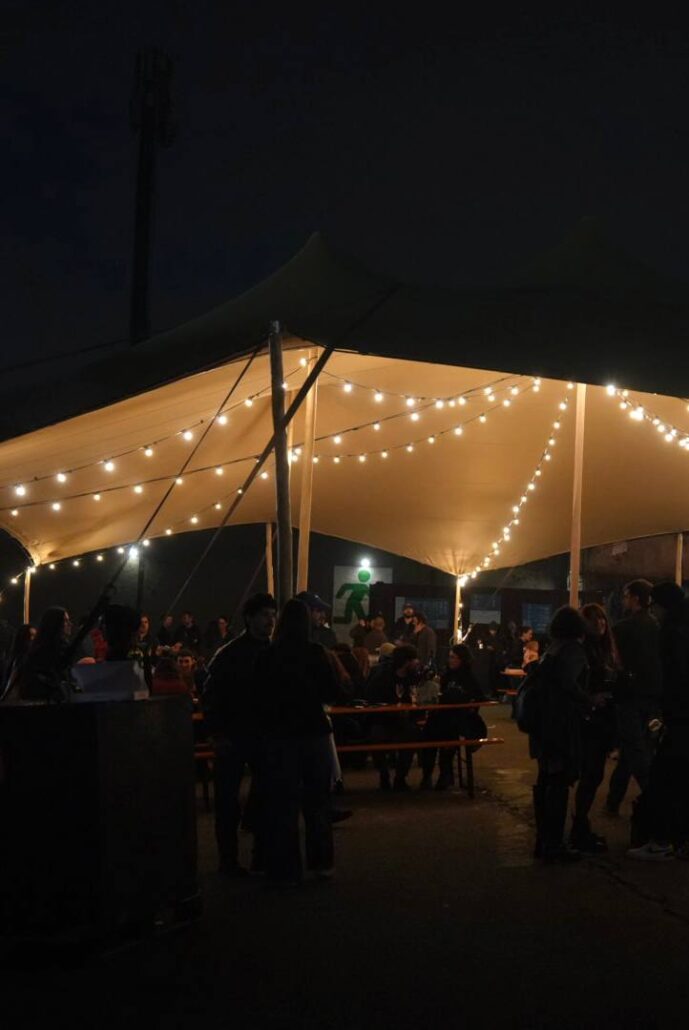
And if the wine at Augusta is good, the food is every bit as appealing. The food area is another part of what makes the event such a success, with a selection process guided by the same care and attention given to the winemakers. This year, between tastings, visitors could enjoy Juri Chiotti’s (REIS) free-spirited mountain cooking, including his sheep’s meat pita burger (an impressive 600 portions were served on Sunday alone), as well as arrosticini and roasted chestnuts. There was pizza from Berberè, plant-based dishes from Erbavoglio, and stuffed pockets from La Tasca di Billi, a project by Genoa-based bakery, featuring flatbreads open on three sides and filled with a variety of ingredients. Rounding things off were the offerings from Turin-based, French-inspired bistro Cou Cou. Yet another good reason to spend the whole day at the Bunker without even noticing the hours go by.
And finally, in the days surrounding the fair, there’s also Augusta Sboccia – roughly, “Augusta pops bottles” in Italian. Vignerons are hosted by wine bars across the city, giving rise to something of a pub crawl: not a term you hear all that often in the wine world, but one that works perfectly here. Because, after all, this too is culture: sharing a bottle, having a chat, exchanging a smile. Meanwhile, the Augusta community keeps growing. Who’s going to stop it now?
Save the date. We’ll see you (again) in Turin in November 2027.