Well, well. A young chef from Viterbo has opened a restaurant in Reggio Emilia. It’s not a traditional trattoria, not a pizzeria, and certainly not a smash-burger joint (should that metropolitan craze ever make its way to the Emilian provinces). The place is called Gilioli – though, oddly enough, the name has nothing to do with the chef’s surname, nor with his grandmother’s.
The restaurant sits on one of the prettiest streets in the historic centre. Until recently, the space was home to Interno Tre, one of the city’s pioneers of plant-based dining. Now the menu speaks a different language: a kind of culinary creole born where French technique, Emilian tradition and fine-dining precision intersect – though never in a mannered or self-conscious way.
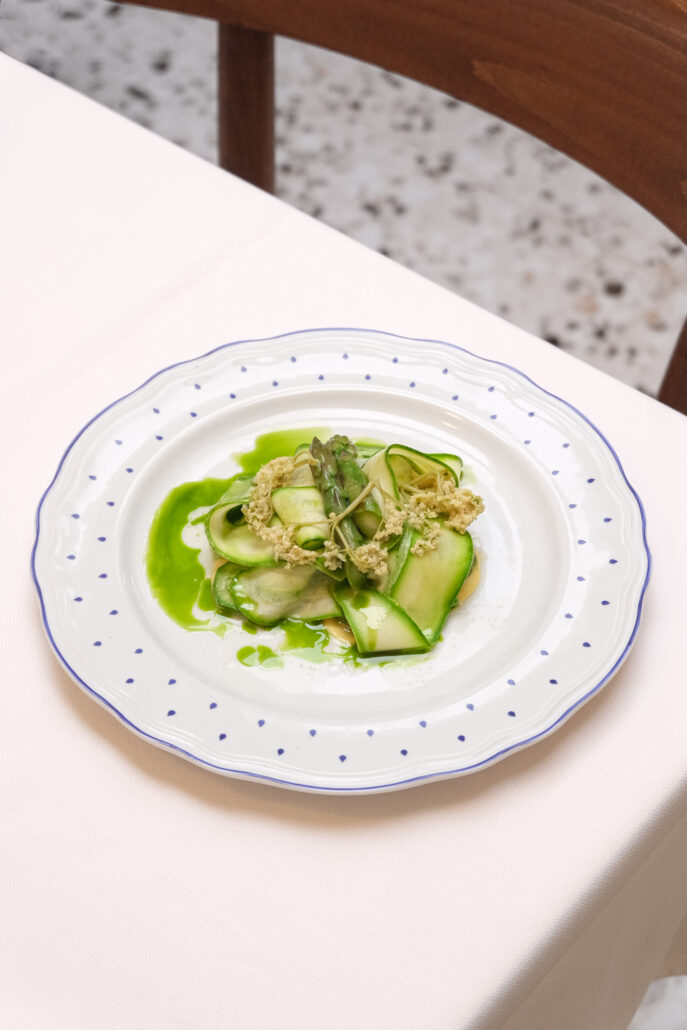
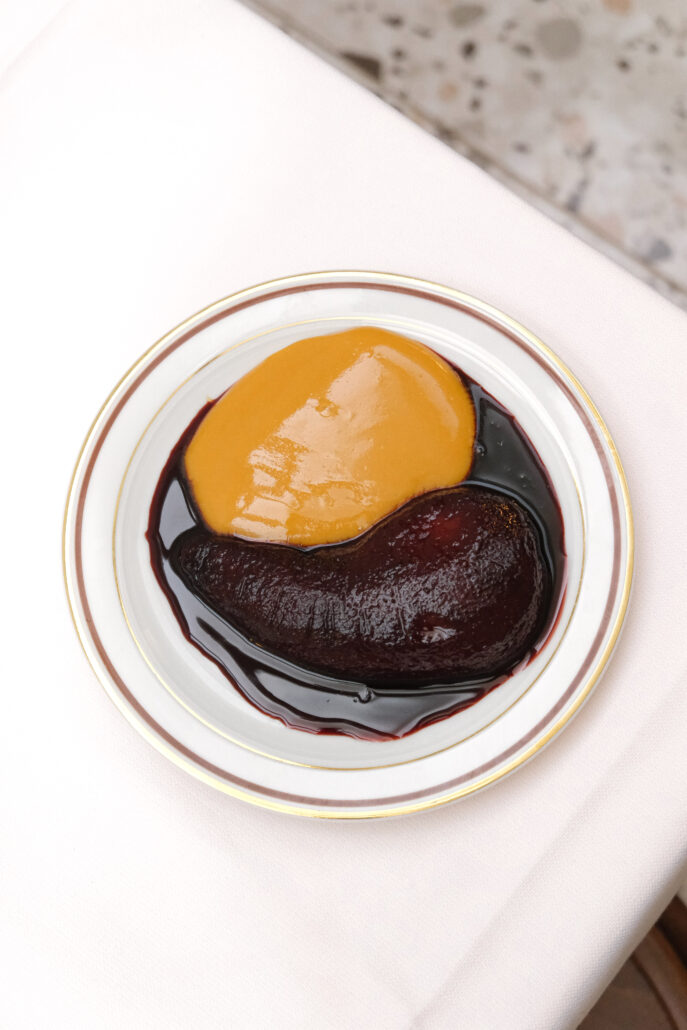
There are cured meats from the Po Valley served with focaccia; picanha bresaola with roasted peppers and lemon; green beans with Vesuvian apricots and capers; thin tagliatelle with dried porcini mushrooms; saffron risotto enriched with smoked beef fat; and tortelli verdi. Then come dishes such as a cutlet that loosely riffs on the Bolognese classic; glazed pork ribs with charred onion; entrecôte of beef with its own reduced jus; sweet-and-sour onions glazed with balsamela; Pantelleria-style tomatoes; pears poached in Lambrusco with zabaglione; and a date cake with nectarines.
Which raises a question: what exactly has happened in Reggio Emilia, a city long regarded as one of Italy’s strongholds of gastronomic conservatism?
To be fair – before anyone accuses us of exaggerating – it’s worth noting that Reggio Emilia has not been standing entirely still. Over the past couple of years, a handful of genuinely contemporary openings have appeared across the city, joining a small but growing group of noteworthy addresses beyond its historic dining establishment. Take Damatosteria, for example, whose profile rose considerably after receiving the social-media seal of approval from chef Matias Perdomo and attracting attention well beyond Emilia.
I ask Guglielmo Chiarapini what brought him to these parts in the first place. “Honestly, it was pure chance,” he says. “What I do can be done pretty much anywhere. My partner and her father are pharmacists, and when they won a tender to open a pharmacy in Reggio Emilia, we moved here. The local food culture is deeply rooted and diners can be quite set in their ways. But then again, I come from Rome, it’s not as if customers think all that differently. What changes is the cuisine, not the people. In recent years, some interesting projects have started to emerge around here,” Chiarapini continues. “Places like Bar Futura, or the team behind Bar Versini, who spent a while operating as a roaming project before settling into Locanda La Concia.”
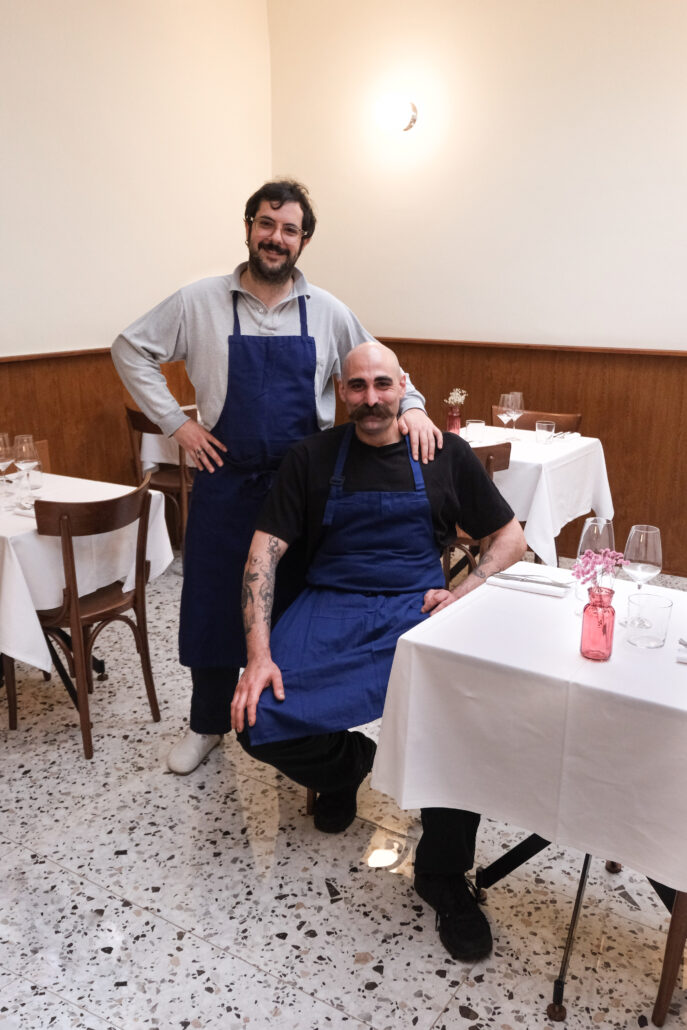
Guglielmo Chiarapini is 35 years old. Born in Rome and raised in Viterbo, he has always worked as a chef. First came Milan, in the brigade of Signor Marchesi. Then France. He returned to Italy to join the team of Valeria Piccini at Da Caino in Montemerano. “I stayed there for six years. That’s where I met Andrea Bertolino, who is now my sous chef at Gilioli, and where I went through every step of the ladder in a Michelin-starred restaurant – from stagiaire to Valeria’s sous chef during my last two years there.”
After Maremma he returned to Rome, joining the kitchen at Marzapane, where he spent three years working side by side with Francesco Dolcetta. “It was with Francesco that, after leaving Marzapane, we founded FEG – Francesco e Guglielmo – a pop-up project that took us all over the place, even a couple of years before guest appearances and four-hands dinners really took off.” That was in 2022 and continued until quite recently, before the opening of Gilioli.
When Reggio Emilia presented itself as an opportunity, Guglielmo was at ease with the idea. Opening a restaurant remains part of the natural trajectory of every chef, he tells me. And, in the end, it was something he wanted to do. “I called it Gilioli partly as a nod to the character of the place, and partly because, while researching the history of the neighbourhood, I discovered that this part of the city was once known as Contrada Gilioli-Blasmatorti.” Blasmatorti remains the name of the restaurant’s street today.
In a sense, Gilioli is coming home. It does so with simplicity, and without the layers of formality or self-importance that someone with a long career in fine dining might have been tempted to bring along.
“I felt the need to create a style of cooking that stripped away the unnecessary – something democratic, both in price and in its ideas. I firmly believe that cooking is about technique, craft, and the skills of a chef placed at the service of the guest. Every now and then, a chef who is also a thinker comes along, of course. But I don’t believe that practising this profession automatically makes you a genius. Generally speaking, chefs are not philosophers.”
Perhaps that is one reason – along with the fact that it only opened at the end of March 2026 – that Gilioli does not feel tired. It is not one of those places that copy others, go through the motions, or settle comfortably into the habits of a clientele that is, as we were saying, often predictable and attached to routine.
People eat very well in Reggio Emilia. I say that because I was born here and spent the first half of my life in the city. But eating well is not the same as eating interestingly. Here, the focus has long been on tradition and on the quality of the product. In many ways, those are the most valuable foundations imaginable, and for some diners they are all that is needed.
And yet, as we know, the table is not only about sustenance, it is also about indulgence. At some point, contentment alone is not enough. Some days, you simply want to go out and have fun.
Gilioli, then, is a restaurant that is fun – genuinely fun – while also serving very good food.
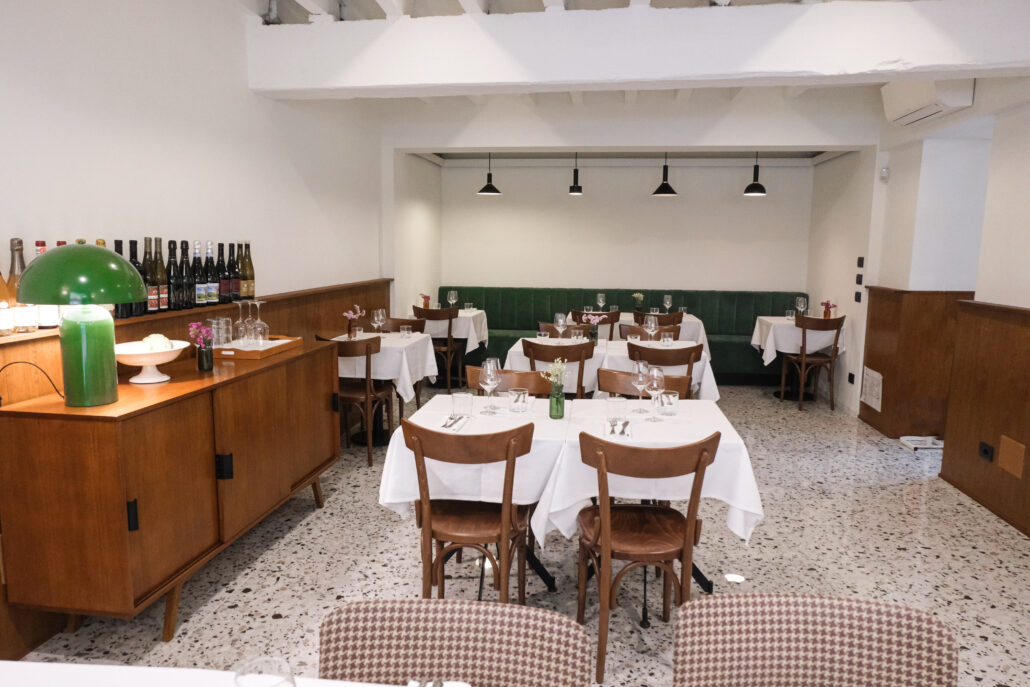
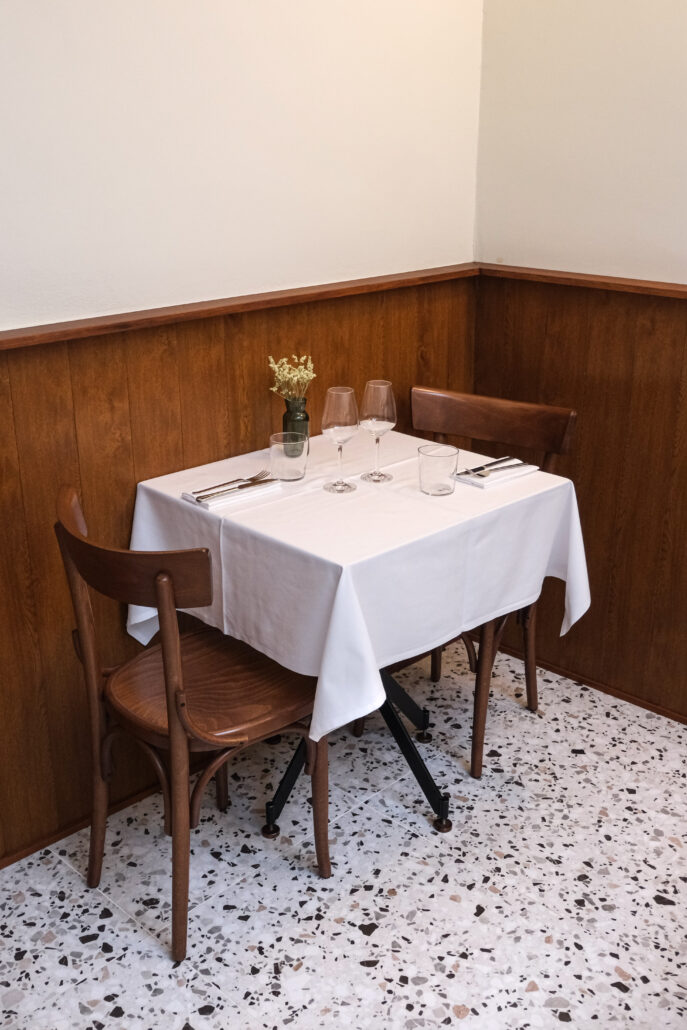
It comes with a strong wine list, and interiors redesigned to nod both to the Italian-style bistro and the neo-trattoria, while being neither one nor the other. The menu is compact enough that a table of four, five, or six can order nearly everything on it. The dishes are meant to be shared, of course. And that, in a way, was the missing piece in Reggio Emilia – not even a trend anymore, but a dining format that elsewhere has already become a given. Let’s just hope it doesn’t immediately spawn a wave of imitators, and that everything here doesn’t suddenly turn into a sharing economy. One would like to think that the provinces can still be relied upon to surprise us.
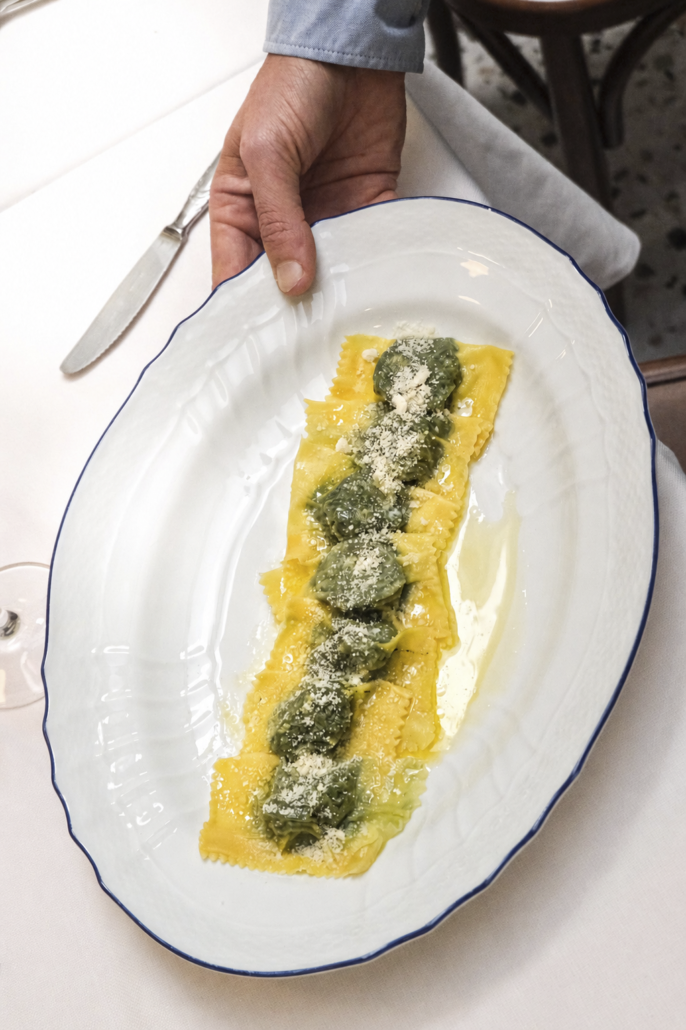
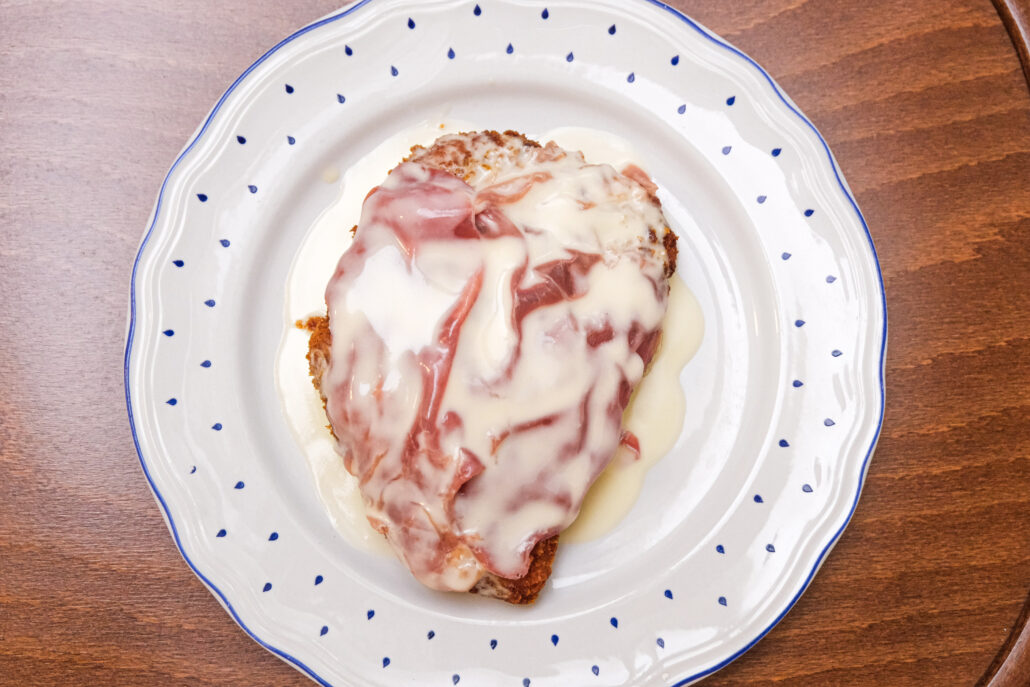
In the meantime, Reggio Emilia has welcomed Gilioli with open arms. “We’re almost full every night. Maybe it’s precisely because we’re not a traditional restaurant, while still offering a couple of familiar reference points that help people feel comfortable and find their bearings. The Tortelli Verdi are hugely popular, but so is the Quasi Petroniana – there’s hardly an order that doesn’t include it.” The former is the fresh pasta dish of Reggio Emilia, and Guglielmo’s version is genuinely excellent (perhaps the pasta is rolled a little too thinly, though I should admit that I come from the mountains, and opinions on tortelli are never entirely free from matters of the heart). The latter, in fact, is a Bolognese dish. It found its way onto the menu because of a rather amusing misunderstanding.
“I thought it was common throughout Emilia! Then I realised it’s really a Bologna-Bologna dish. No matter: now, even though we make it with pork rather than veal, people from Reggio can come and eat it here instead of having to drive to the regional capital.” It’s very good, and less rich than the classic Bolognese version. Which is something to be grateful for during a long, multi-course dinner.
Yet this does not seem to be the real secret behind Gilioli’s strong start. According to Chiarapini, much of the credit belongs to Bertolino.
“Andrea is exceptional with meat, he can stuff just about anything. But it’s not only that. He’s an active and essential part of both the kitchen and the project as a whole. Before I decided to open the restaurant, before I gave myself the final green light, I asked him first. If Andrea had said, ‘No, Guglielmo, I can’t come and be the head chef of your restaurant,’ I wouldn’t have been able to open, because to me he’s an indispensable pillar. It’s not just that he handles most of the prep work, places the food orders and oversees the staff. Every dish at Gilioli is developed by the two of us together. Andrea is an incredibly grounded person, but he’s also one of the best cooks I’ve ever met. And on top of that, he’s a wonderful human being.”
This Gilioli-style structure is entirely consistent with Chiarapini’s lack of interest – or rather, his outright refusal – to build a restaurant around the cult of the chef-owner’s ego.
“I’m not interested in competing, chasing trends, or trying to stand out as much as possible. I just want to do something honest — something that feels true to me — and do it well. If there’s one thing people in provincial Italy can recognise, it’s a genuine willingness to roll up your sleeves and get to work. And to build relationships.”
I couldn’t agree more.
Gilioli, then, already seems to have earned its blessing in the curious world of Reggio Emilia. And for our part, we can’t wait to go back.