The culinary world has a problem with young people. Well, let me correct myself: with those who have just started their professional journey. This issue is shared with the fields of publishing, music, cinema (the list probably could go on, but there are also artistic fields of which I know nothing), all chasing after the prodigy for a sense of laziness when it comes to our own accomplishments. When will we free ourselves from this? The question, in and of itself, sounds like an alarm bell: darn how poorly off we are, if we can’t wait to move on to the next thing, the new input, the new champion.
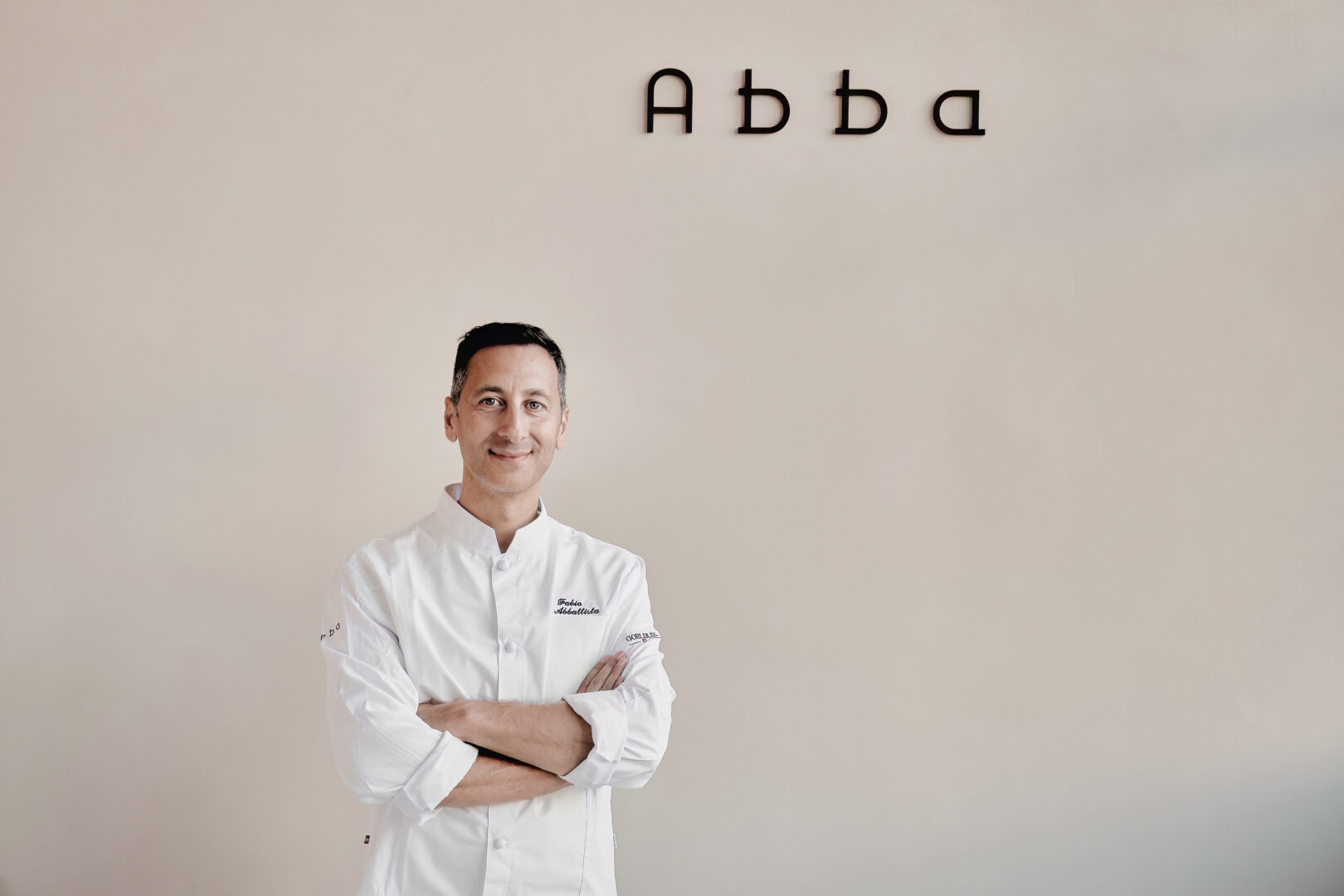
There’s some chatter to be stirred up in all this, providing ourselves and those who will ask us (namely journalists like me and social media users) with some novelty to make the day a success. Everyone must make mea culpa. A good way to start atoning is by treating yourself to the wonder of a dinner at Abba, in the Certosa District of Milan, among Italy’s new Michelin stars. At the helm is Fabio Abbattista, clearly the restaurant’s name is already a signature. This is the first time this has happened. However, Abbattista is about as far from a novice as one can imagine.
Born in 1977 in Molfetta, Abbattista did not come from a culinary background. He started his career at the Institute of Hospitality in Bari, not among the ranks of a prestigious establishment. He then moved to Rome, to the Cavalieri Hilton. The next stop was London, where Stefano Cavallini, at The Halkin, was achieving the first Michelin star for an Italian chef abroad, after receiving the blessing of Gualtiero Marchesi. This was in 1995. Abbattista then navigated within the British capital: he worked at The Square with Philip Howard (two Michelin stars), the legendary Le Gavroche under Michel Roux (two stars), and then Le Spoon, a part of Alain Ducasse’s empire. His return to continental Europe took place in Athens, at the Roof Garden Restaurant of the Hotel Grande Bretagne.
But now it is time to reconnect with home: not Puglia, which Abbattista somehow does not flaunt but infuses into everything, but Milan. Together with Fabio Baldassarre, in 2011 they opened Unico, earning a Michelin star in just six months. Three years later, in 2014, a new journey began: one to Franciacorta, for a once in a lifetime passing of the torch. When Gualtiero Marchesi retired from Albereta, Abbattista took his place. “My connection with Mr. Marchesi is a special memory. I link it to a sense of heritage and responsibility. It is an honor and also a burden, which I have always wanted to express clearly.”
Abbattista also did it in the kitchen: guiding his own direction right from the start, paying tribute in spirit but not in the dish.
This anecdote, subtle yet fundamental, in a way tells everything about this chef who certainly didn’t come from the end of the world, but in a sense, he seems like he did. Abbattista has been taking one step forward after another, always. Without necessarily seeking the obvious move, but especially without shouting too much, during the years of office-stamped artistry and exaggerated events.
And what you find in front, or around you, when you sit at one of the spacious, well-distanced tables at Abba, is a rewriting, of a rewriting, of a rewriting. It’s a meticulous work of refining that resembles a beautiful broth with excellent cuts of meat: in the end, to truly taste the flavor, you have to strain it, leaving out the excess.
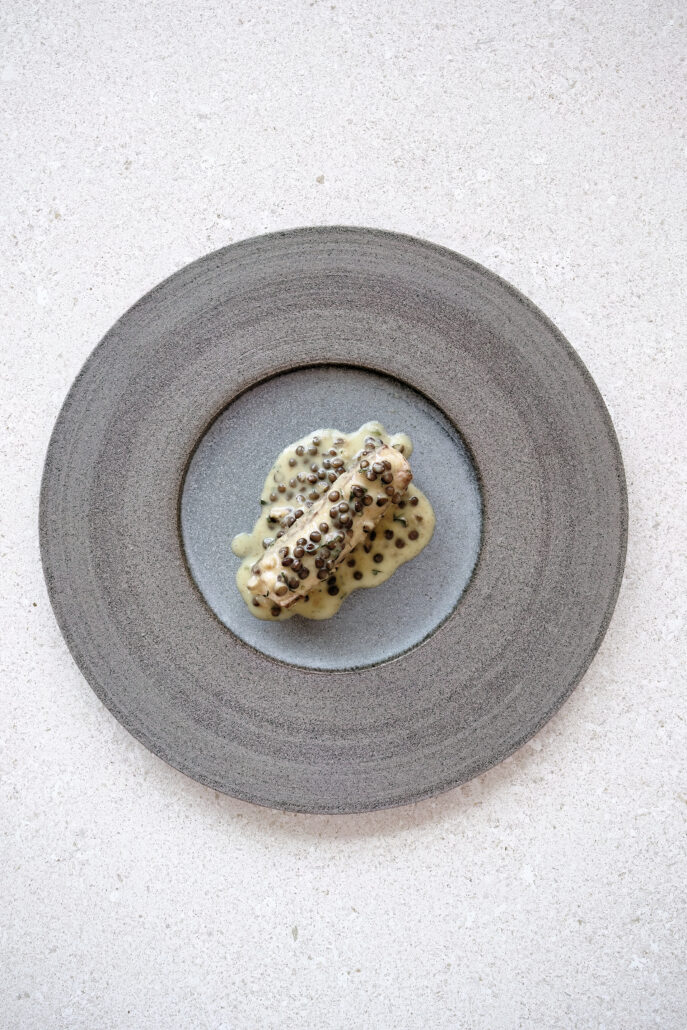
This can be found, starting from the end, in the delicious Hazelnut Soufflé, Coffee and Anise Ice Cream, followed by the young and promising pastry chef of the restaurant and also a material heritage from the time spent at Albereta, where it was already on the menu in various seasonal variations. But also in the Eggplant lacquered with fig must, a vegetable purity that envelops the palate. The Rockfish and timut pepper takes you to the beach, a perfect fry that is more than welcome, in its simplicity. The Cuttlefish and Jerusalem artichoke plays hide-and-seek – indeed, more like a veil-and-reveal – and things truly become important when the Smoked Castelmagno Cheese and Corn Risotto arrives. Whether it’s Marchesi or whatever you prefer. The dish that perhaps, when encountered on a menu, might be one to avoid, becomes a statement of intent: of radical simplicity, of straightness, and perhaps this is what Abbattista means when he talks about “bringing his Apulia” into the cuisine. There aren’t many frills in those parts. The explosion happens naturally. This is a classic risotto, without the tricks – born as signature traits of some, used as vices by others – of many contemporaries: the citrus below is nice, but do we all have to use it?
From here, you can only go up, and that’s what happens with Guinea fowl, chestnut, and quince. It provides another very simple explanation of the Abbattista’s way: there are dishes whose components can hardly be eaten individually; and then there are those that are the complete opposite. You’ll have understood that Abba falls into the latter category. The tasting menu in which these dishes are included (my visit dates back to mid-November: the evening before the star was awarded) is one of two options: ten courses for €110 excluding drinks, or twelve courses for €130 (highlighted by Lavarello, black lentils, and turmeric).
In a somewhat tangential sense, the cuisine of Abba and of this Abbattista, the one we find (re)discovered in 2025, is truly like home cooking: considering itself devoid of frills – the work of subtraction, delving into memories from the early days at Albereta is evident and I suspect it has benefited the dishes – highlights not only the technique, not just an idea, but above all an identity, a taste, a touch. It begs the question, and I hope you’ll forgive the provocation: if this is already a pure chef, and if these dishes have already sparked so much thought; goodness, but this calls for three stars!
The things that are churning, however, are not over. Much of what passes through the mind bite after bite has to do with the state and status of fine dining today. Abba’s proposal also has a say in this respect: firstly because it is a venture without investors, the fruit of Abbattista’s hard work. Secondly, as I introduced at the beginning, due to the cultural obsession and public opinion with youth. Not even Mr. Marchesi started young! Not even some of the best contemporary writers (Antonio Scurati, anyone?)! With the arrogance of youth (I say it like this since we are in the time of MasterChef), you can do anything, but, painful but undeniable, you also have fewer ideas, and fewer practical means – those that only experience can acquire, through trials and errors and rough patches – to realize them.
It is strange that a great Michelin star, a first for its chef, has arrived at a cook who is forty-eight years old? It is always, always the wrong question. To which there are no answers.
The impression, however, and Abbattista confirms it to me, is that the here and now could not have been more opportune, amidst the great efforts to find the right location and self-awareness (“the right moment was determined by a combination of professional maturity and the willingness to express my cuisine without compromise”). To engage in therapy for the right time translates the feeling into a “I do not care,” about others, expectations, voices. But obviously, this is not about that. For lack of a better word, it is better to leave things suspended. In fact, let’s use Abbattista’s words, a couple of days after receiving the star: “The prevailing feeling is one of deep fulfillment and joy. It repays the hard work and dedication to one’s project.”
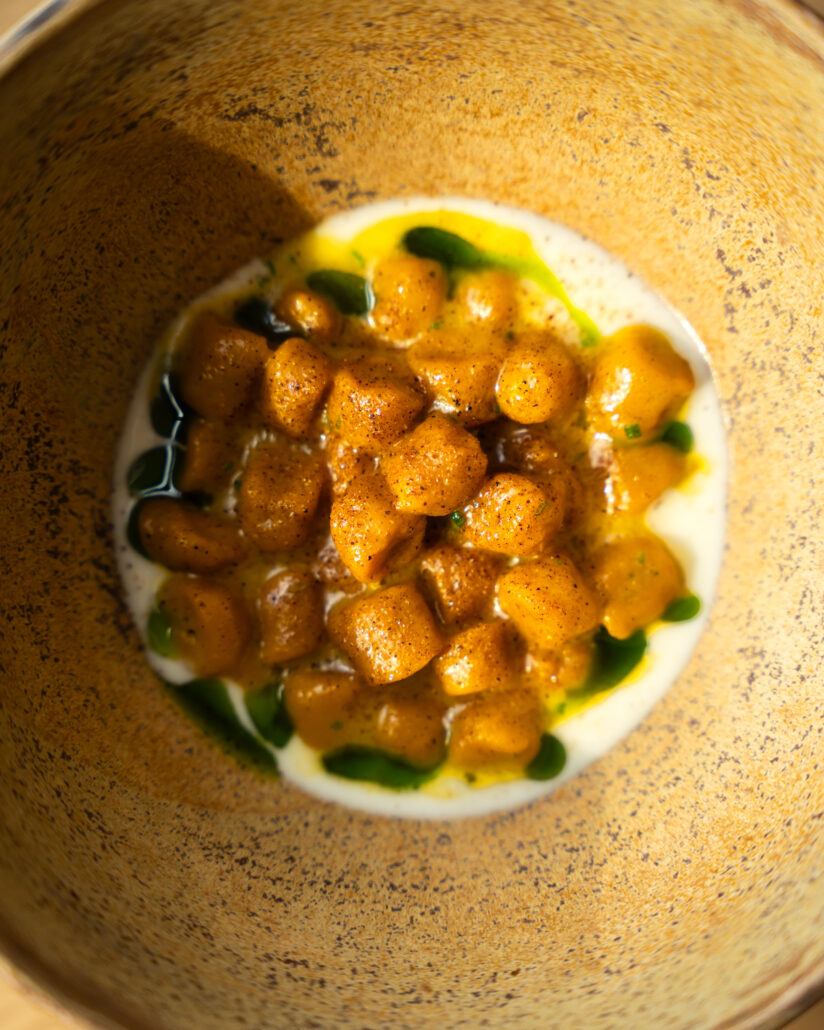
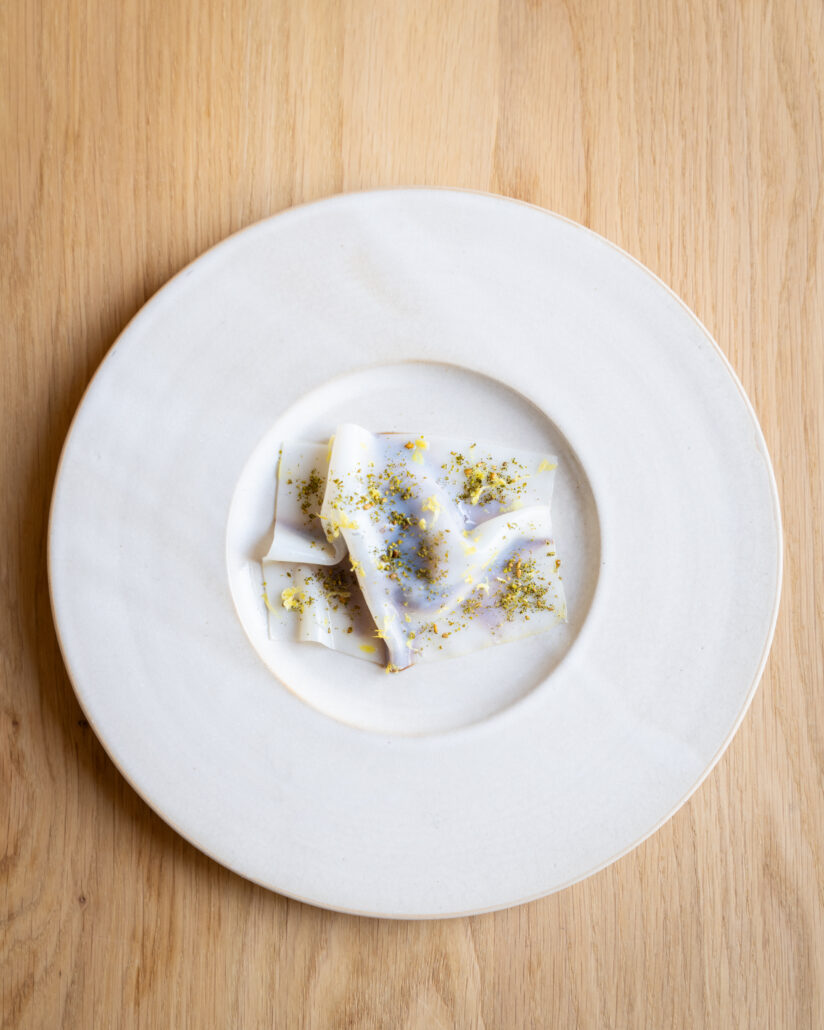
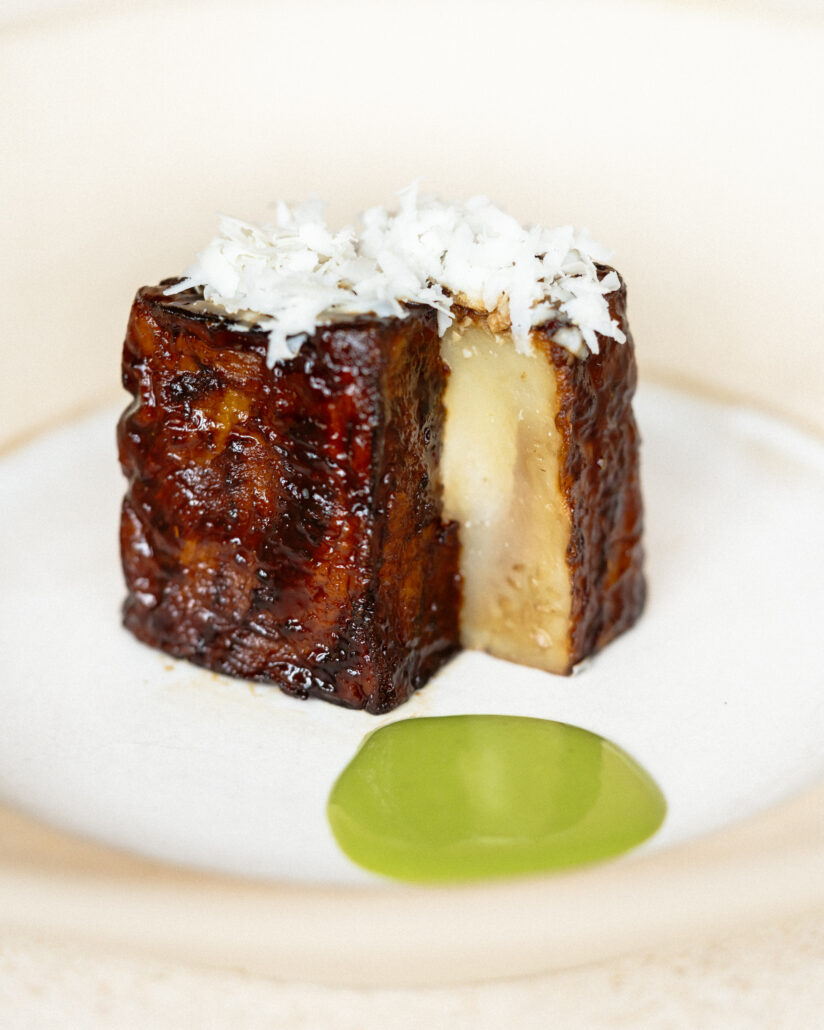
Because the stars make a difference, and the Michelin guide makes a difference, as confirmed by Abbattista. On this matter, no one in fine dining can have a contrasting view, especially in cities or hubs with high tourist traffic, where foreign visitors often become customers precisely thanks to the meticulous scrutiny of the Red Guide. The discussion changes when it comes to what fine cuisine truly is. Abba has its own version from the get-go, which leans towards a Nordic inspiration that has little to do with both Italy and Puglia.
“Today fine dining has become much more, it has expanded. It has become inclusive, but in a particular way, not only in terms of influences. Being fine encompasses a bit of everything: attention to sustainable production, the promotion of young talent within the brigade, offering quality hospitality. The human element behind it all is coming back, in my opinion. The dish is central, but it is no longer the sole value.”
Abba proves to be, in practice, an excellent embodiment of this vision. It aims to “bring back to the panorama of gourmet restaurants a return to the essentiality of the ingredient and a cuisine with solid values. And this also becomes an ethical choice.” It seems to me that there is the best of both worlds: Italy and everything else, experience and the reshuffling of the deck at the beginning, awareness and wonder. This is certainly true for the diner. Hooray for Abba, hooray for the next evening we will spend there. The best of both worlds, at Abba.