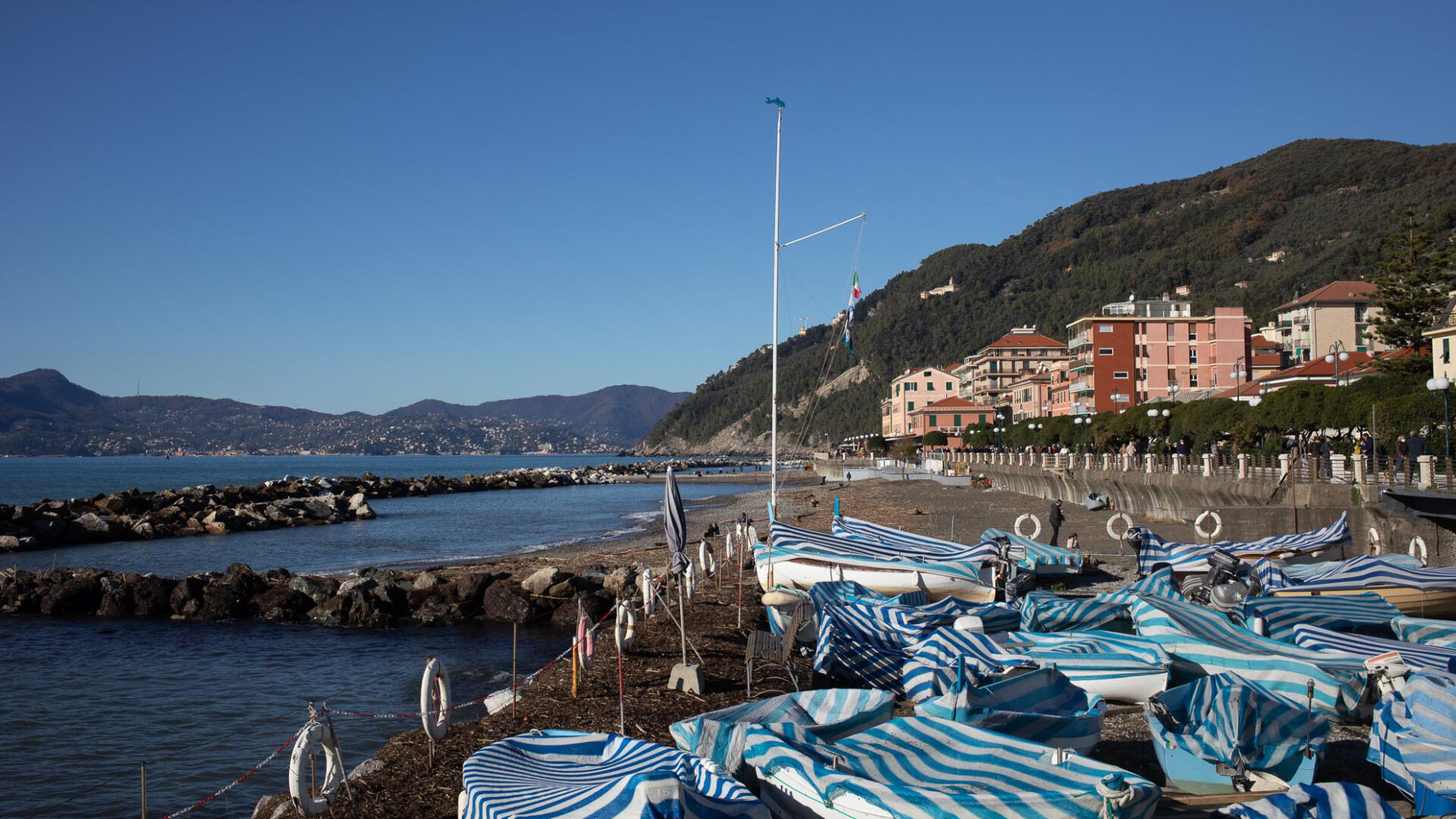
The icy, sharp wake-up call of 5:30 reverberates with the biting cold that carves the coastline of Chiavari. It’s the reserved yet generous Liguria of the Gulf of Tigullio that summons us at dawn reminding us that the early bird catches the worm. Gabriele – the photographer – and I are flung out of bed, with our morning papillary cavities decidedly less sparkling at this time. Rumpled, like the hastily thrown-on boating outfits we’re wearing, looking every bit like a comical pair of improvised sailors. Our faces side by side don’t bode well, yet there’s a buzz in the early hours, because another couple – far better matched than us – is coming to pick us up and set sail from the port of Sestri Levante.
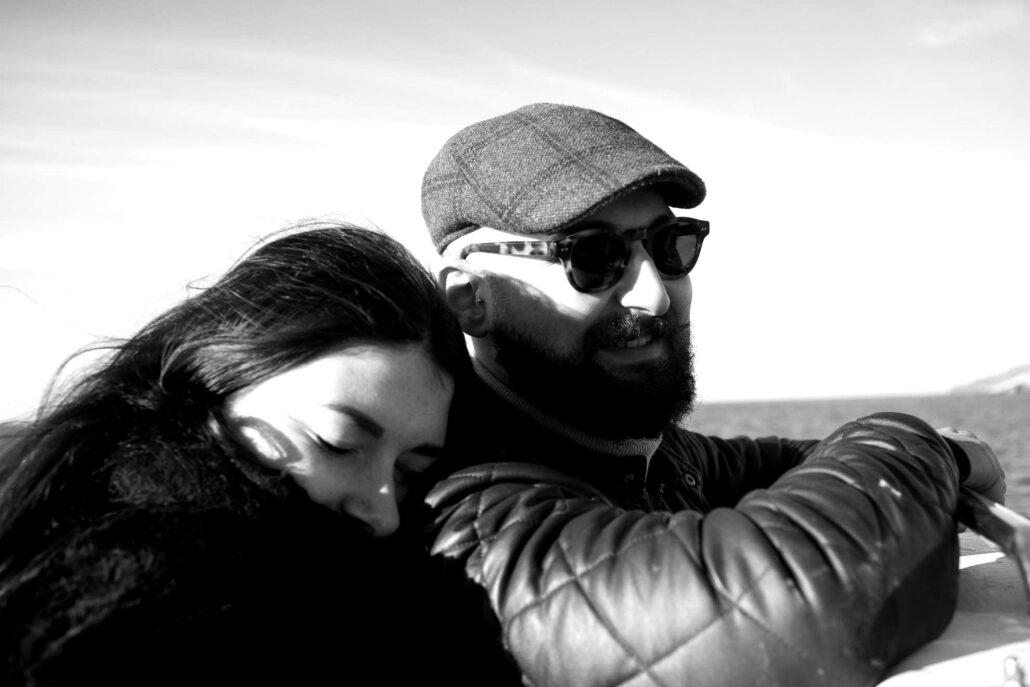
They are Marco Primiceri and Lucia De Prai: she’s Roman, he’s Piedmontese, and together they are close-knit partners in life and work. How, when, and why they chose this stretch of coast as their professional fulcrum will come later. For now, suffice it to say that more than a couple, it’s better to call them Duo. This is, in fact, the name they chose for the sign above their restaurant, right here in Chiavari, on the gentle and prosperous edge of the Ligurian East Coast.
But Duo is also an axiom of life choices, of determined entrepreneurial courage. Of shared passions, mirrored paths, and strong bonds, not only along the emotional ladder built between the two young chefs, but also with every artisanal particle of the ecosystem of this land. It’s the place they identified and were determined to make their home and workshop at all costs. Complementary and spontaneous alignments emerge clearly on the way to Angelo Ciotoli’s fishing boat: the stoic captain who, besides taking us on a fishing trip that fully justifies our early rise, runs the charming Bistromare in Sestri, accompanied by a modest natural wine production in the Cinque Terre. Heroic local enterprises that appeal greatly to our duo of protagonists.
In the car, Lucia playfully scolds Marco for failing to provide the morning coffee, alternating between excitement and a lively chatter about the maritime experience that awaits us. She smiles knowingly, with sharp self-irony, dubbing herself “the perfectionist” of Duo. He, on the other hand, remains silent, easygoing and accommodating, making up for the missed caffeine with a short (but intense) walk along the Bay of Silence, while the dawn’s colour spectrum bubbles with warm, ecstatic hues like never before. Faced with the breathtaking view, the two embrace, renewing themselves with loving intent for the adventure on the open sea.
Here they are, Marco and Lucia: different, yet kindred spirits, strengthened by a bond of choice.
She handles the boat’s two net hauls with complete nonchalance, fully engaged and hyperactive with every movement or bit of instruction offered by Angelo. Meanwhile, he succumbs to the mischievous torment of seasickness, petrified on the prow, with the hapless writer as his companion in the turmoil of nausea. Yet harmony rules in their shared understanding, a precious constant. A simple refocusing on the captain’s floating tutorial, demonstrating his homemade method for smoking fish for his little local spot, is enough to restore Marco’s senses, aided by the emergency Coca-Cola generously extended by his other half.


The day’s catch isn’t exactly bountiful – mostly gilt-head bream, small oysters, and tiny lobsters smelling of iodine – but the two radiate a contagious joy for any gesture that tells the story of Liguria’s gastronomic and cultural heritage. It’s no surprise that it takes very little to have them launch into an improvisation about their favourite version of Genoese focaccia. We escape into the rich, greasy, stamped, and utterly indulgent volumes of the Antico Forno Sanguineti in Lavagna, while a neophyte like me hangs on their anecdotes (and the oil-soaked pockets) about how to recognise a properly made fügassa. “See, the surface must be golden, crisp, but not too dark. With the brine evenly distributed – they explain – the little dimples pressed into the dough with your fingertips should appear slightly raw, only in appearance. Here, when you sink your teeth in or dip it into your cappuccino, you reach true ecstasy”. I savour it in “duo time,” listening to them and demolishing the parallelepiped of focaccia. But how to explain these two pseudo-outsiders’ visceral attachment to Liguria?
Well, let’s start by saying that a territorial connection already existed from Marco’s side, whose family roots partially sink right here. And then? Then came the mutual love at first sight upon finding themselves in Chiavari, deciding it as the immovable centre for their work, only after an extensive training journey across distant but connected hubs. A bit like, alas, the pandemic period forces us to experience. Because the pair, even if they don’t boast about it much, spent a lot of time in important kitchens before taking their individual leap. Their ideas are almost always clear, rational, and straightforward, much more so than many of their peers (in “duo,” they’re just shy of 30 each).


Lucia makes this clear: starting from her law studies in the Roman parterre, she took advantage of a professional cooking course to then pour every ounce of her energy into any growth experience that resonated with her profile: Metamorfosi with Roy Caceres; maestro Paco Torreblanca in Spain (because the call of arte bianca has always been, for her, an added value to refine); and a signature Spanish detour at Quique Dacosta’s restaurant. Marco, on the other hand, bounced from technical high school (ITIS) into a far more old-school apprenticeship within pizzerias and hotels in Courmayeur, before his passionate upgrade toward fine dining under his first mentors: Pietro Leemann, Martín Berasategui, and Enrico Bartolini during his time at Devero. Up to this point, they had no contact, but while Lucia consolidated her role at Quique over about five years – flitting, infatuated, between fish auctions, technical labour, and molecular refinements – Marco burst in as an intern, igniting a new spark between the Duo. Simple, yet beautiful, to see how the human and emotional component is the omnipresent driving force in their journey together. From past to present/future. Back in Italy, they still share the stoves at Antica Corona Reale in Cervere, Piedmont. “A hyper-classical and indestructible establishment”, recalls Lucia, “which no longer represents my model of cuisine, but where I would return to eat for eternity as a guest”.
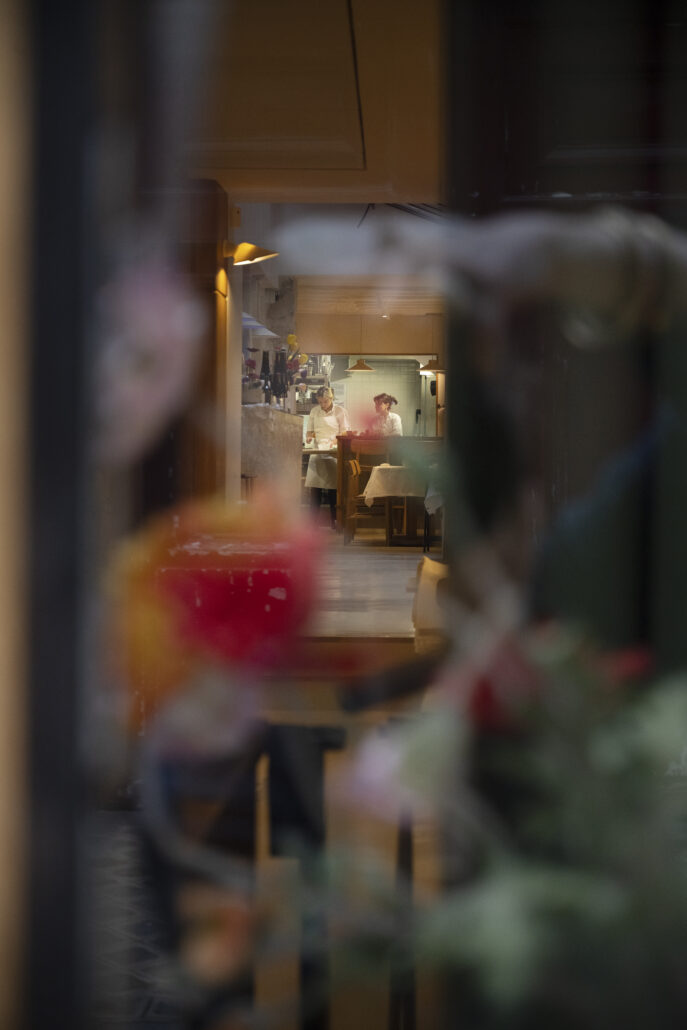
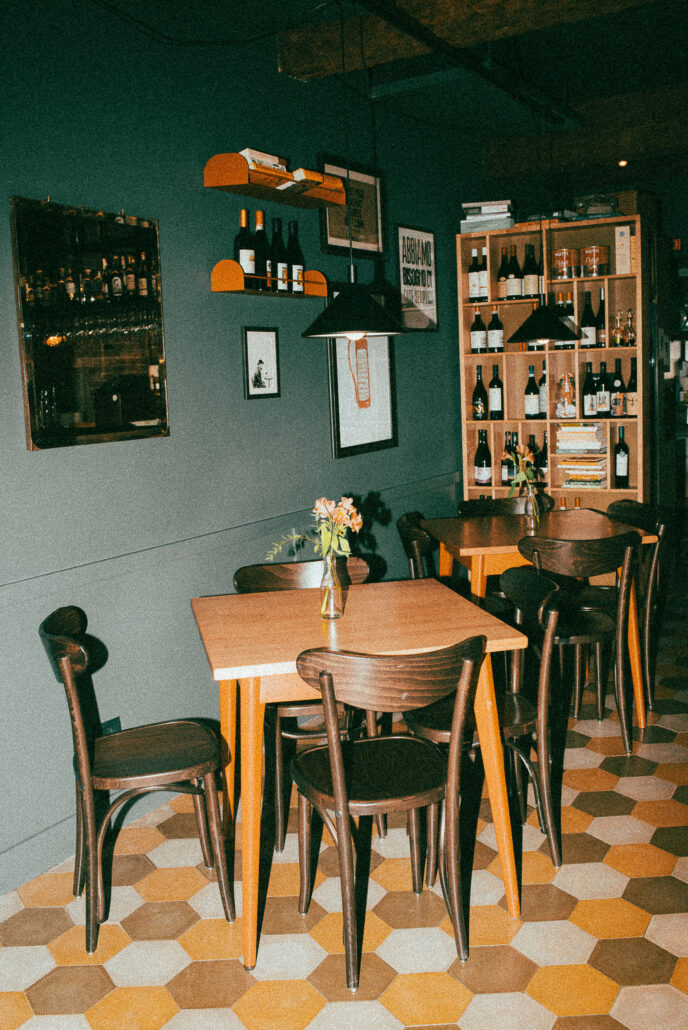
Then, the winds of fate led them to Genoa for a project that ultimately found no outlet, except the far more fruitful one of reigniting their passion within Liguria: this time for a space in Chiavari’s historic centre. After months of peregrinations in search of a suitable venue, it was the former Tipografia Colombo that stole their hearts. A container that, from a disused stationery shop, offered a blank canvas for the Duo to realise their dream piece by piece. Around 200 square metres, framed by vaulted stone ceilings, raw bricks, and natural slate floors. A back-of-house space that, from a post-decay concrete block, was (re)shaped into a large, evocative open kitchen that now dominates the restaurant. Here, they gave free rein to a multidirectional approach, perpetuated in the physical and philosophical construction of their identity: obsessive attention to detail and guest experience, expressed with absolute immediacy and fluidity. The dining rooms gained warmth and light through tables crafted by Marco’s father and a variety of objects and furnishings recovered from vintage markets and local artisans.
Nothing is taken for granted, except the driving desire to merge with the Ligurian land and bring out the nobility of each of its nuances.
Some dishes were crafted by a lady from Sarzana (Eastern Liguria) using the technique of imprinting fabrics, leaves, and twigs directly into the clay forms. Other pieces plates and glasses, were hand-shaped by another radiant couple of ceramists from Camogli (coincidentally, they too have a past in the kitchen).
Together with the artisans of Cham Ceramica – Alessandra Mozzi and Henrik Claesson – the Duo conceived a line of tableware using the discarded shells of local mussels, clams, and oysters. They also reworked the clays of Rapallo into forms with striking visual and tactile impact. “From the very beginning, we sought a uniqueness that would represent us and set us apart in this personal challenge, but without resorting to ostentation or trying to impress”, explains Lucia. “For us, it was and is important to tell our story through every utensil, thought, or flavour that passes across the table. We couldn’t have devised a better way to do this than by starting with the resources of a territory we feel deeply connected to, yet which, due to various historical and cultural circumstances, has often been overlooked from a gastronomic perspective”. In the same expressive vein, they coined their “Chilometro Duo”: the idea of weaving an artisanal supply chain with local producers, without restrictive or label-bound limits. Instead, they follow their own tastes and the emotional inspirations that have always guided and united them in their work.


“After so many celebrated experiences in fine dining and highly technical, conceptual cuisine, it was a necessary impulse to move towards a more instinctive, concrete, and recognisable approach”, Marco elaborates. “Not that that previous standard repels us today. On the contrary, it remains proudly embedded in the foundations of what we do every day, but our primary need was to forge a more genuine connection with our guests and with ourselves. By restoring traditional dishes, customs, practices, and forgotten culinary stories, both from Ligurian cuisine and, more broadly, Italian cuisine with its cross-cultural contaminations. After all, Liguria has thrived on mixed influences for centuries thanks to its access to the sea, channeling countless different cultures. Following this line, even the products we handle acquire an international flavour, despite most of them coming from here”.
Admirable values plated with finesse, and a capacity for creating a system that neither bureaucratic headaches nor quarantine could dent: first, they managed the prolonged wait for their opening with a pop-up in the tiny kitchen of the neighbouring bar, Casa Gotuzzo 1652; then they invested the crystallised time of the first lockdown in studying their own selves and stirring new inspirations even at home. Lucia shares this with us while we are guests at the Duo’s home, feasting (among other things) on the delivery from another Rome-affiliated enterprise adopted by Ligurian soil, Agriturismo Il Castagneto of Castiglione Chiavarese (my Roman pride throbs).
Amid a few rogue supplì, baccalà brandacujun, and the chef’s playful outing about her fondness for the Crispy McBacon®, she reveals that it was during the first Covid alert that she experimented with and mastered natural yeast for her bread. And what bread, I add! It welcomes us, along with addictive buttered breadsticks, to our experience at the convivial table of their elegant home restaurant. In a spirit of compartir, and with no attempt to hide the Spanish references, parades of snacks and leavened treats arrive, each astonishingly enjoyable: Ciuccia anciôe, little wafers with anchovies prepared alla sardenaira; Frisceau (fritters) bursting with liquid brandacujun; soft Manene (ancestors of fügassa) made with cornmeal and potatoes, with a reloaded version of agiadda (a confit garlic and vinegar sauce). Then a whole Razza fried to perfection, served with a dangerously addictive handmade mayonnaise: a quintessential “poor man’s fish,” often released back into the sea by the fishermen themselves, here dressed in regal, endlessly crunchy and succulent garb. Lucia’s pan brioche and focaccia then ambush our senses in a gluttonous carb overdose. “It’s still not at the level I want”, she admits. But I suggest it is so good that it’s worth “andarci a rota”, teasing her Roman roots (i.e. to binge on it).


Returning to the terroir, a tribute arrives to the defence of Tellaro Bay during the ancient Saracen attack, where folklore has it that an octopus rang the alarm bell. The Duo interprets this theme of Ligurian fusion between land, sea, and the Orient, without any clash of flavours: a robustly flavoured curry octopus, spiced purple cabbage water, ginger sauce, and a touch of Rome with puntarelle, oil, and salt serving as a pedestal. Historical sublimation accompanies the creation of the dishes without ever descending into cumbersome rhetoric, instead enhancing the depth of flavour: the tribute to local paper production transforms into paper-thin apple sheets in multiple textures (even as sorbet), topping phenomenal Trippette of cod, cooked to the perfect degree of firmness and collagen. Once again, a nod to a Roman nervetti salad, as Lucia’s hand consistently dialogues beautifully with Marco’s recipes.
The iconic Vegetable Minestrone with Pesto – served in a wide, shallow soup bowl (xiatta) with a touching, homely appeal – finds its bite in cooking the vegetables in seawater, respecting each one’s precise point of texture and lymphatic turgor. A classic-vegetable exaltation that continues in an evolved form in the Broccoli Risotto from Lavagna with Quarantina potato. Partly to honour another quintessential dish of cabbage and potatoes cooked on a wood stove, partly because it reveals the Duo’s unpretentious fondness for vegetables. So much so that they have even cultivated a small vegetable garden, which will serve as a source of self-sufficiency in the future. Despite the humble origins of the recipe, the risotto is astonishing to taste. The grains are perfectly al dente, infused with a subtle smoky note and the alchemical interplay between creamy tuber, bitter crucifer, and sharp onion. Chapeau!
In a closed-loop tasting circuit, the love sparked in Spain returns to centre stage in the finale: first in the aioli sauce draped in a damask pattern over the Red Mullet with horseradish and turnip tops. Then in Lucia’s ecstatic first dessert. Although the cooking fires complete it, she is indeed the mastermind behind the Duo’s wondrous pastries: a Spanish Torrija (French toast with a homemade pan brioche base, pan-fried in butter) elevated by a silky Jijona nougat cream that elicits more than one tear of delight for its texture, execution, and sensory richness. No less impressive are the evocative Neve sorbet, made with lychee and St. Germain; the delightful Chestnut Honey Gelato (from a local micro-production linked to the Cook_inc. Family) with Vermentino grapes and salted rosemary caramel; or the climactic inverse Bread & Chocolate “the way I’d eat it” (i.e., the approach of our formidable pastry chef): bread gelato on a slab of puffed chocolate, fleur de sel, dried sourdough, and Ligurian olive oil. BOOM! If you still have doubts – or need a glycemic boost – commission one of Lucia’s many incredible tarts, made endlessly to perfection. You’ll make her doubly happy, as one of her next dreams/projects in the works is to pair the Duo with an atelier focused on the pastry side. Stay tuned. Returning to our menu, it deserves a “duoppio” round of applause, as I widen my eyes when Marco confides that almost all the dishes were improvised on the very day of our visit.
“It works like this: we let ourselves be inspired by the ingredient, by the creativity of the moment, and by the appetite that we simultaneously share in empathy with the guest” – he states in a calm, sly manner. “This too is the richness, aligned with the possibilities, that the place we’ve chosen manages to give us”.


Riding this wave of regional devotion, the finale of our journey could find no better berth than at a concluding table at La Brinca: a bastion of Ligurian inland cuisine, where the twins Matteo & Simone (front of house and kitchen) are rewriting a story that is already legendary. Etched through research, self-production, and quality by the family core of Sergio and Roberto Circella, aided by the tireless “mamma” Franca and Pierangela. A reality deserving of its own feature in other pages of this magazine, it stands as the final stage for an ode to Ligurian identity in exuberant symposium with the Duo.
Marco tries to funnel the entire menu into a single order, while Simone’s kitchen and Matteo’s oenological delights enchant our palates with championship-level wines; Testaieu with mortar-made pesto; stuffed lettuces in broth; Corzetti; mixed fried seafood, Genoese style. The pair radiates peaks of joviality and tenderness, sharing their passion for the heritage of these lands simply through eating and conversing with us. Almost as if it were a predestined gift.
And we can hardly believe the playful jibe from Lucia about being able to hide her tattoo, bearing the DUO logo, when needed. Because two things have become clear in this full territorial immersion: in Liguria, food and wine sail with the wind at their back, and Duo is always better than one!