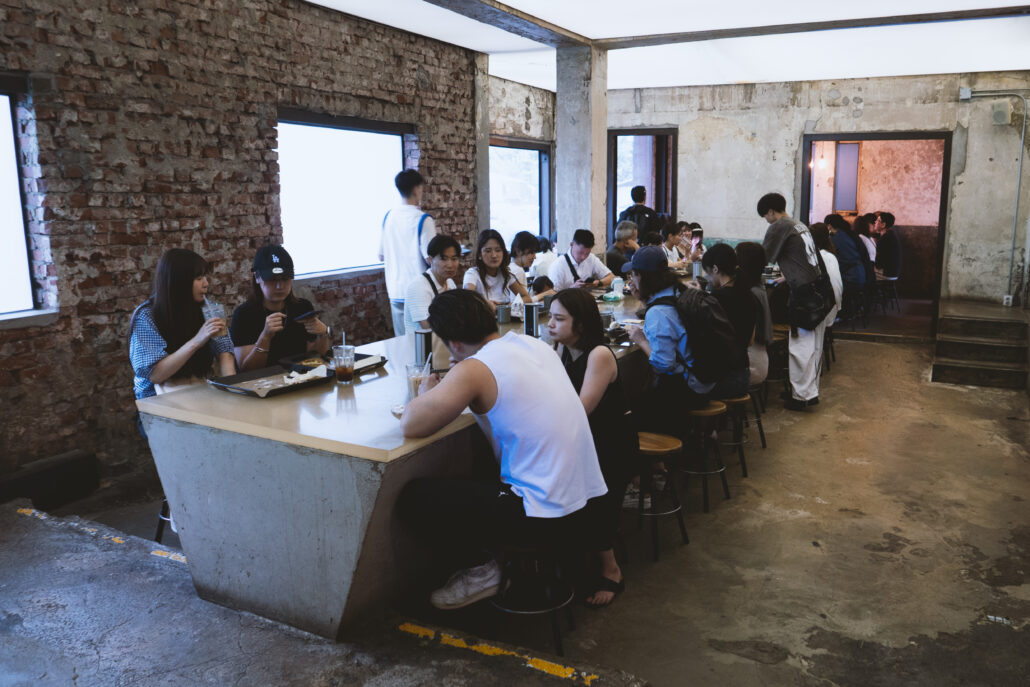
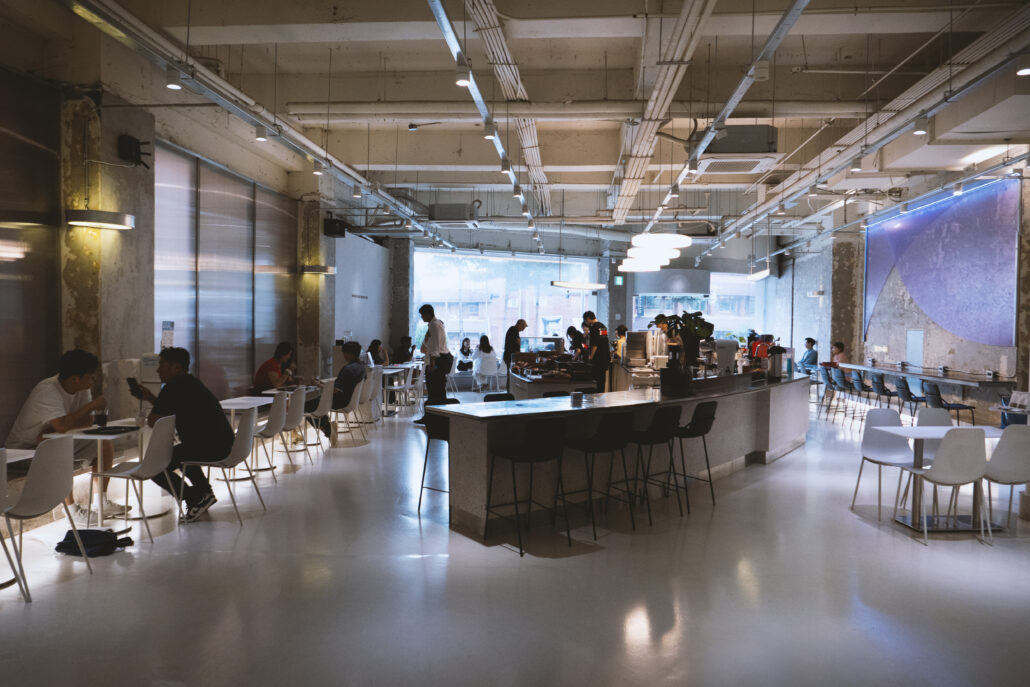
I’m sitting at a communal concrete table, inside a building that could easily serve as the perfect backdrop for a post-apocalyptic film: crumbling walls, spaces arranged in an asymmetrical grid, cast-iron and steel frames. Outside, it’s pouring down. If this were a zombie film, I’d be right in the middle of the climax — the scene that keeps you teetering on the edge of anxiety until the editing throws you into another sequence. In front of me, there’d be a gun with a single bullet, and all around, the city growing ever more twilight-drenched and overrun by the undead.
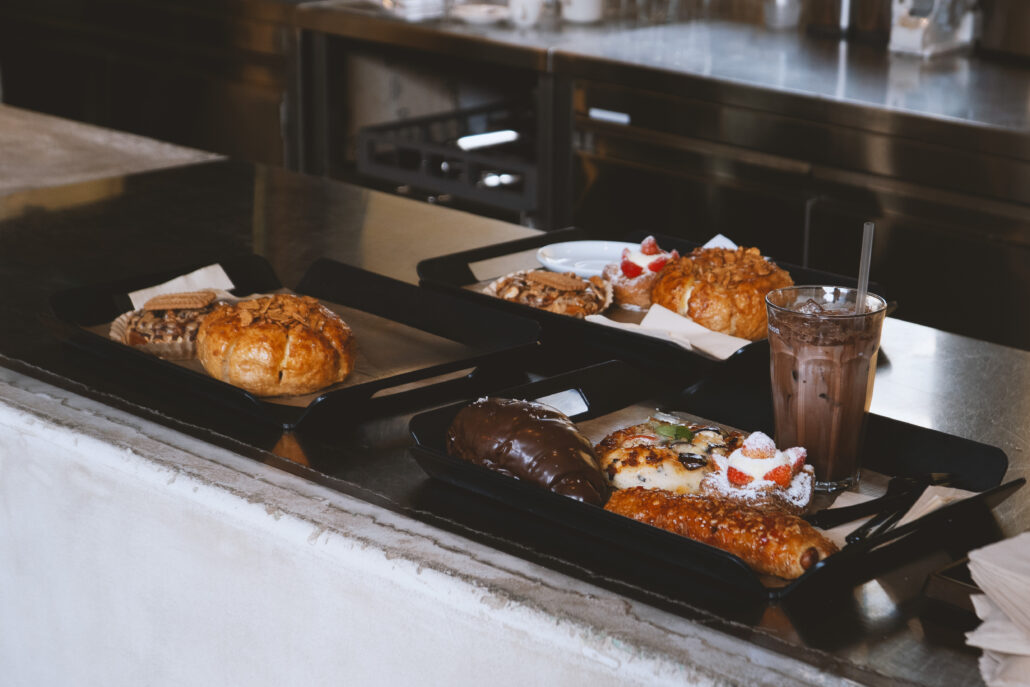
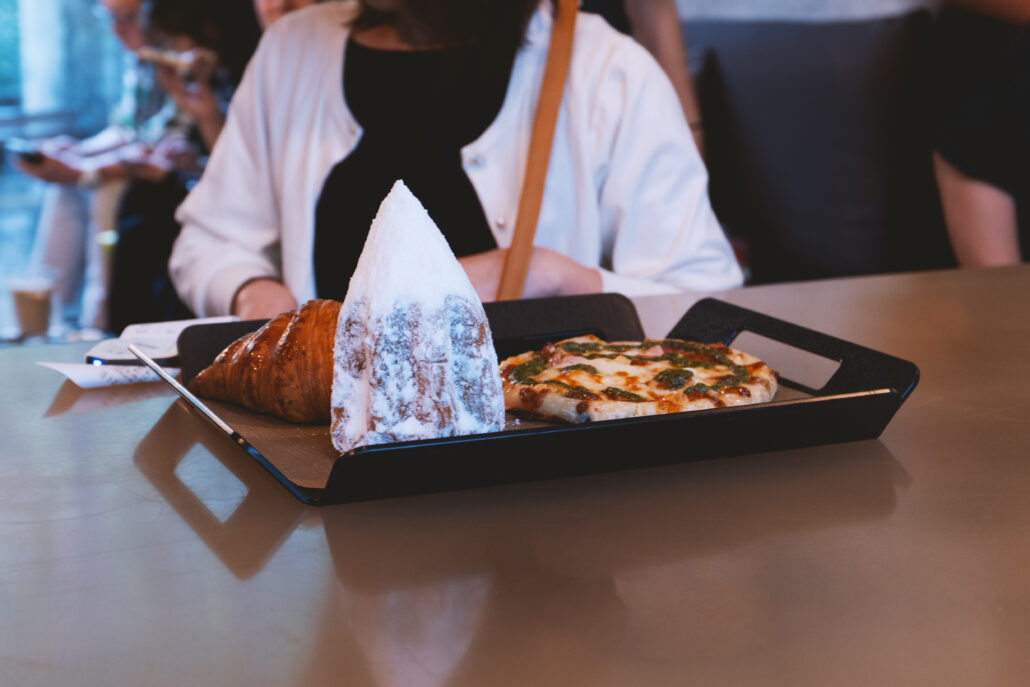
In front of me, however, there’s a mini pandoro topped with a pyramid-shaped dome of icing sugar that makes it look like the silhouette of a little gnome’s head, and a large glass of iced choco-latte. I’m at Cafe Onion in Seoul, the one in the Seongsu district, one of the most recently hipsterised areas of the South Korean capital: a maze of old brick industrial warehouses that once housed small steel factories, storage spaces, and print shops, later becoming home to cobblers and craftsmen, and now wine bars, cultural centres, fashion boutiques, cafés, and bakeries. The crumbling walls of Onion are not signs of neglect or decay, but a deliberate celebration of post-industrial decadence — an aesthetic that, over the years and around the world, has built a fascinating (and practical) imagery capable of adapting to the trend of the moment. It’s a hegemonic aesthetic here in Seongsu, where fashion brands set up pop-up stores that double as art installations, and art galleries carry the same stylish flair as a runway show.
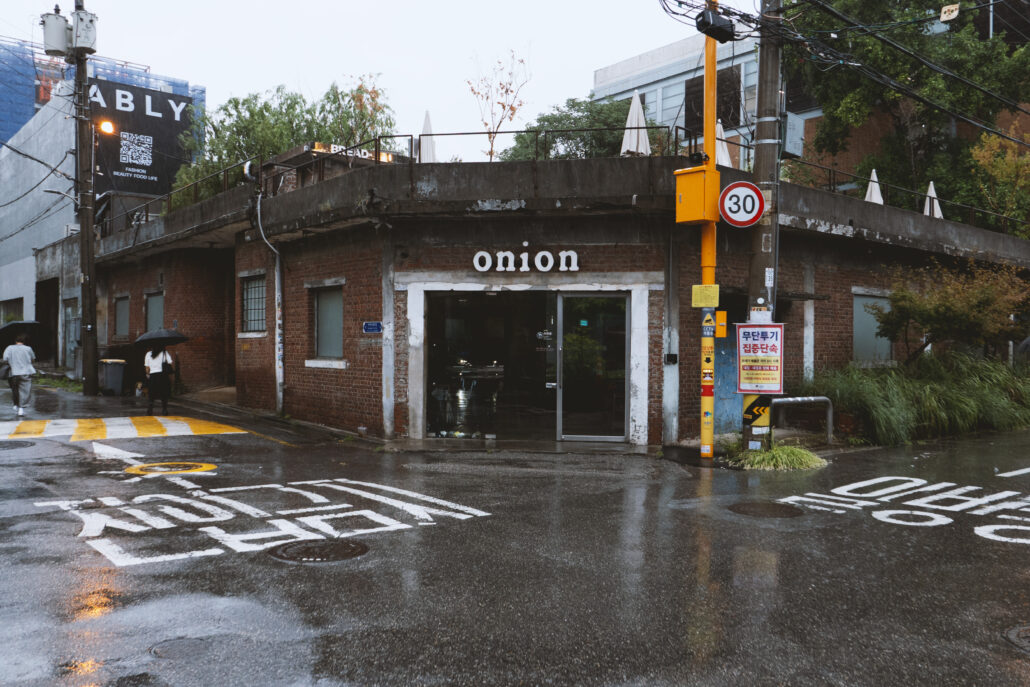
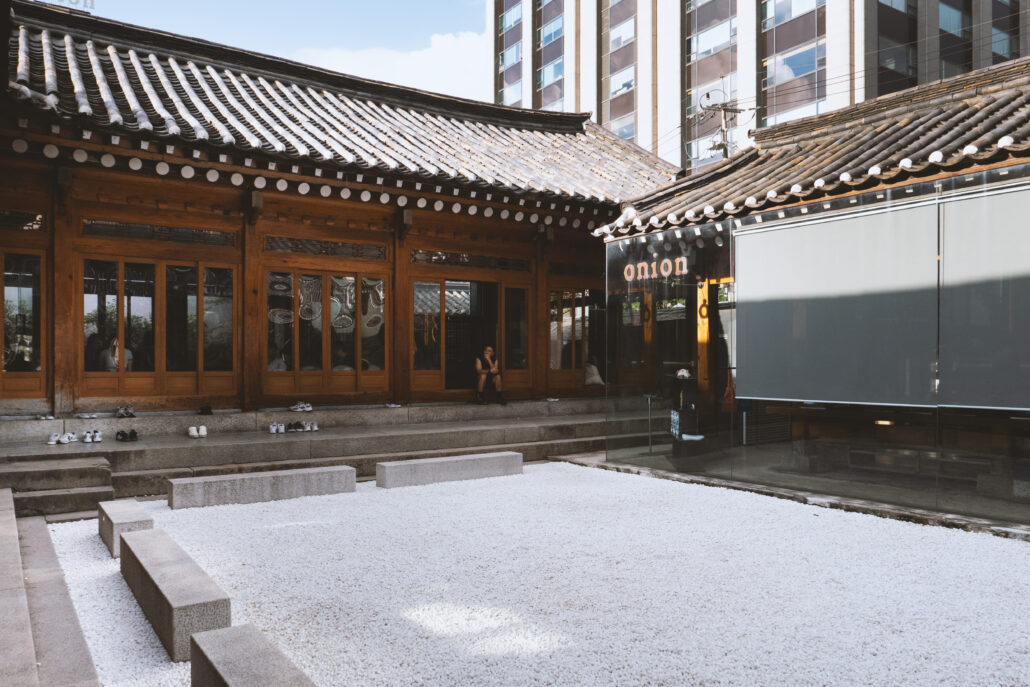
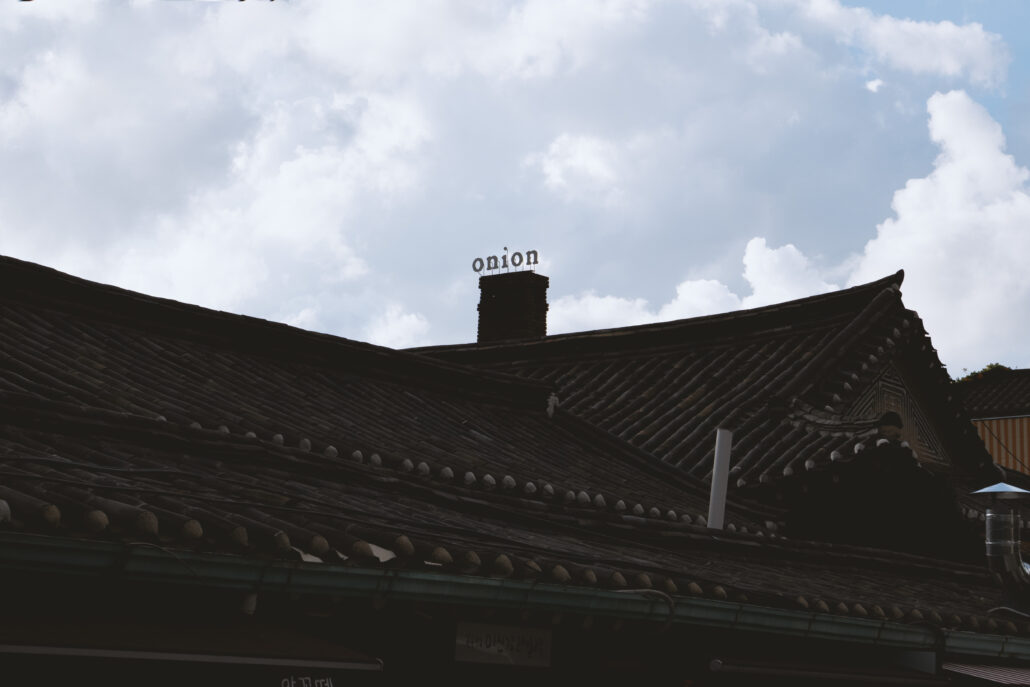
This is, in fact, just one of Onion’s locations. In Seoul, the brand has carried out a sophisticated camouflage operation, adapting to the urban aesthetic of each neighbourhood where it has opened and, in doing so, has managed to strengthen its identity even further. It transforms into an old Korean house with floor seating in the traditional hanok village of Bukchon, or becomes a small kiosk occupying the corner of a building for take-away service next to Gwangjang Market — one of the city’s largest and busiest, best known for its street food.
If a case like Onion exists in Seoul, it’s because, today, the South Korean capital is overrun with specialty cafes, roasteries, and bakeries.
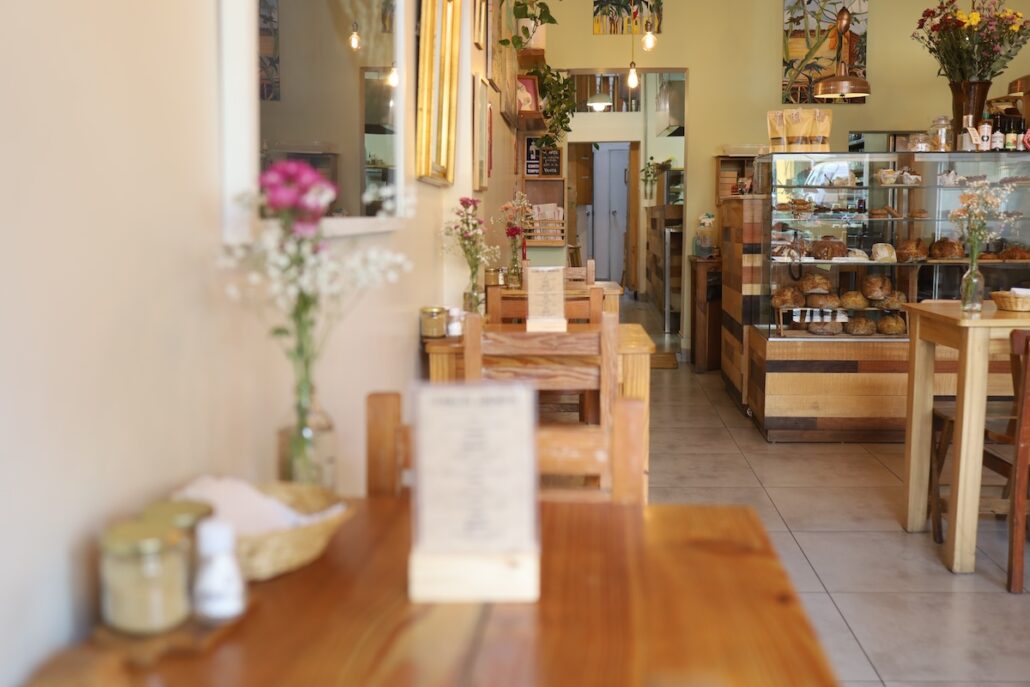
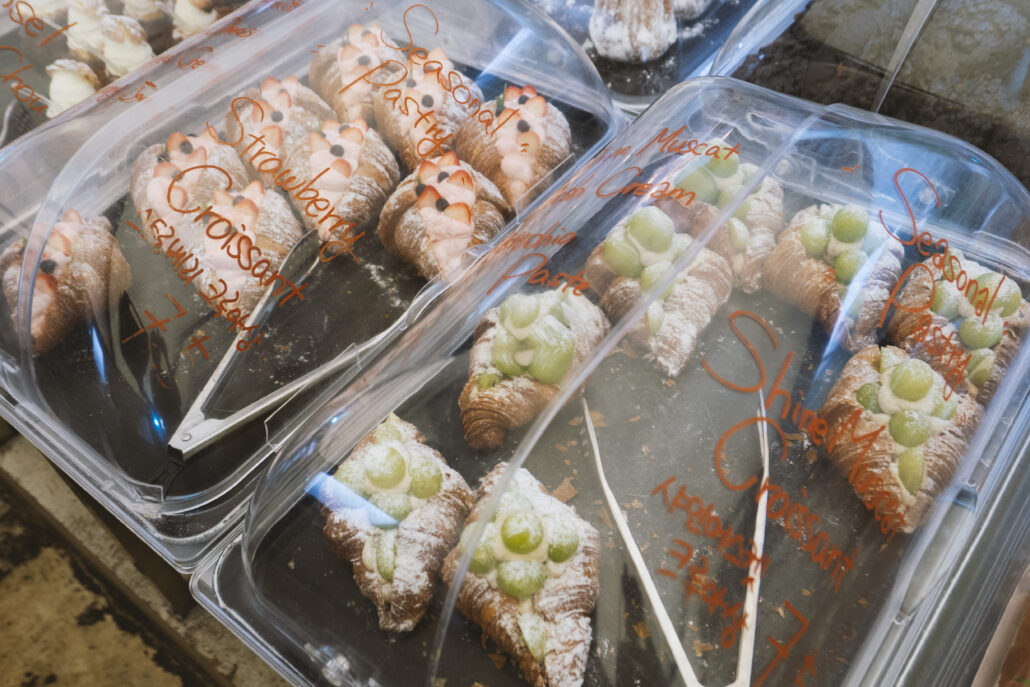
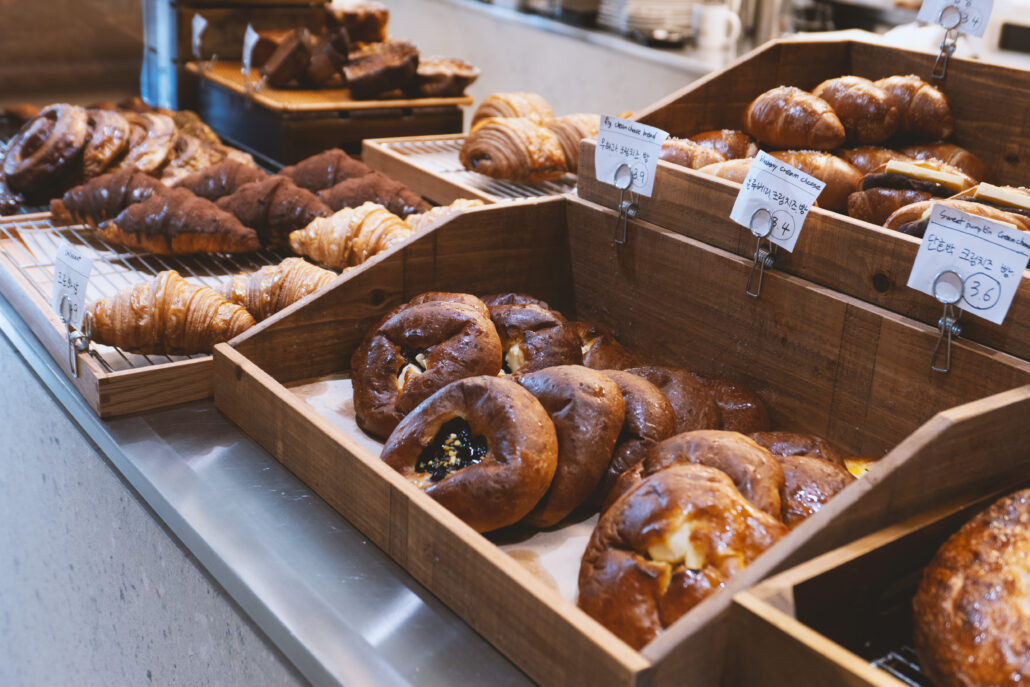
In some neighbourhoods, it’s impossible not to notice these places dotting both the main shopping streets and the smaller alleyways, with their large windows revealing minimal interiors. Here, having breakfast becomes almost a personal challenge, trying to rank the fluffiest salt bread, a buttery brioche known as shio pan, which at Onion is topped with chocolate and Maldon salt, or the flakiest pain au chocolat.
I’m staying in the Euljiro district. When I booked the hotel, I had no idea that hidden among the low-rise print shops — where presses and binders run 24/7, there was a sprawling network of trendy bars, venues, and cafés. I certainly didn’t realise it the night I arrived, when the only colourful sign breaking through the cold lights of the still-open print shops was the green-and-orange glow of a 7-Eleven. I noticed it the next morning, while looking for a place to have breakfast, when I spotted a small corner café: Asor Coffee. A tiny roastery of just a few square metres, with a carefully curated selection of pastries and several coffee blends on offer. Beyond roasting and serving coffee at the bar, since 2017 (four years before opening the café) they’ve also been running training courses to “learn how to make coffee”, from mastering the equipment to the operational management of a coffee shop.
In the following days, I wander through the streets of the district and keep ending up in similar spots. I can’t tell whether I’m discovering them or if they have some strange magnetic pull. Caffee on the Plan feels like a cross between a bacteriological research lab and the entrance to a rationalist museum. One morning, I go there twice within three hours, for a double breakfast.
It’s clear to me that the scrunch of a pain au chocolat between your teeth releases an above-average dose of dopamine.
Still in Euljiro, tucked in plain sight inside a three-storey building that was once a workshop or a tile company, there’s Susanna’s Apron, a bakery with more French than minimal vibes, also hosting small exhibitions. In Hongdae, the city’s quintessential nightlife district, Cafe Comma, with books and publications lining the walls, evokes “our” literary cafés. But even away from the areas where gentrification is most visible, you can stumble upon this type of bakery, Artist Bakery feels like a Provençal oven tucked between the historic Gyeongbokgung and Changdeokgung palaces.
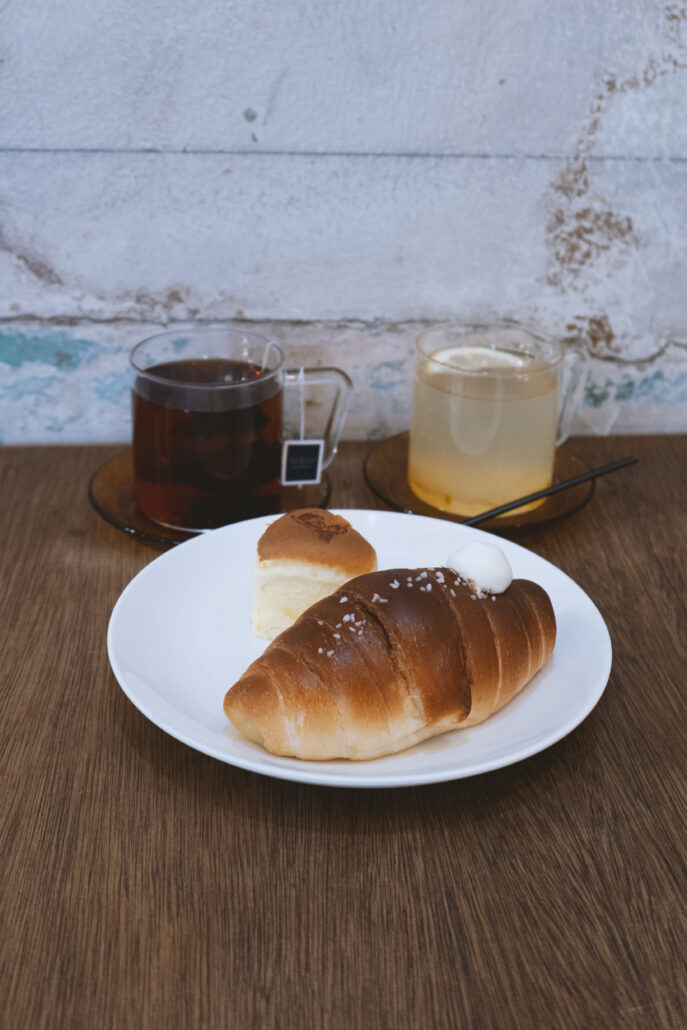
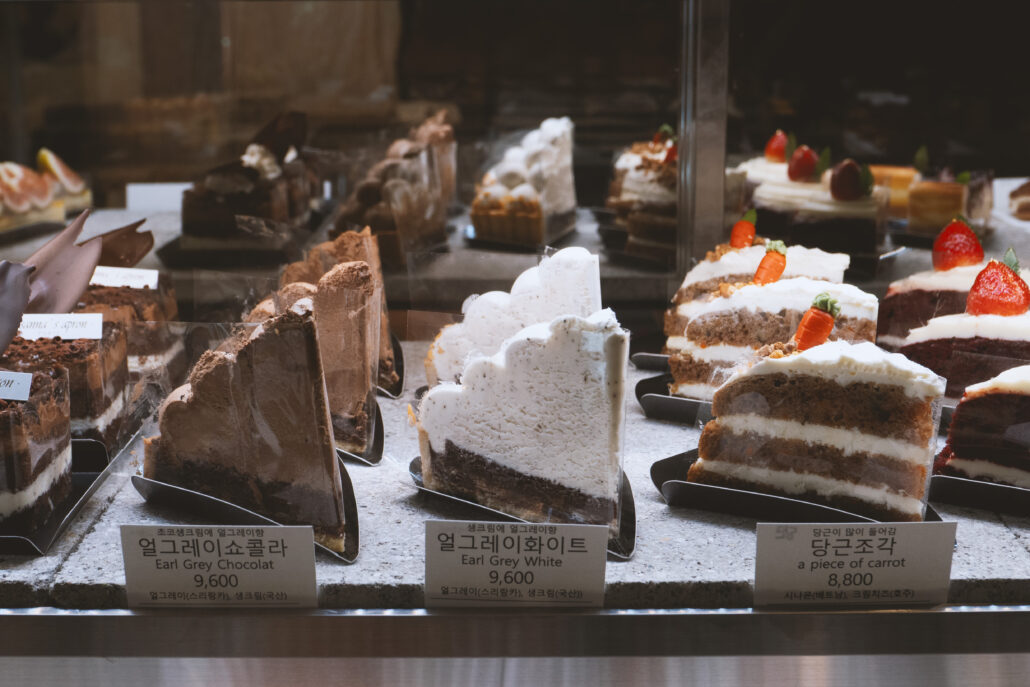
The offerings in these places aren’t limited to sweets: all of them also serve unexpected savoury options, such as unpredictable focaccias that are easily reminiscent of the “Bari-style” ones.
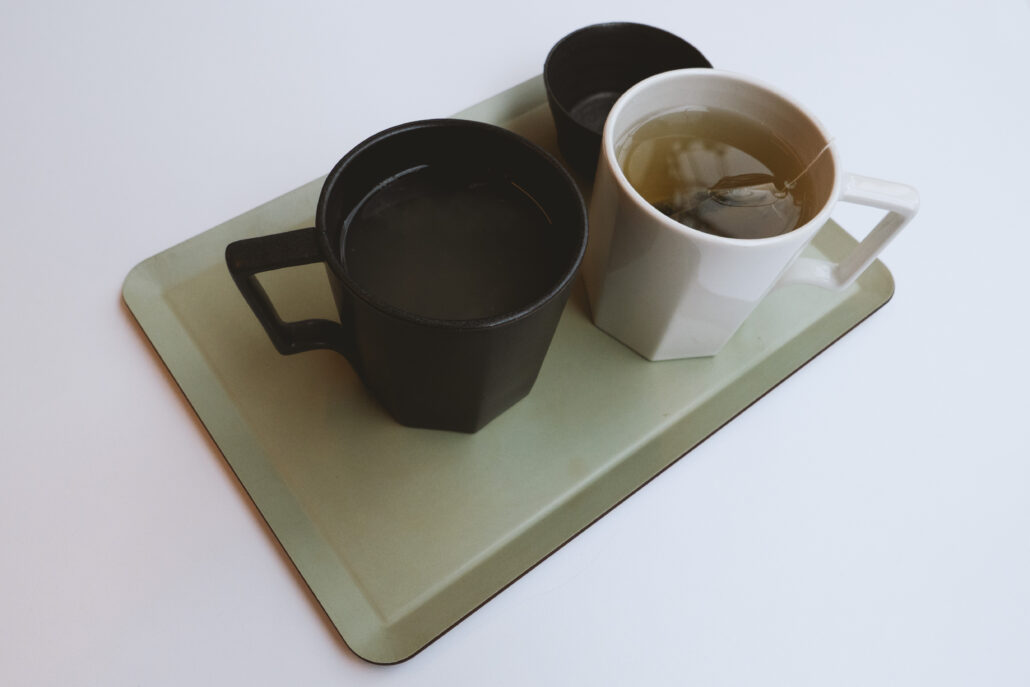
The service works the same way in all of them. The food is set apart from the cash register and the area where drinks are prepared: everything is displayed as if on a stage. Each customer places their croissant or salt bread on a self-service tray and heads to the till. Here, they order their drink. When you order tea, they ask if you want it hot or iced. The selection of coffee blends and cold drinks is always extensive, but never overwhelming. Then you pay and receive one of those black discs that buzz, light up, and vibrate when your order is ready. You sit down and wait for the sound-light-vibration, then go back to collect your tray with food and drink.
It’s not the chaotic Italian ritual, where breakfast at the bar turns into a morning on the trading floor, with bartenders calling out the coffees to be made — “two espressos, one in glass, a long one, a decaf, the long to go” — and croissants are either grabbed from the display with paper-plastic napkins or handed directly into your hand by the server.
In South Korea, “bar-style” breakfast isn’t the rowdy ritual with which we start our days in Italy, but a measured, orderly procedure.
And perhaps it is no coincidence that, driven in part by a small internal revolution, the approach to coffee among a tiny fraction of Italians abroad has undeniably changed over the past 15 years. If before we went searching for our espresso, extra short and wickedly burnt, complaining when we could not find it, today we are drawn like flies to flypaper to cafés with minimal, Northern European-style interiors, daily menus written in white marker on the glass at the entrance, and cinnamon rolls displayed on the counter. These are places that focus on a deep exploration of the raw materials and their processing, coffee above all.
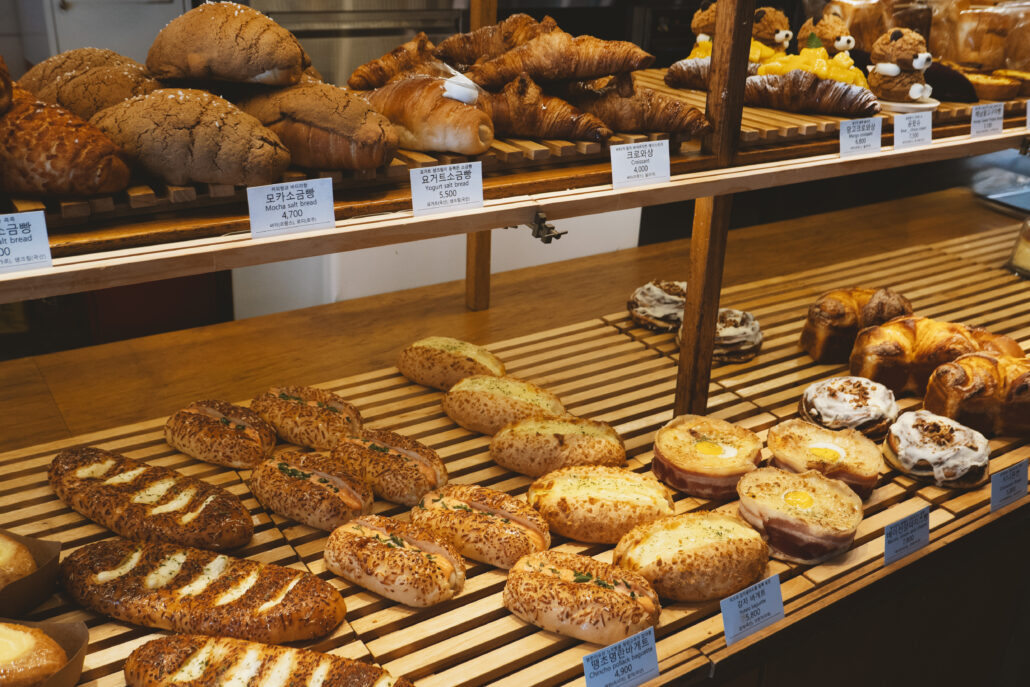
In Seoul, and more generally in South Korea, this aspect of gastronomy is also taking hold — specialty cafés and international bakeries — which, like all culinary trends, reveal much more about a place than what is simply served at the table. In this country, it also embodies a pleasant adaptability that bends local culture to the tastes and trends of the wider world. Otherwise, it would be hard to explain how one can move from a traditional breakfast — essentially a meal like any other, based on rice, soups, and kimchi — to mini pandori served in a post-industrial café.