“Hey Jude? Where are you? I can’t find Hong Kong Avenue…”
Jude Blangit arrives calmly a few seconds later. Behind the wheel of his sedan, wearing a T-shirt that accentuates his broad chest, he looks like a living challenge to the biting cold that hits you the moment you step out of Manchester International Airport.
“Forget it! – he says – it’s not the Uber app that’s malfunctioning. Our brand-new meeting point was supposed to be right behind the Kiss and Fly, but although it’s been planned for ages, the city council – or whoever’s responsible – still hasn’t finished building it. I apologize on behalf of our politicians. Is this your first time in Manchester?”
And off we go, with Jude taking the ring road out of the airport, then turning off the main road onto smaller lanes (“there’s sub-zero traffic at ten in the morning, when everyone’s driving”), talking all the while, explaining and introducing himself as he goes.
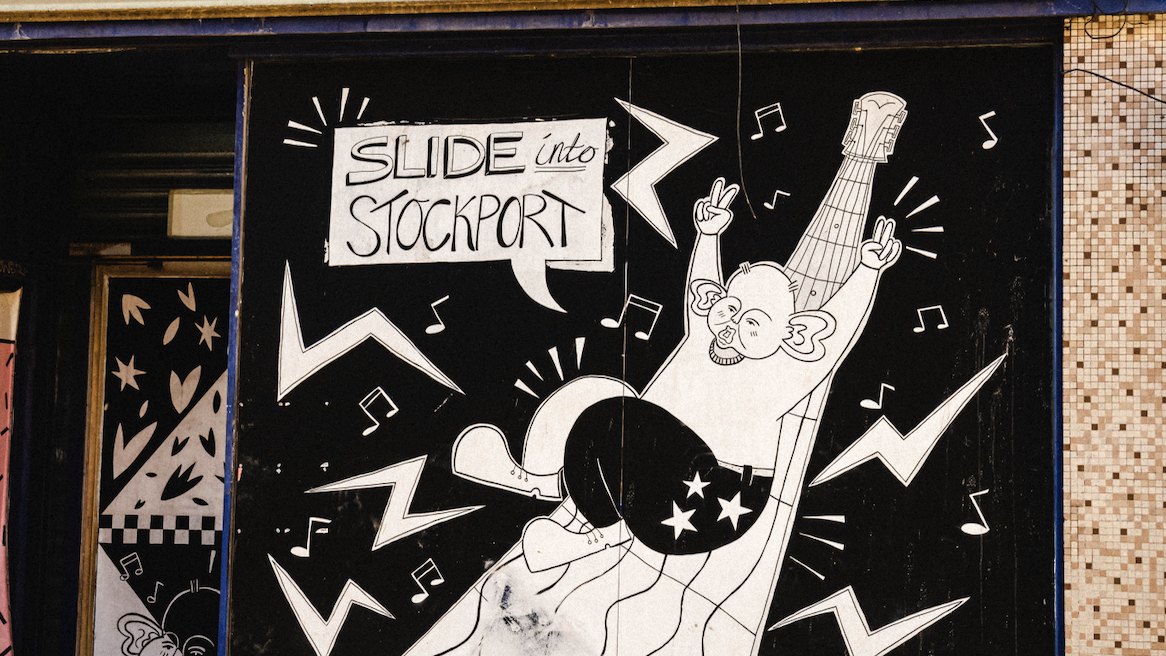
“What’s the name of the place we’re going to in Stockport? Never heard of it. Is it really a restaurant? Yet for years, I was part of that world too. When I lived in London, I worked as a chef. Back then, I told myself I’d never return to Manchester. But living in London became impossible. And in the meantime, Manchester has changed a lot. Though never officially declared a cultural capital, it effectively is one now – and economically even more so. Of all the cities in the UK, it currently has the highest rate of real estate development, thanks to a complex investment plan whose results are visible in the urban landscape, with a myriad of buildings sprouting like mushrooms. You can see it too in the record number of business visitors; the hotels are always full. London looks at us a bit askance. The two worlds – culture and economy – seem to coexist without friction. But the reality is no longer that of the musical ferment of Manchester in the ’90s, cradle of Joy Division, New Order, Oasis, and the first illegal raves. That ‘Madchester,’ as it used to be called, no longer exists, and the Hacienda, the club symbolic of those years, long closed, has been converted into residential apartments. Bah, Stockport, where we’re heading, is something else entirely – a small town still clinging to its modest historic center. But did you really come all this way just to eat at a restaurant?”
Log in or subscribe.