Ta-da!
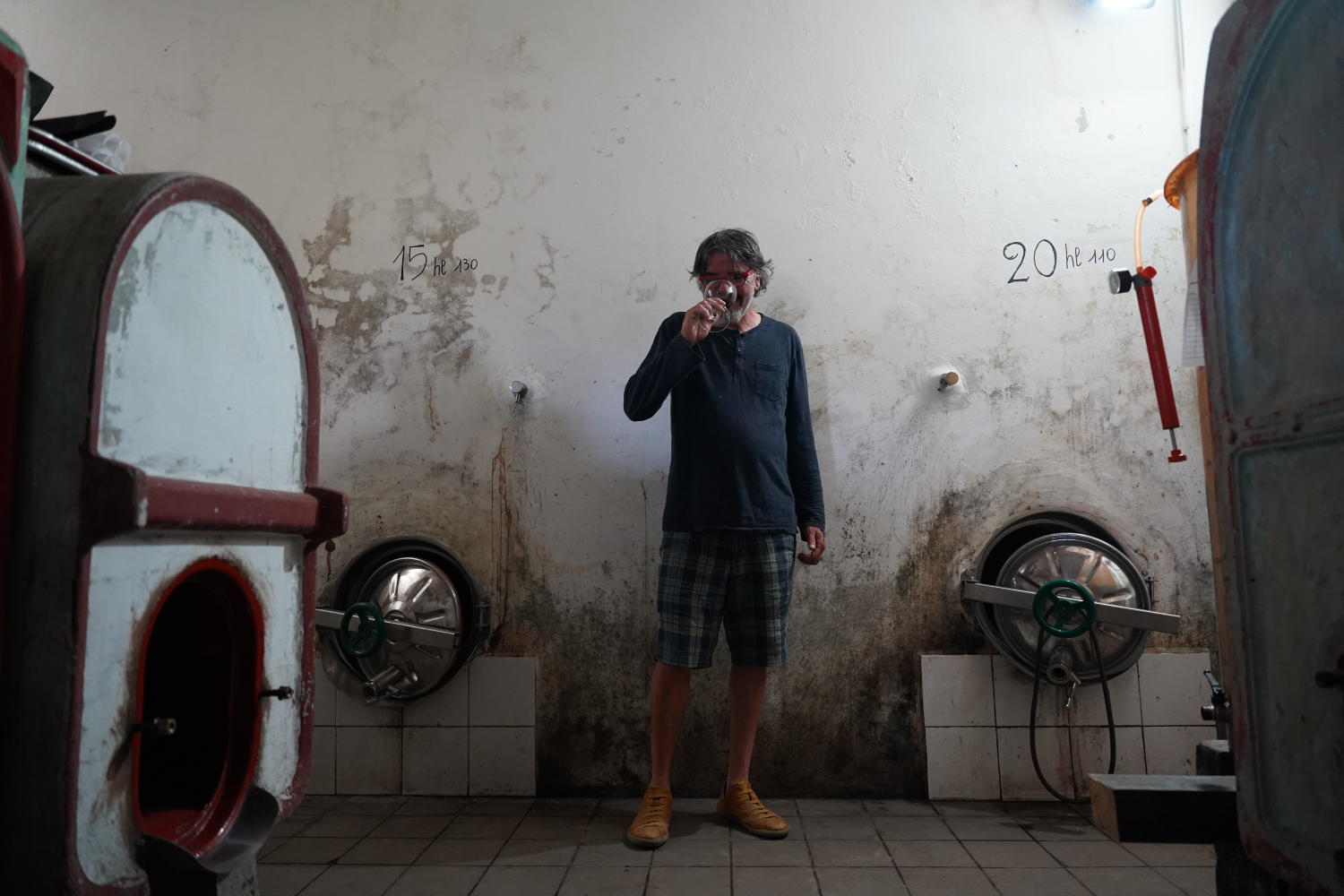
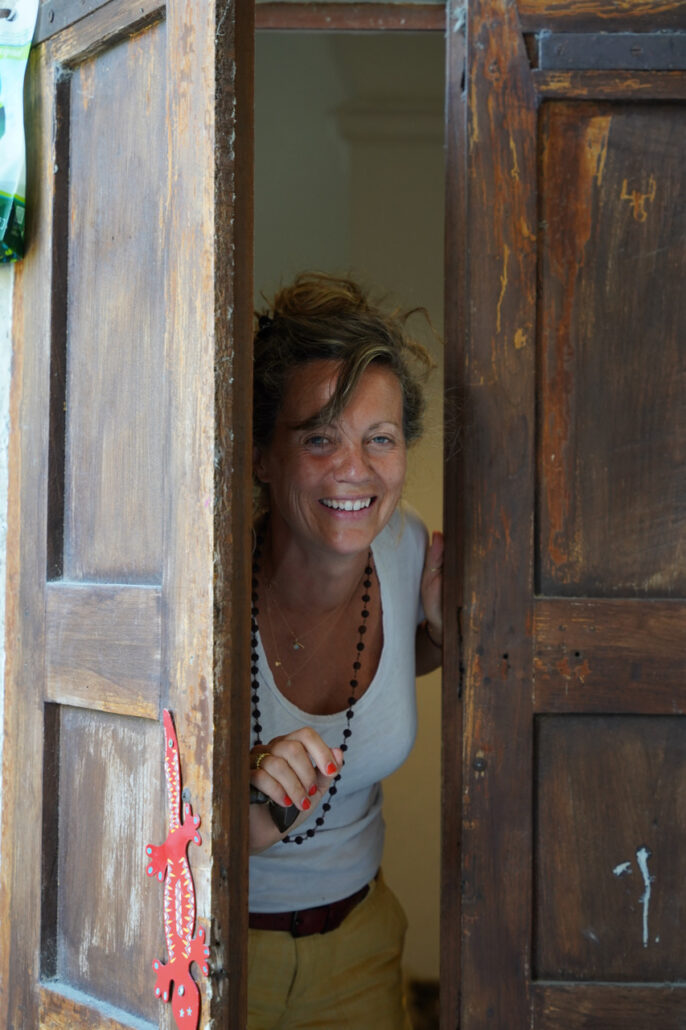
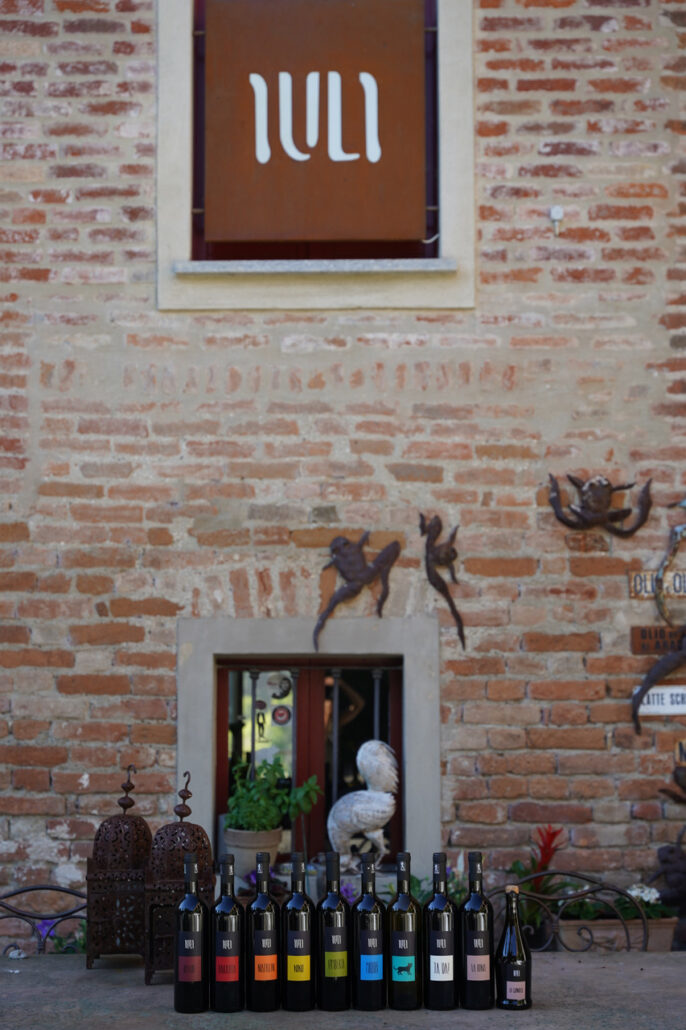
“I went to a Vinicio Capossela concert. Outside the theatre, there was a man on stilts with the phrase ‘ta-da’ tattooed across his chest,” Fabrizio Iuli laughs. “That image stuck with me; so when I had to decide how to name my latest label, it came to me instantly: ta-da!” Time plays differently here in the courtyard of Cascina Iuli. It has been a day since meeting Fabrizio and his wife Summer Wolff, a New Yorker by birth and a certified WSET Advanced wine professional; Summer is a wine consultant and founder of Hootananny Wines, an importer of natural wines. Talking, tasting, and wandering the vineyards of this small corner of Monferrato with them makes the hours both shorter and richer, expanding from wine – after all, that’s why we’re here – into an infinite array of other topics, other worlds, other times. So, holding a glass of Ta-da 2020, a delicate red obtained from the simultaneous fermentation of Pinot Nero, Slarina, Baratuciat, and Grignolino grapes, it’s easy to realise how time on the hills of Montaldo Cerrina in Monferrato feels different from the hours chased outside the estate’s courtyard. To tell the story of Cascina Iuli, one must start with a contrast that here gently dissolves: the distinction between historical time and biological time.

Historical time, biological time
Enzo Tiezzi was one of Italy’s greatest scientists. A professor of Physical Chemistry at the University of Siena, he was a passionate scholar of the relationship between capitalist-driven technological progress and the depletion of natural resources. He anticipated by a long way issues that are central today, such as environmental protection in the face of climate collapse and the decline in quality of life in the name of economic growth. In his well-known book Historical Times, Biological Times (Garzanti, 1984; later Donzelli, 2001), the scientist wrote: “While, with the dawn of the new millennium, science celebrates the triumphs of results that were once simply unimaginable, at the same time a radical crisis in our relationship with nature is plain for all to see. There is a very real risk of a decline in quality of life, of the irreversible destruction of fundamental natural resources, and of economic and technological growth that produces inequality and maladjustment.”
The concerns voiced by Tiezzi in 1984, the year the book was first published, have today turned into prophecies that have sadly come true. In Historical Times, Biological Times, Tiezzi emphasises how historical time – that determined by techno-scientific progress – is propelled at a speed far greater than the biological evolution of human existence. “If we look at this great evolutionary history from which we come,” the Tuscan scientist remarks in one of the key passages of his work, “three major protagonists emerge, ignored by the dominant physical sciences: beauty, time and biodiversity.” Thirty years on from Tiezzi’s intuitions, beauty, time and biodiversity stand as precious principles through which the present can be organised as a form of humanistic resistance to be set against a future in which the control of society seems to coincide with the dehumanisation of experience.
“If you don’t have time, don’t drink wine – drink something else.”
Monferrato is one of Italy’s most important agricultural areas. Viticulture on these hills east of Turin once played a fundamental role in the life of the local community: the undisputed quality of the area’s traditional grape varieties – in particular Barbera, Freisa and Grignolino – ensured market prices that were significantly higher even than those of the Langhe, another famous Piedmontese wine-growing area in the province of Cuneo, now celebrated worldwide for the quality of its wines.
We are talking about fifty years ago, about a biological time, to use Enzo Tiezzi’s words, just around the corner, and about a historical time, instead, moving very, very fast, in which Italy underwent a full-blown industrial revolution with inevitable social and environmental consequences. The first significant fact was the disappearance of the peasants. A profoundly agricultural nation, with forms of noble knowledge handed down for millennia, found itself around the 1960s without that people who, poor and hungry, had survived History with immense suffering, despite everything. The children of that people found, in jobs in newly built factories, in the hygiene of bathrooms finally inside the home, and in a guaranteed wage, a rightful redemption from a life lived too close to the land. The second significant fact, a consequence of the first, was the abandonment of the countryside and the increasingly hypertrophic urbanisation of the population. Migration towards industrial hubs – most visibly from the south to the north of the country, though the phenomenon also affected demographic patterns within individual regions – generated a new metropolitan landscape that, around the 1970s, saw the emergence of supermarkets as the embryonic nucleus of today’s consumerist model of purchasing, amplified almost to the point of paradox by the colossal shopping centres of the contemporary era. The abandonment of the countryside accelerated the process of agricultural industrialisation, increasingly supported by the spread of chemical products and technology. The wine sector, too, with the establishment of the Denominazioni di Origine Controllata and later Garantita (DOC and DOCG) in 1966, committed itself to industry, inaugurating a production system in which the human element was pushed to the margins. Monferrato as well lost most of its farmers, who sought better fortune above all in the Turin industrial hinterland, colonised by the ever more imposing shadow of Fiat.
Fabrizio Iuli’s wines are born in that period – or rather, their essence takes shape in the consciousness of that boy who moves between the tables of the family osteria, Osteria Universo, where the wine produced by his grandfather is served, the same grandfather who had scassato the vineyard by hand (that is, prepared the soil).
“If the old folk were making wine today,” says Fabrizio, “they’d have a great deal of fun. Back then it was truly hard work, and everything had to be done by sheer force of arms.”
The family dimension of relationships and a deep respect for past generations are values that have shaped the estate’s approach to viticulture. This strong bond with its roots coexists with another, equally fundamental side of Fabrizio’s character: a curiosity for anything that encourages listening, observation and conviviality. This inclination stems from his many journeys around the world, especially to South America, undertaken during the winter months, when work in the fields alongside his father allowed for a few months’ respite. The experience of travel has given Iuli’s agricultural work an anthropological quality, in which the human aspect is as important as the oenological one. Love for his own place and human empathy played a crucial role in the decision to embark on an independent production path in the late 1990s, right there in Cerrina Monferrato.
At that time, the country’s industrial momentum was anxiously slowing down, leaving behind it an unprecedented landscape and social devastation, confirming Tiezzi’s dire predictions. Viticulture had established itself successfully by following international reference models. Oenological consultancy guaranteed concentrated, powerful wines that enjoyed great success on foreign markets. The Italian scene lacked the figure of the vignaiolo, the direct descendant of the farmers of the past, namely the person who personally tended both vineyard and cellar. After all, that generation had moved to the cities.
Fabrizio, by contrast, had remained in Cerrina Monferrato; he had held on to his land and his vineyards, but above all his temperament had led him to approach the craft of winegrowing according to a canon that ran counter to the spirit of the times. “Starting out in years when the viticulture of our grandparents was considered inadequate,” says Fabrizio, “and when only modern oenological principles were valued, led me to make a few mistakes. Fortunately, I met many vignaioli, among them Flavio and Silvana of Le Due Terre in Friuli, who encouraged me to think for myself and to believe in a path that would bring out the distinctive qualities of this territory.”
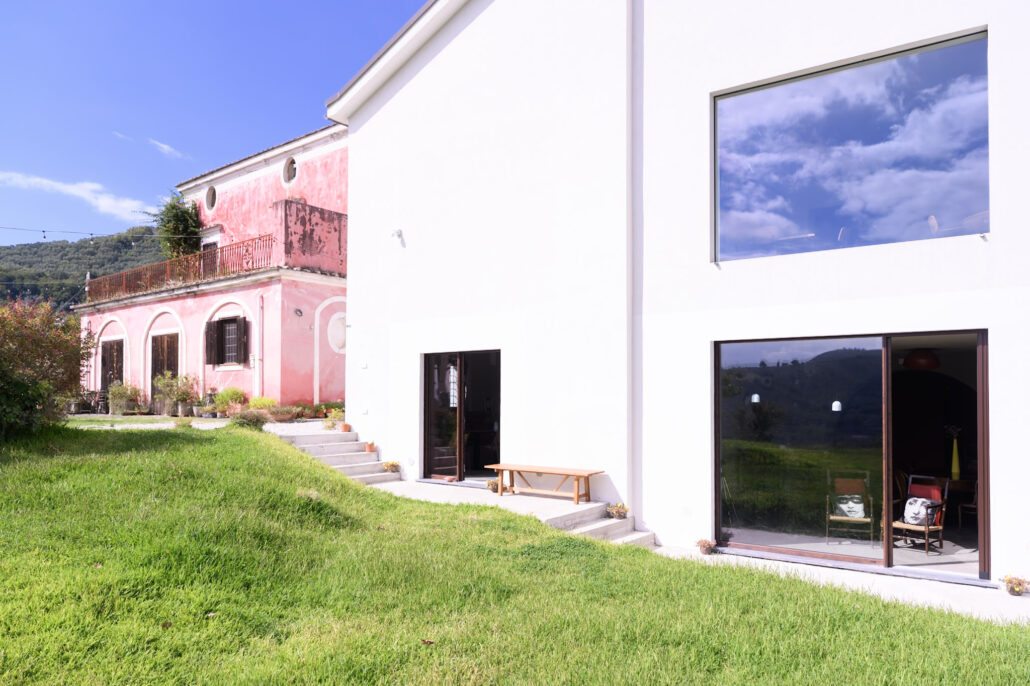
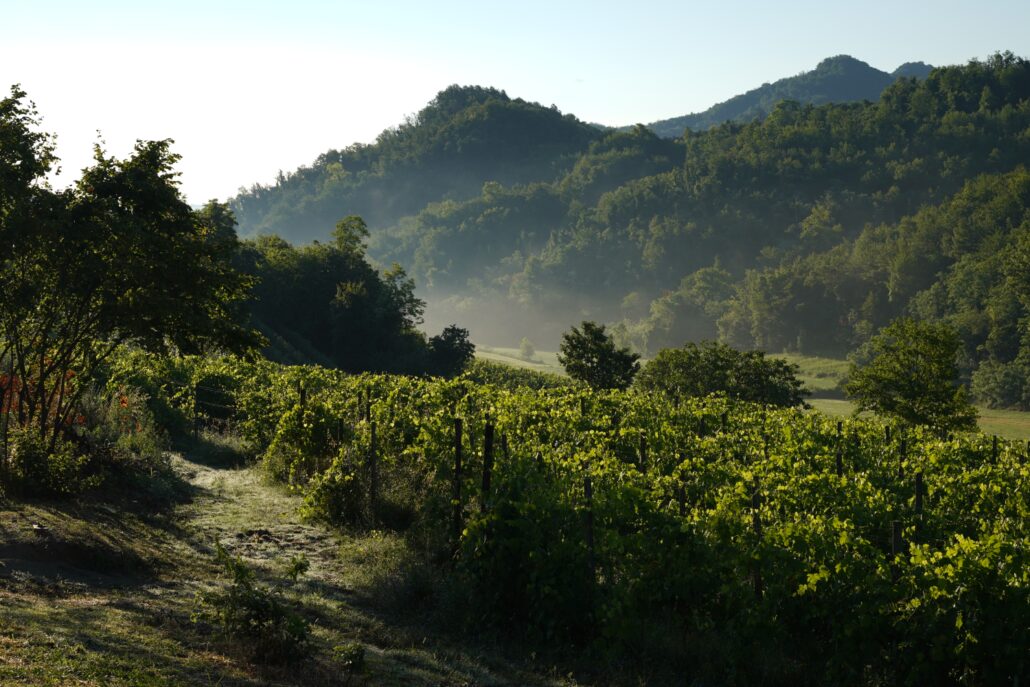
Iuli’s vineyards are all clustered around the core of the splendid cascina, situated on the summit of the hamlet of Montaldo. The view that opens up beyond the ridge of the hill is enchanting: the rows of vines occupy a limestone amphitheatre that whitens the surface of the soils. All around, as far as the eye can see, there is nothing but woodland. “Over the years I have expanded the original vineyard, reaching the current 30 hectares,” says Fabrizio, “but the woodland is essential to preserving biodiversity in our vineyards.” Despite the town’s historic vocation, today Fabrizio is one of the very few winegrowers in Cerrina. “The abandonment of the land has unfortunately taken its toll on local viticulture: it is a great shame, because the wines were highly appreciated before the industrial era.”
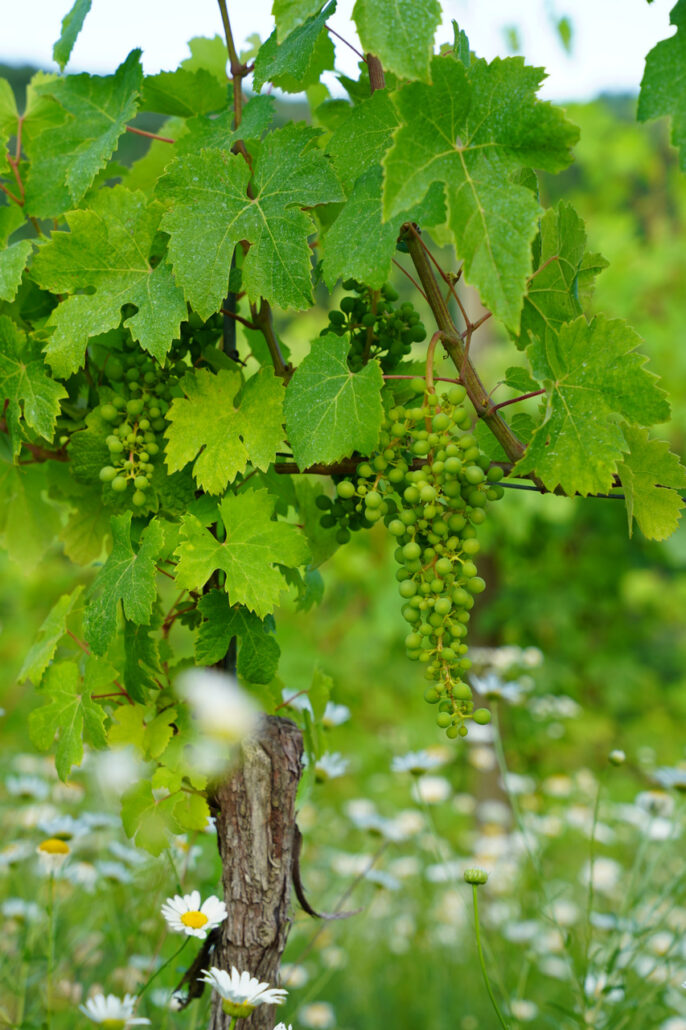
The Barbera vines planted by his grandfather Natalino, which had been on these slopes since 1930 and were reluctantly uprooted in 2016, were gradually joined over the years by other varieties. Fabrizio planted Grignolino, Nebbiolo, and Pinot Noir, the latter driven by an old passion for Burgundy wines and, above all, because “it forces you to think.” Delving into the historical past of Piedmontese viticulture then led him to the decision to cultivate indigenous varieties on the verge of extinction, such as Slarina, Uva Rossa, and Baratuciat, a white-berried grape: these ancient varieties are yielding excellent quality results and represent a very strong link to the winemaking tradition that is so dear to Fabrizio.
The relationship with time permeates the work at Cascina Iuli and is evident in the wines that are bottled. Through delicate vinifications, without aggressive extraction or any overtly oenological interventions, the estate produces wines that are convivial and of exceptional ageing potential.
“Wine is meant to be sipped,” says Fabrizio, “it requires the necessary time and something to eat; drinking should awaken people’s humanity.”
Just as the choice of the aforementioned grape varieties has brought viticulture back within the fold of historical continuity, so the taste of the wines reflects a light, carefree approach, yet no less discerning when it comes to drinking. On the contrary: encountering wines so direct in their impact on the stomach challenges a tasting system skewed towards oenological balance, which does not exist in nature, and redirects drinking towards an act of nourishment more in tune with human culture.
It is no coincidence that Fabrizio’s wines, like those of many other vignaioli of the latest generation of global producers, have unsettled the viticultural system established by governments and industrialists, which focused on standardising taste through serial oenological protocols. Iuli has rejected any form of institutional label on his bottles. Viewed through the broad lens of historical perspective, Fabrizio’s agricultural work appears as an attempt to mend the rift between the agricultural past of our country and the present, in which a generation has returned to viticulture equipped with advanced technologies, good ideas, and a natural unawareness of the harsh peasant life of only a short time ago. It is in this margin of reconciliation between historical time and biological time that Iuli has managed to align, in the craft of winegrowing, much broader concerns relating to the complex relationships between humans, time, and the quality of existence.
Children Through Time
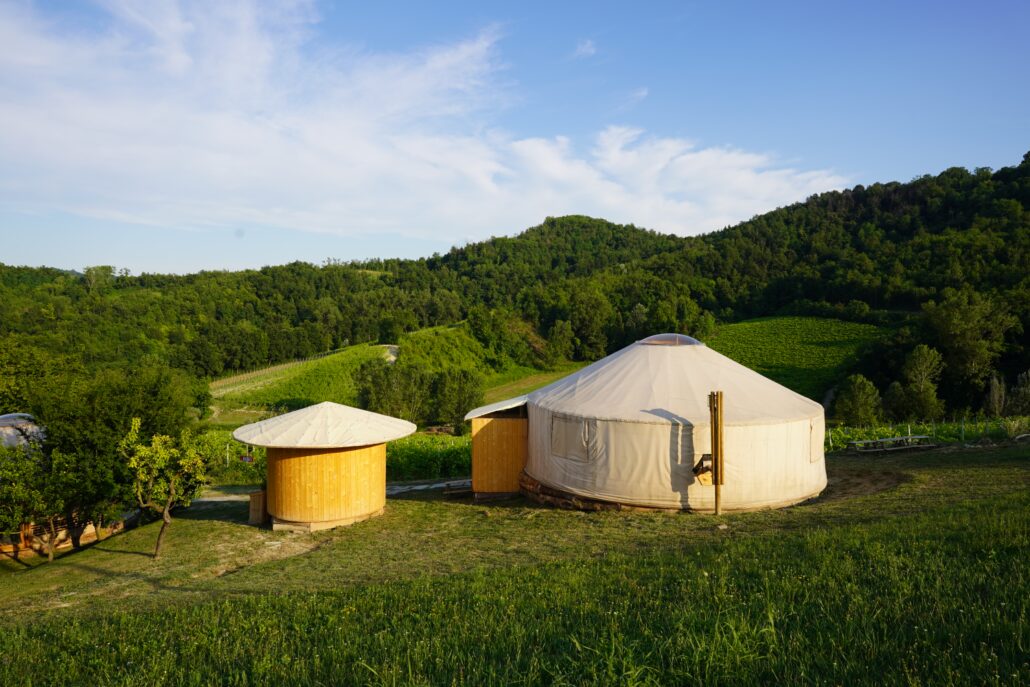
Reconciliation with time meets the future. In agriculture, it is understood that the essential condition for a good harvest lies in fertile, energy-rich soil. At Cascina Iuli, the preparation for the time to come takes place through schooling. Fabrizio, together with his wife Summer and the McCullough family, founded a Waldorf school inspired by the pedagogical principles established by the anthroposophist Rudolf Steiner in the early twentieth century. Opened in 2020, the Village Forest School welcomes children from preschool age through lower secondary school (the former middle schools). The teaching is interdisciplinary; it approaches education in a complex and transversal way, with the primary goal of guiding the child towards individual freedom while fostering social, academic, emotional, physical, and spiritual skills. Most educational activities take place outdoors and include agricultural experiences, always in close contact with the natural environment preserved by the estate. On a meadow overlooking the vineyards, two yurts made from natural materials and sourced from Mongolia have been constructed for indoor lessons. The spaces in the cascina, initially renovated to house a tasting room, are now used as a kitchen and dining hall.
Everything is cultivated on the estate, and the children take part in the production and harvesting of vegetables, fruit, eggs, and everything needed for their nutrition. It is a healthy and relaxed environment, supported by teachers with international experience. The cosmopolitan atmosphere of the school initially surprised the community of Montaldo Cerrina and the neighbouring hamlets, probably intrigued by the presence of children from all over the world in that corner of Monferrato, once considered remote from everything; gradually, however, this unfamiliar educational method—so close to the pragmatic farming practices remembered by the local people—has drawn in local families, who from this year are enrolling in the courses offered by the school. With children scattered across the cascina’s meadows, the vital sounds of the countryside begin to pulse once more, breathing life into the heart of a community that, until a few years ago, was considered lost.
The roar of the tractors, the chatter of women and men, and then the laughter of children at play are the same as always, belonging to both old and new generations; a background in harmony with time, biodiversity, and the beauty that the Iuli family’s viticulture has preserved and returned to the landscape—both geographical and human, of an Italian countryside finally alive.